“Metro in Dino” examines imperfect pairings. In bustling Mumbai, an illicit affair leads to Kajol and Monty (Konkona Sen Sharma, Pankaj Tripathi) heading on an impromptu Goa trip in a last-ditch resort to save their marriage. The couple’s teenage daughter, Pihu (Ahana Basu), who just wants her parents to get back together, is also navigating her own sexual orientation. She is drawn to a female classmate. Meanwhile, Kajol’s younger sister, Chumki (Sara Ali Khan), a confused bride-to-be, ends up at the wrong address during a night out with friends. She is drawn to Parth, a playboy who waxes philosophical. Viewers are meet friends of the latter: the career-oriented Shruti (Fatima Sana Shaikh), who compromised so that her husband, Akash (Ali Fazal,) could pursue a music career. She is preparing to return to the workplace—only to discover she is expecting their first child.
In yet another metro city (Kolkata), widower Parimal (Anupam Kher) frets over his reclusive daughter-in-law and only caregiver Jhinuk (Darshana Banik) repeating his mistakes. He enlists the help of his high school sweetheart Shibani (Neena Gupta)—Kajol and Chumki’s mother—to motivate her to fly the nest before it’s too late.
Commentary Updated for a Contemporary Generation
In a similar vein to its precursor, “Life in a Metro,” (2007), Anurag Basu’s “Metro in Dino” is a commentary on love and lingering. Yet this time he updates it for a contemporary generation. It pulls focus to themes of infidelity, gaslighting, and trust. It also comments on the lack of communication between spouses who live together, yet are more committed to their screens/smartphones. Further, the film calls out work culture that consumes personal life. For instance, we see Kajol and Monty working out a sex schedule around hectic corporate jobs and lifestyles. Yet in another scene, Akash expresses concern shelving his dream of becoming a singer after taking up a day job. He worries he’s turning into a clone of his workaholic dad, with wrinkles and creases replacing zeal for life. Much like his wife, Shruti, he too, is a slave to the biological clock.
Further, the movie depicts the unhealthy normalisation of infidelity which is currently in trend. Married men and women alike secretly sign up for dating apps to find a one-night fling. Some even go public with their affairs. We see Monty’s colleagues openly boasting about their countless affairs at get-togethers and at the workplace. Along with infidelity, even breaking hearts has disturbingly become the new normal.
The opening credits also features a dedication to the women in Basu’s life who overcame much. It showcases the poles-apart mentality of the various households/families in the movie towards the women folk. While Parimal doesn’t wish to hold his daughter-in-law back after the death of his son/her husband, on the contrary Kajol—as well as Shibani—are treated as maids and held back from pursuing their own desires. It also depicts a clash between traditional-minded women like Shibani. She’s been conditioned into viewing marriage as the ultimate goal or as a safety net. Thus, she has no option but to forgive and forget (whether it was clinging to the ambers of a failing marriage, or a disloyal/emotionally-distant husband). The film compares this to modern women like Kajol, who are above such regressive concepts. As a result, others see her as insensitive for challenging the image of a subservient housewife. She chooses not to be a doormat or a used and abused house slipper.
Songs and Musical Storytelling
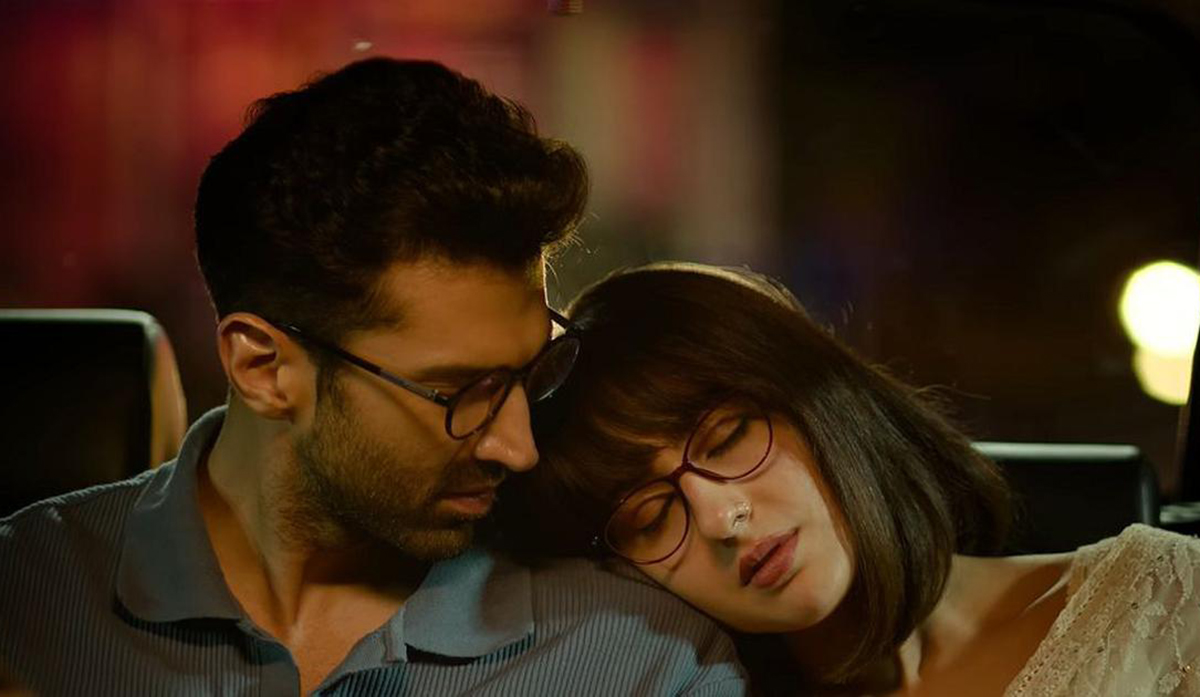
It is especially refreshing to watch three ladies from three generations (middle-aged Kajol, her baby boomer mother, and a millennial/Gen Z sister) connect. They FaceTime each other about their day-to-day routines, the dating pool and marital discord. The act supportive of each other’s decisions. This is true, even if at times—due to the wide generational gap—Shibani worsens the situation with advice that’s way past its expiry date.
While it doesn’t promise to offer all the solutions, one can still find life lessons peppered throughout the movie. Characters learn when to walk away and when to return. They find a middle ground and coming clean about lies one tells others or to themselves. It encourages viewers to stand up or to speak up for the one they love. Additionally, it asks them to deal with emotional or generational baggage before it grows into a burden, in order for relationships to thrive.
Basu likes to experiment with novel techniques to intricately weave together intersecting subplots and narratives. In “Metro In Dino,” he adopts musical storytelling. The diegetic songs enhance the visuals as well as keeping the predicaments of its characters grounded. The OST by Pritam is a fusion of nostalgia for yesteryear with fresh, modern touches, just like the film’s themes. There’s something for everyone. The film features silly love songs, sad songs, ‘dad songs’ (lullabies), and songs encompassing almost every emotion: love, lust, trust, and betrayal. Composer Pritam and his band also feature in their signature cameos in the backdrop of the musical interludes.
Mumbai as a Central Character
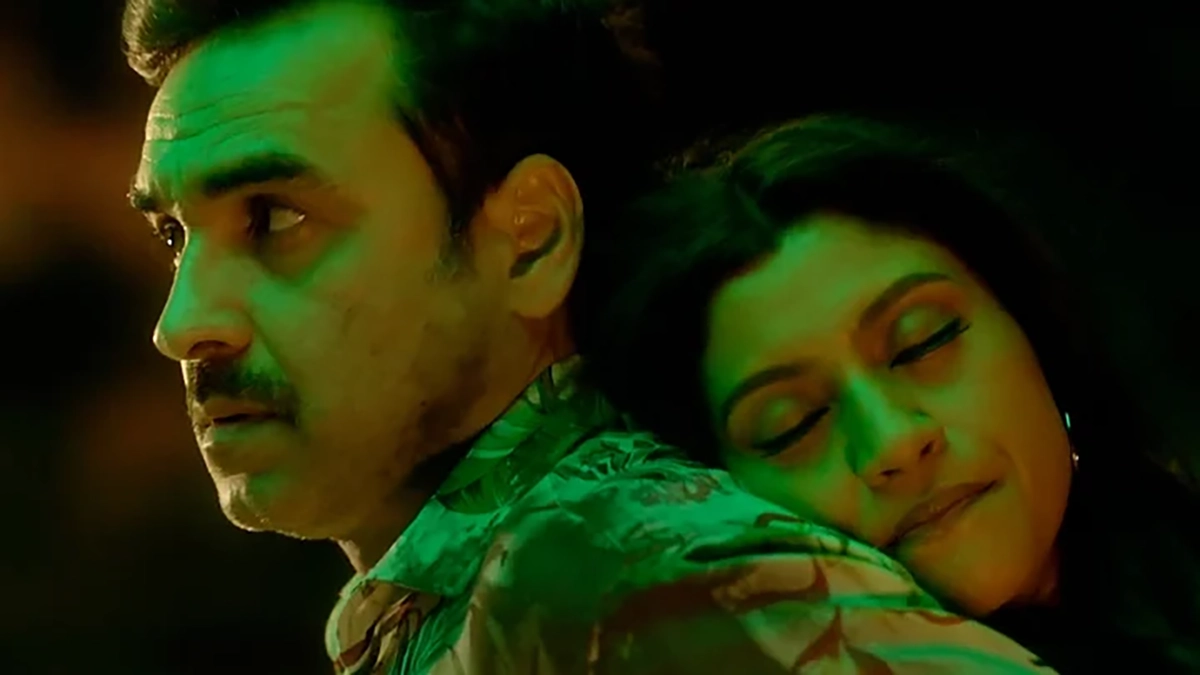
In this urban-centric anthology, Basu also utilises the city as a central character. While “Life in a Metro” romanticised Mumbai monsoons by showcasing reunited childhood sweethearts breaking into a waltz or sharing an embrace in the middle of a waterlogged street, in “Metro in Dino” the same rains are more unforgiving. It sets the scene for a misunderstanding between three friends or an ugly spat between Shruti and Akash, whose marriage is falling apart at the seams due to conflicting professional and personal goals/desires. Love is unhurried and likened to waiting at a traffic signal in peak Mumbai traffic, or going around in circles at a busy roundabout, even despite a SatNav. The city’s architecture has also evolved, for better or worse. In one instance, Monty video-calls Kajol to lament over the demolition of Mamta’s Momos—a restaurant he considers a ‘monument to their love story.’
As with many anthologies, however, “Metro in Dino” has its share of issues in resolving some segments, leaving them half-baked. While some of the love stories flourish, the film sidelines others or rushes them. A few character arcs could have been better fleshed out and compelling too.
With regards to performances, Konkona Sen Sharma is a class act as the steely and wronged Kajol. She returns as a new character after first matching steps with the late Irrfan Khan (to whom this movie is dedicated) in the previous outing. Not surprisingly, she is once again paired opposite a character named Monty. Pankaj Tripathi pulls off a balancing act as the flawed and occasionally charming Monty. The pair are particularly lovable in a brief interlude where—on a boat ride—Monty literally echoes Kajol’s sentiments.
An Excellent Cast Lifts the Film
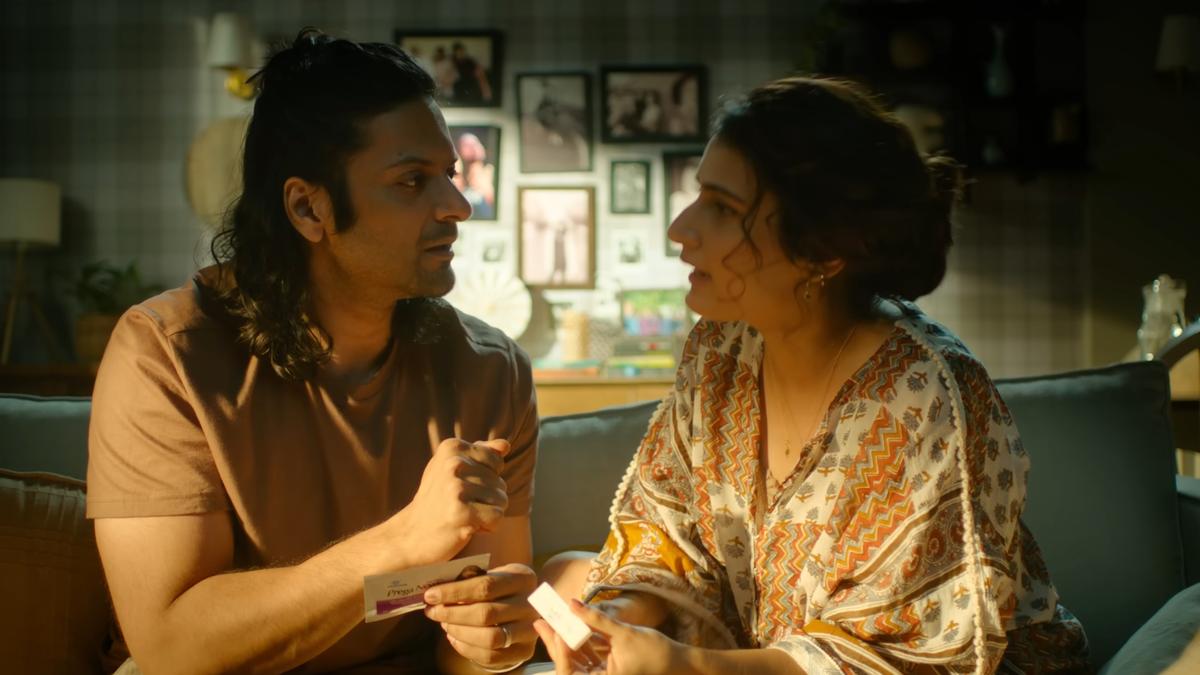
Veteran actors Neena Gupta and Anupam Kher share a wholesome chemistry as Shibani and Parimal, respectively. The movie affords Gupta opportunities to flaunt her comic timing in scenes such as Shibani introducing herself as Parimal’s new bride and Jhinuk’s new step-mother-in-law. Ali Fazal has his moments as Akash. However, ultimately it’s his co-star Fatima Sana Shaikh turning in a far more memorable performance. She immerses herself in the role of the overworked and empathetic Shruti. She is on par with Sen Sharma as my close second favourite performance. Aditya Roy Kapoor and Sara Ali Khan (playing Parth and Chumki) match each other in terms of charisma and vivaciousness. Lastly, Saswata Chatterjee, Darshana Banik, and Ahana Basu lend favourable supporting performances.
“Metro in Dino” is a quirky-yet-complex slice of life that offers an un-romanticised take on romance. It refuses to oversimplify the nature of the men nor the emotion itself. It will appeal to those who wish to learn more about falling in love with the same person every day over and over again. If that sounds like your think the film will pair well with its predecessor as a double feature.