


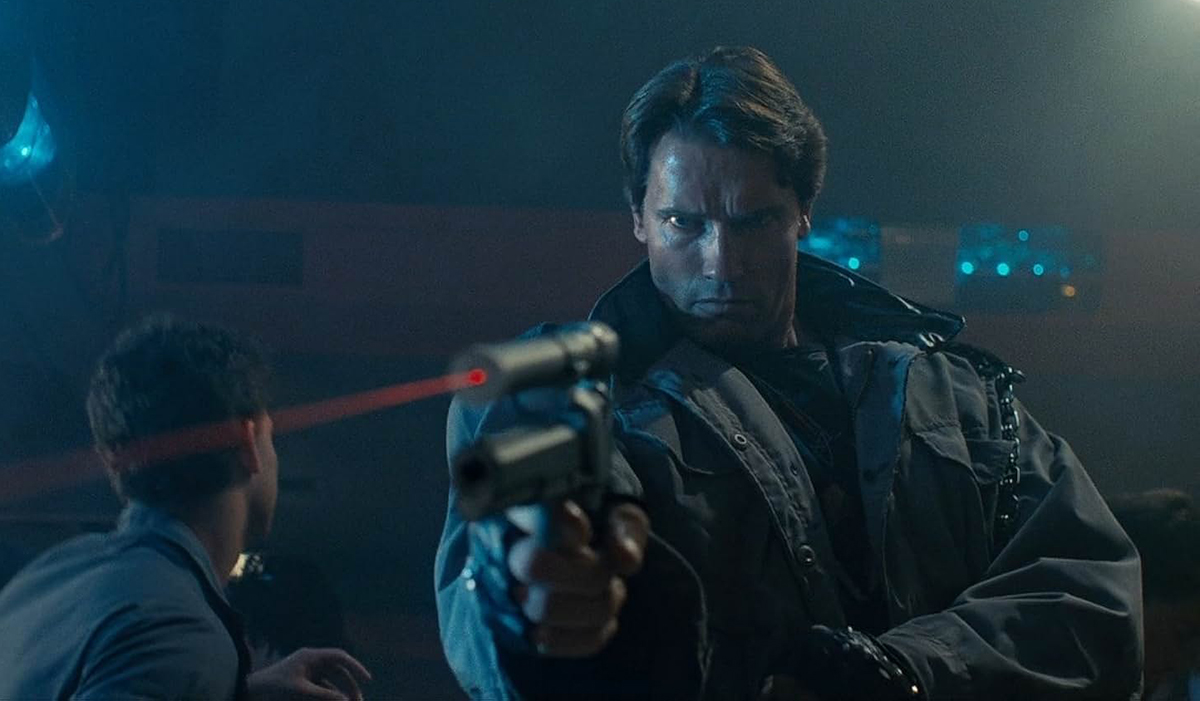
“Terminator 2: Judgement Day” has owned the cinema landscape for so long due to its undeniable “improvements” on its predecessor. But it’s time to give “The Terminator”—James Cameron’s signature piece—its due. It’s more intimate and bleak. The film lacks the pizazz and over-the-top special effects of Cameron’s 1991 sequel. In some cases, you can see Schwarzenegger’s antagonist wearing a full mask, along with rustic CGI and stop-motion animatronics. Yet amidst its legion of genre titles on IMDb—artificial intelligence, sci-fi, time travel, cyberpunk, action, adventure—one is sorely missing: horror. And, as “The Terminator” is one of the most solid sci-fi horror pictures we have, I wonder why it’s never thought of in that light. Or, should we say, in that dark.
There’s really no mistake about it: “The Terminator” is a enthralling horror picture. An unstoppable killing machine landing in ‘80s Los Angeles and setting about murdering everyone who might be Sarah Conner (Linda Hamilton) is creepy enough. His systematic, deadpan phonebook assassinations let the city know a killer is on the loose. At first one of Conner’s co-workers thinks it’s humorous that someone with her name has been killed. “You’re dead, hunny.” Yet Conner knows better. The fear on her face is palpable. And when her roommate, Ginger, is killed (Bess Motta) along with her boyfriend, the events are filmed in a seriousness and horror that was missing from “Judgement Day.” When the Terminator killed John’s step-parents in that film, it felt like necessary plot. Here it felt sad and soul-crushing.
’80s Nostalgia Meets Elemental Horror
Part of what makes the film so engaging as a horror piece is the nostalgic ‘80s it takes part in. It’s a world where dance clubs and outlandish dress are commonplace, where revelry and fun rule. Ginger listens to her Walkman while getting ready to go out and even during sex. There’s an innocence the time invokes—especially in 2025—of a carefree time where people relished in existing. When Sarah hides from the Terminator by running though a happening techno club, it harkens back to a world divorced from modernity. She uses pay phones and has a perm. Club-goers around her dance in reckless abandon. For the first time watching this film, I realized how dated and old everything felt. And the Terminator crashes through this idyllic picture like impending doom. His glowing eyes and blank face are more intimidating than evil sneers. A dark, synthetic score outlines his actions as serious and terrifying.
A pair of police officers in “Judgement Day” would try to intimidate Conner by appealing to her empathy by reminding her how many police officers the Terminator killed that night in 1984. And while Arnold’s famed “I’ll be back” would forever cement itself in the annals of cinema, the events that follow are morose and horrific. He guns his way though the precinct, killing everyone except Conner and Kyle Reese (Michael Biehn), who escape, exterminating cops like rats. Again the film’s score—comprised of synthesizers and pulsing bass—mark the scene’s urgency. Watching the whole thing play out through the Terminator’s unwavering and impersonal infrared makes it that much more horrifying. Police and military are common expendables in action films. Yet only “The Terminator” and perhaps “The Raid: Redemption” shows their deaths in the horror and fright that it deserves.
The Deadpan, Immovable Machine

Of course, none of this would work without Schwarzenegger and the deadpan, immovable quality he brings to the Terminator. He’s not funny here. Not at all. Even with his sunglasses on there’s an unstoppability and detachment to him that’s grim to behold. When he punches through glass and walls to grab at Sarah Conner, there’s never a moment where we think it’s a purpose-driven man doing it, but only dispassionate machine. Schwarzenegger plays him coldly and aptly. There’s nothing to him but metal, chips, and purpose. It makes it all hit all the more chillingly. I don’t feel Arnold is given enough credit for his portrayal here. It takes real restraint.
Set against Sarah—a naive, fumbling twenty-something struggling to get her life in order—makes the film’s horror elements stick even more. There’s not a single comparable note between this Sarah Conner and the hardened, military-shaped entity we see in “Judgement Day.” Sarah has life. She has hopes and dreams. She gets blown off by a date for Friday night and just rolls with it. Love is an afterthought to her as she tries to hold it all together. When Reese—who’s sent from the future to protect her and her unborn son from the Terminator—tells her of her purpose, she crumbles under the weight. Who wouldn’t? The mere fact that Reese is telling the truth while everyone else thinks he’s crazy (you would, wouldn’t you) pairs them together in a lonely fight for survival—amidst love—no one else can fathom. Besides, when a precinct full of cops and assault rifles can’t dent this monstrosity, who can even help?
Sci-Fi Horror Perfection
Biehn is great here too, as Kyle Reese, and his bravery and doleful nature make the time he spends with Sarah a break in the horror and non-stop plodding of the Terminator. He seems broken, yet hopeful. His stories of the world he comes from—the future—along with horrifying visuals—make us feel for his story and feel kind of bad for him. Yet his determination to fight the Terminator is stolid and unwavering. He’s accepted his fate by being sent back through time already. He knows he’s not returning. It makes the whole thing seem more personal, more horrifying, and more sad than sci-fi is used to seeing.
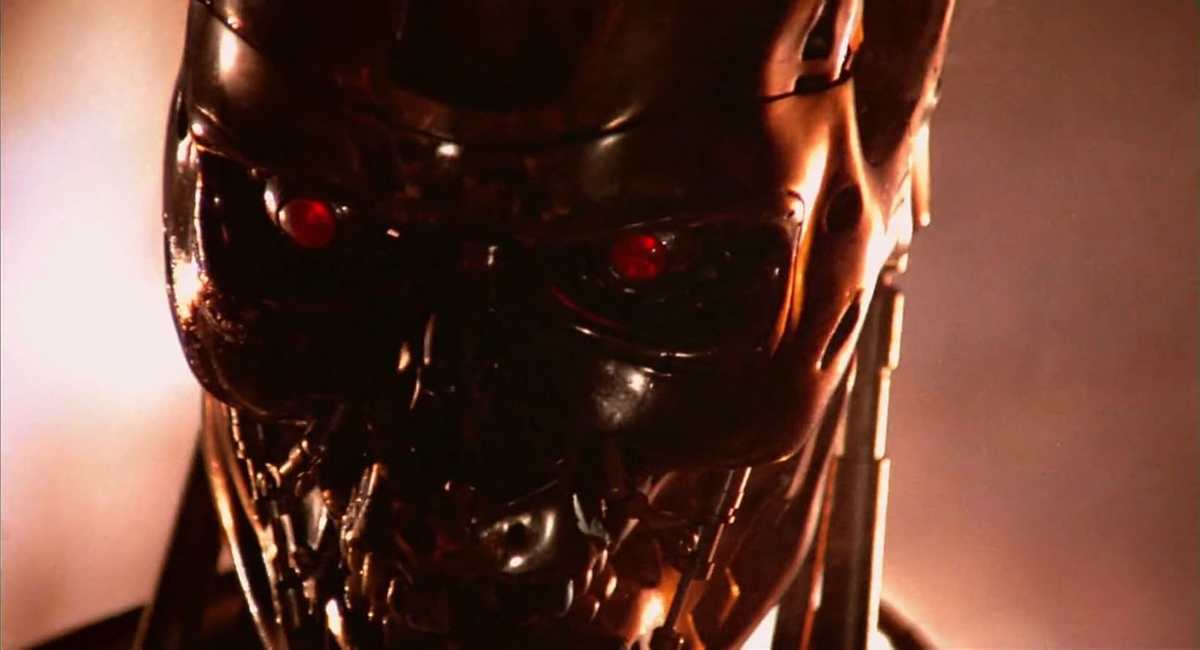
That “The Terminator” was the film that put James Cameron on the map is a testament to its undying nature. He made a stark, intimate, and slow-paced horror thriller with sci-fi elements, never seen so well as in the film’s close, as the naked exoskeleton of the Terminator refuses to quit, attempting to kill Conner like a blood-thirsty and obsessed murderer. There’s something more eerie about the fact the machine doesn’t feel than if it did. And even when Sarah stops it—crushes the damned thing in a hydraulic press—there’s never the sense it’s stopped; there’s never the sense she’s safe. And while the series would jettison into perfection with “Judgement Day,” there’s something elemental and horrifying about “The Terminator” that sets it apart as a masterpiece. The Terminator—its villain—crashes through the film’s idyllic settings and causes fear int he deepest places. In addition to its sci-fi brilliance, maybe one day the film will indeed be heralded for the horror perfection it brings with it.

