


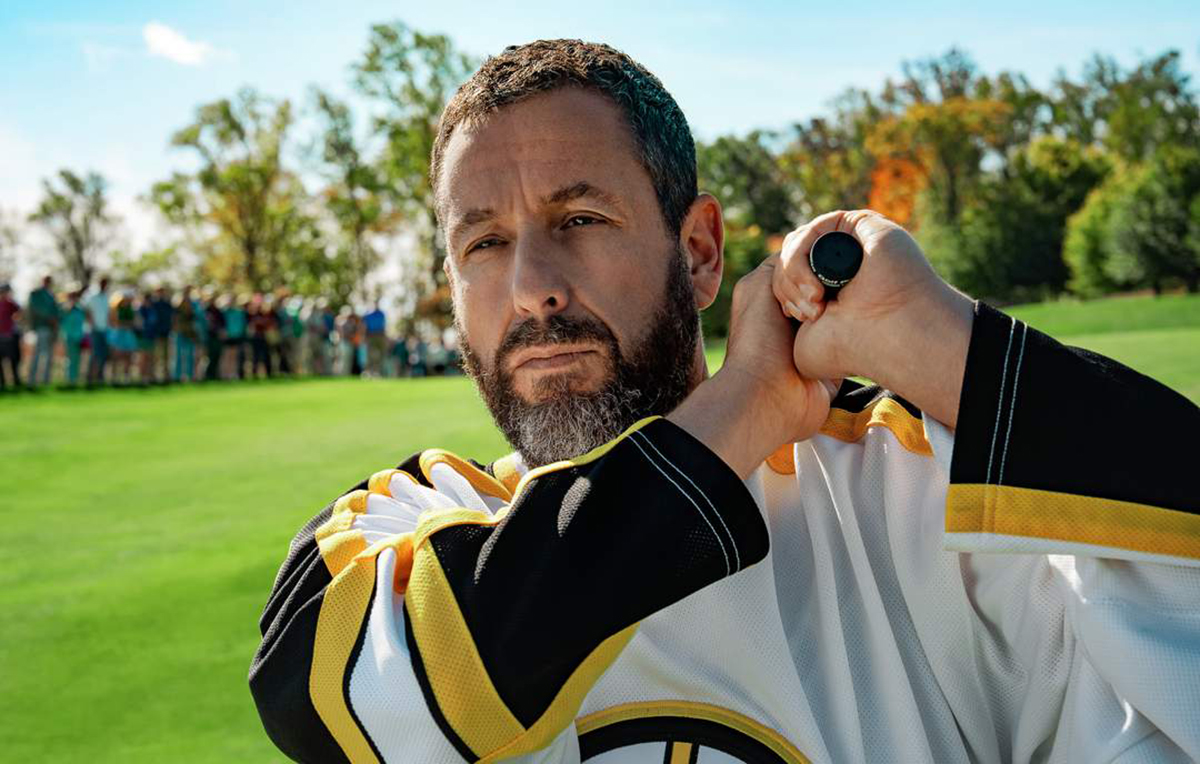
Known for his infamous tantrums and vicious walloping of naïve caddies on the golf course, karma comes knocking for Happy Gilmore (Adam Sandler), with life beating the hockey player-turned-golfer to a pulp. He tragically loses the love of his life in a freak golf accident and is reduced to a shell after hitting the bottle to drown his sorrows. The same lady luck who was responsible for Gilmore’s winning streak betrays him. This forces the widower to move into a run-down neighbourhood with his four mischievous sons who could give the ‘Three Stooges’ a run for their money with their antics, along with a more sensible daughter Vienna, who is an aspiring ballerina.
In an effort to better a grim financial situation, Happy also attempts to get his groove back and literally get back into the swing of things after putting a successful career on the backburner. His rival, the egocentric Shooter McGavin (Christopher McDonald) isn’t any better off, and also at the mercy of a sport that was once his bread and butter. Now lodged in a mental institution due to his mental break over losing the coveted ‘gold jacket’ to Happy. Meanwhile, Frank Manatee (Benny Safdie), an exploitative league owner (pretty much the Elon Musk of golf) proves to be a proverbial pebble in our titular underdog’s golf shoe, obstructing the path to his potential comeback. It remains to be seen whether Happy can make it out of this sand trap, despite outside forces and his personal demons working against him.
The Sandler Trademarks Are All Here
Predictably enough, “Happy Gilmore 2” features all the trademarks one might find in a Happy Madison production. It includes a shameless plug for Dunkin’ (although not as shameless as the in-your-face as the ‘Dunkaccino’ jingle from Adam Sandler’s magnum opus “Jack and Jill”), the occasional gross out humour, in-jokes, recycled gags, Steve Buscemi …and the secret ingredient: brisket. The story too isn’t complex, with plot twists as ridiculous as one would expect. The jokes also land: especially a witty visual gag of Shooter dancing down the stairway of the mental institution a la Joaquin Phoenix in “Joker,” recurring caddie jabs, and self-deprecating jokes (Happy remarking his bust looks like it’s modeled after SpongeBob).
“Happy Gilmore 2” also features self-aware jabs at the ‘wife who dies at the beginning of the movie’ trope, with Julie Bowen’s romantic lead Virginia Venit appearing in spectral form to reprimand Happy for fetishising her in his ‘Happy Place.’ Later we’ll see another light dig as Robert Smigel returns in the role of a lawyer instead of reprising his role as an IRS agent from the first movie, explaining that he switched professions due to the hate and danger of his previous jobt (i.e. Happy throws him through a glass door after trying to take his grandmother’s house). A recurring joke is also Happy concealing his heavy drinking within various knick-knacks around the house, which also serves as a nod to Sandler’s signature ‘you can put your weed in here’ catchphrase (albeit re-used here in a far more depressing context).
Hilarious but More Mature
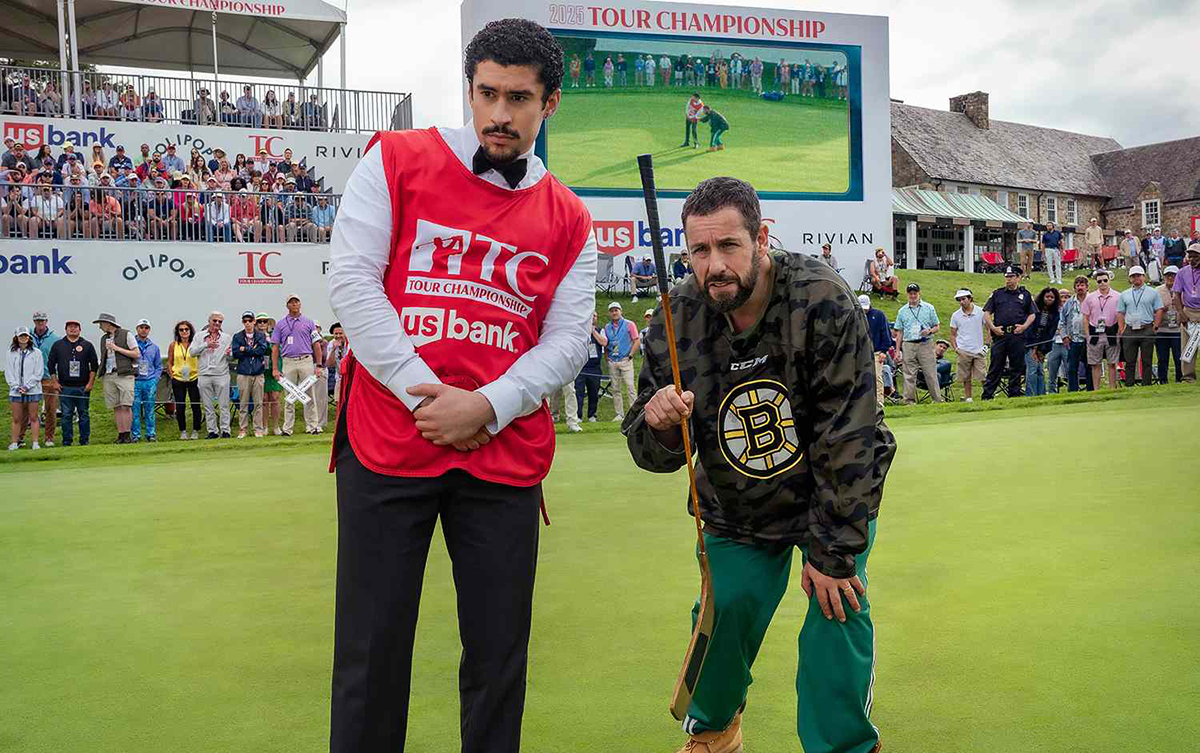
However, it’s the unpredictable aspects of “Happy Gilmore 2″—such as its surprisingly mature approach that treads dramedy territory—which clicked more for me. Instead of coming across as a string of SNL skits thrown together haphazardly, the sequel scores big with its bittersweet vignettes assembled in a meticulous fashion. Happy’s character growth is another aspect that held my attention and to me improves upon the first movie. The older Happy may be cynical, but he is a lot less annoying and feels more sympathetic or lived-in. While he is a flawed individual, Gilmore has also realised well into his middle age that lady luck won’t always be kind to him.
The film doesn’t let Happy off the hook easily, portraying both his smooth rise to fame and his more painful and literal fall from grace well. He struggles with sobriety and grief as well as guilt of ‘robbing’ his kids of a childhood they deserved that eats away at his conscience. Pivotal scenes—such as Gilmore refusing a drink even when a crowd of fans tempt him—showcase his evolution. It elevates him to a positive role model willing to overcome his vices, and an underdog viewers will genuinely want to root for, rather than reducing the character to a caricature. The family dynamics between Happy and his kids are silly, feel-good, and a polar opposite to his overwhelmingly fatigued outlook at life. It simultaneously serves as a love letter to family and friends who act as his backbone through thick and thin.
Cameos that Never Stop
The movie also boasts so many cameos one might lose count. The film draws some from the first outing, some appear out of the blue, and others are pivotal to the plot. Regulars such as Jon Lovitz and Steve Buscemi drop by, with the former playing a long-suffering amateur golfer who is bested by Gilmore at the game, and the latter impressing with his comic timing, even with little to no lines, as Happy’s neighbour. Kevin Nealon is hysterical in a brief role as an inapt sports journalist, while Bad Bunny lends charm to the likeable caddie Oscar. Ben Stiller steals the scene from the main antagonist himself, reprising his role as Hal, previously a sadistic orderly at a nursing home who now runs an equally sadistic rehab programme. He’s an even bigger menace this time around.
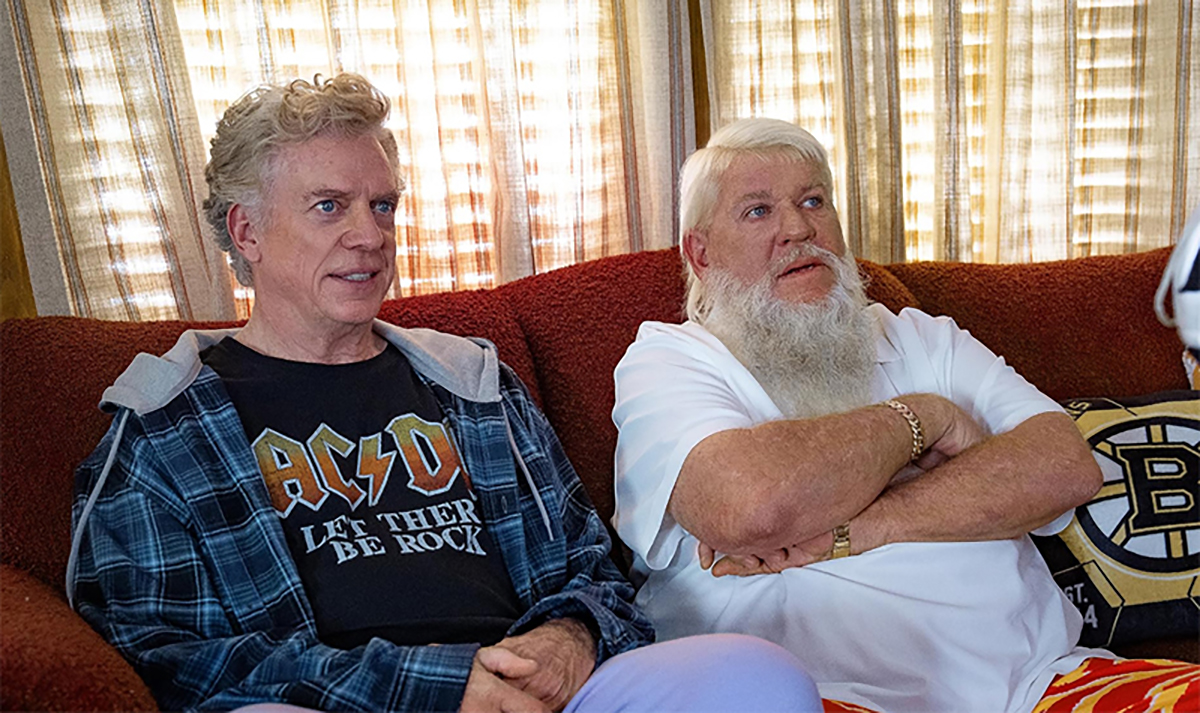
The gags don’t stop there. In one of my personal favourite castings, Stephen A. Smith (a real-life sportscaster) plays a role that’s a cross between a sportscaster and a typical Fox News anchor. He has a bias towards Happy and constantly demands harsh punishments for his misdemeanours, even claiming that the golfer is a practising satanist! Other non-actors in the ensemble include golfer John Daly playing a quirky supporting character who’s a bit too addicted to “Love Island” and drinking hand sanitiser, as well as golfer Scottie Scheffler who impresses with his comic timing and delivers some of the more quotable lines. The late game show host Bob Barker and the ‘mistah mistah lady’ from the first movie also appear in cameos from ‘beyond the grave’ (fingers crossed, if there’s ever a “Little Nicky” sequel in the making, there’ll be a posthumous cameo by the Prince of Darkness too!)
Christopher McDonald chews the scenery with his maniacal laughter, tongue clicks, and signature finger guns. Sunny Sandler, Maxwell Jacob Friedman, Ethan Cutkosky, Philip Fine Schneider, and Conor Sherry round out this seemingly never-ending ensemble as Vienna and Happy’s reckless himbo sons, respectively.
An Undeniable Redemptive Spirit
Ultimately, the onus lies on Sandler himself to make the viewer believe in Happy, and he doesn’t disappoint. The actor and comedian, who can be notorious for sleepwalking through his own comedies, pulls off a sincere and grounded performance. His body language as a man processing the loss of a loved one and trying to resist the urge to relapse harkens back to similar performances such as “Reign Over Me” and “The Wedding Singer.” Thankfully, this time around, he also resists the urge to put on a grating voice (a quality which overstayed its welcome anyway).
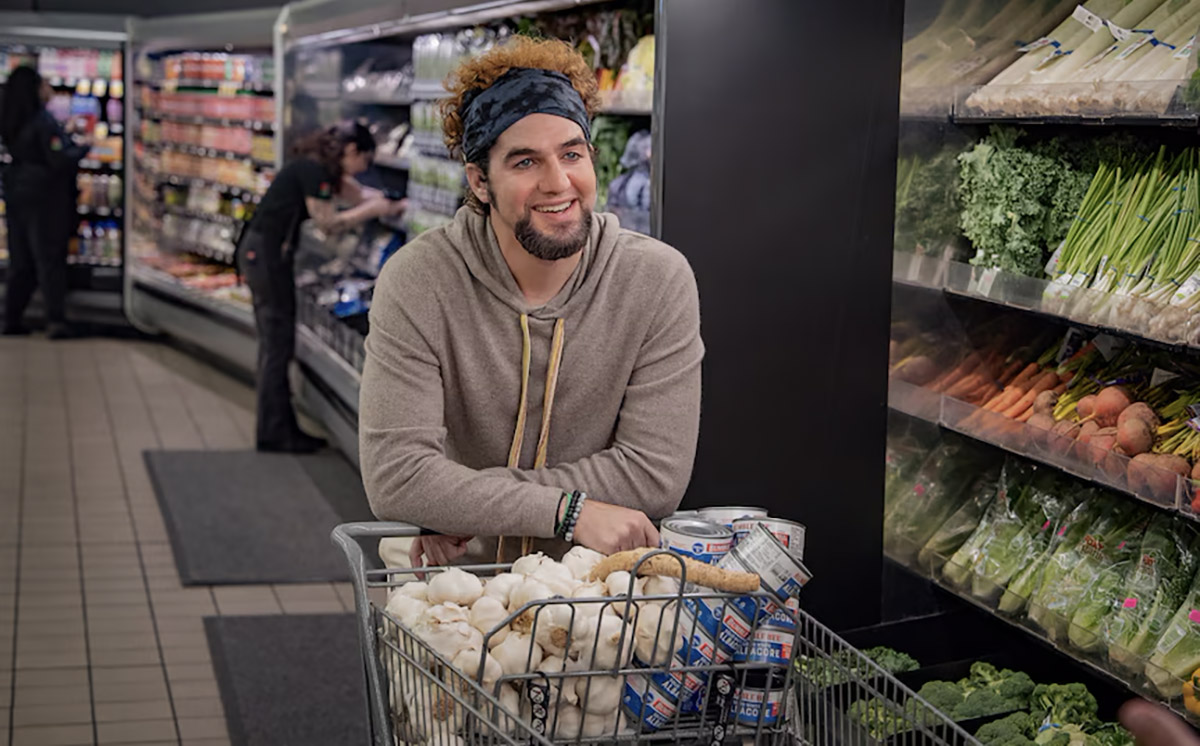
“Happy Gilmore 2” features its fair share of shortcomings, however, suffering from a leisurely pacing that eventually leads to tedium setting in. The final act, while exhilarating, feels overstuffed, and the subplot of Happy putting together a team of real-life pro golfers would have felt more at home in a sequel to “The Longest Yard” instead. While Benny Safdie (Co-director of “Uncut Gems”) as the antagonistic Manatee is inspired casting, he’s limited and unable to convincingly pull off the supervillain act. In comparison, Haley Joel Osment as Manatee’s loyal henchman/lab rat proves more compelling and would have fit the bill better.
Signing off, “Happy Gilmore 2” may not be everybody’s cup of tea due to its slapstick gags and an over-the-top final act. However, thematically—and in terms of character progression—it’s the most mature and sincere Sandler comedy in recent times by a long shot. The redemptive spirit of its protagonist, the sensitivity and empathy afforded to him, and the message of forgiveness/second chances—even for one’s foes—make it a winner… at least in my book.
“Happy Gilmore 2” is streaming exclusively on Netflix.

