


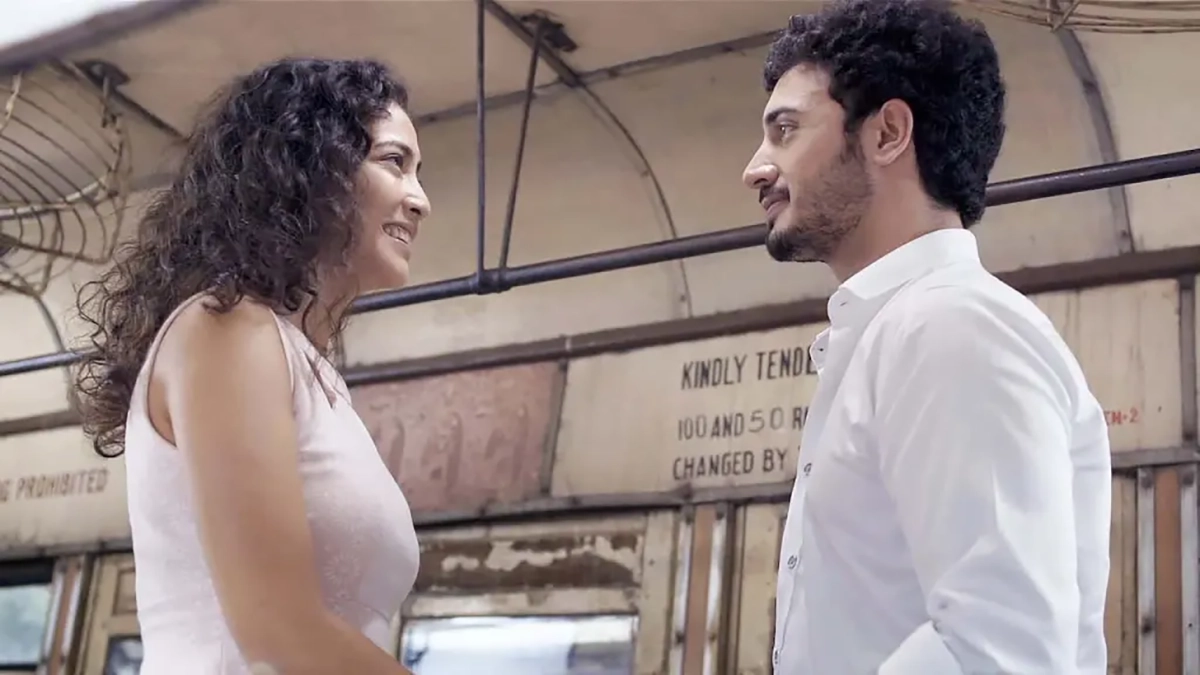
To truly understand the stories that have shaped us, to re-enter the cinematic landscapes that once captured our imaginations, and to revisit the echoes of tales that lingered long after the credits rolled this is the very genesis of a new journey. We’re calling this series ‘Revisits.’ Here, we’ll be unwrapping films from the past. This is not only for nostalgia’s sake, but to explore their enduring qualities and explore how they speak to us now. This is perhaps differently—or perhaps even more profoundly—than they did upon initial viewing.
For our inaugural journey, we venture into a world where connection transcends the tangible, where voices paint pictures, where the unseen can be felt with a startling clarity. Our first movie revisit explores the subtle art of communication, the quiet spaces between words, and the beauty of finding solace in unexpected places. It asks us to consider the power of vulnerability, sharing one’s true self, and the unspoken language of human connection. The film we’re about to revisit is: “Kuch Bheege Alfaaz.”
A Quiet Arrival, A Resonant Discovery
In an era of bombastic blockbusters and frantic storytelling, some films arrive like a gentle rain, subtly soaking into your consciousness, leaving an indelible mark. “Kuch Bheege Alfaaz,” released in 2018, was one such film. Honestly, it didn’t scream ‘masterpiece’ when I first saw it, but it crept up on me. I distinctly recall watching it in a theatre with only a handful of others. It was a shared, almost intimate experience that felt uniquely fitting for such a quiet film. The film didn’t grab headlines or shatter box office records. It slipped quietly into the cinematic landscape, a hidden gem waiting to be discovered, truly appreciated, in the fullness of time. Today, I believe, it’s finally getting the attention it always deserved.
The film tells the tender story of Archana (Geetanjali Thapa), a young woman living with leucoderma, who works as a graphic designer, answering a “missed call” from RJ Alfaaz (Zain Khan Durrani), a popular late-night radio jockey known for his melancholic poetry. What begins as a series of accidental phone calls blossoms into an unlikely bond. What unfolds is a connection forged through shared vulnerability and genuine understanding. No big twists. No dramatic declarations. Just honesty.
The Architects of Words: Story and Poetry
The soul of “Kuch Bheege Alfaaz” is deeply rooted in its writing. The overarching story, written by Abhishek Chatterjee, weaves a tapestry of modern loneliness unexpected connection with delicate precision. Adding another layer of profound depth are the exquisite poems recited by RJ Alfaaz. The Urdu poems are penned by Abhishek Chatterjee and the English ones by Trisha Dhar Malik. These verses are not mere embellishments; they are integral to Alfaaz’s character. They serves as his true voice and his emotional conduit, making the film’s exploration of spoken word connection truly authentic and heartfelt.
Sometimes, the greatest stories are found not in what is loudly proclaimed, but in the softest whispers of the soul.”
Arpit Nayak
The city of Kolkata serves as more than just a backdrop; it’s a living, breathing entity that mirrors the characters’ internal worlds. The charming old-world architecture, the bustling streets, the serene riverbanks—all contribute to the film’s melancholic yet hopeful atmosphere. Onir uses the city to evoke a sense of quiet intimacy, of two souls finding each other amidst the cacophony of life.
Director Onir, known for his sensitive nuanced storytelling, crafts a world that feels both intimate expansive. The pacing is deliberate, allowing us to sink into the rhythms of the characters’ lives, to truly hear their conversations. This is a film that understands the power of silence as much as it understands the power of words. The direction is a masterclass in subtlety; never does it overpower the narrative, instead it serves it with quiet grace.
Onir’s Masterful Direction

The story arc of “Kuch Bheege Alfaaz” is deceptively simple, yet profoundly impactful. It begins with two isolated individuals, each grappling with their own forms of internal external struggles. Archana, despite her vibrant spirit, carries the burden of societal judgment due to her leukoderma. This leads her to seek superficial connections in online dating, partly as a shield, partly as a defiant act. Her initial interactions with Alfaaz are tentative, playful, but slowly deepen into meaningful exchanges. Her journey is one of shedding the need for external validation, of finding comfort in her own skin, literally figuratively. She moves from a place of using humor as a defense mechanism to embracing genuine vulnerability. The scene where she shares her “untouched” photos with Alfaaz is a pivotal moment in her arc. She’s allowing herself to be truly seen without filters or pretense.
Alfaaz, on the other hand, is defined by a past trauma and guilt that’s driven him into a self-imposed anonymity. His radio show is a paradox: he connects with thousands, yet remains utterly detached from personal interaction. Alfaaz’s arc is about confronting this past, learning to trust, and opening to the possibility of a real, tangible connection. His voice, initially a shield, slowly becomes a bridge. The transformation isn’t sudden or dramatic. It is a gradual unfolding, a slow thawing of a heart that has been deeply wounded. The film culminates in their physical meeting, a moment of profound vulnerability acceptance. It signifies the completion of its characters journeys towards self-acceptance and emotional liberation.
Archana: A Bold Portrayal of Inner-Strength
One of the most striking aspects of “Kuch Bheege Alfaaz” is its bold portrayal of Archana’s leukoderma. This wasn’t a plot device or a source of pity; it was an integral part of her identity, handled with refreshing honesty sensitivity. Geetanjali Thapa’s portrayal of Archana is nothing short of breathtaking. Her performance is imbued with a quiet strength, a vulnerability that never borders on weakness. Her expressions, often subtle, convey a universe of emotion—the quiet dignity in the face of judgment, the hopeful glint in her eye as she connects with Alfaaz, the gentle determination to live life on her own terms. She embodies the character’s struggle for acceptance the dignity with which she carries herself. There’s a scene where she confronts a stranger staring at her, her eyes speaking volumes without uttering a single word. It’s powerful, poignant, profoundly human.
The story arc of ‘Kuch Bheege Alfaaz’ is deceptively simple, yet profoundly impactful.”
Zain Khan Durrani, as RJ Alfaaz, complements Thapa beautifully. His voice, a character in itself, carries the weight of unspoken feelings, the solace of shared solitude. He brings a raw authenticity to the role of a man grappling with his own past, finding solace in the anonymous connections he forms through his radio show. Durrani’s performance is notably restrained, allowing the emotional depth of Alfaaz to emerge through his resonant voice his thoughtful silences. He doesn’t overact; instead, he feels the character’s melancholic poetry his slow journey towards opening up. The chemistry between them isn’t born of typical romantic tropes, but of a deeper, more intellectual emotional understanding.
Philosophical Echoes: Enduring Relevance
The philosophy embedded in “Kuch Bheege Alfaaz” is deeply humanist and relevant. It champions the idea that true beauty lies not in physical perfection, but in the authenticity of one’s soul, in the kindness of one’s heart. It’s a powerful statement in a world obsessed with curated images filtered realities. The film subtly argues that genuine connection transcends superficialities. It suggests that empathy, listening, truly seeing another person beyond their external packaging, are the cornerstones of meaningful relationships.
The film’s exploration of leukoderma is particularly bold revolutionary for Indian cinema. Instead of making it a tragic disability, it’s presented as a characteristic, one that impacts Archana’s life but does not define her worth or spirit. This challenges deeply ingrained societal beauty standards that often prioritize fair skin flawless appearances. The message is clear: self-acceptance is paramount. We are beautiful not despite our imperfections, but often because of them, as they contribute to our unique story.
Why Revisit this Gem: Its Soulful Invitation

Is this film still relevant? Absolutely, perhaps even more so now. In an age dominated by social media, where virtual interactions often replace real ones, where curated online personas hide deeper insecurities, “Kuch Bheege Alfaaz” serves as a poignant reminder of the power of genuine connection. It highlights the beauty of conversation, of words spoken not for likes or validation, but for shared understanding. It teaches us that vulnerability is a strength, that allowing oneself to be seen, flaws and all, is the truest form of courage. The film encourages us to look beyond the surface, to listen with our hearts, to find the humanity in every voice, every story. It’s a timeless ode to love, acceptance, the quiet revolution of being truly oneself.
Some interesting facts include Onir’s conscious decision to use classic Hindi songs like “Pehla Nasha” seamlessly within the narrative, giving the film a nostalgic yet fresh feel. The independent nature of its production allowed for the kind of nuanced storytelling that often gets lost in mainstream cinema.
You should revisit this movie not just for its compelling story or stellar performances, but for its profound philosophy, its gentle soul. It’s a film that understands the anxieties of modern connection, offering a balm in its celebration of authenticity. It teaches us that sometimes, the most beautiful conversations are the ones where a few “wet words” are enough to bridge the widest of gaps.

