


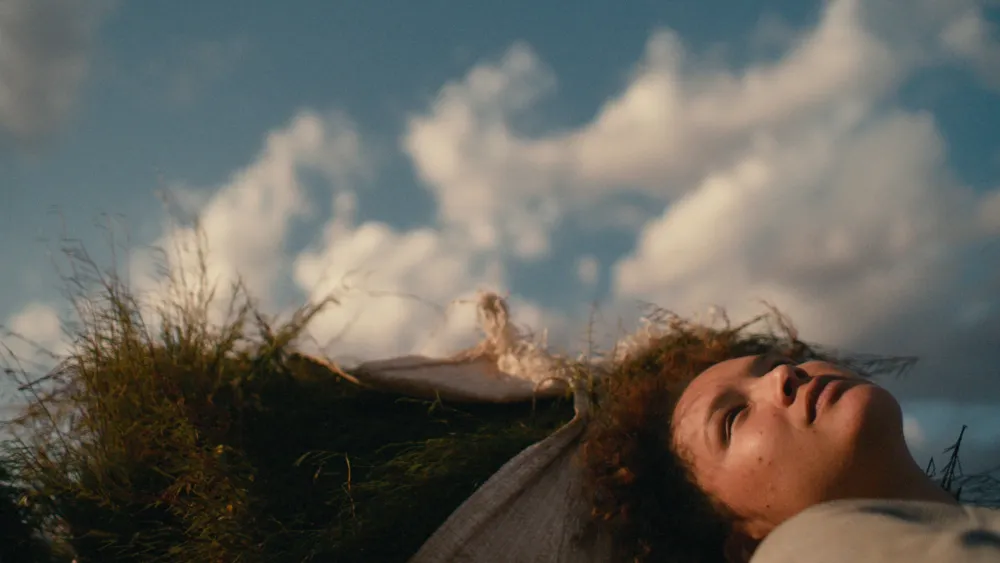
Set against the rugged beauty of South Africa’s Cederberg mountains, “Carissa” unfolds as a quiet but urgent meditation on heritage, progress, and the uneasy compromises that come with change. At its center is Carissa (Gretchen Ramsden), a young woman caught between two possible futures: one in which she leaves her small village behind for the promise of the city, and another in which she stays to take over her grandfather’s struggling rooibos farm—land that is now under threat from developers looking to transform it into a luxury golf estate.
It’s a dilemma that extends far beyond this single village. Across the developing world, modernization is advancing at breakneck speed, often at the cost of erasing traditional ways of life. From Southeast Asian farmlands giving way to industrial zones to indigenous communities in Latin America resisting deforestation, the tension between preservation and progress is a global struggle. With “Carissa,” directors Jason Jacobs and Devon Delmar tap into this universality while keeping its focus deeply personal.
No Easy Villains, No Easy Answers
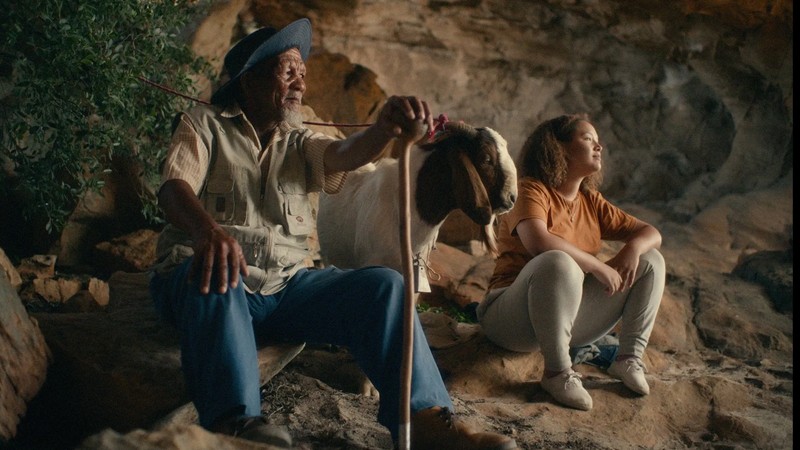
Carissa’s struggle is shaped by the two people pulling her in opposite directions: her pragmatic grandmother Wilhelmiena (Wilhelmiena Hesselman), who sees the economic potential in embracing change; and Hendrik (Hendrik Kriel), her estranged grandfather and a local figure who offers her a way to continue the family’s farming legacy.
The push and pull between these forces gives the film its emotional weight, as Carissa wrestles with not only the future of her home but also her own sense of belonging. Her dynamic with Wilhelmiena, in particular, is complex—there’s love between them, but also frustration, a generational divide that neither fully knows how to bridge.
Importantly, “Carissa” doesn’t reduce its conflict to a battle of good versus evil. While it would be easy to frame the developers as straightforward villains, the film resists that urge. Yes, the multinational corporation is presented as an encroaching force, and yes, the villagers are at risk of being displaced. But the film also acknowledges why some within the community might welcome change. When economic hardship makes survival uncertain, rejecting modernity isn’t always an option. That complexity is one of the film’s greatest strengths—it doesn’t offer easy answers, because none exist.
More SBIFF Coverage: ‘To Kill A Wolf’: A Haunting and Atmospheric Tale of Trust, Trauma, and Redemption
A Story Told in Glances and Silences
There’s an immediacy to the way “Carissa” captures this conflict, owing largely to its raw, semi-documentary style. The handheld camerawork, at times unpolished and intimate, lends an authenticity that makes the titular character’s predicament feel all the more tangible. At times, the film unfolds less like a conventional drama and more like a docufiction hybrid, immersing the audience in the rhythms of a village whose fate is teetering on the edge.
It’s a striking choice that heightens the film’s urgency, albeit at the risk of being uneven, particularly when the pacing begins to drag. At 85 minutes, “Carissa” isn’t long, but the film’s deliberate approach sometimes makes it feel otherwise. Some sequences breathe with purpose, while others stall, raising the question of whether the movie might have been more effective as a leaner, tighter narrative or even a short film.
Still, there’s no denying the film’s power. Gray Kotzé’s cinematography gives the movie a striking visual language. The vast, mythic expanse of the Cederberg mountains is more than just a backdrop; it’s a presence, a quiet witness to the forces pushing Carissa toward a decision she isn’t ready to make. Kotzé’s use of grainy film stock lends a tactile, almost-weathered quality to the imagery, reinforcing the film’s themes of preservation and loss. The contrast between this untouched landscape and the looming Mont Royale development underscores the film’s central conflict: tradition versus modernity, preservation versus progress.
As mentioned above, the camera sometimes moves with a raw, handheld urgency, drawing us into Carissa’s perspective; at others, it lingers in wide, painterly compositions that highlight the vastness of the land she’s being asked to leave behind. This visual approach not only enhances the docufiction feel but also deepens the sense that the land itself holds history, memory, and something worth fighting for.
Imperfections in the Journey
Still, not every choice lands as effectively. While the film’s meditative pacing allows for moments of quiet introspection, it also results in a structure that can feel meandering. Some scenes stretch out without clear momentum, and while that mirrors the slow, uncertain nature of Carissa’s decision-making, it occasionally tests patience. The editing, too, could have been tighter. There are moments throughout its runtime where a more precise approach might have heightened the film’s impact.
Yet even with these imperfections, “Carissa” stands out as a film with something real to say. Jacobs and Delmar deliver a thoughtful, visually striking meditation on identity and change, carried by a strong central performance and a deep sense of place. The film’s refusal to wrap things up neatly is, in the end, one of its most honest qualities. After all, the questions it raises—about what we hold onto, what we let go of, and what we’re willing to trade for a future we can’t fully see—don’t come with easy resolutions.
That uncertainty burns long after the final frame, and maybe that’s the point.

“Carissa” will have its U.S. premiere at this year’s Santa Barbara International Film Festival, which runs from February 4 to 15, 2025. Follow us for more coverage.

