


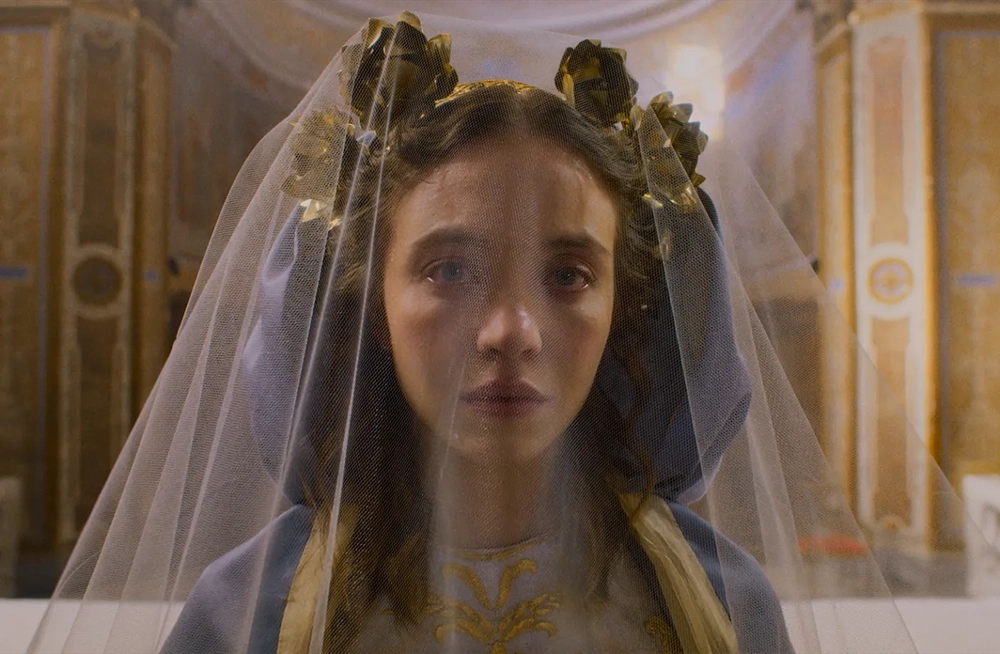
Cinematographer Elisha Christian shoots “Immaculate” with a careful eye and a unique, horrific beauty that ascends into a bloody nightmare. But looks aren’t enough to suffice. Director Michael Mohan and screenwriter Andrew Lobel don’t know if they want to delve deeper into surrealism or B-movie camp, leaving the film’s stylistic endeavors to dry and excessively relying on jump-scares to build its asymptomatic atmosphere.
Since the very beginning, religion has played an essential part in horror cinema. However, one movement that doesn’t get much attention is the one attached to Grindhouse: nunsploitation. This subgenre of exploitation cinema mainly revolves around the fear and mystery emerging from the secretive and silent nature of nuns’ lives, most of whom lived in European convents during the Middle Ages, as they dealt with sexual suppression. From Norifumi Suzuki’s “The Transgressor” to Giulio Berruti’s “Killer Nun,” we have seen this subgenre cross through various decades, never skipping a beat—shocking audiences worldwide. Director Michael Mohan, alongside producer-actress Sydney Sweeny, has decided to take inspiration from this variety of films to craft “Immaculate.” The movie itself doesn’t want to delve that deep into what makes these nunsploitation movies so explicit and provocative. But instead uses them as inspiration for its eventual bloody climax.
A Woman Marked by the Hand of God
While it may be beautiful to look at and feature an occasionally stirring performance by rising star Sweeny, “Immaculate” never makes the most of its horror conventions and premise due to Mohan’s indecisive tone and excessive dependence on genre tropes. From the get-go, you notice that the title reveals many things, some promising and others unfulfilled. The film centers around Sister Cecilia (Sydney Sweeney), a young woman who has a deep devotion to the Lord and his words yet lacks a grasp of the language and culture surrounding her. Since she was a kid, Cecilia feels destined for something greater, marked by God, after surviving a possibly fatal accident that’s reminiscent of “Damien: Omen II” (In fact, there are many connotations to the “Omen” horror franchise as a whole).
Because of her calling, she travels from Detroit to an Italian convent full of debilitated and dying nuns led by Father Sal Tedeschi (Alvaro Morte). Father Tedeschi invites Cecilia into this remote convent to help her achieve her purpose in life. He will help her do the lord’s work and help the needy. It’s almost like Suzy Bannion enters this new world once she takes a step inside the pristine dance academy in Dario Argento’s “Suspiria” in a way—given that Director Michael Mohan takes some inspiration from Giallo pictures to curate the atmosphere and tension-building in “Immaculate,” yet doesn’t have the gusto to pull those elements off—and her “calling” to go to that respective place. Truthfully, you can draw plenty of comparisons between Cecilia and Suzy. Both of them are frail at first, yet grow stronger as they experience supernatural horrors that cross their paths.
The Radiance and Darkness of a Devouring Presence
They are outsiders basking in a new territory. This location draws intrigue yet is ridden with secrets, ones that grow darker as they go deeper into the rabbit hole. Some of the other nuns, specifically Gwen (Benedetta Porcaroli) and the Mother Superior (Dona Romano), greet Cecilia kindly upon her arrival. However, others see her as unnecessary baggage, leading to tarnished circumstances. This comes in the way of an immaculate conception; Cecilia is pregnant through a blessed miracle… or so she thinks. What starts as a sign of wonder then turns out to be a nightmare. Her health begins to deteriorate. The succubus is being eaten alive by the malevolent, unseen creation. This convent turns into a house of horrors, deteriorating amidst the madness evolving. The events that transpire afterward are going in the route that the prologue determined.
Mirrorings between dreams and nightmares fluctuate through the young Cecilia’s mind. The gift of immaculate conception may contain a malevolent hand. With this arrives the showering of surrealistic imagery that never feels edgy or provocative enough to warrant a reaction from the viewer (or at least the one that the director wants). Sure, you appreciate the textures and design, alongside the periodic costumes and lighting. There’s a specific scene where Sweeny looks like the Virgin Mary. In the way that scene is concocted, there is a big focus on the actress’ saddened blue eyes and brooding facial expression. You sense that there is an evil spirit following her at all times. And she feels it breathing down her neck.
Succumbing to Genre-Tropes and Misusing Misusing Horror Conventions
In the first act, Sweeny brings this radiance to the scenery while the shadows consume the background. Meanwhile, as “Immaculate” descends into hell, that radiance shifts into darkness. Sweeny’s Cecilia embraces the evil in order to come out of the situation alive and well. It is these short yet effective scenes that make the viewer feel the tension inside the story. But the problem is that the same description that I mentioned: short. They are ephemeral set pieces or sequences that arrive with impact, yet their effect rapidly fades away due to Mohan’s shift in tone and reliance on the most tired horror apparatus, jump scares. In his direction, you can see that he wants to have his cake and eat it too.
Mohan uses surrealism to create vivid imagery. And whilst he does that, there’s B-movie camp to culminate with striking yet dilatory bloody segments. Trying to combine these three storytelling procedures is a challenging task. And Mohan doesn’t have the directorial gusto to pull it off. You notice this in the placement of scenes, which is meant to scare the viewer out. The respective horror sequences do have a sense of flair, as the cinematographer Elisha Christian has done in her previous work. Like in “The Night House” and “Columbus,” he elevates the film thanks to his vision and lens. But the problem is that they don’t contain that dose of dread and chill that runs down the viewer’s spine.
Shock Factors ‘Out of the Blue’
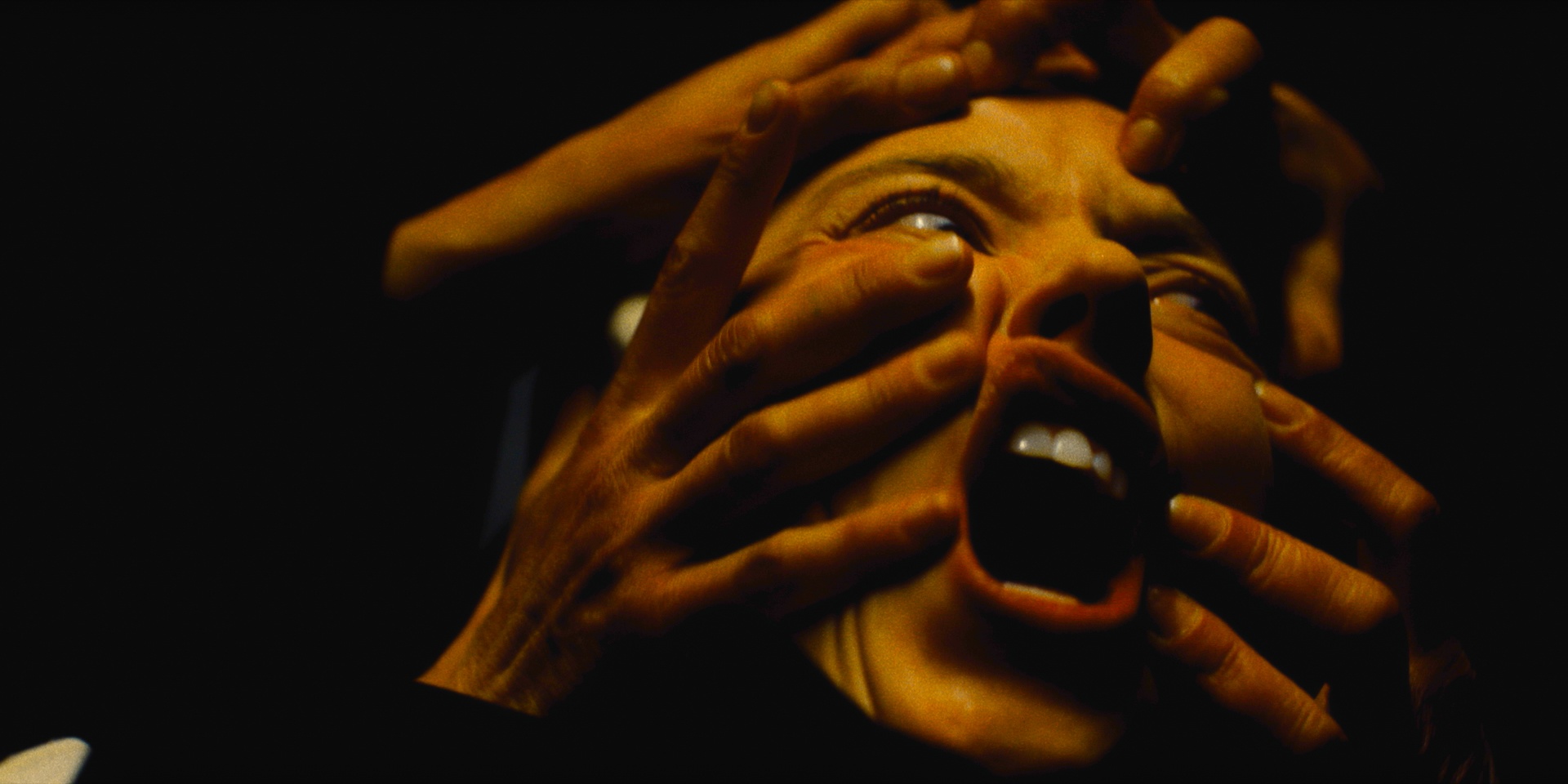
The continuous use of jump scares and nun horror movie tropes separates “Immaculate” from being its own thing (or a more demanding, melancholic version of what we have seen before) and instead working as one of the many—most of which get lost amidst one another. Because of this lack of proper scares, one begins to lose interest; the film’s effect weakens minute by minute. “Immaculate” begins to rise from the dead after an array of cheap jumpscares and the most predictable story swings during its final string of scenes. This is where both Mohan and Sweeny deliver their best work in this feature. They use all of their cinematic capabilities to leave a big impression on the viewer before closing the curtains.
The “shock factors” and violence finally arrive after Mohan tries to hide away from them on occasion. But I believe this out-of-the-blue pulse arrives after the film’s expiration date. While it is enjoyable, the majority is way too tawdry in terms of story to hook the viewer this tardy. And the viewer anticipates that there should have been more to tap into by that point. As a big fan of Grindhouse and exploitation movies, I would have wanted “Immaculate” to embrace the exploitation cinema edge more throughout its runtime instead of piling up everything in the end. I know that Michael Mohan wanted to build up to these events. But if you consider what has been showing up to this point, the arrival of these scenes feels unearned.
Missing that Needed ‘Edge’
While it wasn’t a horror movie, I started thinking about Paul Verhoeven’s “Benedetta.” More specifically, I was going back to how that movie handled its nunsploitation scenes. In terms of narrative, it was one of the weaker Verhoeven’s affairs. But he manages to get us intrigued and invoke a reaction through different distinctive yet nod-worthy scenarios, something that Michael Mohan could have done. He didn’t have to create something in the same vein as the aforementioned film’s raunchy self. But in its unique way, to leave its stamp on a subgenre that needs reinvention. If it had the edge of the aforementioned pictures, “Immaculate” could have had more to play with in terms of layering out its themes. The embrace of the films that came before alone, whether or not they are in the exploitation cinema subgenre, just doesn’t suffice. There needed more playfulness with its cinematic nods.

“Immaculate” hits theaters worldwide on March 22nd, 2024.

