


“The Power of the Dog” starts with an enigmatic monologue from Peter stating, “When my father passed, I wanted nothing more than my mother’s happiness. For what kind of man would I be if I did not help my mother. If I did not save her.” Initially, this seems quite mysterious, but as time goes by in the film, the true meaning of this quote resonates with us. The burden of masculinity, its responsibility and also the domination of it between the power dynamics of the sexes is clearly reflected with this single quote; it becomes the central theme of Jane Campion’s adaptation of the Thomas Savage classic.
The study of masculinity with humanism and brutality at the same time, Campion strips it naked trying to examine its intricacies. Through the three male characters she explores the different shades of masculinity. And with adjoining their psyche, Campion creates a qualitative analysis of them.
Phil, the Rugged ‘Alpha Male’
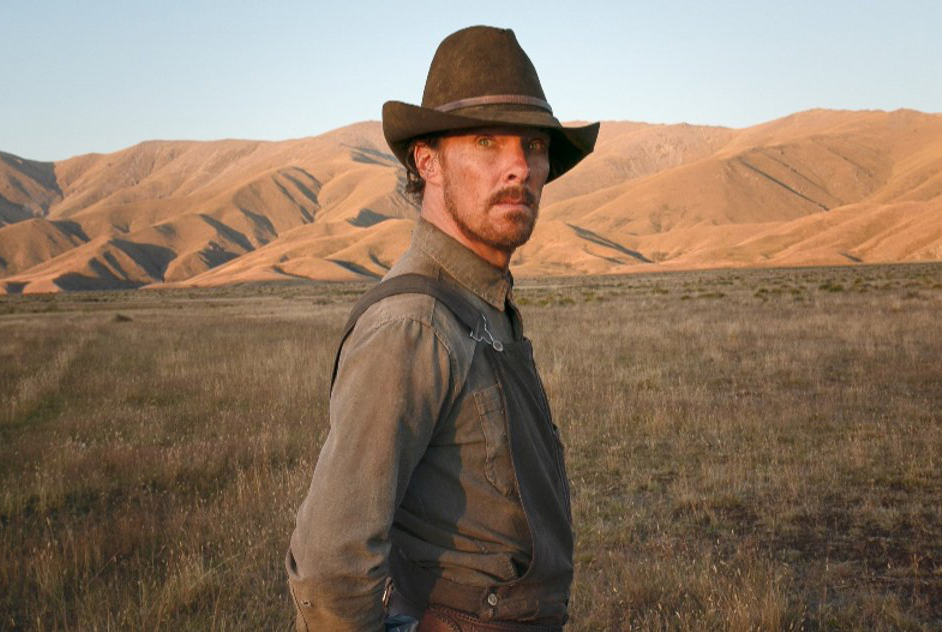
The first male we encounter in the film is Phil (Benedict Cumberbatch). Among the three pivotal masculine characters, he is the rugged alpha male. Not only that, he is also the most toxic character in the film. In the first shot where we introduced with his character, he is framed against the backdrop of the rugged landscape, signifying his machismo and the rough character he harbors. In the next scene, we can hear that he calls his brother, George, ‘fatso.’ We can see Phil to call his brother by this name several times in the film, further signifying his pride of being an alpha male.
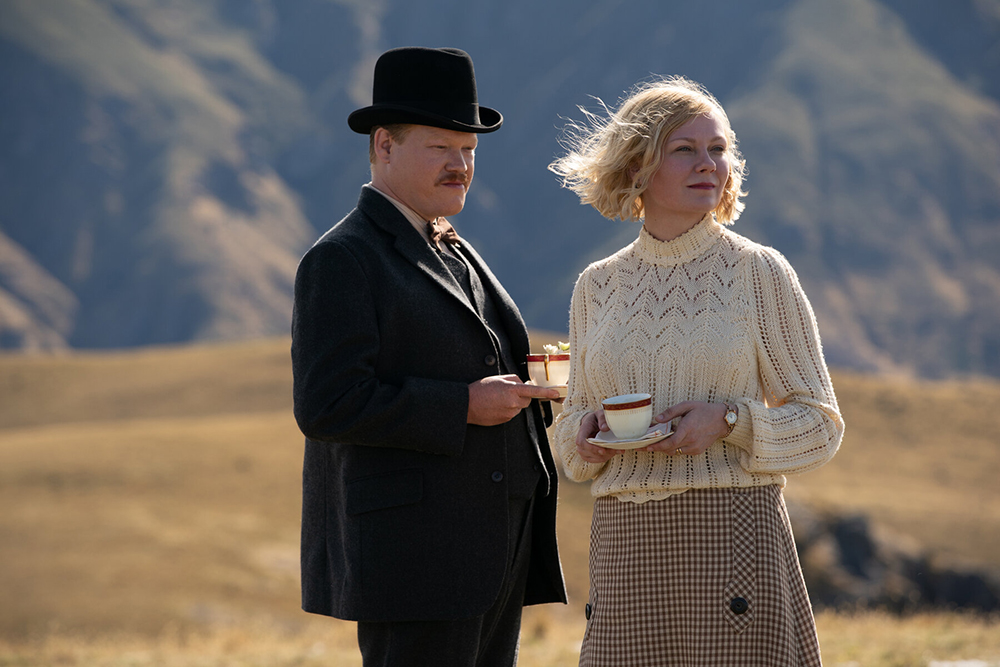
Among his other masculine attributes, Phil harbors a deep-rooted misogyny within himself. When George marries Rose (Kirsten Dunst), he tries to humiliate and break her psychologically in the every possible way. He succeeds in his motive in this case. With his constant abuse and humiliation, Rose becomes mentally broken and an alcoholic. Another way of seeing, Phil’s such behavior towards women (especially towards Rose) is his repressed sexuality. In the end of the film, it becomes clear Phil is a closeted gay man. Thus he can’t express himself fully. Due to this repression, he uses his mask of toughness as a tool to gain power and stability in his life. When George marries Rose, his power seems threatened to him, and as a defense mechanism he tries to terminate this threat.
George’s On-Screen Passivity
But Phil is not a one-dimensional character. Campion meticulously designed this character with much layering. Phil is a dominating character with his machismo, yet he is vulnerable. He doesn’t show his vulnerability lest his toughness seems weak. In his thoughts, he doesn’t allow himself to be seen as weak. His frequent banjo playing alone acts as some relief in his repressed emotions. It can be interpreted as a relief for Phil from his repressed emotions, which are coming out as the beautiful tune from the instrument. But this relief is transient. He is so much drowned in his masculinity there is no turning back for him. In that process, he drowns himself in self-harm with his own toxicity, which becomes equally harmful for the others.
Another way of seeing, Phil’s such behavior towards women (especially towards Rose) is his repressed sexuality.”
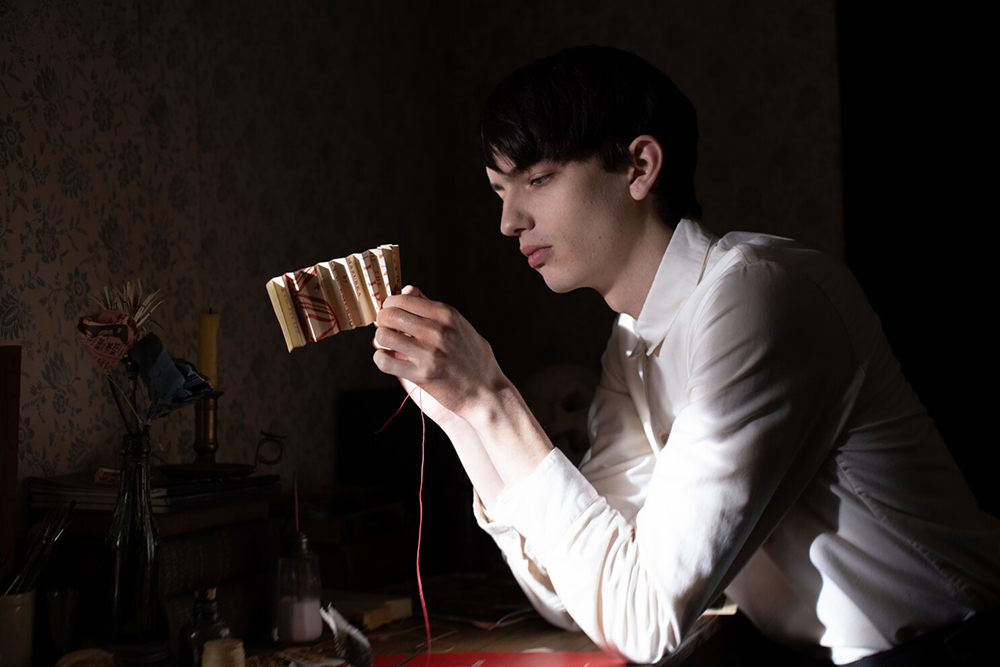
The second male character we encounter is George (Jesse Plemons). Among the leads, he is the most passive character on-screen. From an initial viewing, I perceived this character as the counterpart of Phil. He has the tender, caring, and empathetic qualities that Phil lacks. Unlike Phil, George can’t be labeled as tough masculine character—yet the subtle aggression towards women forced me to rethink about George’s standpoint in repeated viewings. In the film, George constantly pressures Rose to play the piano in front of his invited guests despite her objection. This act of George indicates that he is a typical male who will put his wife on the line to save his honor. Also, when Phil’s constant abuse terrorizes Rose, we see George as a passive bystander.
In my opinion, Campion designs George as the representation of our male dominated society. Maybe he is not a toxic male like Phil, yet he has a dominating persona around his wife.
The Different Psyches and Shades of Masculinity in ‘The Power of the Dog’
The third male character introduced in the film is the character of Peter (Kodi Smit-McPhee), the son of Rose. For me, he is the most fascinating character among the three lead males. In the initial scenes, Peter is portrayed as a teenage boy with the characteristics of the weak. He is skinny, vulnerable, and also has a lisp. From the initial scenes, Peter is portrayed as the character who lacks the masculinity; rather he has a feminine sensibility among all these masculine characters. He has all the attributes that Phil loathes. Thus in the initial interaction between them, Phil ridicules and bullies Peter. But as the film progresses, it reveals that he is the most strong character in the film. With time, the strong masculine sensibility Peter harbors comes forth and he emerges as a masculine guardian angel.
These male characters all have different psyche and shades with the commonality of tormenting Rose in a way. There is Phil’s constant abuse, George’s apathy, and at the end, Peter’s sense of masculine responsibility towards her. It doesn’t matter if these all happens subtly or crudely; Rose becomes tormented and bruised all the time.
Through the three male characters she [Campion] explores the different shades of masculinity.”
“The Power of Dog” is a mature take on exploring on masculinity. Without taking any sides, Jane Campion achieves this exploration with highest creative finesse, which definitely resonates through us on a highest level.
“The Power of the Dog” is currently available to stream on Netflix.
Support the Site: Consider becoming a sponsor to unlock exclusive, member-only content and help support The Movie Buff!
