


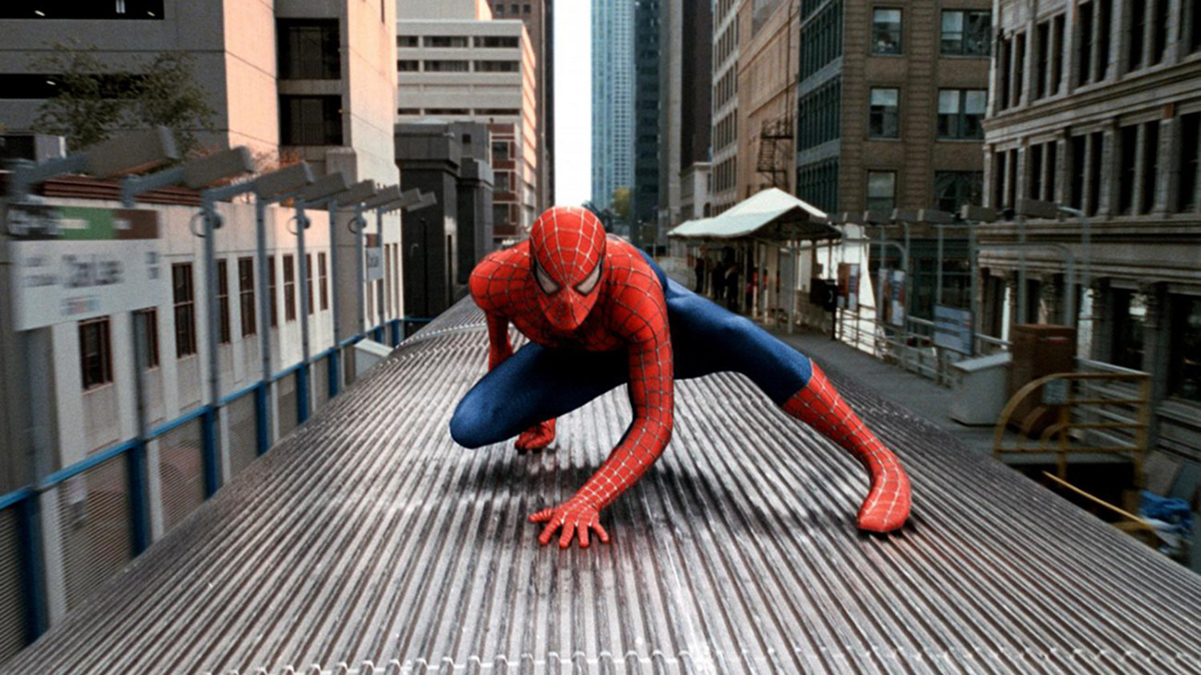
There’s a moment early in “Spider-Man 2” that explains almost everything Sam Raimi understands about Spider-Man. Peter Parker is racing across New York, desperately trying to deliver a stack of pizzas before his boss’s twenty-nine-minute guarantee expires. He changes into Spider-Man, swings across Manhattan, nearly loses the pizzas, saves two kids from getting hit by a truck, changes back into Peter Parker, and still arrives late.
He gets fired.
This is the first major action sequence in “Spider-Man 2.” Not Spider-Man fighting some C-list villain pulled from his rogues gallery. Not a teaser for the next installment. And not the setup for an energy cube or a hole opening in the sky. Peter Parker is trying to keep his shitty pizza-delivery job and failing spectacularly.
Peter Parker is Charlie Brown. He fails constantly. He loses his job. He’s late for class. His grades are slipping. His best friend hates Spider-Man and is increasingly drinking his way through his grief. The woman he loves is moving on. His landlord wants the rent. His washing machine eats his money. Even when Peter gets something resembling a victory, another humiliation is usually waiting around the corner.
And still, somehow, he keeps trying to do the right thing.
Twenty-two years after its release, that may be the most radical thing about “Spider-Man 2.” Not the sublime train sequence. Not Alfred Molina’s incredible turn as Doctor Octopus. And not the visual effects, which have aged remarkably well. It’s the movie’s almost unfashionable earnestness. This is a blockbuster about the difficulty of being a good person, made by a filmmaker who believes without qualification that being a good person matters.
That sounds simple. Maybe even corny. Raimi believes it anyway, and that distinction matters.
Peter Parker Is Having a Terrible Time
The first “Spider-Man” is about becoming Spider-Man. “Spider-Man 2” is about figuring out whether it’s worth remaining Spider-Man.
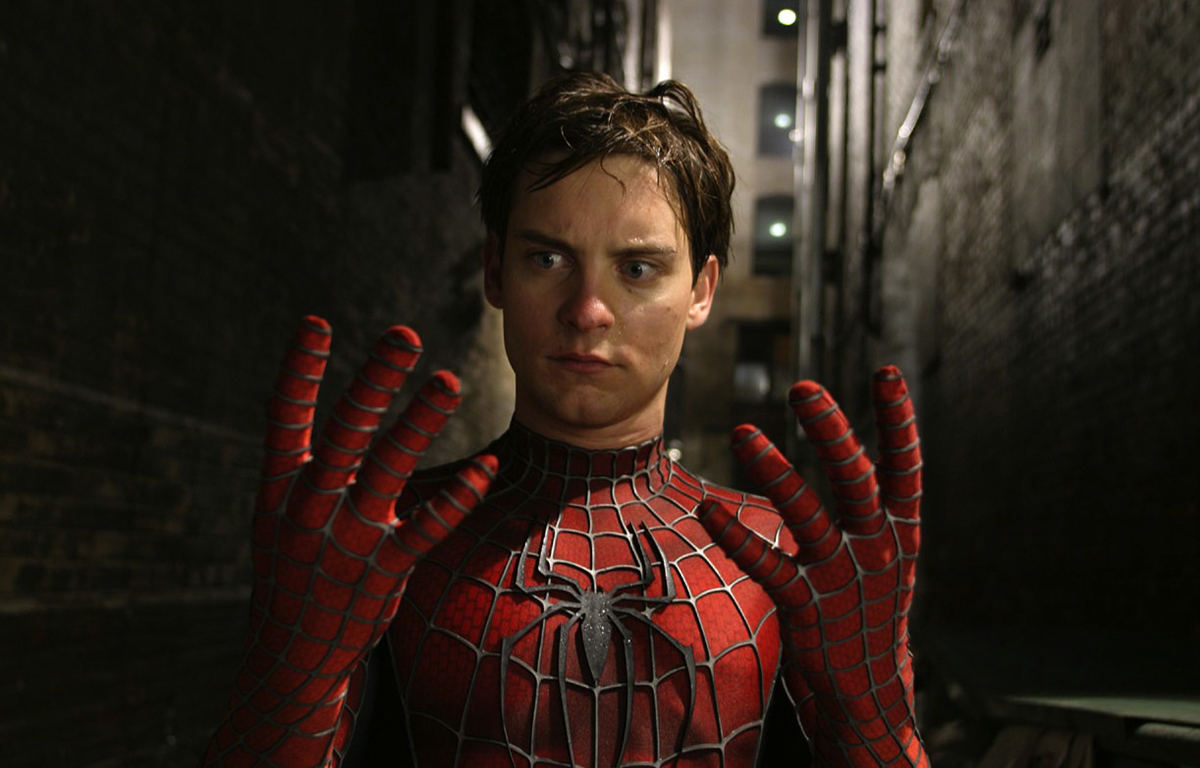
Peter has done what Uncle Ben asked of him. He accepted responsibility, and what has it gotten him? He’s broke, lonely, exhausted, and failing. Raimi doesn’t make Peter’s sacrifice abstract. He makes it mundane. Responsibility means being late. Responsibility means losing the girl. And responsibility means getting fired because you stopped to save somebody’s life and nobody knows you did it.
Raimi loves to put his main characters in a constant torturous spin cycle, and Peter may be the purest expression of that impulse. Every time he gets his footing, life knocks him sideways again.
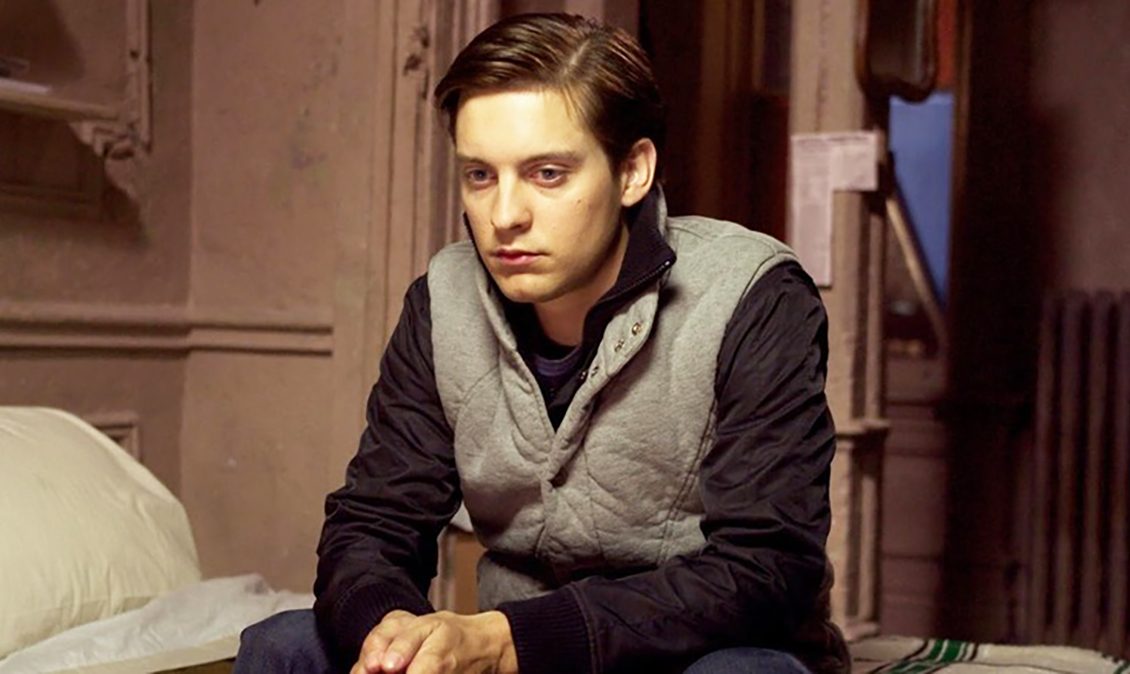
Tobey Maguire’s performance is much more internal than it’s often given credit for. Peter spends huge stretches of the movie listening. Aunt May tells him about heroes. Otto tells him about intelligence and love. MJ tells him she’s moving on. Harry tells him about his anger. Peter absorbs all of it, and Maguire lets the emotion accumulate across his face.
Raimi understands that a shot of Tobey Maguire solemnly listening is worth millions.
His voice-over and little soliloquies feel like Steve Ditko thought bubbles come to life. “Am I not supposed to have what I want? What I need? What am I supposed to do?” You could put that sentence in a caption box over a Ditko panel.
When Peter finally loses his powers, the movie briefly becomes euphoric. He gets to live. He walks down the street smiling. Peter eats cake, studies, and he goes to the theater. Then he sees a burning building.
Peter has already decided he isn’t Spider-Man anymore, but he runs inside anyway. There isn’t a supervillain waiting for him. Nobody is watching. Nobody is going to applaud. He doesn’t know the little girl trapped inside. He’s powerless and could die, but somebody needs help, so Peter Parker runs into the fire.
That’s the movie.
Then Raimi twists the knife. Peter saves the girl and learns that somebody else died in the building. Even when he does the right thing, it isn’t enough.
A Melodrama With a Guy Who Climbs Walls
For all its superhero spectacle, “Spider-Man 2” is basically a young-adult melodrama. Maybe a ’50s Douglas Sirk melodrama where one of the characters can climb walls.
The questions driving the movie aren’t really “Will Spider-Man save the world?” They’re: Can Peter pay rent? Can he keep a job? Can he make it to class? Will MJ wait for him? Can Harry forgive him? Can Aunt May forgive him? How much of his own happiness can Peter sacrifice before there’s nothing left?
The stakes are almost sitcom-sized, but Raimi gives them the same sweeping grandeur of any display of superhero heroism.
There’s a tendency in comic-book movies to confuse scale with importance. Reality has to collapse. The universe has to end. An energy cube has to activate. A glowing orb has to hover over a city. “Spider-Man 2” technically has one of these—the tritium-powered miniature sun—but even that becomes less a MacGuffin than an expression of Otto Octavius’s dream consuming him.
“Spider-Man 2” doesn’t feel like it was written by people thinking about comic-book movies. It feels like it was written by people thinking about movies.”
Raimi understands that Peter missing MJ’s play can matter as much as a fusion reactor threatening Manhattan.
That sensibility owes something to Alvin Sargent. Sargent wasn’t somebody hired because he had demonstrated sufficient fluency in superhero lore or written a clever episode of “Community” or “Rick and Morty.” He was an Academy Award-winning dramatist whose credits included “Paper Moon” and “Ordinary People.” He understood character, romance, disappointment, family.
There’s something wonderfully quaint about the idea that one of the greatest superhero movies was written by a guy born in 1927. “Spider-Man 2” doesn’t feel like it was written by people thinking primarily about comic-book movies. It feels like it was written by people thinking about movies.
Everybody Lives Here
That extends to the ensemble. One of the great pleasures of “Spider-Man 2” is that everybody seems to have wandered in from a slightly different movie, yet Raimi somehow keeps the whole thing in the same key.
J.K. Simmons’ J. Jonah Jameson is basically operating inside a screwball comedy. Bill Nunn, Elizabeth Banks, Asif Mandvi, Joel McHale, Elya Baskin’s Mr. Ditkovich and his immortal demand for rent: everyone pops. Even characters with a couple of lines seem to have lives that continue after Peter leaves the room.
James Franco plays Harry Osborn less like a future supervillain than the friend in your twenties who has started drinking a little too much and is clearly going through something, but everyone around him is too uncomfortable to ask if he’s okay. His deterioration feels sad before it feels comic-booky.
Alfred Molina gets even richer material. Doctor Octopus remains one of the great comic-book villains because Otto is so tender before he’s frightening. The dinner scene with Peter and Rosie has an extraordinary ease to it. You immediately believe these two people have been married for decades. They tease each other. They know each other’s rhythms. There’s real warmth in the room.
And Peter sees something in them: a possible future. Not for Spider-Man, but for Peter Parker. A brilliant scientist who can also have a loving marriage and a full life.
Then Raimi destroys it.
Otto’s origin becomes a Universal monster tragedy filtered through “Darkman.” He isn’t evil so much as consumed—by grief, ambition and the literal voices of his own creation. His final act isn’t defeat. It’s a return to himself: “I will not die a monster.”
And then there’s Rosemary Harris. Her Aunt May might still be the high-water mark for the character. Sally Field and Marisa Tomei almost had to radically rethink May because there wasn’t much reason to attempt this version again.
The scene where Peter confesses his role in Uncle Ben’s death remains one of the most emotionally mature scenes in superhero filmmaking. “I held his hand when he died.” Peter reaches for May’s hand. She pulls it away. Raimi doesn’t rush toward forgiveness. He lets the hurt sit there.
Later, May gives Peter the movie’s moral thesis: “I believe there’s a hero in all of us that keeps us honest, gives us strength, makes us noble…” It’s an unabashedly sentimental speech. Raimi plays it completely straight, and it kills.
Mary Jane Gets to Want Something
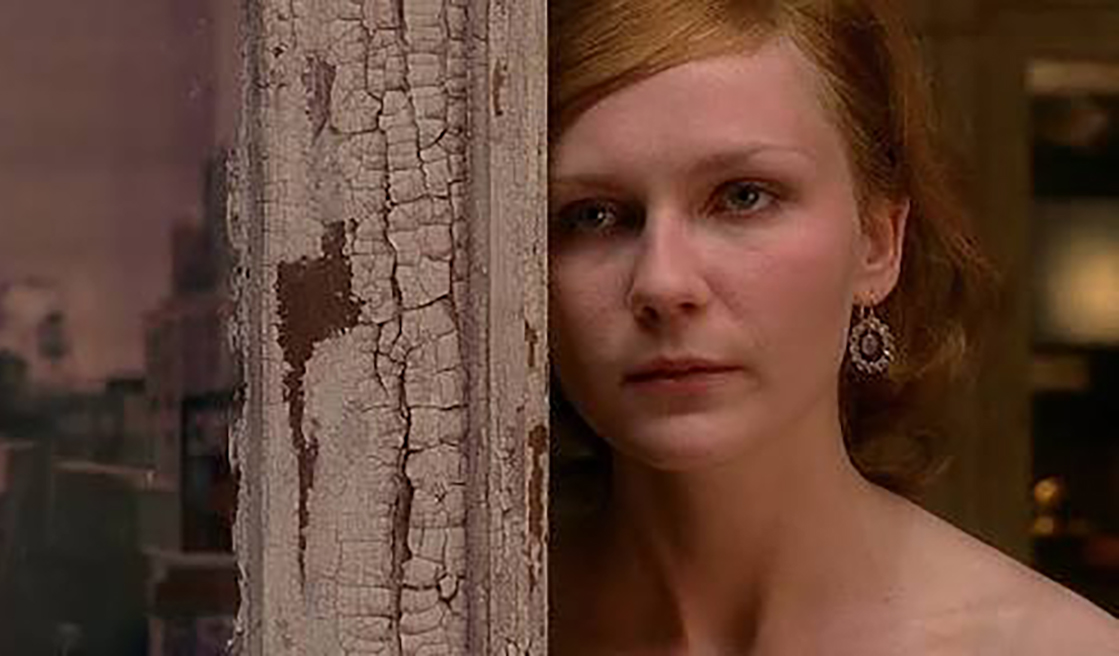
Kirsten Dunst is also doing more complicated work here than the old “damsel in distress” dismissal of these movies allows.
MJ is trying to live her life. She likes Peter. She keeps reaching out to him. But she’s not going to wait forever for a man who repeatedly refuses to show up.
One of my favorite moments is when she kisses John Jameson upside down, trying to recreate her kiss with Spider-Man. Nothing. She tries to reproduce the fairy tale and discovers that the gesture means nothing without the person.
Dunst is completely keyed into the old-fashioned romantic language of Raimi’s movie. She understands its melodrama and never condescends to it. She can play yearning without embarrassment.

That makes the final shot especially important. MJ chooses Peter. She leaves John at the altar. She makes the grand romantic declaration. Peter immediately has to go save the city.
“Go get ’em, tiger.”
She smiles, and then the smile changes.
Raimi stays on her face just a little longer than a more conventional blockbuster would. The shot echoes the ending of “The Graduate,” where Benjamin and Elaine’s euphoric escape slowly curdles into uncertainty once Mike Nichols keeps the camera rolling past the point where the romantic comedy is supposed to end.
Raimi does something similar. MJ got what she wanted, and now she has to live with what she chose. Peter accepts the burden of being Spider-Man. MJ accepts the burden of loving him. The fairy tale is real, and so is the cost.
Raimi’s Circus
None of this works without Raimi’s control of tone. “Spider-Man 2” moves from melodrama to silent comedy to horror to romance to slapstick without ever seeming uncertain about what kind of movie it is.
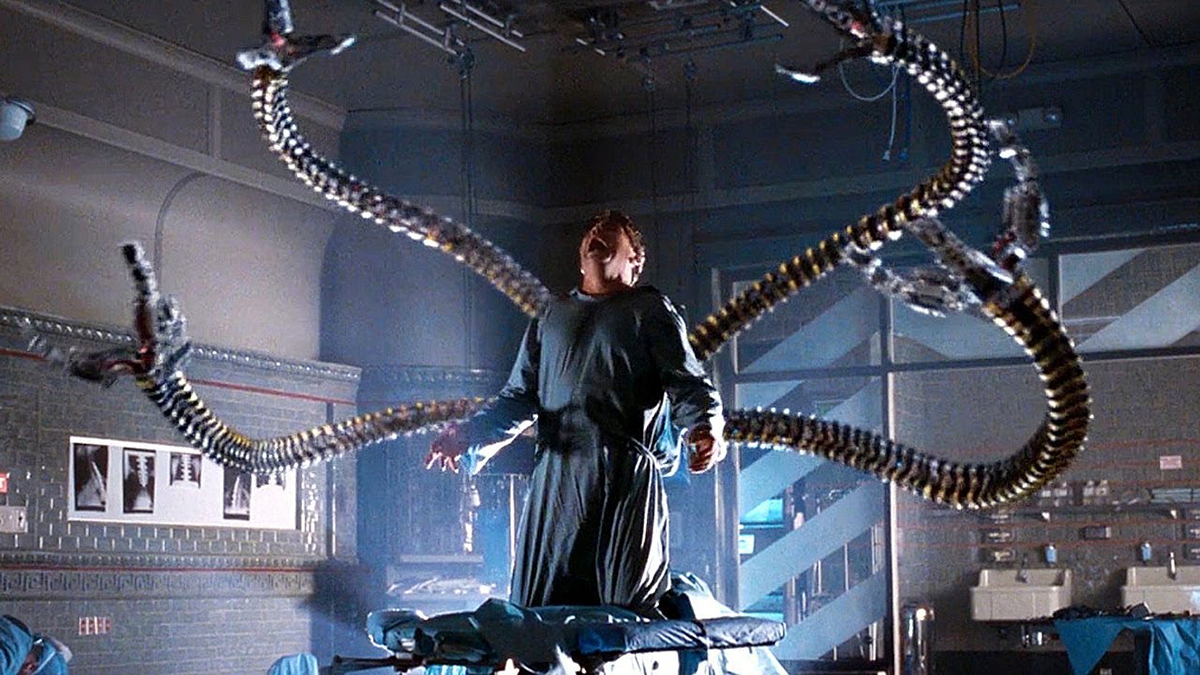
With Raimi, every set piece is brimming with weird visual ideas. The pizza delivery sequence is Harold Lloyd with web shooters. The hospital sequence, where Doctor Octopus’s mechanical arms come alive, is pure Raimi horror: “The Evil Dead” by way of Universal Monsters, William Castle, and Alfred Hitchcock. The tentacles crawl, stab, grab and drag bodies through the room while Raimi’s camera whips around with cruel slapstick energy.
And then twenty minutes later Rosemary Harris is telling us why the world needs heroes. Somehow, both scenes belong in the same movie.
Raimi’s NYC may be a place that never existed, reminiscent of a timeless, Silver Age NY.”
Raimi understands something that a lot of blockbuster filmmakers don’t: tone isn’t consistency of mood. It’s consistency of worldview. Horror can be funny. Comedy can be painful. Romance can be ridiculous. Melodrama can be profound.
His filmmaking is intensely physical. People don’t merely get punched. They crash, tumble, skid, dangle, get thrown through walls, and barely hang on. The camera seems as physical as the actors.
Raimi often directs comic books like silent movies, relying on movement, exaggerated blocking, expressive close-ups, reaction shots and visual punchlines. His movies move because he thinks in images. Few superhero movies feel this alive.
The Train
The train sequence may still be the high-water mark for comic-book action filmmaking. It’s visceral, kinetic, awe-inspiring and, most importantly, hard.
Peter gets tired. Every hit hurts. The sequence keeps escalating until you almost can’t believe you’re watching it brought to life.
But what makes the scene special isn’t just Raimi’s command of action. It’s the people watching.
So much modern superhero spectacle turns cities into digital playgrounds populated by anonymous crowds whose primary function is to flee destruction. Raimi keeps cutting to faces. People are frightened. They’re amazed. They’re invested.
Then Peter saves them and collapses, and they catch him.
For a moment Spider-Man isn’t swinging above New York. New York is carrying Spider-Man.
They see his face. “He’s just a kid.” They promise to protect his secret, then stand between him and Doc Ock. The sequence begins as superhero spectacle and ends as an act of communal tenderness.
That’s Raimi’s New York.
A New York That Never Existed
Even more than the first film—with its gloriously time-stamped Macy Gray concert—”Spider-Man 2″ seems to take place in a timeless Silver Age New York.
It isn’t realistic. It’s mythic.
There’s a sweeping quality to these films that later Spider-Man adaptations, for all their efforts to capture the character’s motormouthed, wise-guy attitude, have never quite replicated.
Raimi’s New York is a place where landlords knock on doors demanding rent, newspaper editors scream across offices, scientists build miniature suns in warehouses, beautiful actresses perform Oscar Wilde, and a man in red-and-blue tights swings between skyscrapers.
It feels assembled from comic panels, old Hollywood movies and Raimi’s imagination.
And because this is a New York movie made only a few years after September 11, its conception of heroism feels inseparable from that moment.
The burning-building scene is especially revealing. Spider-Man isn’t framed as a god. He’s almost a first responder. Heroism means running toward danger because someone else can’t.
Aunt May’s speech about our need for “courageous, self-sacrificing people setting examples for all of us” lands differently in that context. That is essentially Raimi’s conception of Spider-Man: not power, but example.
“Spider-Man 2” asks what it means to choose goodness during uncertain times. What it feels like to be caught in a rut, to wonder whether your sacrifices mean anything, to feel like the world is getting worse—and then to accept responsibility anyway.
Revenge of the Nerds
It’s worth remembering where all of this sits in the larger history of Hollywood.
You could argue that the last thirty years of blockbuster filmmaking have been the story of the Revenge of the Nerds. The generation that grew up loving comic books, horror movies, fantasy, and science fiction eventually inherited the industry.
Peter Jackson. Guillermo del Toro. Sam Raimi. Joss Whedon. Eventually James Gunn.
The outsiders won, and for a while that victory produced some extraordinary movies. But every outsider eventually becomes the establishment.
At some point, acceptance became dominance. The implicit attitude shifted from “please take these things seriously” toward something closer to: “We were mocked for our interests, and now our interests are going to become everybody else’s interests.”
Shared universes. Lore. Continuity. Canon. Easter eggs.
Hollywood stopped inviting audiences into these worlds and increasingly assumed everybody already lived inside them.
Joss Whedon may be the pivotal figure in that transition. His mixture of self-aware banter, pop-culture fluency, genre affection, and sincerity filtered through irony became one of the dominant languages of twenty-first-century blockbuster filmmaking. Marvel didn’t invent that voice so much as industrialize it.
James Gunn increasingly feels like the final boss of the Revenge of the Nerds. Not necessarily as an insult, but as its fullest realization. Here is a filmmaker with an encyclopedic love of comic books who has risen to the point where he can effectively curate an entire cinematic comic-book universe.
The nerd didn’t just get invited into the studio. He runs the studio.
And now general audiences increasingly seem to be saying: That’s great. But does everything have to be this?
Not every blockbuster needs lore. Not every character needs a universe. And not every movie needs homework. After decades of nerd culture becoming popular culture, there seems to be a renewed appetite for movies that don’t require membership in anything.
Which makes returning to “Spider-Man 2” revealing.
Raimi Won Without Needing Revenge
Raimi absolutely belongs to that wave. Like Jackson and del Toro, he’s a weirdo genius who figured out how to mutate low-budget ingenuity into enormous Hollywood filmmaking.
But unlike much of what followed, Raimi never seems interested in cultural conquest.
He doesn’t need to prove Spider-Man deserves respect. He doesn’t ask the audience to admire how much he knows about Spider-Man. Raimi just tells a story about a sweet young man who becomes Spider-Man and then has to figure out how to remain a decent person while dealing with love, work, rent, friendship and responsibility.
It’s almost shockingly black-and-white. Not politically. Morally.
There are innocent people. There are wicked actions. And there are responsibilities and there are sacrifices. People fail. People change. And people can choose to be good.
And Raimi believes all of it.
That’s earnestness.
His eventual return to Marvel with “Doctor Strange in the Multiverse of Madness” makes the transformation of Hollywood almost painfully visible. There are sequences in that movie that feel completely anonymous, followed by stretches brimming with so much visual invention and electricity that you can practically feel Raimi fighting his way out of the machinery.
The movie even hands him the perfect metaphor: Doctor Strange possesses and reanimates his own desiccated corpse.
It’s hard to imagine a better image for a filmmaker returning to the superhero industrial complex he helped create—an artist on the assembly line, sneaking something alive into the corpse.
The Importance of Being Earnest
Maybe that’s why “Spider-Man 2” feels more precious now. It isn’t simply a reminder of where superhero movies came from. It’s a reminder of what they could be before they became primarily concerned with perpetuating themselves.
Before world-building became an objective. Before continuity became content. And before every superhero needed to know another superhero.
Raimi made a movie about a guy trying to pay his rent, keep his job, love a woman he thinks he can’t safely be with, give up being a superhero and then run into a burning building anyway. A guy who fails constantly and keeps trying.
Its greatest special effect isn’t Doc Ock’s tentacles. It isn’t Spider-Man swinging through Manhattan. It isn’t even that extraordinary train sequence. It’s the almost unfashionable belief that an ordinary person can choose, day after day, to be kind, responsible and self-sacrificing—and that those choices are heroic enough.
“Spider-Man 2” believes goodness matters. It believes people need heroes not because heroes can save the universe, but because heroes remind us to hold on a second longer.
Twenty-two years later, after the genre it helped legitimize conquered Hollywood and audiences started wondering whether they’d finally had enough, that belief feels more radical than ever.
“Spider-Man 2” has endured not because it predicted the future of superhero movies. It endured because it remembered something much older: the importance of being earnest.
–> Read More: Browse all of our Marvel content.

