

Close Menu
    Facebook X (Twitter) Instagram
    Friday, June 5
    Facebook X (Twitter) Instagram Bluesky
    The Movie Buff
    • Home
    • About
      • Critics
      • Press & Testimonials
      • Friends of the Buff
      • Terms of Use
      • Thank You!
    • Film Reviews & Coverage
      • Movie Reviews
      • TV/Streaming Reviews
      • Film Festival Coverage
      • Interviews
    • Podcasts
    • Indie Film
      • Reviews & Articles
    • Advertise
    • Contact
      • Write for us
    The Movie Buff
    Drama

    Review: ‘Petulia’ is a Heady Cross Between John Updike and Ingmar Bergman as Mediated by Jean-Paul Sartre

    Rita AmerBy Rita AmerSeptember 12, 2020No Comments4 Mins Read
    Facebook Twitter Pinterest LinkedIn Tumblr Email Copy Link
    Share
    Facebook Twitter Email Copy Link

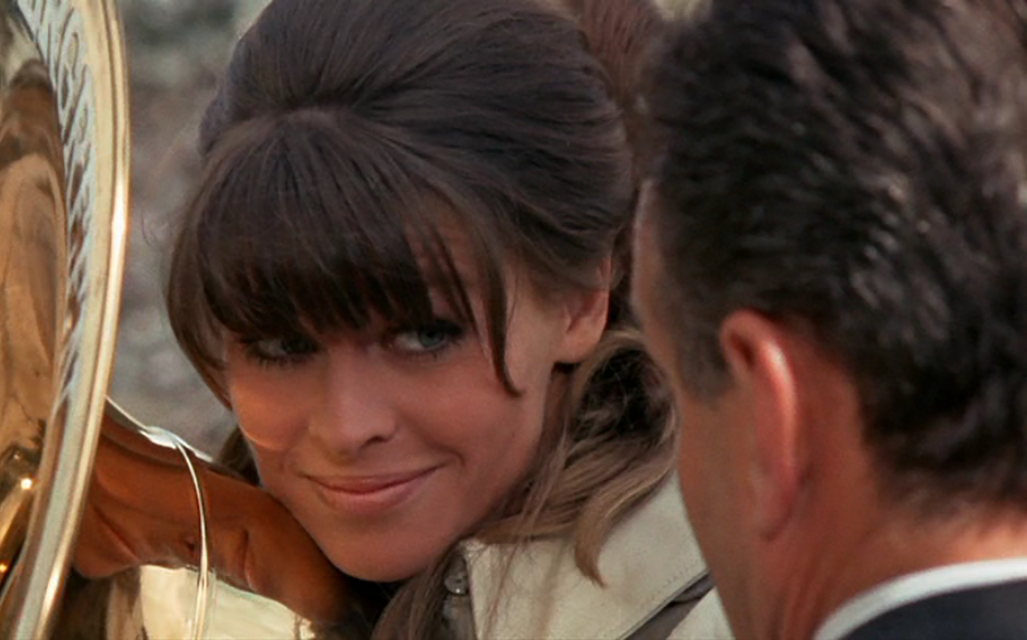
    “Petulia” has a royal pedigree. It was directed by Richard Lester, who helmed many great films including “A Hard’s Day’s Night” (1964) and was photographed by Nicholas Roeg, soon to be a great director in his own right with such films as “Walkabout” (1971) and “The Man Who Fell to Earth” (1976).

    The film reflects a world falling apart at all levels. Caught in the 1960s psychedelic zeitgeist that was tearing down the traditional curtain of propriety and social order in the Western world, these characters flounder in an ocean of confusion. With the imposed morality of the old order suddenly in tatters, how does one conduct oneself? Based on what standard does one make choices? Petulia (played by the luminous Julie Christie), her husband David (played by the equally luminous Richard Chamberlain), and their entire upper-class social circle can not even begin to grapple with these questions.

    They don’t know themselves at all, so there is nothing inside to replace the old externally imposed code of conduct. Under the old system you wanted what you were told to want, nothing more, nothing less. You did what you were expected to do. Your boxed-in misery was just the sub-aural soundtrack of your life. With the old constraints lifted, the new oppression of uncertainty descends. These people have no idea who they are or what they want and in their struggle they wreak havoc mostly upon themselves, until it runneth over onto innocent—and not so innocent—bystanders.  

    The deep, deep unconsciousness of the characters in this film is its central theme and its aggravation. I could almost hear the steady hum of their internal vacuity and wanted to slap each of them, in turn, into consciousness.

    The plot of “Petulia” is very much of its time and would have been forgotten amidst all the other mid-century arcana. But Richard Lester’s direction and Nicholas Roeg’s cinematography raise this story to an enduring portrait of human souls squirming under an existential magnifying glass. There are so many dramatic, vertiginous techniques packed into this film that it could have been chaotic. But they tightly interlock into each other and they are integrated into the emotional plane of the story so that they form a solid structure which holds firm while the social order and the lives of the characters disintegrate within it.
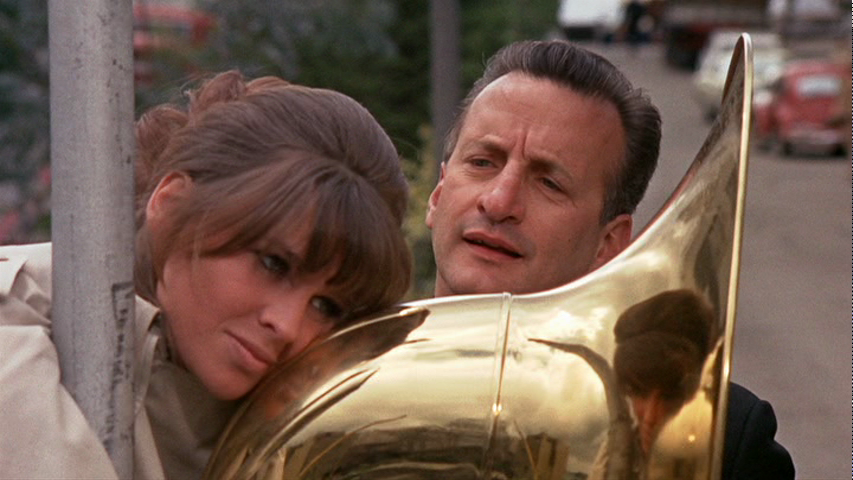
    Julie Christie and George C. Scott in a scene from 1968’s “Petulia.”

    Marriage is the primary social institution “Petulia” uses to explicate the spiritual decimation of the 1970s. In particular, Petulia (Julie Christie) is seeking the perfect mate who will buffer her from the pain of the world. And she never learns the lesson that other people can’t save her from the void inside. In addition, her erstwhile lover Dr. Bollen (George C. Scott) chucks a perfectly good wife and children for no concrete reason. He’s just not feeling it. And Petulia’s perfectly charming, beautiful monster of a husband (Richard Chamberlain) is torn to pieces by his vitriolic self-loathing, which he externalizes onto her. Ultimately, it’s Petulia’s passiveness in the face of this spousal abuse and her inability to remain in an emotionally stable relationship that meshes perfectly with Lester’s sudden visual silences, shifts of pace, and disconnected visual perspectives. These crazy visuals confuse and suffocate Petulia until she sinks down under them.

    The superb filmmaking, itself, shows that in the midst of social upheaval it is art that will most quickly and effectively fill the gap with insight and compassion.

    Some trivia notes: Janis Joplin appears very briefly in the opening shot! The group she was singing with, Big Brother and the Holding Company, were picked up from the Haight Ashbury scene before hitting the big time. What a tremendous piece of luck. Janis Joplin is the poster child for the generation adrift and untethered in so much freedom that it suffocates them. (If you are unfamiliar with Janis Joplin, she died of a drug overdose at the age of 27, after blazing into fame as one of the best and most famous rock performers of the 1960s.) You will also see cameos from some stalwart character actors of the time: Howard Hesseman, Austin Pendleton, Rene Auberjonios, and Mel Stewart.

    Recommendations: An equally interesting, and more modern, investigation of the cost of our culture’s unrealistic expectations of marriage is “Take This Waltz” (2011), or else see a Julie Christie double feature with “Away From Her” (2006).


    culture George C. Scott Julie Christie marriage Petulia Richard Lester
    Share. Facebook Twitter Pinterest LinkedIn Tumblr Email
    Previous ArticleReview: ‘Bill & Ted Face the Music:’—a Compelling Story with Bone-Cracking Laughter
    Next Article Review: ‘The Scarlet Pimpernel’ is One of the Finest Novel Adaptations, From Page to Screen
    Rita Amer
    • Website

    Rita has been a cinephile since birth. Though she works a day job, her evenings and heart belong to celluloid (and video). Rita has a Masters in Dance and a Juris Doctor; but those accomplishments pale in comparison to sharing the best and worst of cinema with our readers. You can also follow Rita on her podcast, ‘Foibles,’ where she talks about film and literature.

    Related Posts

    Independent June 4, 2026

    ‘Meadowlarks’ imagineNATIVE 2026 Review: A Reunion With One Chair Still Empty

    Drama June 3, 2026

    ‘The Currents’ Review: Taking the Plunge

    Bollywood June 3, 2026

    Review: Sarthak Dasgupta’s Long-lost ‘The Last Tenant’ — Starring Irrfan Khan — Now on YouTube

    Dark Comedy June 2, 2026

    ‘Send Help’ Review: A Bizarre Mishmash of Genres and Poor Writing Sink the Island Thriller

    Western May 31, 2026

    ‘Laal Kaptaan’ Review: This Cult Classic Chronicles an Ascetic’s Revenge in Colonial India

    Horror May 30, 2026

    ‘Passenger’ Review: An Unremarkable Haunting Story with a Van-Life Twist

    Leave A Reply Cancel Reply

    Latest Posts

    ‘Meadowlarks’ imagineNATIVE 2026 Review: A Reunion With One Chair Still Empty

    By Paul Emmanuel EnicolaJune 4, 20260

    ‘The Currents’ Review: Taking the Plunge

    By Kevin ParksJune 3, 20260

    Review: Sarthak Dasgupta’s Long-lost ‘The Last Tenant’ — Starring Irrfan Khan — Now on YouTube

    By Vidal DcostaJune 3, 20260

    ‘Send Help’ Review: A Bizarre Mishmash of Genres and Poor Writing Sink the Island Thriller

    By Mark ZiobroJune 2, 20260
    • Facebook
    • Twitter
    • Instagram
    • YouTube
    Bollywood
    Bollywood

    Review: Sarthak Dasgupta’s Long-lost ‘The Last Tenant’ — Starring Irrfan Khan — Now on YouTube

    By Vidal DcostaJune 3, 20260

    Sagar (Irrfan Khan), an ambitious musician rents a quaint cottage while awaiting his acceptance letter…

    ‘Laal Kaptaan’ Review: This Cult Classic Chronicles an Ascetic’s Revenge in Colonial India

    By Vidal DcostaMay 31, 20260

    ‘Kartavya’ Review: A Grim Slow-burn that Depicts the Rapid Decline of Humanity

    By Vidal DcostaMay 24, 20260

    Halfway to Halloween: ‘Shaapit’ and the Curse of Two Backstories

    By Vidal DcostaApril 27, 20260

    Halfway to Halloween: ‘Lekin…,’ a Time-Spanning Tale About Crossing Over to the Other Side

    By Vidal DcostaApril 22, 20260
    Spotlight on Classic Film

    ‘The Innocents’ Review: One of the First Haunted House Films of the Modern Horror Era

    ‘Gone With the Wind’ Review: Epic Film from the Golden Age of Hollywood

    ‘The Count of Monte Cristo’ QCinema 2024 Review: A Thoughtful, If Rushed, Study of Revenge and Redemption

    ‘Thirteen Women’ Review: A Precursor of the Slasher Genre, with a Devilishly Divine Femme Fatale at its Helm

    The Movie Buff is a multimedia platform devoted to covering all forms of entertainment. From Hollywood Blockbusters to Classic Comfort faves. Broadcast Television, on-demand streaming, bingeworthy series'; We're the most versatile source.

    The Movie Buff is also the leading supporter of Indie film, covering all genres and budgets from around the globe.

    Facebook X (Twitter) Instagram YouTube LinkedIn TikTok
    Copyright @2011-2026 by The Movie Buff | Stock Photos provided by our partner Depositphotos

    Type above and press Enter to search. Press Esc to cancel.