


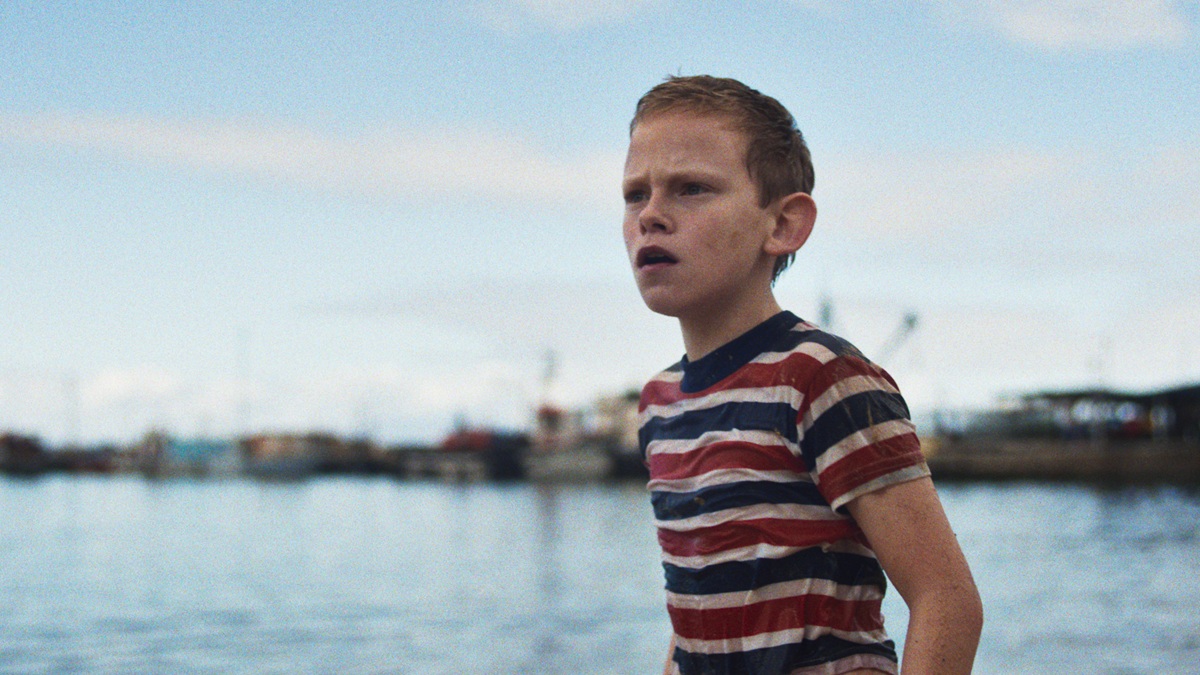
You know how messed up a movie is when its silent beats feel so loud and unbearable that whenever the music finally plays, the film somehow gets quieter? John Trengove’s “The Smell of Apples” (Afrikaans: Die Reuk van Appels) has several moments like that. The Erasmus home is filled with piano music, children playing, dinner conversation, and the usual sounds of a family going about its life, yet none of them can drown out what sits underneath. By the time the silence really starts closing in on 11-year-old Marnus (Dawian van der Westhuizen), every ordinary sound in that house seems to be covering for something.
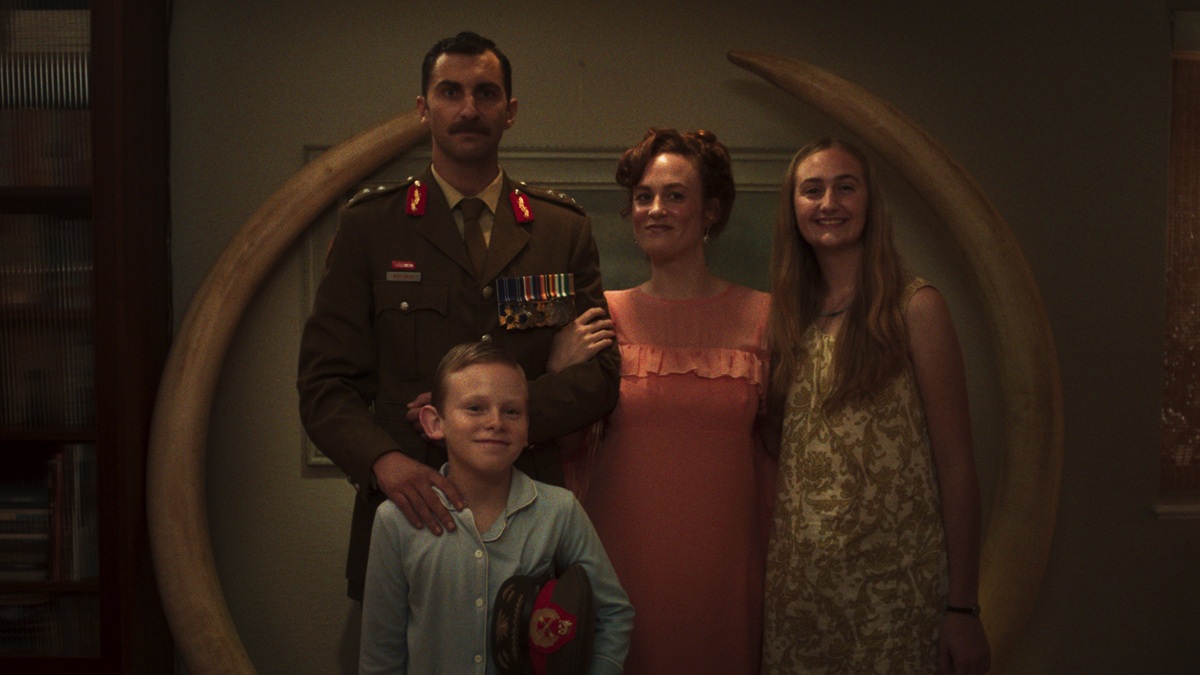
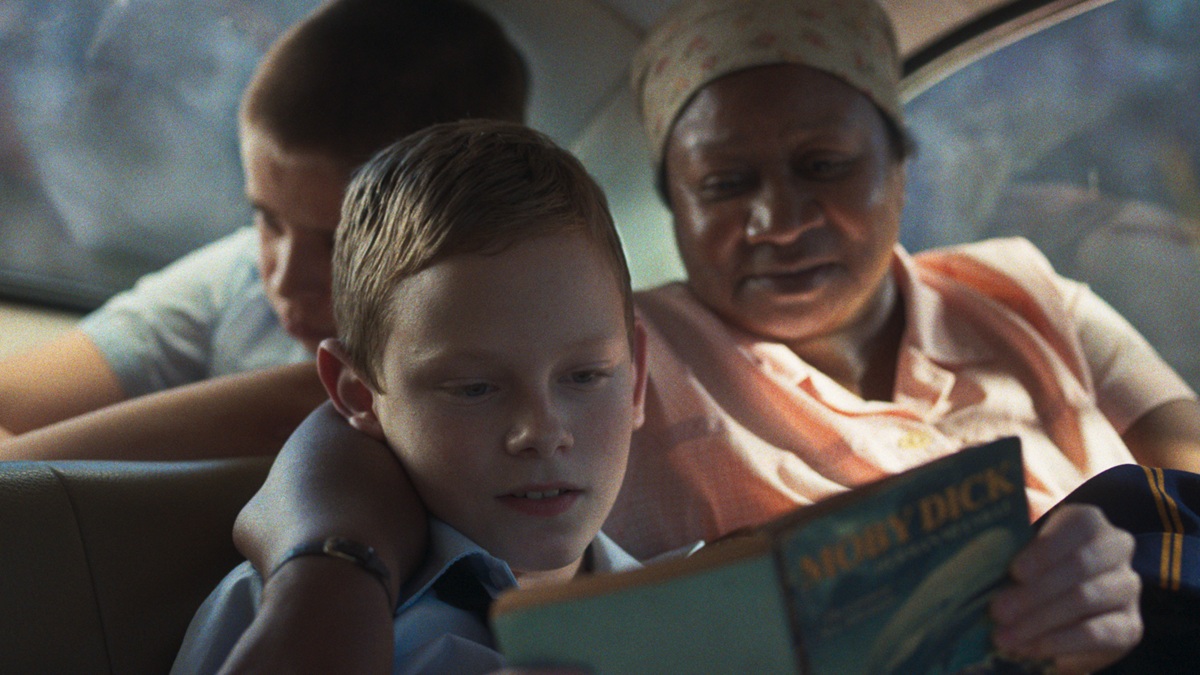
Marnus doesn’t begin the film thinking there is anything to cover. It’s 1974, and he lives an almost absurdly comfortable childhood in white South Africa. His father Johan (Hilton Pelser) is a celebrated army general; his mother Leonor (Maude Sandham) is loving, cultured, and determined to maintain the family’s composure; his best friend Frikkie (Wian Carstens) spends the summer with him. The sea is nearby for fishing and swimming. Doreen (Celeste Matthews Wannenburgh), the family’s Black domestic worker, has known him long enough that his affection for her appears completely sincere.
Instead of falling for portraying an eleven-year-old racist caricature, Trengove manages to paint Marnus as a child who can love the Black woman who helped raise him, while still inhabiting a system built to keep her beneath him. Sure, the boy sees Doreen as family. But he also accepts, without much thought, that she serves his household and moves through the same home with far less power than he does.
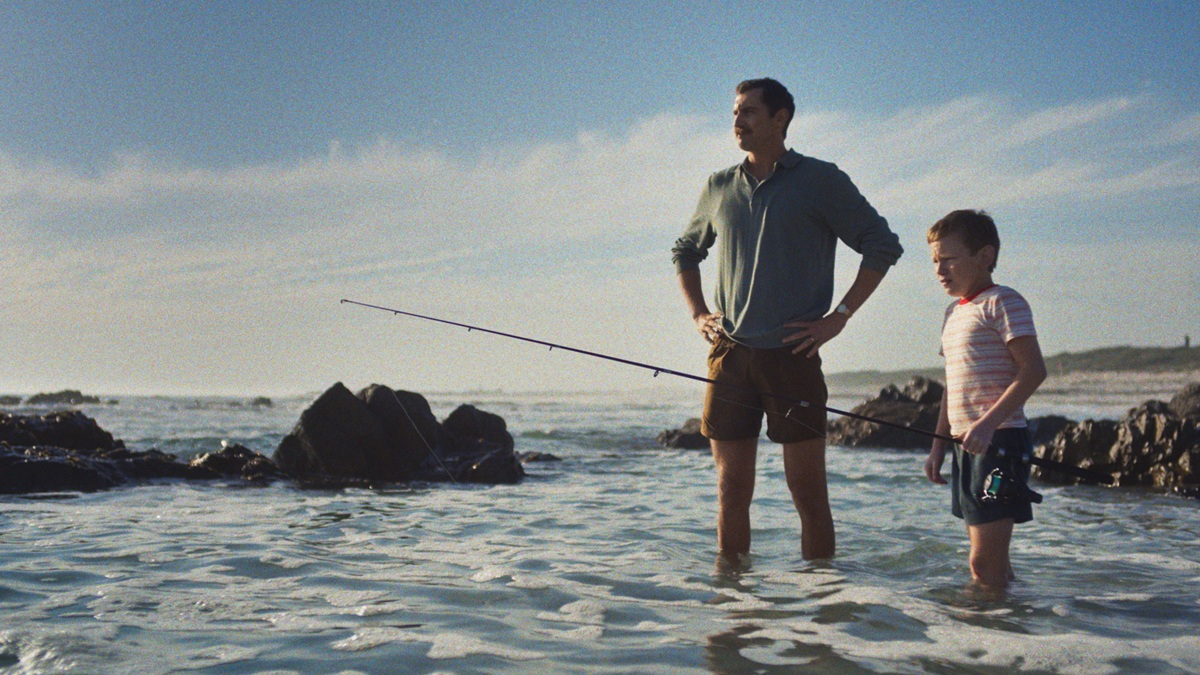
So when Marnus loses the fishing rod he inherited from his grandfather and suspects Doreen’s grandson Neville of stealing it, he says so. The adults and institutions around him do the rest. Police violence leaves Neville badly injured, and only afterward does Marnus discover that the rod was never stolen in the first place.
More TIFF 2026: ‘The Hummingbird Paints Fragrant Songs’ Finds the Person Behind the Art
A Child Inside the Machine
There is always something difficult about centering a sympathetic character who belongs to an actively oppressive class. Why should Marnus’s heartbreak command our attention when the consequences of apartheid appear at the edges of his comfortable life in far more brutal forms? “The Smell of Apples” finds its answer by drawing a firm line between sympathy and absolution. Marnus is a child, but he is also learning what his words can do. His accusation becomes catastrophic because the social order has already decided whose suspicion carries weight and whose body can absorb punishment. Privilege here isn’t merely having a beautiful house or a famous father. It is possessing power before you are old enough to realize you have it.
The setting makes that blindness even more disturbing. South Africa in the early 1970s was already experiencing growing Black Consciousness activism and increasingly aggressive state repression, with unrest building toward the Soweto uprising only two years after the film’s 1974 setting. Marnus, however, knows almost none of this. His father supplies the interpretation of the country instead: who built it, who threatens it, who deserves protection, and who should be feared. Marnus adores Johan, which is what makes Pelser’s performance so effective. Johan is affectionate enough to make the boy’s loyalty believable, but his affection is inseparable from an idea of masculinity based on endurance, dominance, obedience, and never appearing weak.
Over time, however, the film peels back enough for Marnus to slowly discover something worse than ordinary adult hypocrisy. Johan’s politics, fatherhood, ideas about manhood, and appetite for domination are not competing parts of his personality. They reinforce each other.
There’s something of “The Zone of Interest” filtered through the lens of a coming-of-age story here. Trengove keeps much of apartheid’s most explicit violence just outside Marnus’s immediate experience, yet close enough that it continually contaminates his supposedly idyllic childhood. The boy gets beaches, family rituals, piano music, and holiday plans. Somewhere nearby, other people are paying for that peace.
Related Review: ‘Mother, You Have Not Died Yet’ Review: Grief Has Poor Boundaries
When the Family Photos Get Mixed Up
Nothing expresses that contradiction more brutally than the projector sequence. Johan insists on showing slides to the family’s visitors despite Leonor’s discomfort, and what begins as the familiar ritual of adults showing off photographs starts slipping between completely different worlds. Captured Black men appear blindfolded, tortured, and mutilated. Then come happy family photographs. Marnus as a baby, held by a Black nanny. Then back again to images of state violence.
The photographs may be shuffled at random, but the moral worlds they depict aren’t separate at all. That scene disturbed me because nobody in the room, save for Leonor’s protestations, responds with anything approaching the horror the images should demand. Marnus being lovingly held by a Black woman does not exempt his family from apartheid, just as the warmth of their home does not cancel the brutality carried out in the name of men like Johan. The slideshow accidentally makes the relationship between those images clearer than the family ever would.
Here is the baby. Here is the Black woman holding him. Over here, our soldiers pose with a severed hand. Now, here’s a fun family picnic. And here is what the state does to people who look like Doreen.
Lennert Hillege’s cinematography works in a similar way. Trengove repeatedly allows shots to creep toward faces, closing the distance until whatever somebody is withholding starts becoming difficult to avoid. Marnus watches far more than he understands. Leonor understands far more than she admits. Meanwhile, Doreen often hardly needs any dialogue at all; Wannenburgh lets grief, fury, affection, humiliation, and the knowledge that she cannot safely express all of them coexist in the same look.
More TIFF 2026: ‘Hombre al agua’ Lets Everyone Rewrite Their Own Reality
The Kids Are Not Alright
Dawian van der Westhuizen is the revelation here. A lot of “The Smell of Apples” depends on Marnus being readable without becoming overly articulate about what he is seeing, and van der Westhuizen understands that balance beautifully. He can register admiration, unease, guilt, and confusion without making Marnus seem wiser than an eleven-year-old should be. The boy keeps arriving at the truth in pieces, sometimes too late, and the performance lets those pieces accumulate across his face before he has the language to make sense of them.
John Trengove turns apartheid into a coming-of-age nightmare where seeing your father clearly also means seeing the world that made him.
It also makes me think back to Ong Xuan Jing in “Ah Girl,” another young performer from this year’s TIFF who has to carry a film built around a child’s incomplete understanding of adult behavior. In both cases, the adults around them may have the authority, but the children have the harder dramatic task: they have to hold the movie together while reacting to worlds they don’t fully understand.
Van der Westhuizen stands toe to toe with Hilton Pelser, Maude Sandham, and Celeste Matthews Wannenburgh without ever seeming like he is “acting up” to match them. That naturalness is a big part of why Marnus’s loss of innocence hurts as much as it does.
The Apples Were Never Rotten
Mark Behr’s novel pushes Marnus’s trajectory further than the film does. Alongside the childhood story, the book periodically jumps ahead to an adult Marnus serving in the South African military, which leaves far less uncertainty about whether the boy eventually escapes the world that formed him. Trengove and co-writer Chris Ciancimino strip away that future timeline and remain with the eleven-year-old Marnus instead. That choice makes the film’s moral question more unsettling. Understanding cruelty is one thing. Whether that knowledge changes the person who benefits from it is another.
The film also gives greater weight to the missing fishing rod and Marnus’s accusation against Neville, tying his awakening directly to his own culpability. He doesn’t merely discover the ugliness of apartheid from a safe distance; he realizes that his privilege has already given his mistakes consequences other children would never have the power to produce. From there, increasingly disturbing discoveries force him to reconsider not only Johan but the values that made his father such an object of admiration in the first place.
The title eventually acquires a far darker meaning than its pastoral simplicity suggests. Apples belong naturally to the film’s world of abundance, domestic comfort, cultivated land, and the wholesome image this family works so hard to preserve. Trengove gradually turns that image against itself. Something can remain beautiful on the surface while the knowledge attached to it has made innocence impossible.
That is where “The Smell of Apples” leaves its deepest bruise. Marnus begins the film believing goodness means loving his father, obeying him, and trusting the world adults have built around him. Over five days, those ideas stop fitting comfortably together. What comes after that realization is left for the boy to answer, not for the movie to solve.
John Trengove’s “The Smell of Apples” had its world premiere at the 51st Toronto International Film Festival under the Platform Prize program. The festival runs from September 10 to 20, 2026. Follow us for more coverage.

