For the first time since “War of the Worlds,” Steven Spielberg has made a movie that feels fully planted in the present tense. After years of moving between the historical past in top-shelf classical Dad Films like “Lincoln,” “Bridge of Spies,” and “The Post,” and speculative futures like the nostalgic dystopia of “Ready Player One,” Spielberg returns to contemporary America with “Disclosure Day.” It’s a film explicitly burdened by the anxieties of 2026: information overload, institutional distrust, technological alienation, and the lonely sensation of living through history without a shared language for it.
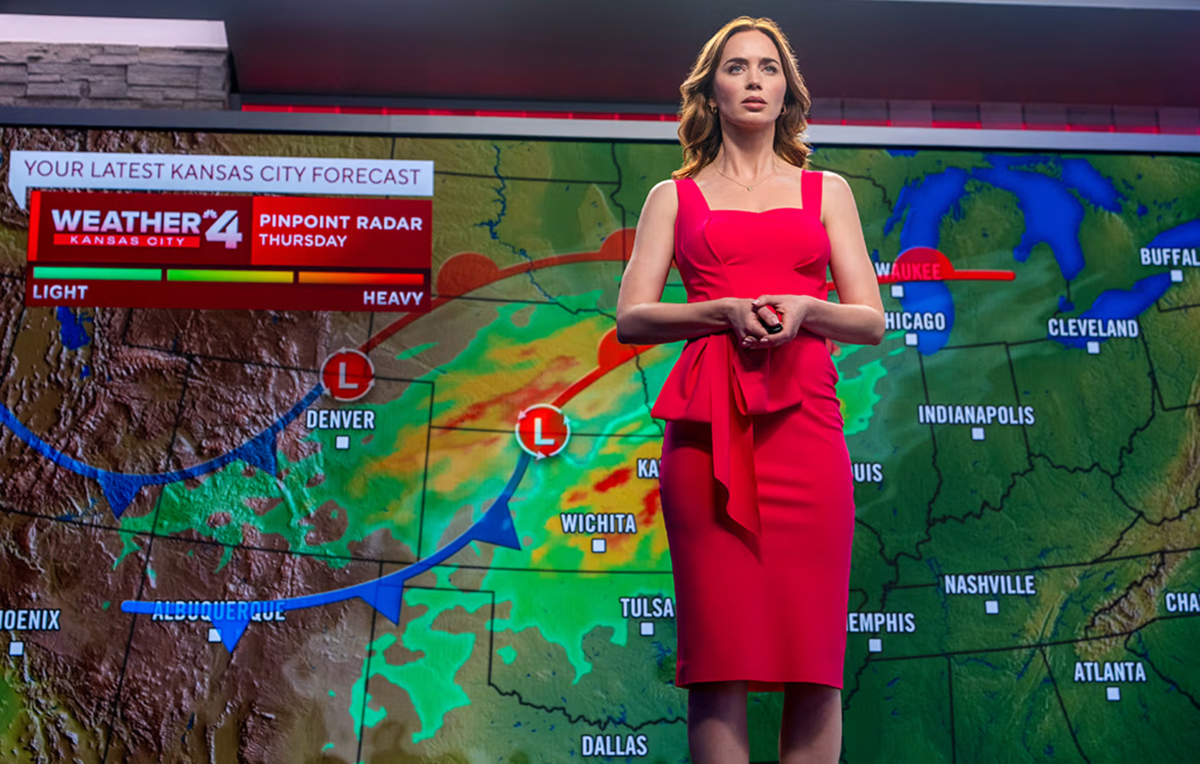
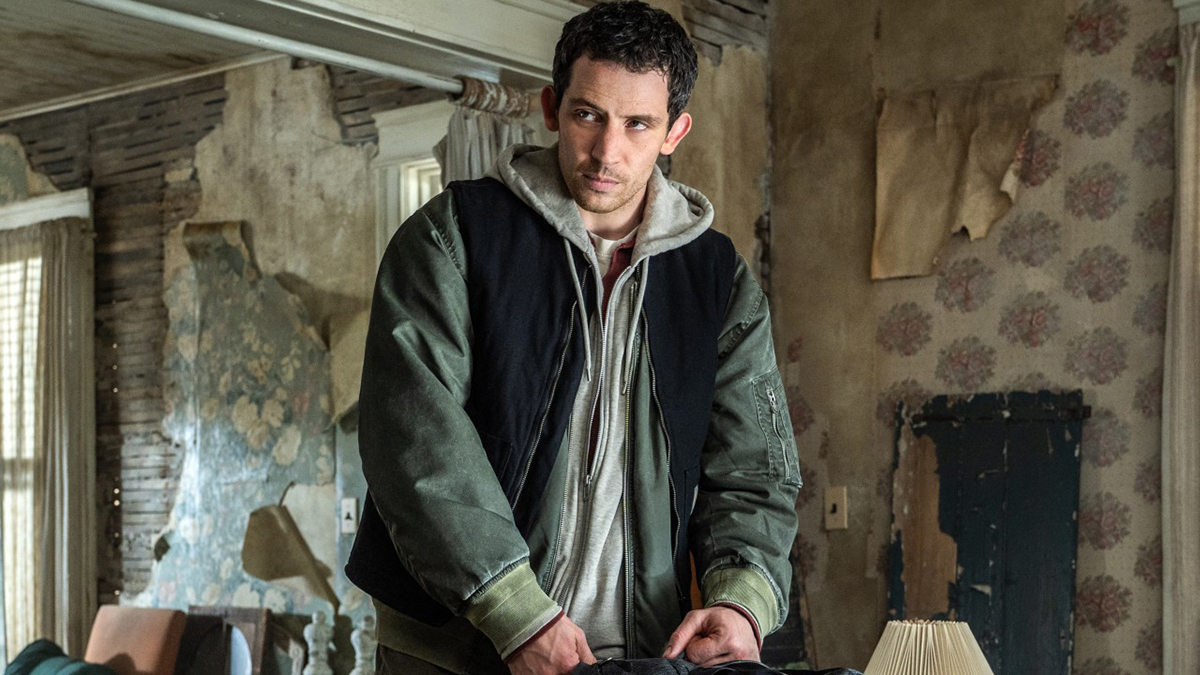
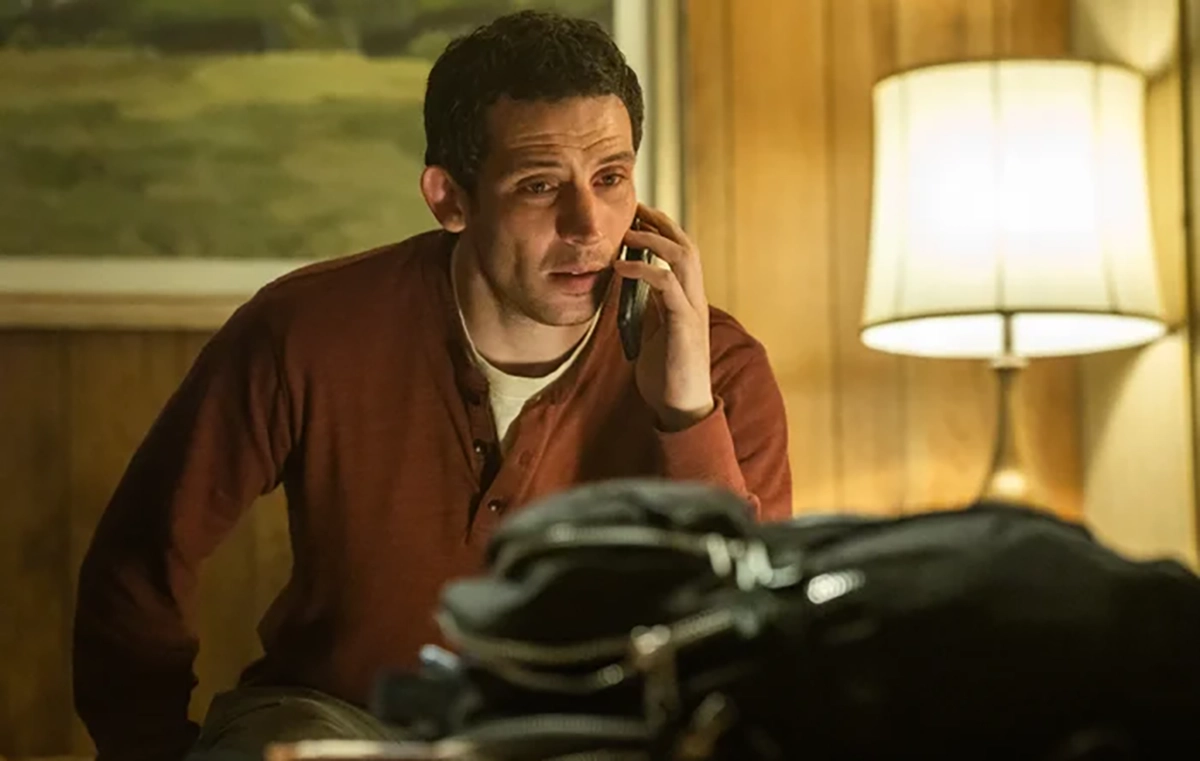
At its simplest, “Disclosure Day” is a chase film that follows Daniel Kellner, played by Josh O’Connor, a cybersecurity whistleblower carrying hard drives full of top-secret files detailing decades of alien contact. This is alongside Margaret Fairchild, played by Emily Blunt, a local-news meteorologist whose sudden onset of psychic abilities and radical super-empathy pulls her into the same orbit. Together, they race to broadcast the truth, evade a sinister government-adjacent corporation, and expose extraterrestrial life to the world. The movie adopts the language of ’70s conspiracy thrillers like “Three Days of the Condor” and “All the President’s Men,” then filters it through 1950s UFO conspiracy mythology: government cover-ups, Area 51, hidden files, secret contractors, buried memories, forbidden evidence.
‘Disclosure Day’ is About Belief
But Spielberg has never really been a filmmaker who makes movies just about aliens. He is a filmmaker about belief.
From “Close Encounters of the Third Kind” to “E.T.” to “A.I.,” Spielberg’s science-fiction cinema has always been less interested in whether the impossible exists than in what it means to believe in it. His great subject is not extraterrestrial life but faith: faith in other people, faith in unseen worlds, faith in images, faith in the emotional intelligence of awe. “Disclosure Day” extends that tradition by asking whether belief can still function in a world this fractured. Its central question is not whether aliens are real. It is whether people are still capable of accepting a shared truth.
That makes the film both deeply moving and, at times, deeply naïve in our cynical age. Spielberg imagines disclosure as a potential act of collective repair. Once the truth is revealed, perhaps understanding can follow. Perhaps empathy can be restored. Perhaps humanity, confronted with something larger than itself, might finally become less small. Depending on your level of cynicism, this is either the film’s most beautiful idea or its most maddening limitation.
Spielberg and an Old Fashioned Quality
The movie occasionally feels as though it belongs to an older media ecosystem. It has an almost touching faith in television news, live broadcast infrastructure, and the possibility that mass communication can still produce consensus. There are gestures toward AI, misinformation, digital manipulation, and deepfakes — but the film never fully wrestles with the fact that any revelation today would immediately be absorbed into the machinery of denial, irony, counter-narrative, and content. Spielberg seems less interested in interrogating why shared reality has disappeared than in defending the idea that it might still be possible.
That old-fashioned quality is both the film’s weakness and its soul. “Disclosure Day” feels like a movie made by someone who still believes a single image can matter to everyone at once. Spielberg continues to make films as though the monoculture is not dead, only dormant; as though a sufficiently powerful truth might still gather people together; as though cinema itself remains a common language.
Visually, the film is far more sophisticated than its expository dialogue. Spielberg and Cinematographer Janusz Kamiński give even mundane spaces a strange spiritual density. Light pours through windows like revelation. Laptops, phones, and screens become conduits for transcendence, replacing the bicycles, spaceships, and suburban backyards of Spielberg’s earlier work. There is something fascinating about watching his old visual language collide with contemporary technology. Divinity now arrives when someone opens a laptop.
Emily Blunt Gives the Film an Emotional Heart

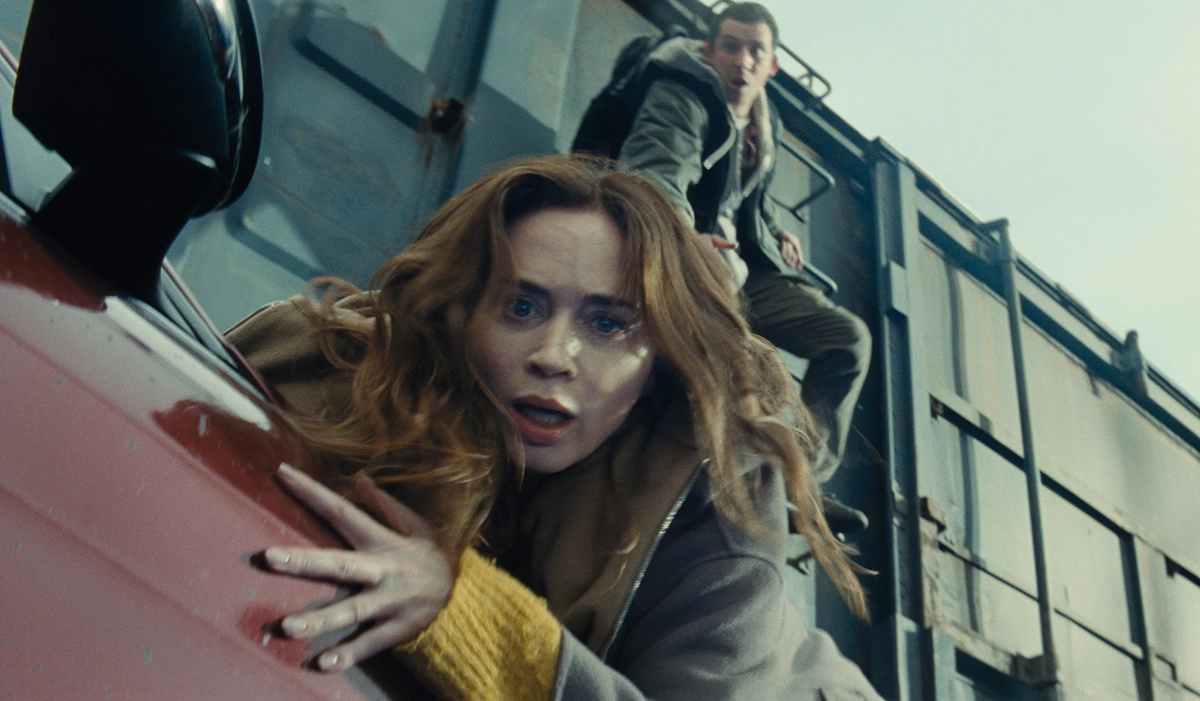
The script, by David Koepp and Steven Spielberg, is often more functional than inspired. However, it wrestles with some big ideas, and there are moments when Spielberg’s images are doing more interesting work than the words surrounding them. The movie can be exposition-heavy, and it sometimes explains what the audience has already understood. Yet even when the writing falters, Spielberg remains a staggering visual storyteller. His command of geography, movement, and emotional rhythm is still close to unmatched. The chase sequences have clarity and momentum; the large freight-train set piece is the film’s most impressive spectacle, echoing the childhood terror and wonder of “The Greatest Show on Earth” that Spielberg already mythologized in “The Fabelmans.” What makes the sequence work is not just its scale, but the way Spielberg bookends it with human reaction. The spectacle matters because the people inside it matter.
Emily Blunt gives the film its emotional center. Margaret’s abilities are not treated like a traditional superpower so much as a painful expansion of feeling. Her empathy is a burden, a migraine, a constant assault of sensation and perception. Blunt plays her as someone being torn open by other people’s emotions, and that gives the movie its most persuasive moral force. Spielberg’s belief in empathy can sound abstract when spoken aloud, but Blunt makes it physical. She turns compassion into something frightening, exhausting, and necessary. It’s arguably the best work Blunt has ever done.
Josh O’Connor is quieter but effective as Daniel, a man carrying world-historical knowledge while still seeming fragile, human, and overwhelmed. He fits neatly into Spielberg’s tradition of ordinary people pulled into extraordinary circumstances. He is not a superhero or a warrior. Daniel is a witness, a carrier of truth, a person whose moral burden is larger than his ability to process it.
Living in the Shadows of ‘Close Encounters’
Inevitably, any Spielberg UFO film lives in the shadow of “Close Encounters of the Third Kind.” That film turned wonder into cinematic language. Its lights, sounds, gestures, and music suggested transcendence beyond explanation. “Disclosure Day” consciously revisits similar territory, but it is after a different kind of revelation. This is closer to “The Post” than “Close Encounters.” It’s less a movie about cosmic awe than about the civic, emotional, and spiritual consequences of disclosure. It wants transcendence, but it pursues it through journalism, memory, empathy, and public truth.
That makes the film an odd object: part conspiracy thriller, part late-career self-portrait, part liberal-humanist prayer. It is not Spielberg at his cleanest or most elegant. It reminded me, in ways I did not expect, of M. Night Shyamalan at his best: sincere, strange, spiritually direct, and willing to risk corniness in pursuit of catharsis. Sure, it can be clumsy, overly earnest, and too willing to state its themes out loud. But it is also unusually vulnerable. Its flaws are inseparable from its sincerity.
Spoilers follow.
The longer the film goes on, the clearer it becomes that “Disclosure Day” is not just a companion piece to “Close Encounters” or “The Post,” but to “The Fabelmans.” Spielberg’s most emotionally naked film has become a kind of skeleton key for his entire body of work, and “Disclosure Day” only deepens that sense. Both films revolve around hidden truths waiting to be uncovered. Both are concerned with memory, repression, and the emotional cost of revelation. Most importantly, both involve returning to a recreation of childhood space, a home that is not simply a home but a constructed site of disclosure.
Is Shared Empathy and Belief Still Possible?
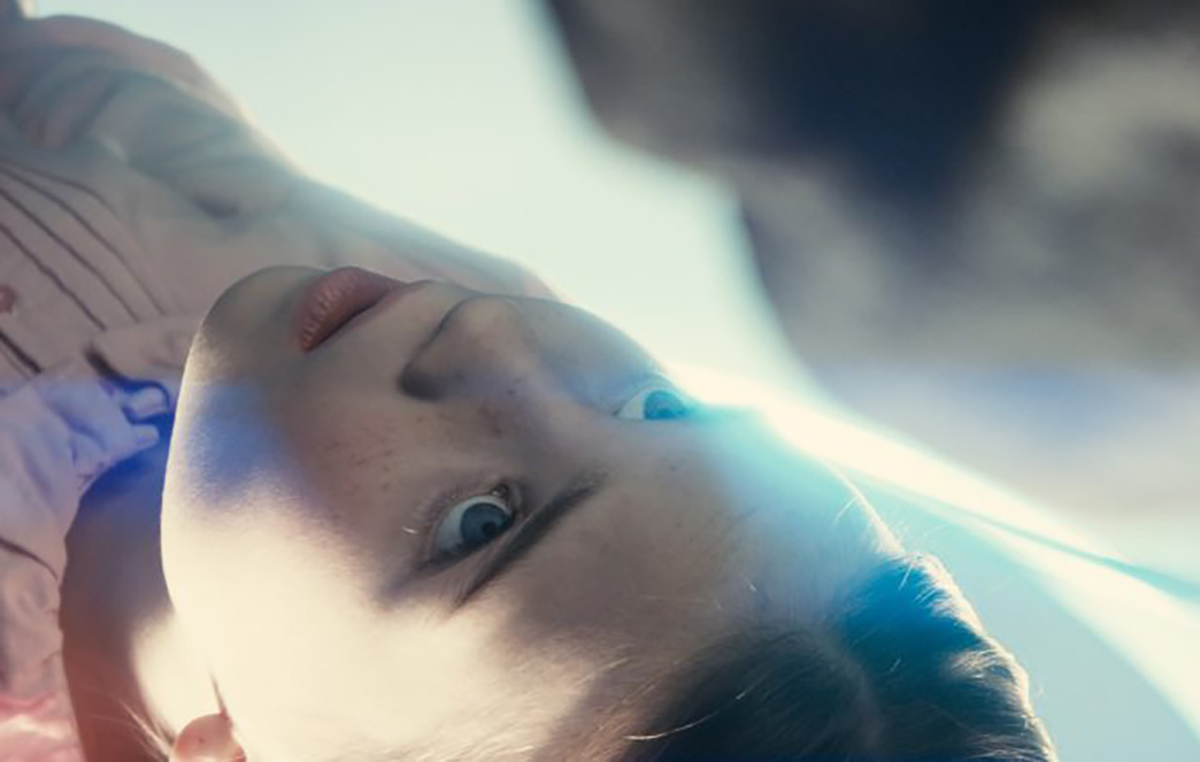
This is where the film becomes most interesting. The idea of home has always haunted Spielberg: home as sanctuary, home as escape, home as wound, home as illusion, home as the place you spend your life trying to get back to even when you know it no longer exists. In “Disclosure Day,” home becomes something even stranger: a staged environment, a reconstruction, a place built to produce emotional truth. That makes the movie feel like another act of therapy disguised as genre entertainment. The disclosure is extraterrestrial, yes, but it is also autobiographical. Spielberg is once again digging through the architecture of his own memory and turning private revelation into public spectacle.
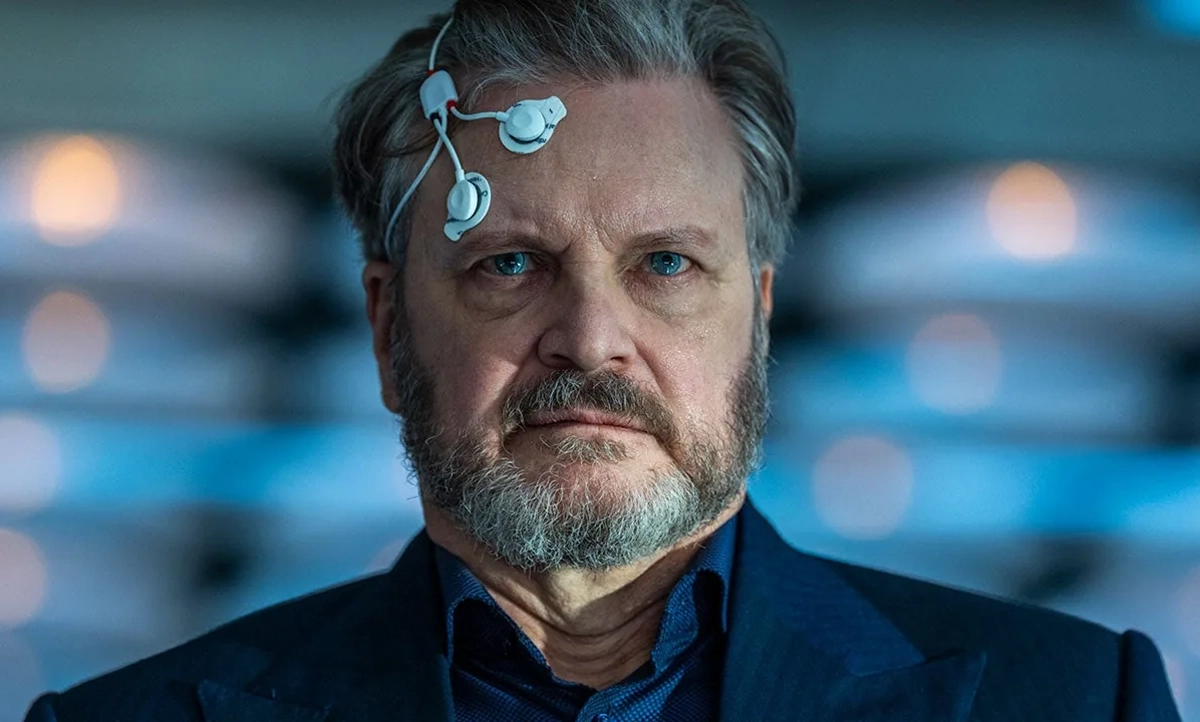
The characters begin to feel like pieces of Spielberg himself, or at least pieces of his mythology. Hugo, played by Colman Domingo, is the benevolent orchestrator, guiding people from afar, arranging movement, shaping destiny, nudging frightened people toward catharsis. He is Spielberg as generous storyteller. Scanlon, played by Colin Firth, is the darker reflection: a manipulator obsessed with controlling information, surveilling the world, and shaping reality according to his own paternal logic. He is Spielberg as control freak, the director as authoritarian, the image-maker as someone who does not merely reveal reality but manufactures it.
Daniel and Margaret deepen that self-portrait. Daniel, with his mathematical precision and exacting mind, evokes the rational, problem-solving side of Spielberg’s family mythology. Margaret, with her warmth, emotional intuition, and almost painful sensitivity, evokes the forever-young empathic force Spielberg has often associated with maternal feeling. Seen this way, “Disclosure Day” becomes a strange internal drama: Spielberg staging an argument between logic and feeling, control and surrender, secrecy and revelation.
Suspicion and Faith that Coexist
That also explains why the film’s old-fashioned faith in journalism feels so central. Nixon appears in some of the alien footage, and his presence is not incidental. Nixon remains one of the ghosts haunting Spielberg’s political imagination. From the duplicitous civic leaders of “Jaws” to the haunted statecraft of “Munich” to the institutional heroism of “The Post,” Spielberg has repeatedly returned to systems that conceal truth in the name of order. “Disclosure Day” continues that obsession while pushing it into the realm of cosmic absurdity. The government has not merely lied about policy or war. It has lied about humanity’s place in the universe.
And yet Spielberg’s suspicion of authority coexists with his stubborn faith in civic institutions. Governments and corporations may suppress the truth, but journalism can still reveal it. Television can still carry it. A broadcast can still matter. That belief is almost shockingly earnest in 2026, and the film’s climax depends on whether you can meet Spielberg on those terms.
This is where “Disclosure Day” will likely lose some viewers. Its grand revelation is built around the belief that truth, once shown clearly enough, can generate empathy. The film’s central fantasy is not that aliens exist. It is that humanity could witness something undeniable and respond with humility rather than cynicism, tribalism, disbelief, or opportunism. Spielberg imagines revelation as a moral event. He believes that seeing can still become understanding.
Moving Pictures as Empathy Machines
That idea is easy to mock. It may even be impossible to defend realistically. But Spielberg has always been a master of impossible defenses. His cinema is built on the conviction that images can make us believe things we know are unreasonable. “Disclosure Day” asks us to believe not only in aliens, psychic empathy, and cosmic hidden histories, but in the continued possibility of shared human recognition. It’s a film about moving pictures as empathy machines.
The movie’s central fantasy is not extraterrestrial life. It is the existence of a truth so profound, so undeniable, and so human that everyone might still recognize it together.
For Spielberg, that may be the last impossible thing worth believing in.
“Disclosure Day” is currently playing in theaters.