


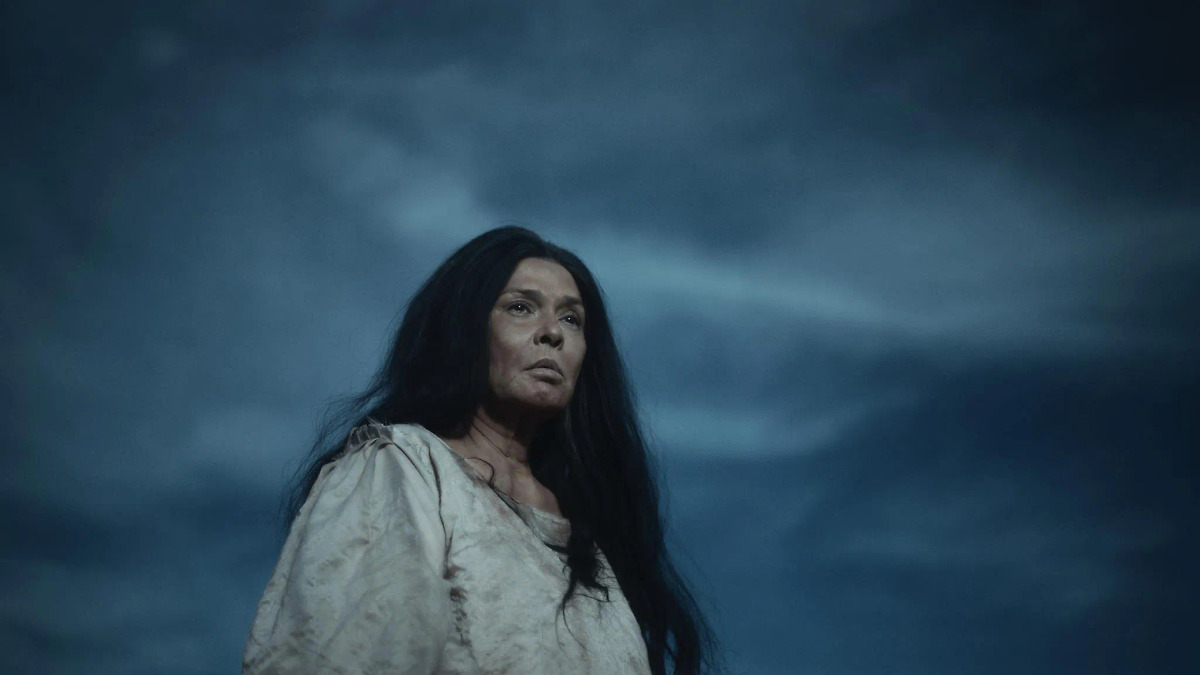
Some names outgrow the stories they came from. In the Philippines, say “Sisa” and people immediately understand what you mean. The word has drifted far from the pages of Jose Rizal’s Noli Me Tangere. Over time it has become shorthand for madness—a cultural label used to describe someone who has lost control of herself.
Jun Robles Lana’s “Sisa” begins by taking that label seriously again.
Sisa: A Name That Became a Punchline
The film opens with stark title cards explaining the historical moment: Spain has ceded the Philippines to the United States, and the Philippine–American War is raging in the background. American forces are implementing what they call a civilizing mission, rounding up Filipino civilians into concentration camps in order to isolate rebel forces still fighting in the countryside. The language of “benevolent assimilation” hangs in the air like a polite excuse for brutality.
Then a woman appears.
She is disheveled, barefoot, hair matted, wandering toward the guarded perimeter of the camp as Teresa Barrozo’s score rises in a wailing chorus that sounds almost primal. An American soldier stops her and asks who she is. She doesn’t answer. Instead she urinates on the ground, scoops up the dirt mixed with it, and flings it toward him. It is the kind of introduction that would be funny if it weren’t so defiant.
The woman claims she cannot remember her name. A young girl in the camp, Nena (Angellie Sanoy), decides to call her Sisa, borrowing the name from Rizal’s tragic character. The reasoning is simple enough. The woman looks mad, so the name fits.
Life Inside the Camp
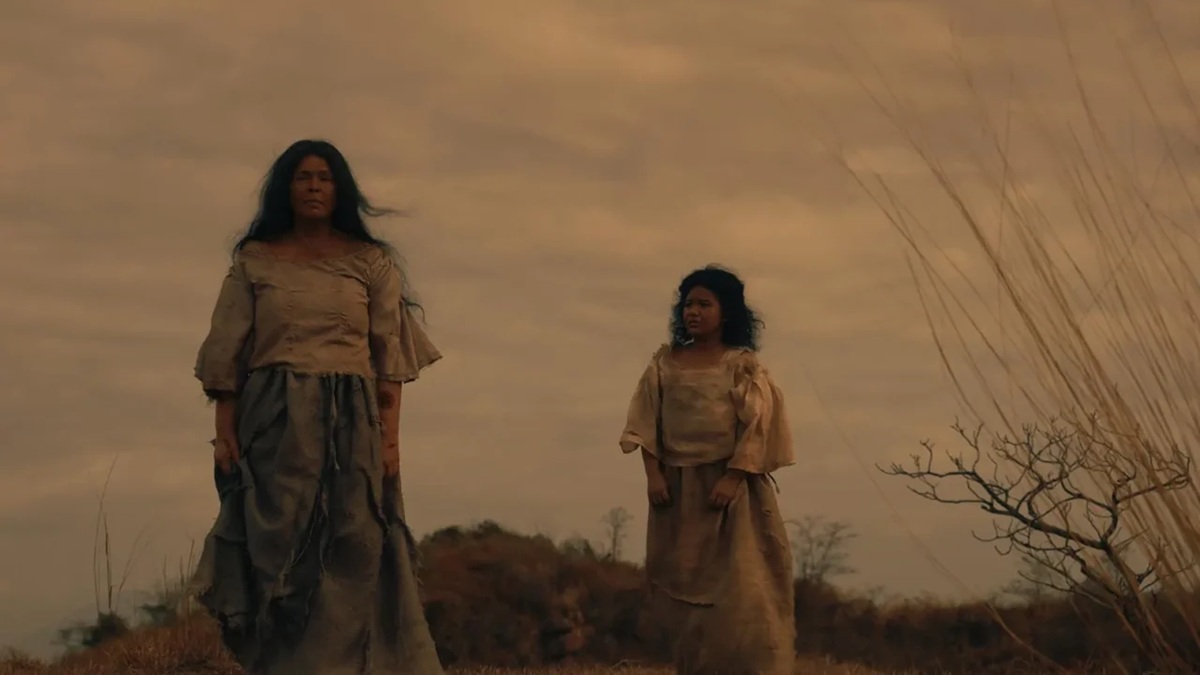
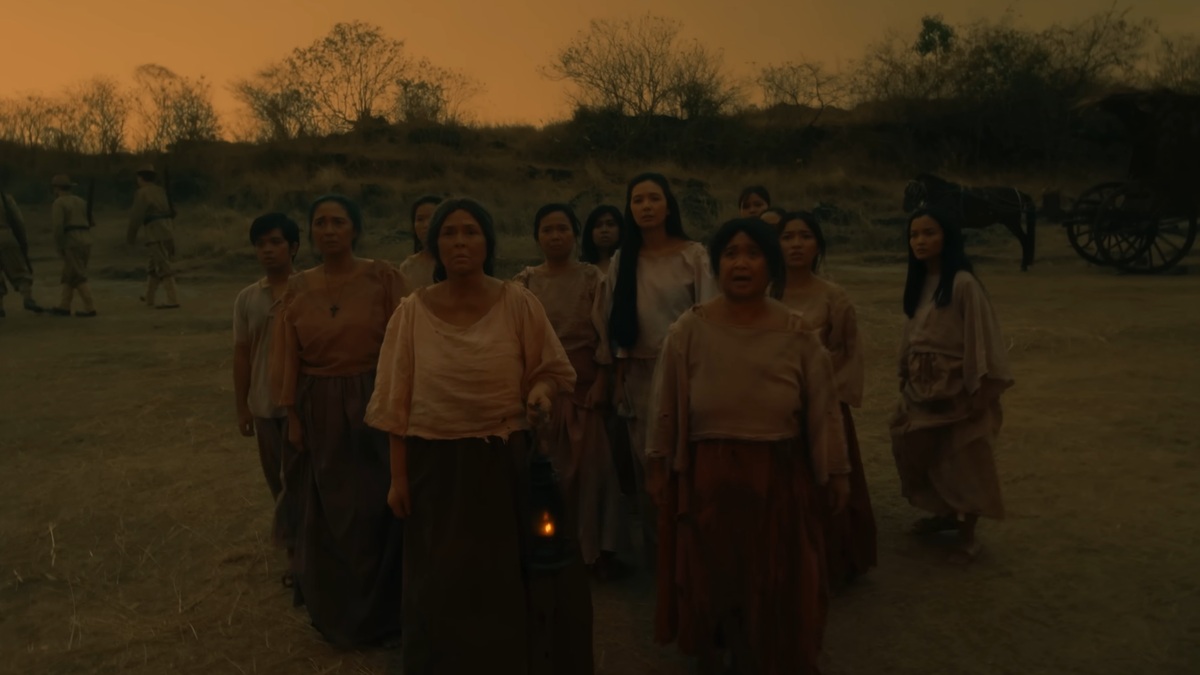
Sisa soon falls under the reluctant care of Delia (Eugene Domingo), a weary mother who lives in the camp with daughter Nena and the other women who have been herded there by American forces. Their husbands, fathers, and sons are gone. Some were killed in the fighting. Others vanished into prisons or into the mountains where resistance fighters still roam. What remains are the women, trying to survive inside a place that feels less like a village and more like a waiting room for history’s next humiliation.
One of the most satisfying aspects of the film is the way it slowly introduces these women as individuals rather than symbols. They gossip, complain, glare at one another, carry grudges. Leonor (Jennica Garcia), a young widow who has become the favored companion of the American commander Harrison (Kuya Manzano), draws particular hostility from the others. In a community defined by loss, her relationship with the occupying force is seen as betrayal. Yet Garcia plays Leonor with a softness that suggests a different truth. Survival sometimes comes disguised as compromise.
Lana has explored female perspectives before. “Barber’s Tales” did something similar during the Martial Law period. What makes Sisa feel sharper is how the war unfolds through these women’s daily humiliations rather than through battlefield heroics. The Americans speak English with condescending patience. They insist they are bringing civilization to a population they openly describe as incapable of governing itself. The violence is rarely spectacular, but the contempt is constant.
The Concept of Crazy, According to a Filipino Screen Legend
Hovering around all of this is the film’s most intriguing figure.
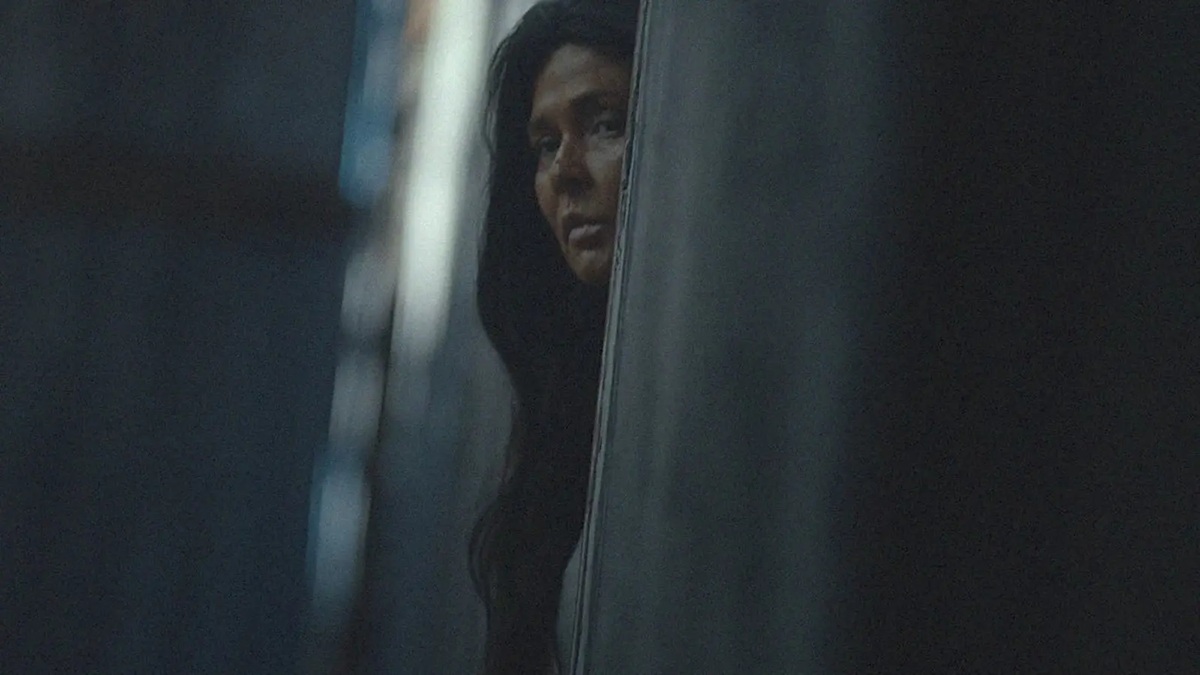
Gradually the film reveals that Sisa’s madness may not be madness at all. The woman wandering through the camp is performing a role. Her erratic behavior allows her to move freely, unnoticed by soldiers who dismiss her as harmless. Beneath that act is a sharper mind, one quietly gathering information and nudging the women toward something more dangerous than survival.
Hilda Koronel, returning to the screen after more than a decade away, gives Sisa a presence that is both unnerving and magnetic. For much of the film she barely speaks. Her eyes do most of the work. Sometimes they convey confusion, sometimes maternal warmth, and sometimes something darker simmering just beneath the surface. Anyone who grew up catching reruns of “Maynila sa mga Kuko ng Liwanag” during Holy Week knows how expressive Koronel can be with the smallest movement of her face. Watching her here feels like being reminded of a talent Philippine cinema has missed for far too long.
The idea of the “baliw” as camouflage is not new in storytelling, but Lana gives it a cultural twist that makes it resonate. In Filipino culture, the name Sisa itself has become synonymous with insanity. The film, on the other hand, asks what happens when that stereotype becomes a weapon. If everyone expects Sisa to be irrational, they will never suspect her of strategy.
In that sense the movie feels like a small act of historical reclamation. Rizal’s Sisa was a victim crushed by colonial cruelty. Conversely, Lana’s Sisa refuses to remain trapped in that role. She observes. She waits. And when she finally acts, it carries the quiet fury of someone who has seen too much.
A Community of Women
The performances around Koronel help anchor the film’s emotional weight. Eugene Domingo plays Delia as a mother hardened by grief and frustration. She is the kind of woman who keeps moving because stopping would mean acknowledging the depth of her loss. Domingo has always been capable of shifting between comedy and drama with ease, and here she leans fully into the latter. Her scenes with Sanoy’s Nena are especially effective, capturing the uneasy bond between a protective mother and a daughter beginning to test the limits of her own innocence.
Sanoy brings a heartbreaking vulnerability to Nena. Her ability to speak English earns her small privileges from the Americans but also places her in uncomfortable proximity to them. A secret relationship with one of the soldiers becomes a thread that quietly builds tension throughout the film. Lana treats these moments without melodrama. The tragedy creeps in gradually, the way many real tragedies do.
Jennica Garcia’s Leonor is perhaps the film’s most tragic figure. She survives by convincing herself that the affection shown to her by the American commander might be genuine, even in the middle of the occupation. Garcia plays her not as a villain but as someone clinging desperately to the possibility of kindness in a world that offers very little of it.
Together these performances ground the film in lived experience. The women may share the same prison-like camp, but each of them carries her own private war.
Craft, Atmosphere, and Some Issues with Pacing
Behind the actors, the film’s technical work adds a layer of unease that lingers from scene to scene. Barrozo’s score moves between mournful wails and sudden bursts of tension, giving the camp an almost haunted atmosphere. Carlo Mendoza’s cinematography shifts aspect ratios and occasionally tilts into disorienting angles, as if the world itself were slightly off balance. The camera lingers on faces, dirt paths, and dim interiors where conversations feel half-whispered.
If there’s a slight stumble along the way, it comes in the film’s pacing. At 115 minutes, the story occasionally lingers a beat longer than it needs to. A few sequences stretch just enough for you to notice the film’s deliberate rhythm. But even here the slowness has its logic. Lana lets tension gather quietly inside the camp. Conversations carry unspoken threats. Small acts of kindness take on unexpected weight.
By the time the story reaches its final stretch, the air feels thick with anticipation. When the payoff finally arrives, it lands less like a sudden twist and more like the inevitable result of everything that came before.
Rage, History, and Revision
What makes “Sisa” particularly fascinating is how it fits into the current wave of Philippine films wrestling with history. Jerrold Tarog’s “Quezon” examines mythmaking and political power. Lav Diaz’s “Magellan” revisits the earliest colonial encounter with a philosopher’s patience. Lana’s film operates in a different register. It asks what happens when history is viewed not through generals or presidents but through women who were never meant to appear in the official narrative at all.
Wars are usually remembered through the actions of men. Battles, treaties, declarations. The women in “Sisa” occupy the margins of that story, yet their experiences reveal a different truth about occupation. Survival is rarely heroic. Sometimes it involves compromise, silence, or choices that would look unforgivable from the outside.
The film also complicates the idea that this is simply an anti-American story. The Americans here are clearly agents of violence and arrogance, but Lana’s focus is broader. The real target is the way history itself has been written. Victors shape the narrative, and so do men. In that version of the past, women often appear only as background figures. By centering the story on them, Lana isn’t rewriting history so much as shifting the camera to a place it rarely stands.
For all its anger, “Sisa” is also strangely reflective. It raises uncomfortable questions about memory and responsibility. When we remember the past, do we seek truth, or do we choose the version that flatters us? And if we knowingly repeat the same distortions, who is more dangerous: the person who has lost their mind, or the one who understands the truth and still refuses to act? That’s an unsettling thought.
Reclaiming ‘Sisa’
By the end of the film, the name Sisa carries a different weight. The madwoman wandering through the camp has become something else entirely. Not a symbol of helpless grief, but a declaration that sometimes the people dismissed as crazy are the only ones brave enough to see the world clearly. And for a character long reduced to a cultural punchline, that transformation feels long overdue.
Jun Robles Lana has always been a prolific filmmaker, capable of turning out works that vary wildly in tone and success. With “Sisa,” he delivers one of his most compelling films in years, a historical drama that refuses to play by the usual rules of heroism.
History, after all, is not just written by the victors. Sometimes it belongs to the people history forgot.

Jun Robles Lana’s “Sisa” had its world premiere at the 29th Tallinn Black Nights Film Festival in Estonia on 20 November 2025, where it was part of the “Official Selection—Competition” category. The film had its theatrical release in the Philippines on March 4, 2026. Follow us for more coverage.

