





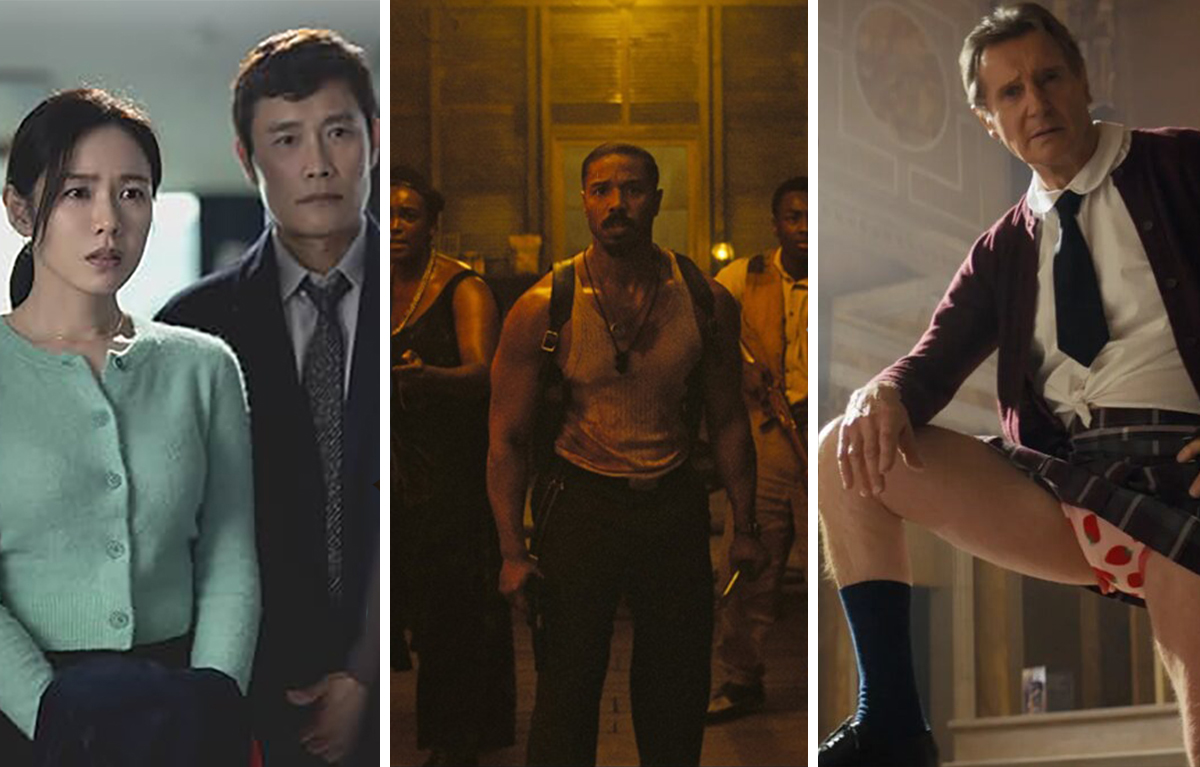
Paul Emmanuel Enicola
10. “The Secret Agent” (Eir. Kleber Mendonça Filho)
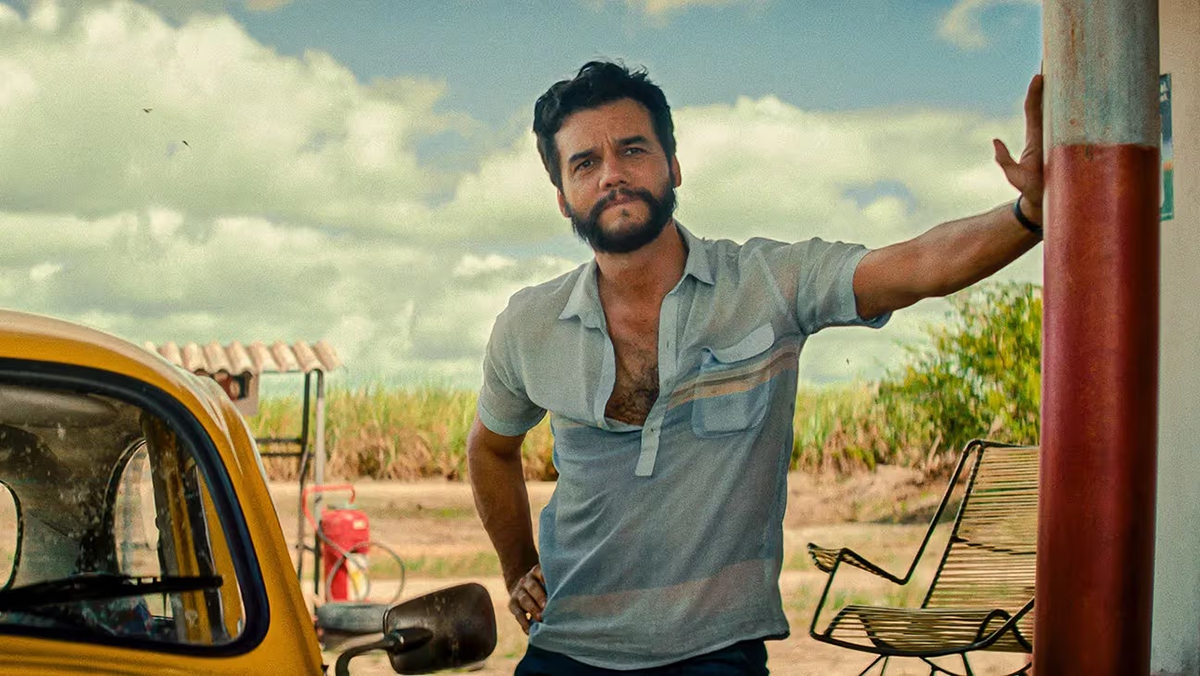
Kleber Mendonça Filhoâs most intellectually ambitious film yet disguises itself as a political thriller only to become something stranger and richer: a meditation on memory, absence, and cinema itself. Set against the suffocating backdrop of Brazilâs dictatorship era, âThe Secret Agentâ unfolds in fragmentsâvoices on tapes, conflicting testimonies, half-glimpsed recollectionsâso that the story of Armando is never fully possessed by anyone, least of all the film. (Read our review).
Thatâs the point. The structure mirrors the mechanics of remembering: incomplete, emotional, shaped by gaps. History here is not an archive but a haunting. Mendonçaâs camera lingers on textures, environments, and bodies as if each frame were trying to hold onto something that might otherwise disappear. The result is a film where political urgency lives not in speeches but in atmosphereâthrough whatâs withheld, misremembered, or distorted by time.
Wagner Moura grounds the film with bruised restraint, while the ensemble builds a lived-in world that feels culturally precise without leaning on symbolism. The result is a film about resistance through cinema: how images, recordings, and the act of recounting can preserve what power tries to erase. Itâs rich, unsettling, and unusually moving for something so structurally elusive.
9. “Black Bag” (Dir. Steven Soderbergh)
Steven Soderbergh makes espionage feel intimate again, not through action set pieces but through glances, pauses, and the specific terror of not knowing the person across the table. âBlack Bagâ is lean, sharp, and sexy in a way most modern spy films forget: the seduction comes from intelligence, not spectacle.
The hook is brutally simple. George Woodhouse is asked to investigate a leak, and his wife Kathryn is on the list. From there, the film turns a marriage into a pressure cooker. A dinner party becomes a trap. Professional competence starts to look like emotional avoidance. The dialogue has bite, the pacing never bloats, and the humor lands without deflating the tension.
Michael Fassbender plays George with tightly wound control, and Cate Blanchett gives Kathryn a coolness that can read as devotion or strategy depending on the angle. Their chemistry does the heavy lifting. You believe the attraction and the damage. This is Soderbergh reminding everyone he can make a thriller that moves like clockwork and still feels human. Itâs one of his most entertaining films in years, and also one of the yearâs sneakiest. (Read our review).
8. “The Voice of Hind Rajab” (Dir. Kaouther Ben Hania)
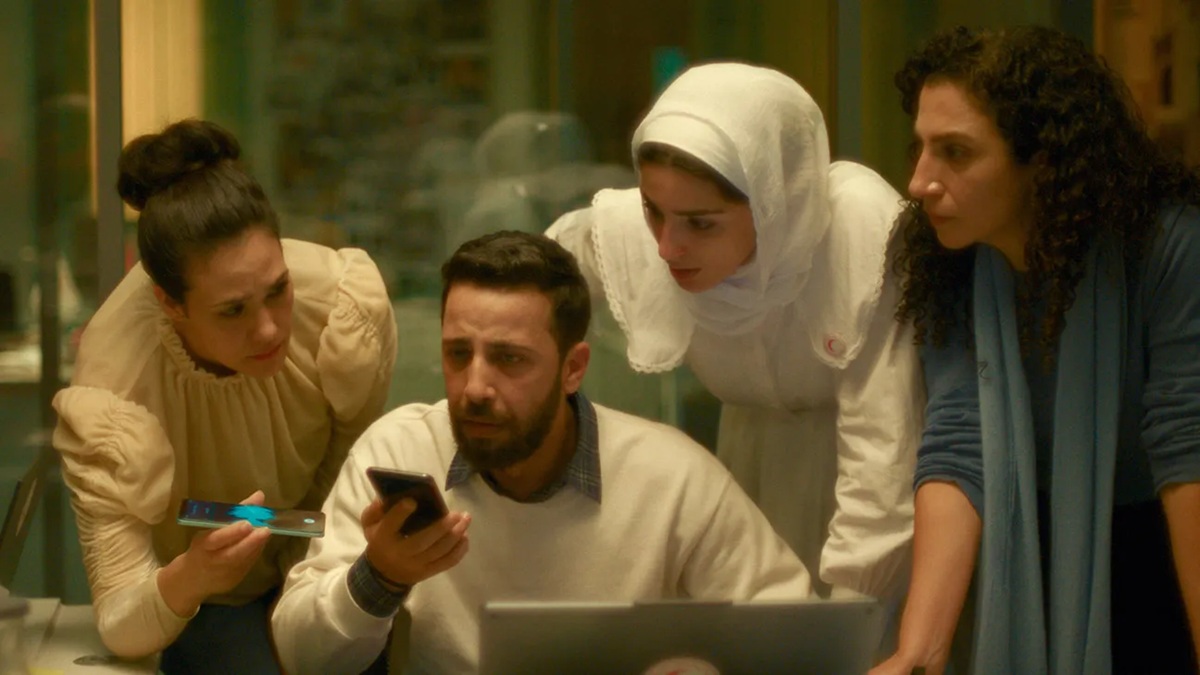
The film announces its location and date, then refuses to let you hide behind distance. Kaouther Ben Hania stages a docufiction built around emergency calls, but what makes it unbearable is that the voices are real, recorded, and impossible to forget. Hind Rajab is there in the audio: scared, polite, trying to be brave, asking for help that never arrives.
Ben Haniaâs approach is precise. Reenactment provides structure while the sound carries the truth. The call-center workers become our point of entry, which is its own kind of cruelty. Youâre placed in the position of someone trying to help while rules, bureaucracy, and danger make that help feel meaningless. The film avoids graphic imagery, yet itâs still crushing, because imagination fills what the camera refuses to exploit.
Hindâs name matters here because the film is fighting erasure. The war continues, the headlines keep moving, and this story insists on presence. It demands witness, not consumption. Few films this year felt as necessary, or left me as shaken. (Read our review).
7. “Marty Supreme” (Dir. Josh Safdie)
What Josh Safdie and Timothée Chalamet pull off here shouldnât work: a film centered on a selfish, manipulative, deeply exhausting young man. And yet somehow you end up leaning forward, hoping he survives his own worst instincts.
Thatâs almost entirely Chalametâs doing. His Marty is slippery, frantic, vain, often indefensible. But the performance is so committed, so electrically alive, that you begin to understand the hunger underneath the bravado: the need to be remembered, to matter, to outrun erasure. Safdie wisely builds the film around character rather than redemption. This is not a sports movie, not a moral parable, not a comeback story. Itâs a character study propelled by nervous momentum.
The direction amplifies this approach. Safdieâs camera rarely lets Marty breathe, mirroring the way he ricochets through scams, relationships, and self-made catastrophes. The rhythm becomes the point: life as perpetual hustle. Beneath the chaos sits a quiet thematic thread about legacyâJewish identity, historical trauma, and the terror of being forgotten. And that final act doesnât tie a bow around Marty. Instead, it leaves him suspended between failure and clarity. That ambiguity is what makes the film stick.
6. “No Other Choice” (Dir. Park Chan-wook)
Park Chan-wook takes a simple nightmare, then tightens it until it becomes a critique of modern survival. A man loses his job after a corporate buyout. Thirteen months later, the bills are crushing him, the home he fought to reclaim is slipping away, and something inside him turns. Park treats the descent like procedure: not melodrama, not a sudden snap, but a series of decisions that get easier to justify once the first line is crossed.
Lee Byung-hun is phenomenal here. He plays Yoo Man-su with coiled tension, the kind that makes even domestic scenes feel unsafe. The performance sells the central horror: that this man isnât a monster at the start. Heâs recognizable. Heâs proud. He believes he earned his life. And that belief becomes the fuel for what follows.
Parkâs dark humor threads through the film without softening it. The style is controlled, the violence exhausting rather than cathartic, and the final images undercut any illusion of victory. “No Other Choice” is class warfare filtered through shame, masculinity, and the terror of becoming disposable. Park makes it entertaining, then makes it sting. (Read our review).
5. “It Was Just an Accident” (Dir. Jafar Panahi)

It starts with a dead dog on a dark road and ends with a sound you canât shake. Jafar Panahi builds the film around a question that refuses to stay theoretical: what happens when victims come face-to-face with the person who broke them, and certainty is never clean?
In “It Was Just an Accident,” Vahid hears a squeaky prosthetic leg and spirals. The kidnapping feels impulsive, almost absurd at first, but the film keeps widening into a group portrait of former prisoners who canât agree on justice, mercy, or even identification. Panahiâs gift is tone: the humor is real, the logistics get messy, and the conversations feel lived-in. Then the anger rises, slow and steady, until you realize the comedy has been sharing space with trauma the whole time.
The thriller mechanics are tight, but the real tension comes from moral pressure. Killing might be wrong. Letting him go might be worse. Either choice carries a cost that doesnât end with a body in the ground. That last cue is the punchline and the curse. Whether itâs real or imagined, the threat remains. Panahi leaves you with dread, not closure.
4. “Sentimental Value” (Dir. Joachim Trier)
A father returns after a death in the family and behaves as if presence alone should count as reconciliation. Thatâs the kind of emotional violence âSentimental Valueâ understands in detail: the casual comments, the polite evasions, the way an adult child can regress in seconds once the old dynamic enters the room.
Renate Reinsveâs Nora is a wound with a sharp sense of humor. Her stage fright isnât just a quirk; itâs the body remembering what the mind tries to manage. Joachim Trier lets scenes unfold at human pace, giving full attention to pauses, glances, and the small humiliations that donât look dramatic from the outside but stay lodged for years. Meanwhile, Stellan SkarsgÃ¥rd plays Gustav with a believable mix of ego and confusion, a man who thinks he tried and canât see why that wasnât enough.
In the film, cinema becomes the filmâs cruelest language. Gustav wants to turn his past into art and call it intimacy. Nora hears the request as theft. In between, Inga Ibsdotter Lilleaasâ Agnes tries to translate what cannot be said. Trier doesnât promise repair. He offers recognition, and the ache that comes with it. Thatâs why the film lands so hard. (Read our review).
3. “Sinners” (Dir. Ryan Coogler)
Ryan Coogler throws five genres in a blender and somehow the mess feels like life, not clutter. âSinnersâ is jagged in the right way: not because itâs forcing pieces together, but because the world is crowded, loud, and textured. The characters donât feel like genre archetypes. They feel like people with habits, histories, and secrets that existed before the camera found them.
Here, music is the glue. Itâs not decoration and itâs not just mood. Itâs story logic. And Itâs how grief gets spoken, how memory survives, how the filmâs supernatural current becomes believable instead of silly. The set pieces hit, sure, but what makes them hit harder is the groundwork underneath: quiet conversations and the sense of a community with its own rhythms.
Michael B. Jordanâs dual performance is strong, but the revelation is Miles Caton. He gives the film its pulse. When he plays, you believe the room changes. Coogler doesnât sand down the rough edges. He leans into them, then lands the emotional weight anyway. Thatâs filmmaking with nerve.
2. “Hamnet” (Dir. Chloé Zhao)

Jessie Buckleyâs grief in Hamnet isnât performative. Itâs physical. Thereâs a scream in this film that feels almost intrusive to witness, and what follows is even worse: the quiet. Buckley plays Agnes as someone both grounded and uncanny, a mother whose intuition reads like magic because grief sharpens perception into something feral.
Chloé Zhao frames mourning with patience, letting the domestic textures matter: the house, the woods, the labor of living before and after tragedy. Paul Mescalâs Shakespeare is the countercurrent, less openly explosive, burying pain in distance and work. The filmâs best passages come from watching these two modes of suffering exist side by side without tidy moral judgment.
What lifts Hamnet into best-of territory is the honesty of its portrait: grief as routine, as obsession, as memory you canât set down. Buckley and Mescal are excellent, but Buckley is on another level. The film keeps returning to the same wound from different angles, and each time it hurts in a new way. (Read our review).
1. “One Battle After Another” (Dir. Paul Thomas Anderson)
Paul Thomas Anderson steps into the present tense with a fury that feels bracing. “One Battle After Another” is chaotic, funny, and frightening in the same breath, a film that understands how quickly politics becomes atmosphere: background noise until it suddenly isnât.
The filmmaking is full-bodied. Vistavision images have grit and scale. Jonny Greenwoodâs score needles the film forward, teasing satire one moment and dread the next. The set pieces are thrilling, but they arenât the reason the film stays lodged in your system. The reason is emotional. Under the conspiracy energy and national rot is a fatherâdaughter relationship that gives the story gravity. The personal stakes keep the political ones from turning abstract. Anderson doesnât simplify the ugliness. He also doesnât surrender to cynicism. The film keeps finding humor without softening the danger, and tenderness without pretending the world is safe.
No other film this year grabbed my attention the way this one did. Itâs a big, unruly movie with real craft behind the noise, and it feels urgent without turning into a lecture. Anderson makes the moment feel alive on screen, and that alone is worth the top spot.
Honorable Mentions
- “Sorry, Baby” (Dir. Eva Victor)
- “The Perfect Neighbor” (Dir. Geeta Gandbhir)
- “Companion” (Dir. Drew Hancock)
- “Ky Nam Inn” (Dir. Leon Le)
- “Happy Birthday” (Dir. Sarah Goher)


