





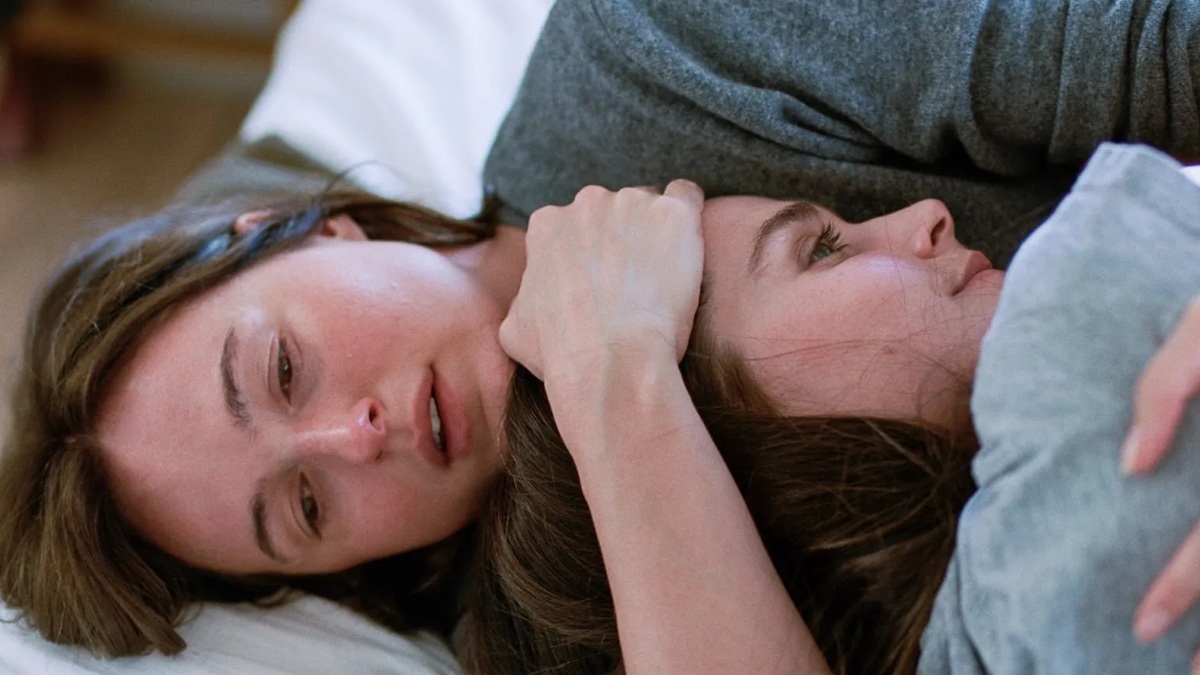
A father returns after a death in the family and behaves as if presence alone should count as reconciliation. Thatâs the kind of emotional violence âSentimental Valueâ (Norwegian: Affeksjonsverdi) understands with unnerving precision: the casual comments dressed up as concern, the polite evasions that sting more than shouting, the way an adult child can regress in seconds once the old dynamic re-enters the room. Joachim Trier helms a film that doesnât chase the spectacle of dysfunction. It studies the quieter cruelty instead, the version that hides behind civility, good intentions, and awkward smiles.
This drama about families that donât come with instructions is among 2025âs best filmsâand one that felt deeply, achingly personal. I didnât just admire this film. I felt recognized by it.
A Family That Never Learned the Same Language
Trierâs story follows the Borg family: Gustav, a once-celebrated film director who abandoned his daughters in the name of career; Nora, now an actress with a reputation and a private terror of stepping onstage; and Agnes, the younger sister who built a stable life around the damage and quietly carries the role of translator between two people who cannot speak the same emotional language. Their motherâs death pulls them back into the same physical space, the same generational home, the same old choreography of wounds and restraint. The house feels less like a setting than a nervous system. Every hallway holds memory. Every room seems to anticipate conflict.
Gustavâs return is not accompanied by grand apologies. He arrives with projects instead. Plans. Proposals. The most catastrophic of these is his belief that making a film about his pastâcasting his daughter in a story shaped by his motherâs traumaâcould function as an olive branch. Itâs the logic of someone who has spent his life communicating through art and now assumes everyone else should meet him there. He wants to transform memory into cinema and call it intimacy. Nora hears the offer as theft.
That chasm between intention and impact becomes the emotional engine of the film. Gustav genuinely believes he tried. Nora genuinely believes he didnât show up when it mattered. Both can be true, and the film refuses to flatten either perspective for the comfort of the audience. Trier hones in on that refusal to give âSentimental Valueâ the backbone.

A Body That Remembers
Renate Reinsveâs performance as Nora cuts deep because it never calls attention to itself. She plays Nora like someone who learned early on how to survive damage rather than heal it. Her humor cuts sharp, but itâs not showy. Her silences feel full rather than vacant. The stage fright that punctuates her career isnât treated as a narrative quirk or convenient symbol; it feels bodily. Instinctual. As if the nervous system never got the memo that childhood is over.
Watching her backstage in the opening stretchâhovering at the threshold of performance, unable to cross itâyou start to understand that this isnât about fear of audiences. Itâs about exposure. About being seen. About the terror of occupying space when you grew up learning that your needs were secondary, inconvenient, or invisible.
Reinsve communicates years of history with the smallest gestures: a delayed response, a tight smile, a glance that lasts half a second too long. Her Nora isnât âlikableâ in the manufactured sense. Sheâs brittle, sarcastic, evasive, withdrawn. Sheâs also painfully recognizable. You donât watch her and think, what a performance. You watch her and think, I know this person.
Perhaps, at certain points in the film you think, more uncomfortably, I have been this person.
The Father Who Thinks He Tried
On the other hand, Stellan SkarsgÃ¥rd plays Gustav with a disarming blend of ego and confusion. This isnât the portrait of a monster. Probably worse than that, itâs the portrait of a man who believes that meaning well should count for something. Heâs self-absorbed, emotionally clumsy, too accustomed to being indulged as an artist to notice the damage heâs caused in ordinary life.
This drama about families that donât come with instructions is among 2025âs best filmsâand one that felt deeply, achingly personal.
And yet SkarsgÃ¥rd never pushes him into caricature. There are moments where you glimpse the boy Gustav once was, shaped by his own share of inherited damage, still struggling to find language for it. There are moments where you see a man who simply cannot understand why the effort heâs making now cannot erase the years he wasnât there.
That confusionâthe sincere inability to grasp why trying isnât the same as being presentâis one of the filmâs most piercing observations. Because itâs real. Because itâs common. And because so many fractures persist not out of cruelty, but out of people speaking with total conviction while never actually hearing one another.
When Art Becomes the Cruelest Language
Cinema itself becomes part of the conflict. Gustav doesnât just want to reconnect with his daughter; he wants to do it through the only language he trusts: filmmaking. So he writes a script rooted in his motherâs suffering, plans to shoot in the family home, and stages moments that echo real trauma. To him, this is vulnerability. To Nora, itâs appropriation.
The film-within-the-film isnât just a clever narrative device; it also exists as an ethical question. Who gets to tell whose pain? When does art become extraction rather than expression? What happens when your attempt at confession becomes someone elseâs reopening wound?
The arrival of American actress Rachel Kemp (Elle Fanning) sharpens these questions. Rachel steps into a role she can technically perform but emotionally cannot inhabit. Her struggle isnât framed as incompetence; itâs framed as distance. She hasnât lived this life. She hasnât grown up in this house. And she doesnât carry this particular silence in her bones. Her miscasting becomes thematically essential. Trier frames this arc as a thesis that some truths simply resist translation; that trauma, when itâs real, is not just something you research or rehearse. Instead, itâs something that has already written itself into the body.

How ‘Sentimental Value‘ Deals with Communication (or Lack Thereof)
Trier structures the film around these failures of communication. Scenes stretch out, conversations falter. Silence becomes the dominant language. The pacing is deliberate without being indulgent. It doesnât hurry characters toward breakthroughs, instead allowing discomfort to breathe. It lets awkwardness linger long enough for you to feel the social exhaustion that accompanies unresolved relationships. In another directorâs hands, this might feel punishing. But here, it feels honest.
There are also technical choices that reinforce this emotional approach. The filmâs recurring blackouts give scenes the rhythm of theatrical acts, as though weâre watching emotional chapters rather than plot beats. The house itself is filmed with such attention that it seems to hold memory in its walls. Trier has always been attuned to the emotional geography of spaces, but here it becomes central: the architecture of the home mirrors the architecture of the family. Cracks, separations, rooms that no longer communicate.
Meanwhile, Agnes (Inga Ibsdotter Lilleaas) might be the filmâs quiet anchor. Where Nora embodies the emotional aftermath and Gustav embodies the emotional blind spot, Agnes occupies the uncomfortable middle. Sheâs the one who chose stability, who built a life that looks functional, who manages the logistics while others spiral. Her profession as a historian isnât incidental. Sheâs the only one who actively seeks out the documented past, who goes to the archives, who tries to understand what has been buried. She doesnât escape the family trauma, but she studies it. She contextualizes it. And in effect, she becomes the translator between generations: between the unspeakable and the survivable.
When a Film Chooses to Observe and Not Resolve
What resonated with me is that the film never pretends this family can be fixed. There is no cathartic explosion where everything gets said at once. Thereâs neither a monologue that resolves years of damage, nor a sentimental pivot into easy healing. Instead, Trier offers something smaller and more difficult: recognition. A shift in how characters see each other. A moment of understanding that doesnât undo the past but slightly alters the present. How âSentimental Valueâ addresses the tensions doesnât promise repair. It leaves you with the ache that comes when you realize that although repair might not be possible, recognition might still matter. That choice feels deeply ethical. It respects not only the audience, but also the complexity of lived relationships.
Sure, some aspects of the film might be a little challenging to viewers, chief of which being the languid pacing that makes the runtime feel longer than it actually is. Or the filmâs preference for restraint in favor of messier emotional outbursts. Or the meta-cinema elements that could read as self-referential if youâre resistant to films about filmmaking. Having said that, none of these diminished my experience. If anything, I felt they felt aligned with Trierâs temperament: careful, patient, uninterested in shortcuts.
Through it all, I keep circling back to why this film landed so deeply for me. Part of it is simply aesthetic preference. Iâve always gravitated toward films that sit with unresolved family trauma rather than tidy it up. Iâm drawn to slow burns, to lingering shots, to wordless acting that trusts the audience to notice whatâs happening beneath dialogue. âSentimental Valueâ lives entirely in that territory. It respects silence. It understands that damage often manifests not in explosions but in withdrawal, sarcasm, deflection, and politeness stretched too thin.

Apropos to Getting (a Little) Personal
But thereâs also something more personal, and itâs impossible to separate that from how much I adored this movie. Watching Gustav and Nora navigate each otherâs presence, I recognized patterns that felt uncomfortably familiar: the awkward civility, the emotional misfires, the belief on one side that effort should be enough, the exhaustion on the other side from having spent years adapting to absence.
âSentimental Valueâ articulates a particular pain: knowing someone loves you in the only way they know how, while also knowing that love never arrived in the form you needed. Living with the knowledge that they probably believe they did their best. Carrying the awareness that their best still left marks.
Thankfully, Trier never exploits that pain. He simply observes it. He gives it shape without sensationalizing it. And he trusts his actors to hold it in their bodies. Because of that trust, the film feels less like a constructed drama and more like something you stumbled into, something youâre almost embarrassed to witness because of how private it feels.
âSentimental Valueâ felt like that to me: through its attention to the ways people fail each other while still loving each other; through its active avoidance to fix what life rarely resolves; and through its understanding that sometimes the most meaningful shift is simply seeing the person in front of you more clearly than you did before. That kind of honesty stays with you.
“Sentimental Value” had its world premiere at the main competition of the 2025 Cannes Film Festival on 21 May 2025, and was released in the United States on 7 November 2025 by Neon. Follow us for more coverage.




3 Comments
Your review is everything I felt watching this film but couldnât articulate it as well. So much generational family trauma in my family and this movie is pretty close to how we function with each other. Trying to always see them more clearly than I did before and accepting their best but still showing the scars.
Thank you â¤ï¸
Thank you. I’m glad the review resonated with you. Cheers.
A wonderful review.