





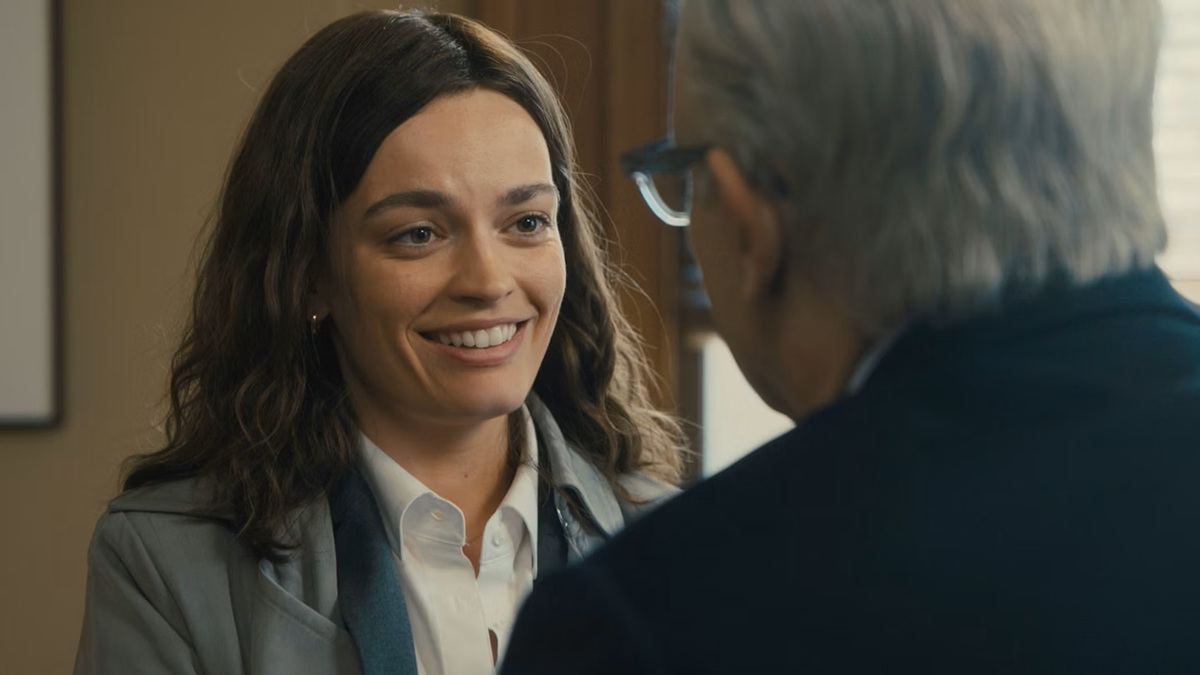
Part of me really wanted âElla McCayâ to work. Not in a polite, professional way, but in a personal one. James L. Brooksâ films were stitched into my early movie memory: the swell of the âTerms of Endearmentâ score being the soundtrack of my earliest memories I have of my father, the awkward electricity of âAs Good As It Getsâ playing on VHS while I hovered at the edge of the room as the adults watched it at home, the moment I discovered âBroadcast Newsâ and realized movies could be sharp and funny and aching at the same time.
So I went into âElla McCayâ with real goodwill. I wanted to feel the old rhythm again. I wanted to recognize the voice. Frankly, I wanted to root for the film. And then it started, and it kept starting, and restarting, and zigzagging, until whatever goodwill I had quietly packed up and left.
âElla McCayâ: A Mishmash of Several Microfilms Clumped Together
This isnât the mild disappointment of a late-career stumble. This is the baffling kind, the sort that sends you replaying scenes afterward, trying to pinpoint where things went wrong. The honest answer is harder: it never really goes right at any point.
Watching âElla McCayâ feels like being handed several potentially interesting movies at once and being asked to pretend they form a coherent whole. Thereâs the political story: a young lieutenant governor (Emma Mackey) suddenly elevated to the top job. Thereâs the family story: a wounded daughter, a cheating father (Woody Harrelson), a dead mother (Rebecca Hall), a fragile younger brother, a marriage already cracking. And then thereâs the scandal, the workplace drama, the personal reinvention arc.
On paper, this should be Brooks territory. Interlocking lives. Emotional mess. Talky scenes that slowly reveal character. Instead, everything feels undercooked and overcrowded, as though the film is afraid to commit to any one thread, so it keeps tugging at all of them and finishing none.
Scenes donât build on each other. They interrupt. Emotional beats are introduced, then quietly abandoned. Storylines arrive with urgency and leave without consequence. By the time the film ends, youâre less moved than puzzled. Not because itâs complex, but because itâs scattered.

A Political Film That Shirks from Responsibilities
The 2008 setting only deepens the confusion. When the film opened by situating itself in that year, I genuinely laughed, and not because it was clever. Unnamed state? Unspecified political party? Politics reduced to vague vibes. A world where scandals are quaint, institutions mostly function, and everything wraps up with improbable neatness.
If Brooks was aiming for a kind of fairy tale, this leans closer to fantasy than fable. Even without specifics, audiences already understand the fabric of political life well enough to fill in the blanks. Those blanks donât become universal here. They become unintentionally comic. At times, âElla McCayâ is funny, yes. Just not in the way a comedy-drama hopes to be.
What makes this harder to accept is that you can see the outline of a better film underneath the mess. There is charm and sincerity here, and there are moments that almost land.
Most of the performances deserve more than the film gives them. Emma Mackey works hard to give Ella a pulse even when the writing undercuts her at every turn. Meanwhile, Jamie Lee Curtis brings warmth and bite to scenes that would otherwise feel weightless. You sense that the cast showed up out of respect, maybe even affection, for Brooks.
The problem is that the script leaves them stranded. Effort isnât the issue; construction is.

Even the Music Can Only Do So Much
One of the few elements that genuinely works for me is the score. Hans Zimmerâs music brings a sense of life and emotional continuity that the film itself often lacks. Itâs restrained, graceful, sometimes lightly playful, with orchestration that occasionally recalls the warmth of classic John Williams, and even Zimmerâs own underrated works in films such as âItâs Complicatedâ and âSomething’s Gotta Give.â
And yet even here, thereâs a bittersweet comparison. Set aside emotional tracks such as âCasey Opens Upâ and âIf You Even Liked Me,â and this filmâs score pales compared to an earlier work: Zimmer previously collaborated with Brooks on âAs Good As It Gets,â and that score carried real emotional heft.
Zimmerâs work here, conversely, does its best to hold the movie together, but it canât compensate for the storytelling around it. It instead ends up feeling like mood lighting in a room where the furniture keeps collapsing.
Related Review: âSentimental Valueâ: The IKEA-ification of Fractured Family Relationships

The Strange Sadness of This Experience
Halfway through, I caught myself wondering why this was bothering me so much. I donât root for films to fail. I donât enjoy piling on. But thereâs a specific sadness in watching a filmmaker you once admired deliver work that feels detached from the qualities that made their films matter in the first place.
The Brooks who wrote characters that felt messy, contradictory, and recognizably human seems distant here. What we get instead are people who behave however the scene requires, then reset for the next one. By the end, my reaction settled into something simple and uncomfortable: I didnât expect much, but I also didnât expect it to be this dispiriting. Not offensive, not infuriating. Just draining. The kind of film that slowly erodes your initial goodwill instead of rewarding it. If Iâm being honest, Iâd rather spend time with Leslie Knope. At least her optimism comes with clarity, intention, and a sense of the world sheâs actually living in.
I wanted to like âElla McCay.â I really did. Somewhere along the way, though, that desire didnât survive the movie.
“Ella McCay” premiered at the El Capitan Theatre on December 9, 2025, and was released in the United States by 20th Century Studios on December 12, 2025. Follow us for more coverage.




