
Sriram Emaniâs short film âJam Boyâ just had its world premiere at the DC Independent Film Festival this February and was the filmmaker’s debut. It leaves in its wake a deeply cultural picture about identity, dystopia, and self. That Emaniâs film was also written by himâand starring himâshows the filmmaker is comfortable being vulnerable with his material. His lead character, Sriram, wears Emaniâs themes close to his heart. The result is a film, that at 22 minutes, lets viewers into his life and brings home its themes of colonialism, cultural death, and Americaâs often skewed thoughts on assimilation.Â
“Jam Boy” opens upon a colorless room with a circle of chairs, its participants all dressed in black, discussing their upcoming âplacement.â We have little information about why they are there, but quickly learn itâs to work for âcredits.â Sriram (played by Director Emani) is told heâs earning credits that will allow him to travel back home to India and see his sick mother. Itâs a noble quest; in this society, where food is weaponized (workers are forced to eat a special cake everyday and cannot bring their own food), the absolute color we seen in visions of Sriram cooking with his mother make us long for that kind of warmth and love. But something is amiss: workers in this dystopian office are slowly mentally decaying. Sriram helps one in the opening scene, but later on it will do no good as the man is all but a zombie.Â
A Cultural and Powerful Film
âJam Boyâ is a film less described by plot, and itâs clear Emani is taking a stand against cultural death. This is an Indian film but is applicable to any minority culture mixing with a âdominantâ one. The corporation Sriram works for has prison-like rules: workers must check in and out from their computer with an ankle bracelet. They donât know what their coding does, just that it must be done. When Sriram later finds out what some of this code might do, heâs quickly redirected to just do his job. Sriramâs boss, Niko (Zeus Taylor) has the attitude of someone who only cares about the outcome and not the harm it causes. This is magnified when Sriamâs credits systematically disappear when he questions things. A conversation with a co-worker, Sofia (Kris Sidberry) shows his trip back to India may very well be a dangling carrot he can never reach.Â
What makes âJam Boyâ intriguing is its use of color to juxtapose its dystopian world and Sriramâs home life. The filmâs opening shows a cooking lesson with his mom full of spices, color, and love. The filmâs artistic, and Iâm unsure whether Sriramâin the opening sceneâis remembering a time cooking with his mother (an excellent Manga Emani), or just imagining one. He will FaceTime her after work in the precious time he gets at home. Their talks shew vibrancy and love. He will later share one of his dishes surreptitiously with a Sofia, who is amazed by the spice. Itâs a strong comparison to the flat, colorless white cake workers are forced to eat that also decays their personality. This scenes between Emani and Sidberry show a celebration of life that bursts onto the screen. Itâs quickly shut down by Niko, with likely repercussions for both parties.Â
Fighting Back Against Cultural Theft
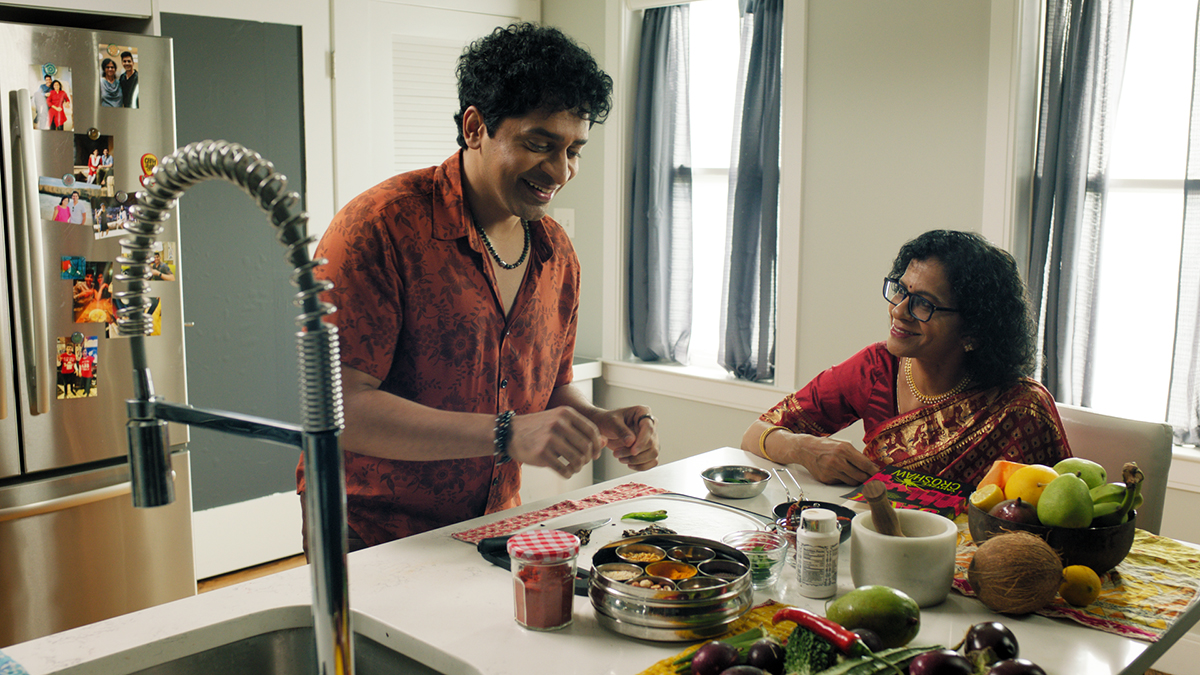
Watching âJam Boy,â I couldnât help but note comparisons to demands minority communities are saddled with in the U.S. Retaining oneâs culture is often viewed in conservative circles as ârefusal to assimilate,â and thereâre instances of this all the way back to African Americans after slavery and Indigenous Persons with regard to their dress, hair, and customs. The Aurora Corporation in âJam Boyâ is one that demands performance and the death of whatever culture or personality one brings along. Those who conform become drones, quickly replaced. Maintaining oneâs identity to Sriram becomes not luxury, but necessity. Thereâs something special about the flair and vigor Sriram and his mother bring to their scenes. Itâs hard to imagine a world where killing thisâin the name of progress, conformity, whateverâshould ever be on the table.
The only caution when viewing âJam Boyâ is its deeply cultural messaging, which may be foreign to some viewers. Director Emani hails from a Telugu/South Indian background, and the experience may be different, even amongst people from the same nation. But itâs of little concern. The points âJam Boyâ is making are relatable and real, and I found myself deeply attached to the culture Emani is commenting on. Amidst Aurora Corporationâs desire to sanitize culture out in the quest for sameness, the protection of oneâs roots has never been more necessary. The film is also commenting on what some minority populations in the U.S. are often asked to give up in order to stay. I hope the takeaway from Sriramâs important film is to hold on to our roots at all costs and to question any system that demands otherwise. Because, if weâre not ourselves, who are we?Â
Trailer and More Info
âJam Boyâ had its world premiere at DC Independent film festival and is the filmmakerâs debut. It won âBest Filmâ in the Web Series category. For more information on âJam Boy,â you can follow the film on Instagram, visit the filmâs official website, and check out the trailer in the window below.Â