





I knew about Canadaâs residential schools, but Iâll admit I knew much less about the Sixties Scoop before watching “Meadowlarks.” That blind spot matters. Tasha Hubbardâs film is working from a chapter of Canadian history that plenty of people outside Canada may not know well enough, if at all: Indigenous children taken from their families and placed in non-Indigenous homes, with the damage then left for those children, their families, and their communities to carry.
That alone gives “Meadowlarks” weight. It also makes the film tricky to write about, because the importance of the story and the quality of the dramatization are not always the same thing. I was moved by it, more than once. I also found myself wishing the film trusted its quieter moments more often.
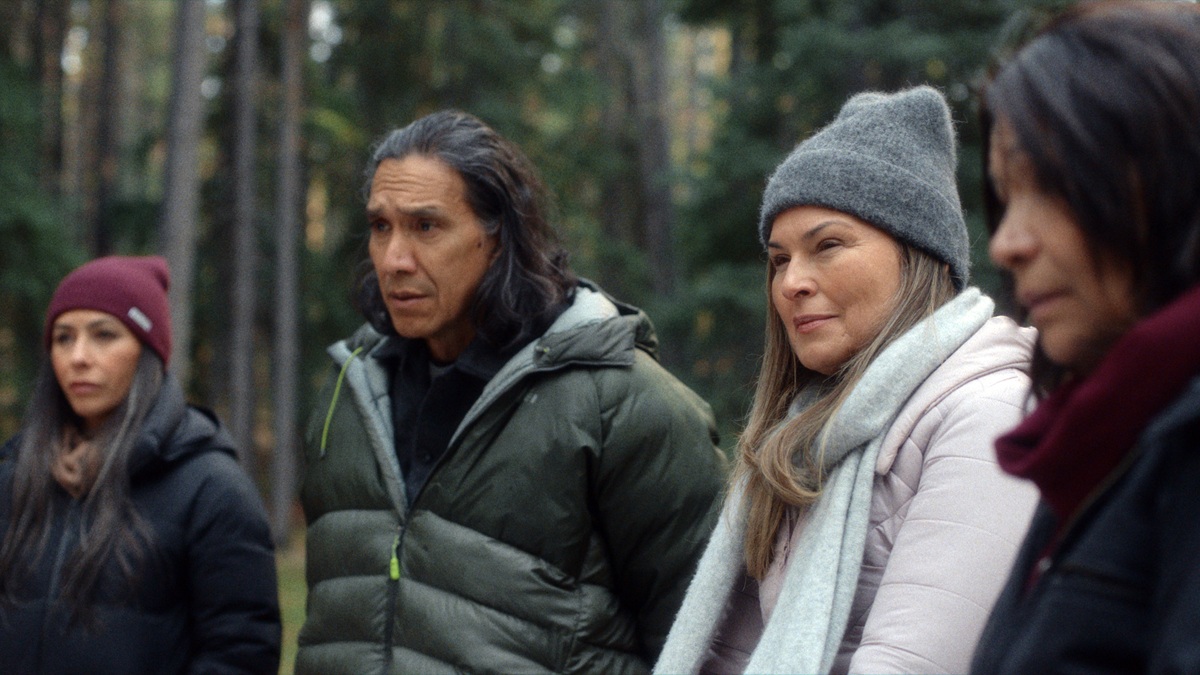
Based on Hubbardâs own documentary “Birth of a Family,” “Meadowlarks” follows four Cree siblings who were separated as children and placed in non-Indigenous homes during the Sixties Scoop. Now in their 50s, Anthony (Michael Greyeyes), Connie (Carmen Moore), Marianne (Alex Rice), and Gwen (Michelle Thrush) agree to meet for the first time over a holiday weekend in Banff. A fifth sibling, George (Lorne Duquette), cannot bring himself to attend. That absence sits there from the beginning. Nobody has to overstate it. A family is trying to become a family with one chair still empty.
Related Review: âCafé Daughterâ: A Coming-of-Age Story of Embracing Identity Amidst Racism
Meeting as Family, Starting as Strangers
The early scenes have the right kind of awkwardness. These people are siblings, yes, but what does that mean when they donât have the shared history most siblings take for granted? They donât know each otherâs habits. They donât know which jokes will land, which questions are safe, which small comments might hit a bruise. Even calling it a âreunionâ sounds strange when, for most practical purposes, they are meeting for the first time.
Hubbard and co-writer Emil Sher build much of the film around conversation. The siblings compare photos, childhood memories, missing pieces, and different versions of displacement. Marianne, who grew up in Belgium, has lived with a different kind of distance from her Indigenous identity than Gwen or Anthony, whose wounds seem closer to the surface. Connie tries to keep things warm and manageable until she cannot. Anthony keeps pulling back into silence, not because he has nothing to say, but because silence was probably once the safest place available to him.
The performances carry much of this. Greyeyes is especially good as Anthony, playing him with a softness I do not always associate with his screen presence. He lets you see the boy still stuck inside the man: the child who wanted protection, the adult who now thinks he should have known how to protect everyone else. Moore gives Connie a nervous, generous warmth, the kind that can turn into panic when the room stops cooperating. Thrush makes Gwen blunt without making her cruel. Rice, meanwhile, has some of the trickiest work as Marianne, whose polished composure slowly gives way to shame, longing, and the pain of realizing that a nice life can still leave something essential untouched.
When Silence Says More Than the Script
The frustrating thing about “Meadowlarks” is that it often knows exactly how to hurt us without forcing the matter. A look across the room. A phone call with a daughter. Someone stepping away before the conversation becomes too much. Those moments work because they feel lived rather than written.
Then, every so often, the film says the thing out loud anyway.
This is where the writing can get stiff. Some lines arrive too neatly, as though the characters have been asked to summarize their pain for the viewer. A few emotional beats lean toward TV-movie bluntness, and the music sometimes pushes harder than it needs to. Piano, strings, swelling feeling. The usual machinery. It is not disastrous, but it does make some scenes feel smaller than the experiences they are trying to hold.
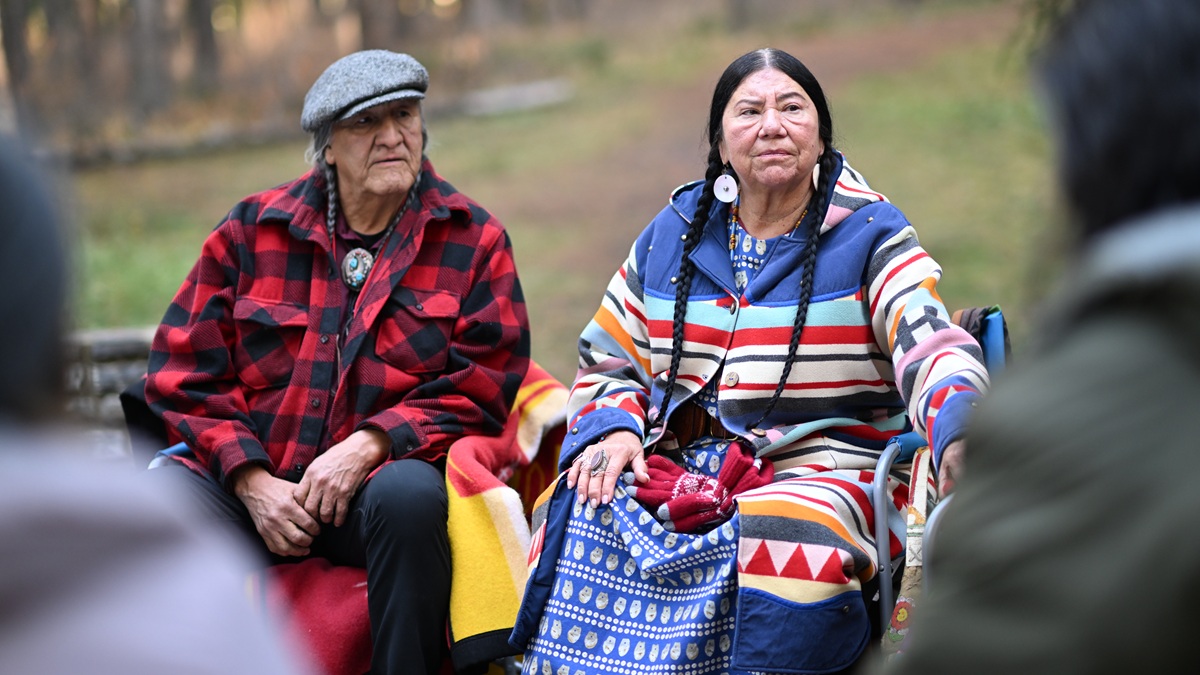
And yet, I donât want to sound harsher than I feel. Because when “Meadowlarks” works, it really works. The visit to the Elders, for instance, could have been handled with sticky sentimentality, but the scene has a plain, open-hearted quality that moved me. The siblings are not being magically healed. They are being welcomed into something they were denied. That difference is key.
James Klopko‘s cinematography helps, too. Banff is beautiful, obviously, but the film doesnât simply coast on mountain views. The setting creates an odd tension: a tourist town, a rented house, a temporary gathering place for people trying to rebuild something that should never have been broken. The prettiness almost makes the ache sharper. They are surrounded by all this grandeur, and still the hardest work is happening at the table, in the car, on the phone, in pauses nobody quite knows how to fill.
âMeadowlarksâ: Learning How to Be Family for the First Time
So yes, “Meadowlarks” has its Hallmark-ish edges. The dialogue can be too direct. The score can tug too hard at the sleeve. Some scenes would have cut deeper if they had stopped one or two lines earlier. But the filmâs emotional force is not fake. The story is too painful, the actors too committed, and Hubbardâs compassion too evident for me to dismiss it as merely well-meaning.
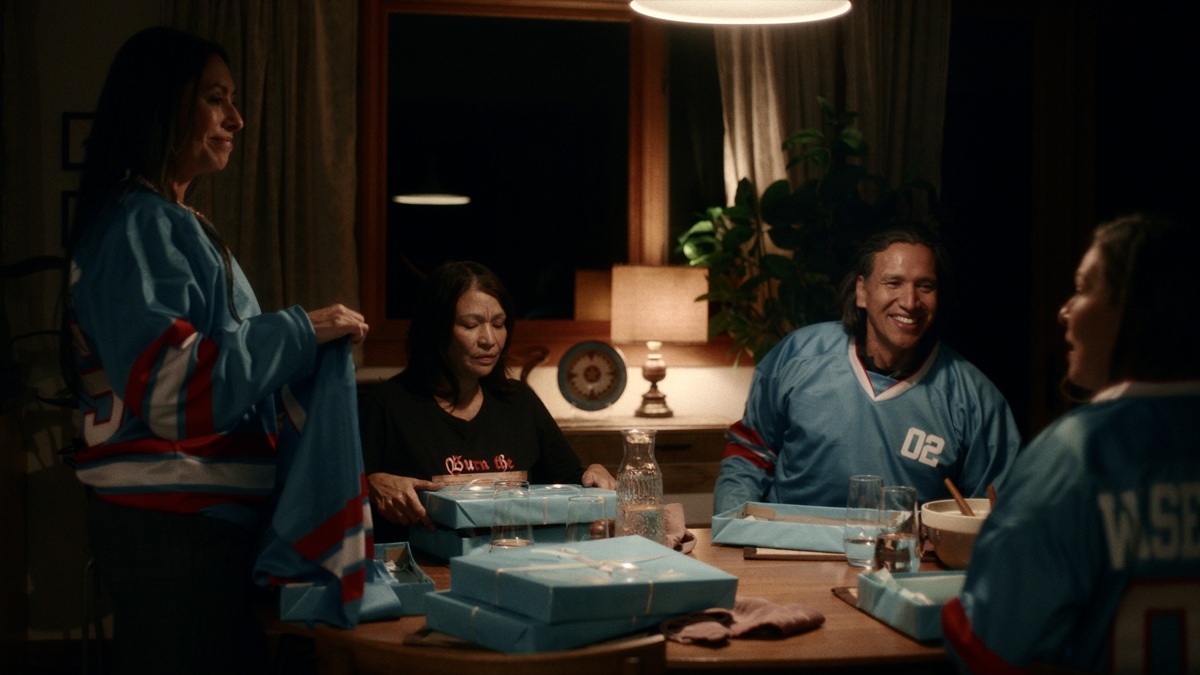
Fortunately, “Meadowlarks” does not pretend that one long weekend can repair five decades of separation. What it offers is more modest: four people learning how to stand near each other without having to explain every wound from the beginning. They are not whole. They are not healed, but they have more than they had when they arrived. For this family, that is not everything. Yet, through it all, it still counts for something.


Tasha Hubbard’s “Meadowlarks” premiered at the 2025 Toronto International Film Festival on September 7, 2025. It will screen at this year’s imagineNATIVE Film + Media Arts Festival, which takes place on June 2-7, 2026. Follow us for more coverage.




