





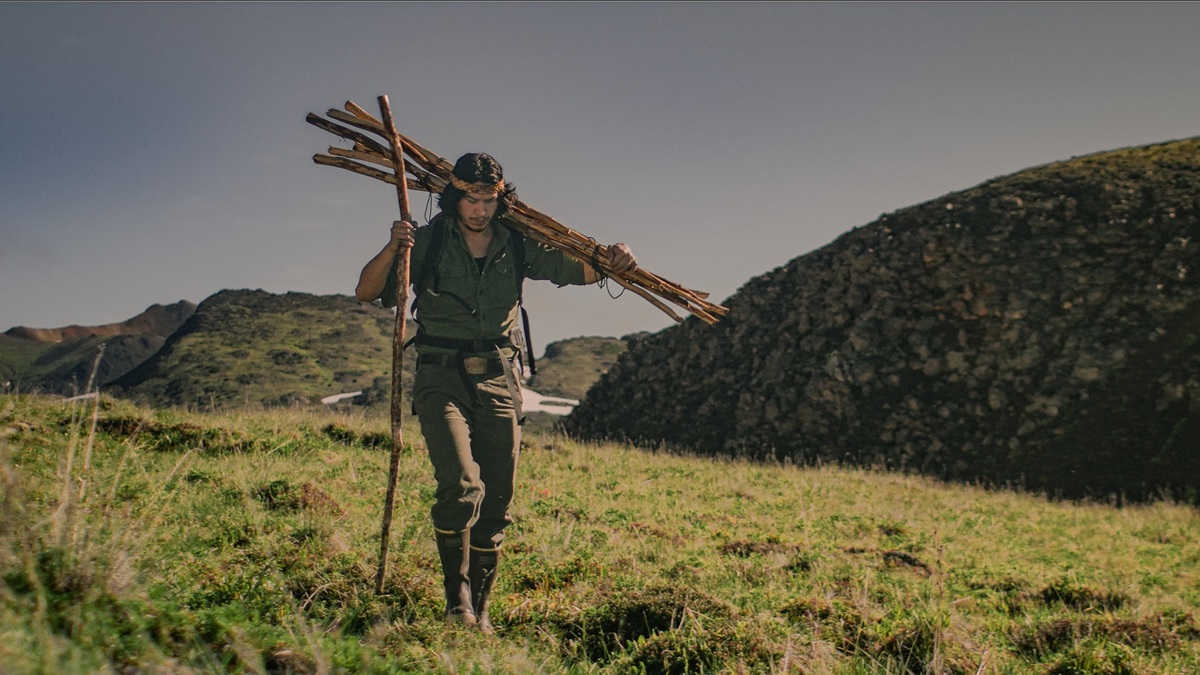
Before “Ceremony” becomes a film about loss, it first teaches us how to listen. We hear rushing water, birds, Nuxalk language, the crackle of radio, and memories of a fish so abundant that people once caught them by hand. The sputc, or ooligan, havenât returned to the Bella Coola River in meaningful numbers for more than two decades, and Banchi Hanuse‘s documentary begins with that absence.
Nonetheless, the film doesnât treat the missing fish as a tidy environmental mystery. Instead, it follows the absence outward until it touches almost everything: land, memory, ceremony, law, language, family, and the long work of refusing disappearance.
Listening Through Nuxalk Radio
One of Hanuseâs sharpest choices is letting Nuxalk Radio guide the film. A more conventional documentary mightâve leaned on narration, maps, experts, and a clean explanation of what happened to the ooligan. “Ceremony” works from inside the community instead, allowing stories to move through the crackle of a local station where people arenât performing grief or history for outsiders. Theyâre speaking to one another.
That choice gives the film a looseness that feels earned. Elders remember when ooligan season meant grease camps, families gathering by the river, children helping and playing, seagulls crowding the sky, and everyone waiting for that first taste after a hard winter. Scientists and community members talk about monitoring the river and finding only a tiny fraction of what once returned. Others speak of smallpox, stolen land, settlement, logging, and the legal language that keeps pretending Nuxalk territory was ever empty.
The radio thread also helps Hanuse avoid turning Indigenous history into a lesson plan. The film teaches, of course, but it doesnât lecture in the usual documentary way. Its rhythm comes from conversation, song, memory, broadcast, archival material, animation, and stretches of water that ask for patience. The anger is there. So is the grief. But Hanuse lets both emerge through community speech rather than packaging them into a digestible argument.
More imagineNATIVE Coverage: âMeadowlarksâ: A Reunion With One Chair Still Empty
The Fish, the Land, the Return
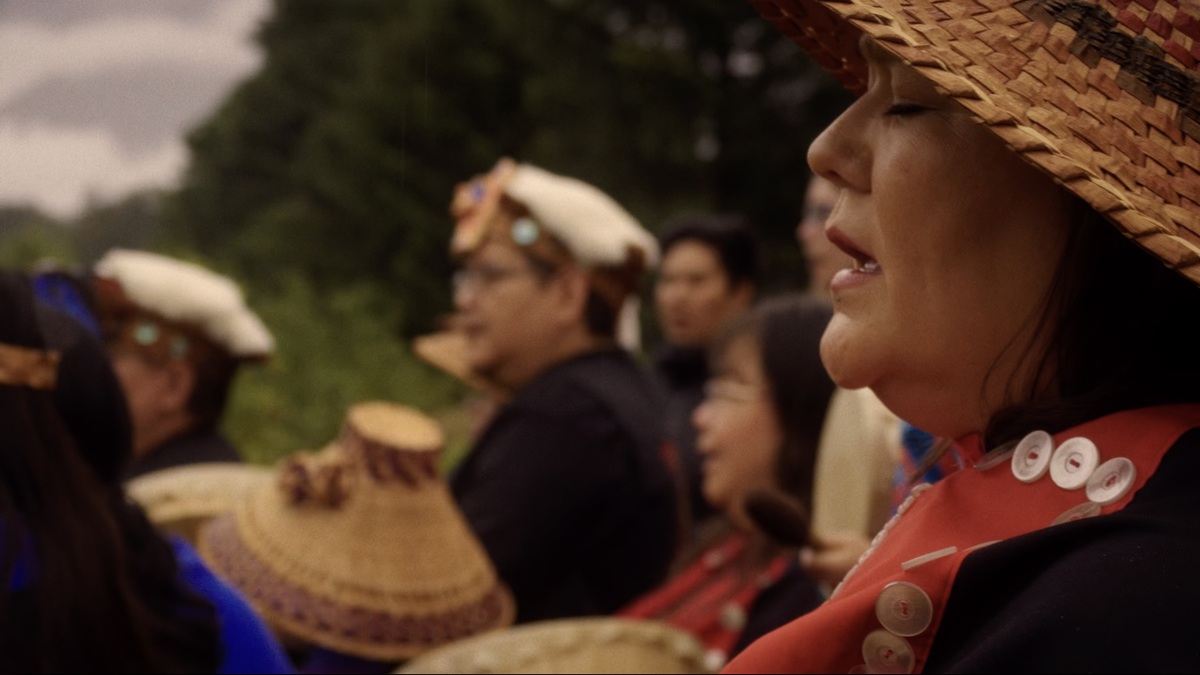
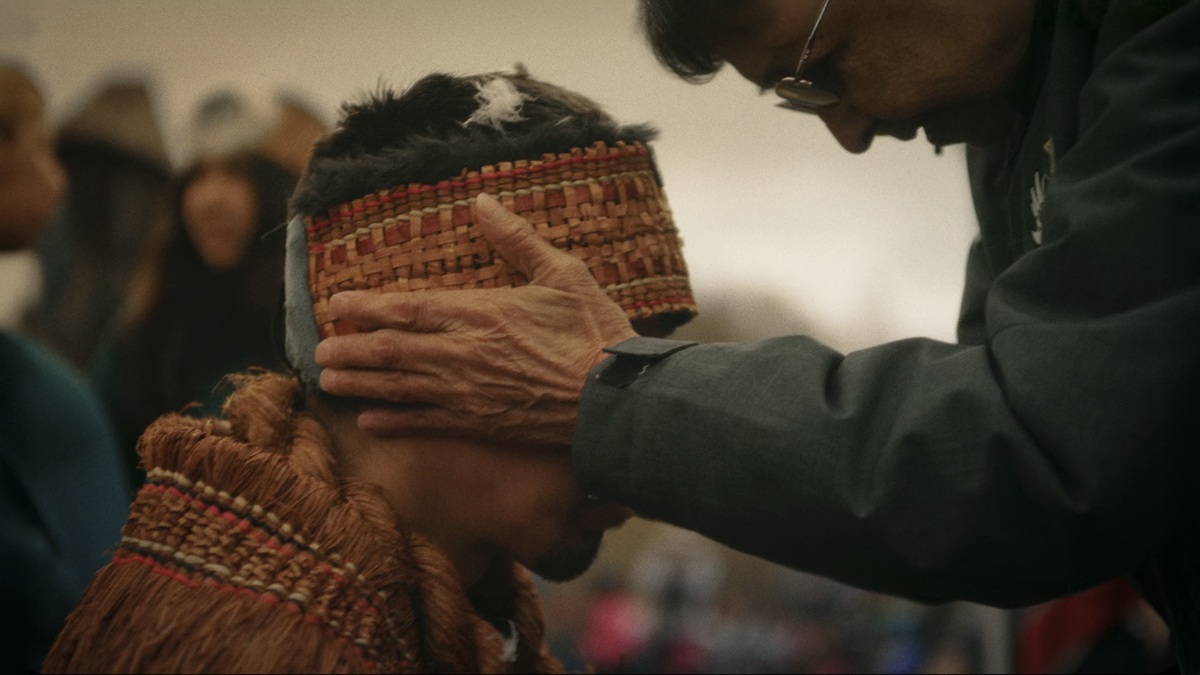
The title carries more weight as the film goes on. Ceremony here isnât a symbol placed neatly over the story. Itâs action. When the community gathers to bring back a sputc ceremony once outlawed by Canada, the moment feels both practical and spiritual. A pole is carried to the riverbank. Songs are sung. People help, laugh, remember, and prepare a welcome for something that may not return exactly as they hope.
Hanuse places science and ceremony beside each other without forcing a debate between them. Megan and Jason Moodyâs work studying the ooligan run is patient and precise, built on careful observation of the river. The ceremony is also a form of stewardship. Both are ways of saying that return doesnât happen by accident. You donât simply wait for the fish to come back; you rebuild the conditions that make return imaginable.
From there, the film widens. Sometimes beautifully, sometimes with a shape that can feel unruly. The thread involving Nuskmata and the rebuilding at Nusqâlst may first appear to pull the film away from the ooligan, but it belongs to the same wound. If land can be renamed, fenced, sold, and policed, then disappearance is never only ecological. Itâs political, historical, and spiritual all at once. Hanuse understands that the river, the fish, the graveyard, the radio station, and the house being built on ancestral land are not separate stories. Theyâre part of the same argument for continuity.
Related Review: In âAkiâ, Darlene Naponse Crafts a Wordless Love Letter to Home
âCeremonyâ: Listening for the Return of the Sputc
Still, “Ceremony” isnât always easy to settle into. Its structure drifts, and some transitions ask the viewer to do more connective work than usual. A few passages linger in atmosphere when a little more shape mightâve helped. But Iâd rather sit with a film that risks being too open than one that flattens a living history into a neat documentary template.
The filmâs central question isnât only what happened to the ooligan, though Hanuse never treats responsibility as incidental. The stronger question is what people do when the river no longer answers the way it used to. “Ceremony” finds its answer not in closure, but in practice: broadcasting, remembering, studying, building, singing, carrying, gathering at the water again.
What makes the final stretch moving is that Hanuse doesnât ask the viewer to mistake survival for comfort. The sputc have not simply returned because a film wants a clean ending. The legal and political struggles remain. The grief remains. But so does the sound of Nuxalk Radio cutting through the valley, carrying voices that refuse to be archived as something past tense. In “Ceremony,” the river is not empty because the story is over. It is waiting, and the people beside it are still speaking.


Banchi Hanuse’s “Ceremony” had its world premiere at the SXSW 2026, where it won the SXSW audience award. It will screen at this year’s imagineNATIVE Film + Media Arts Festival, which takes place on June 2-7, 2026. Follow us for more coverage.




