





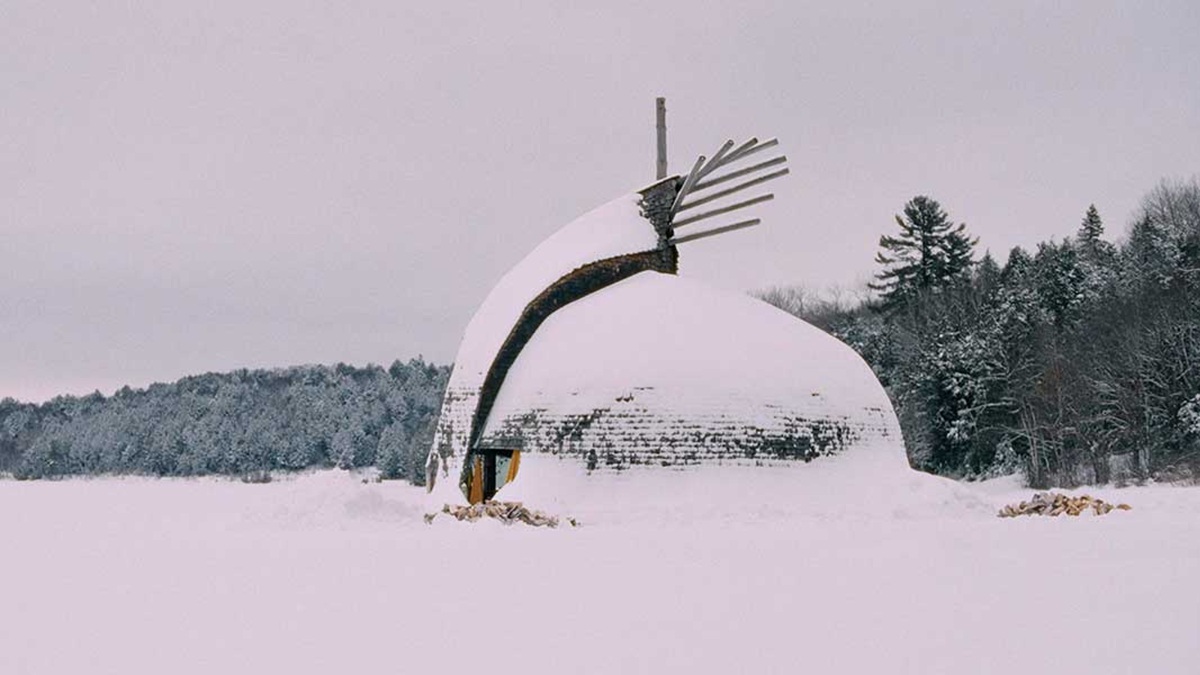
Darlene Naponseâs latest film âAkiâ opens with a quiet confidence that feels almost radical. No narration, no on-screen text telling you what to notice, just the northern Ontario land breathing in real time. A birdâs eye view of snowy land as the lush music swells; later on replaced by crickets trilling against the hum of distant water, cattle lowing from somewhere off-frame, and hockey sticks scraping the ice as young girls play at night. Where Godfrey Reggioâs experimental cult classic âKoyaanisqatsiâ blasted urban chaos in operatic time-lapse, Naponse moves the other way: a kind of anti-âKoyaanisqatsiââcamera lowered in reverence, offering images like a song of praise to the earth.
The seasons in âAkiâ turn without hurry. A childâs skate blades cut across an outdoor rink. A beaver swims through the current. A dog joyfully runs through the lake. A sloth of black bears rummages through trash. Later, white snow hardens the ground into a field of diamonds. These are not inserts to decorate a narrative; they are the narrative.Â
An Immersive Look to Life on a Small Anishinaabe First Nation
âAkiââwhich in Anishinaabemowin can broadly refer to land and the peopleâinvites you to surrender to the rhythm of Atikameksheng Anishnawbek, the filmmakerâs own home community. Its beauty isnât something you check off a list of scenic attractions. More than that, itâs a living presence that asks you to stay, listen, and breathe.
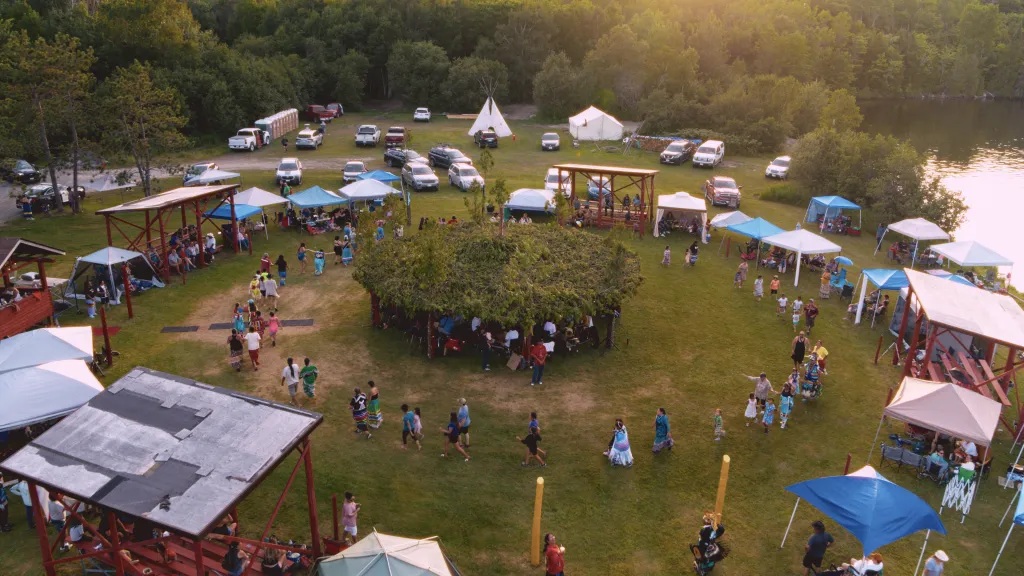
When people do enter the frame, they arrive almost as naturally as the changing leaves. A highlight comes in a powwow sequence that builds from the soft rattle of drums into a swirl of color and movement. The camera doesnât treat the gathering as spectacle; it simply bears witness. For anyone who has covered Indigenous cinemaâfrom the more narrative-driven âFancy Danceâ to Naponseâs own earlier feature âStellarââthe powwow resonates as both celebration and act of continuity, a heartbeat linking generations. No exposition explains its meaning; the meaning is in the drums, in the faces, in the simple fact that it endures.
On the other hand, while watching âAkiâ I was reminded of Kimi Takesueâs âOnlookers,â another experimental documentary that trades conventional story for a kind of meditative travelogue. Both films trust their audiences to find shape in the act of watching. Thereâs no guide rope, just the quiet thrill of being present. Naponseâs difference is her intimacy. Whereas âOnlookersâ roams through Laos as an inquisitive outsider, âAkiâ moves like someone tracing the contours of her own heartbeat. The result is less travel diary than homecoming.
âAkiâ: A Love Letter to the Land That Requires Little to No Words
If you saw âStellarâ at TIFF a few years back, youâll recognize Naponseâs fascination with the cosmos and the bonds of community. With âAki,â however, she trades the magical-realist romance of that film for something sparer and, in its own way, more daring. With almost no dialogueâoccasional Anishinaabemowin asideâthe message carries more weight. This is a love letter to the land and to the people who refuse to be separated from it. The absence of words isnât a lack. Quite the contrary, itâs a statement of trust that the images and sounds can speak for themselves.
By the time the final images fadeâa bookend of shots that mirror the opening sceneâyou may feel as though youâve been breathing alongside the pines and rivers, your own heartbeat slowed to match the drum. âAkiâ doesnât lecture or plead, and I donât think it ever felt the need to. Instead, it simply lets the land, and the community that calls it home, assert their presence.Â
In a festival landscape crowded with talky, self-conscious experiments, âAkiâ is a tender delight that stands out by doing less and giving more. In a way, Naponse offers the land back to us, luminous and unhurried, and asks only that we look.

Darlene Naponse’s âAkiâ had its world premiere at this yearâs Toronto International Film Festival. Follow us for more coverage.




