
Back in 2013 I reviewed Andrzej Bartkowiakâs âDoomâ and gave it a failing grade. Growing up in the â90s on the MS-DOS version of the gameâwhich weaved in and out of Mars and HellâBartkowiakâs film was initially a letdown. Though it took place on the Martian ARC facility, there were no shots of the Red Planet. And with a bevy of Marines running around (fronted by Dwayne Johnson), the film lost that one-man-alone-in-Hell motif that made the games atmospheric and creepy. The ending was also clumsy. It was hard to discern what it represented. Was Johnsonâs âSargeâ now a demon? Was Karl Urbanâs John Grimm the Doom Slayer? Etc.
But now, after years of hurling myself back into the original games on Nintendo Switchâand expanding to âDoom 3,â âDoom 2016,â and âDoom Eternal,â I realize what I got wrong in my criticism. I donât take it all back; the film isnât perfect. But what it is, flatly, is a movie based on âDoom 3ââwhich was more based in deserted science labs and a sprawling military compound than the winding tunnels and Mars surface that inhabited the original game. And in that task, it mostly succeeds.
Based on ID’s ‘Doom 3’
Still, thereâs creative license. The âDoom Marineâ from âDoom 3â is here replaced by a squadron comprised of macho types. They are trained to respond militarily to whatever the ARC Corporation on Mars might need. While the film is slow to get into what that might be, veterans of the game know that what follows. The Arc engaging in unethical science experiments and tampering with the gateway between Mars and Hell led to hosts of demons to be loosed and scientists and station guards to be turned into zombies.
When I first watched this film, I was upset by the near-total abandonment of the gameâs feel. While 16-bit and grainy, the marine in that series would wander from room-to-room on the Mars base. Sometimes a room would be filled with the undead or other demons. Other times there would be a barren hallway, windows on either side showing the red surface of Mars in the distance, even though you were trapped inside and couldnât get to it. In Bartkowiakâs film, thereâs none of that. But to be fair, thereâs little-to-none of that in âDoom 3â as well. You start the game, thrust into a subterranean facility thatâs mostly dark, with only a flashlightâthat has limited useâas your guide.
Good at Highlighting the Game’s Physical Darkness
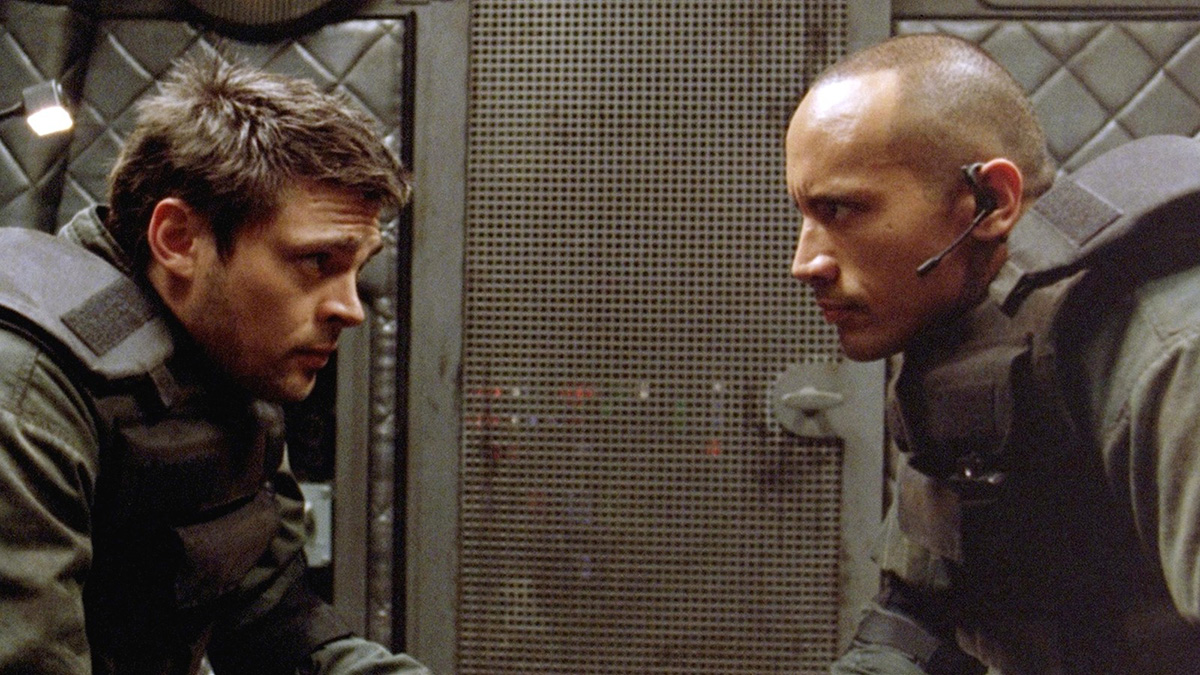
In that vein, Bartkowiakâs film is effective. It highlights the gameâs endless corridors, darkened rooms, and sense of isolation. However, it doesnâtâ happen right away. First, it pits the Marine crew against several scientists and a research head, played with vulnerability and likability from Rosamund Pike. Pikeâs Samantha Grimm is also Johnâs sister, and the two have some heated moments of standoffishness. Thereâs a history between them âDoomâ is slow to unravel and is actually kind of solidly built. Underscoring this, thereâs the tension of the ARC facility being forcedâafter an accident that leads to the Marinesâ arrivalâto give away more of its secrets than it wants. Namely, this includes experiments that Dr. Carmack (Robert Russell) was engaged in that led to the facilityâs current state.Â
The Marine team is cast appropriately, and during my first viewing I hadnât yet seen Richard Brake in âBatman Beginsââwhere heâs excellentânor Karl Urban in much. Thereâs of course a pecking order (Dwayne Johnsonâs âSargeâ is in command), but the camaraderie between the rest of them is good. Of the cast, I liked Ben Daniels and Razaaq Adoti. And Brake was humorous as that one soldier that just has to pick at everyone and everything. He reminded me of Bill Paxton in âAliens.â Watching the crew sneak through the ransacked facilityâand become increasingly alarmed at what they findâis one of the movieâs strong points. Additionally, âLock, Stock and Two Smoking Barrelsââ Dexter Fletcherâwho will become an unfortunate demon by the endâwas a fun addition.
‘Doom’s Choice of Homages Become a Problem
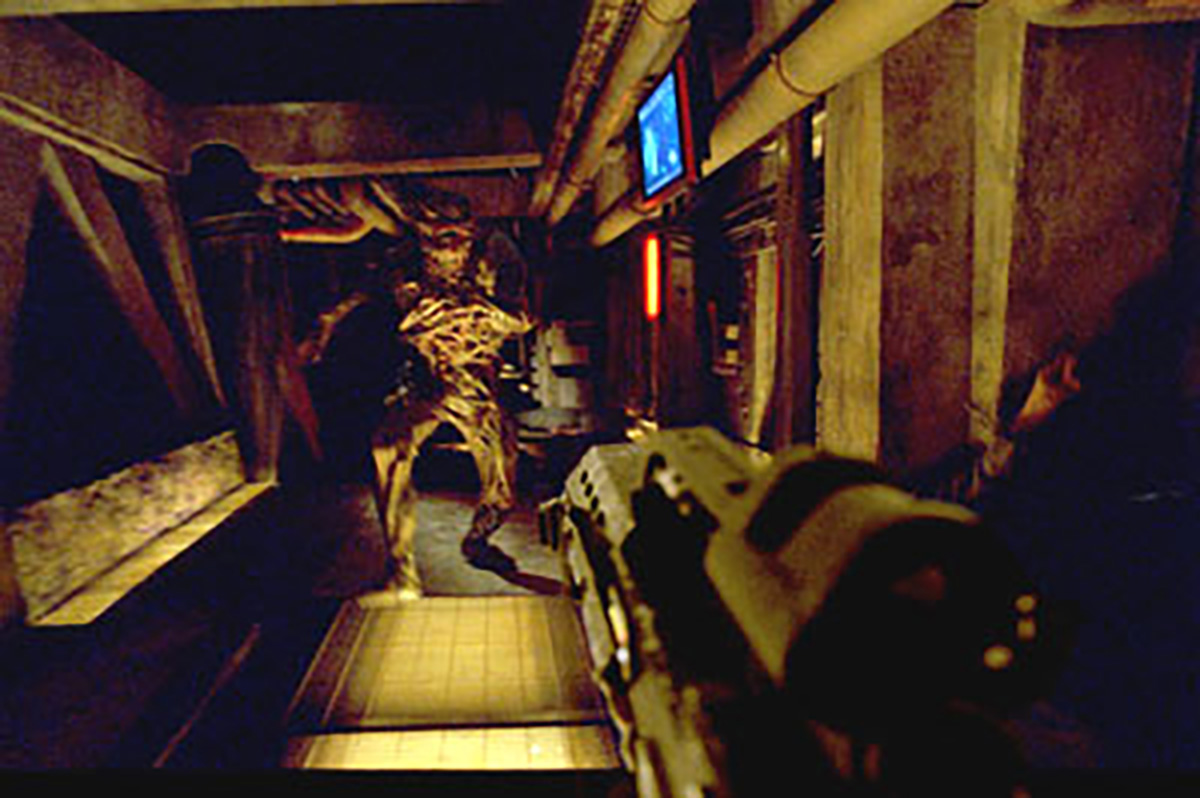
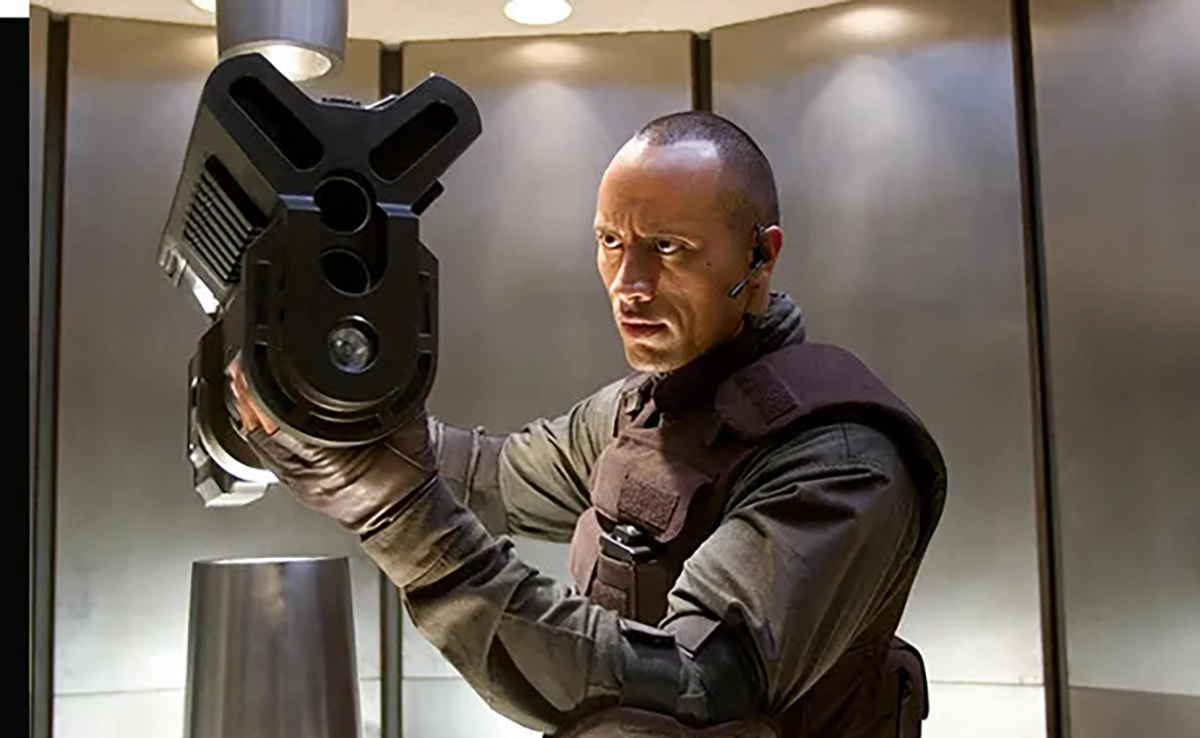
Where the movie loses something is by cramming in homages from the game to appeal to its fanbase while simultaneously ignoring other homages that would have added to the filmâs atmosphere. For instance, the Marines raiding the armoryâin particular Sarge finding the âBFG,â the film even having the honesty to have him utter âbig fucking gunââwas rightly iconic. Sarge later using the weapon reminded me of the gameplay in both looks and physics better than it ought. Additionally, the corridors of the facility look creepy and forlorn. Cinematographer Tony Pierce-Roberts goes a good job showing the facilityâs desolation (especially in its darker recesses). And Production Designer Stephen Scott has built a good, labyrinthine feel to the place.
However, a little goes a long way. As such, a scene where Grimm shoots zombie after zombie in first person shooter mode becomes a little much. Bartkowiak wants this to feel like the game a little too much in places and it dents the film. Also, in addition to the lack of Mars atmosphere or any hint of red (which seems a bait-and-switch given the Universal logo being the planet Mars in the opening), even the concept of Hell is abandoned. The filmâs poster even teases the tagline, Hell breaks loose. However, most of the threats in âDoomâ come in the form of scientific bastardizations and not demons from Hell. The filmâs best bit is when one Marine fights a Hell Knight in an electrified cage (this part is actually scary) and talk of a shadowed gateway to Hell. Yet âDoomâ doesnât take the leap to actually make that connection. Yes, 2005âs CGI likely couldnât handle the gameâs more advanced denizens of Hell. But âDoomâ is a world predicated on tinkering with portals to the underworld and the folly of unchecked scientific progress. Bartkowiakâs film is notably concerned with the latter in lieu of the former.
What Could Have Been…
Still, despite these shortcomings, âDoom,â on rewatch, left me with a better impression. Maybe itâs because it did remind me of a âDoomâ gameâjust not the one I wanted. Or maybe it was the claustrophobic cinematography that is reminiscent of some of the better facility-type settings of âDoom 3.â As such, “Doomâ became a comfort film my wife and I like to watch on occasion. The lack of Hell-inspired creativity is still a problem. And the end fight between Sarge and Grimm is still kind of head-scratching. Yet the filmâs takeawaysâunchecked scientific progress is badâand my expanded video game experience to understand which iteration the film was based on led me to like it more. Itâs ultimately a shame that the film did so poorly in the Box Office. A sequel with Urban picking up the mantle as the Doom Slayer would have been infinitely more rewarding than the straight-to-TV reboot âDoom: Annihilationâ that followed 14 years later.