





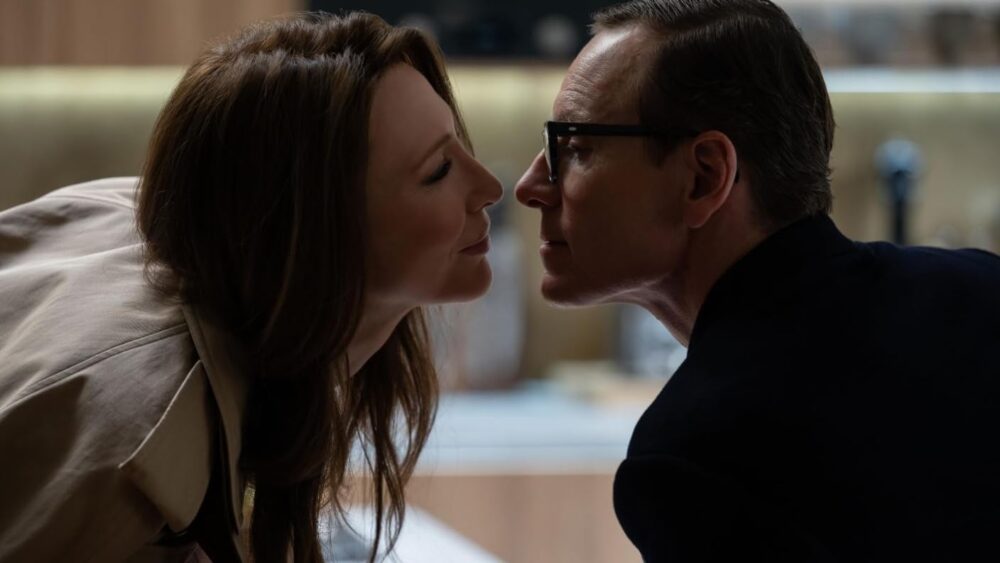
âNot everyone aspires to your flagrant monogamy,â a superior sneers to MI6 officer George Woodhouse (Michael Fassbender) in “Black Bag,” Steven Soderberghâs taut, sun-dappled chamber piece of betrayal. Itâs a line that stingsânot because itâs cruel, but because it might be true. Georgeâs loyalty, both to his country and to his wife Kathryn (Cate Blanchett), has been weaponized against him. He has just received a list of five possible traitors in an investigation over a leaked cyberweapon called Severus; and one of whom, yes, is Kathryn. Fidelity becomes a fault line.
This is where the film begins: not with a bomb blast or a motorcycle chase, but a quiet, terrifying implication that the people you love might be the very ones selling you out. From the outset, “Black Bag” announces itself as a spy thriller more interested in the slow poison of doubt than in brute force. If youâre expecting “Mr. & Mrs. Smith” with British accents, look elsewhere. This is “Tinker Tailor Soldier Spy” for the emotionally entangled.
Love, Lies, and a Dinner Game
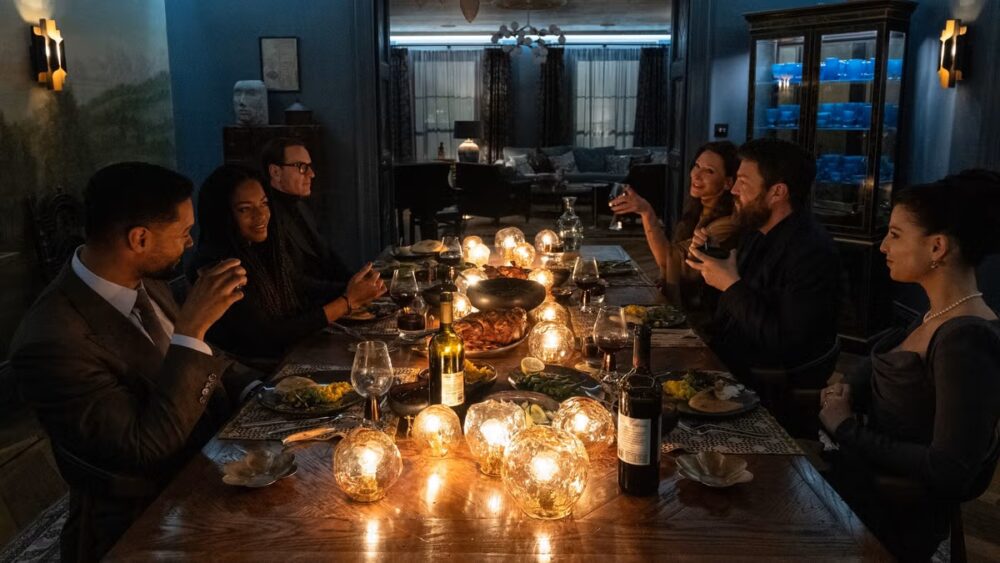
Soderbergh, working from David Koeppâs efficient and razor-cut script, keeps the tension simmering just under the surface. George, ever the loyalist, invites the other four suspectsâall fellow intelligence officersâto dinner under the guise of camaraderie. Instead, he drugs their food and plays a psychological game that makes “Clue” look like a slumber party. That he includes his wife in this trap, even as he denies his own suspicion to her face, is the filmâs core tension: what if catching the traitor means destroying your marriage?
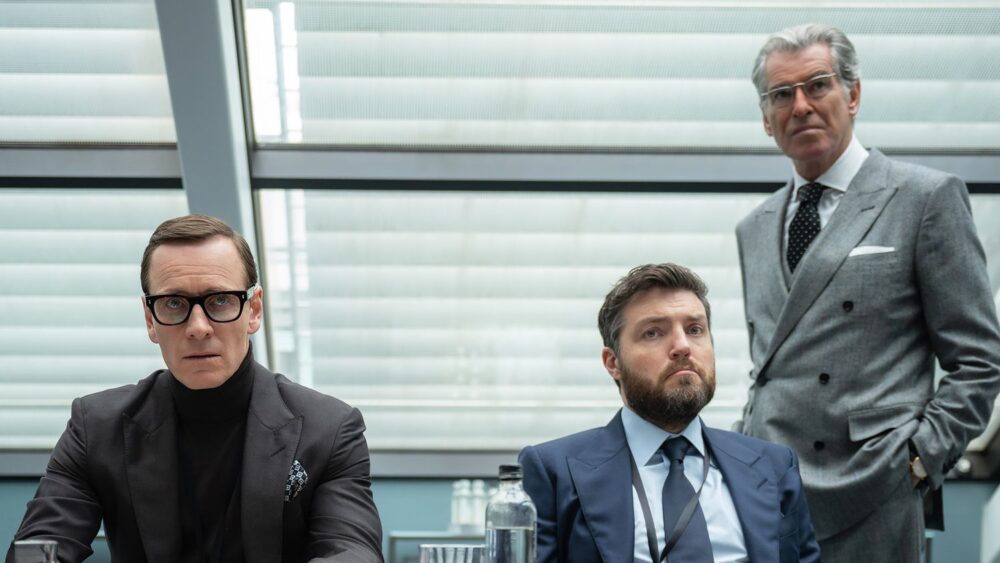
Kathrynâs own loyalty is also called into question by her mentor, Stieglitz (Pierce Brosnan), who suggests that her commitment to her husband is a vulnerability in a profession where deception is currency. The same implication hangs over George during his early meeting with his superior Meacham (Gustaf SkarsgÃ¥rd), who has narrowed the list of suspects to five and dryly suggests that monogamy is a kind of operational liability.
And for a film named after the agentsâ canned response to questions that touch on classified matters, it frames a quietly brutal thesis: trust no oneânot even your spouse.
No Car Chases, Just Cold Reads
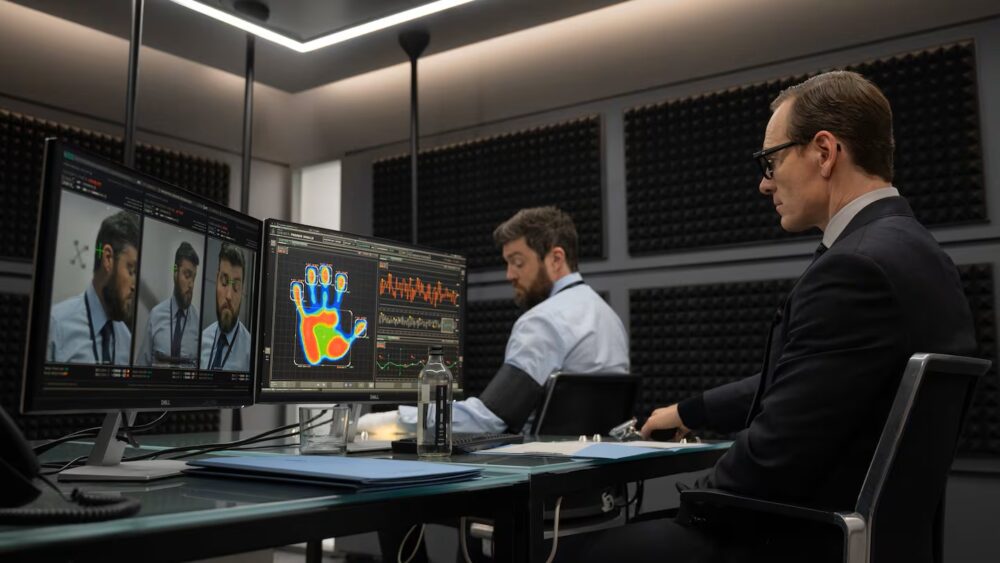
The script wisely lets the paranoia breathe. At a lean 93 minutes, the film feels tightly wound without coming off as rushed, and deliberate without dragging its feet. Thereâs almost no action in the traditional sense, but every moment exudes the same crackling energy you’d expect from a heist film. Only this time, the dynamism comes from the world of surveillance footage, satellite re-routing, polygraph needles, and long conversations by the lakeside.
In one of the filmâs best sequences, George quietly commissions satellite imagery analyst Clarissa (“Back to Black‘s” Marisa Abela) to track Kathrynâs movements abroad, just as suspicions start curdling into certainty. Another standout: the polygraph sequence, where George lines up his guests like suspects in a drawing room murder mystery, but makes it government-sanctioned.
Thereâs fun in the coldness, too. Soderbergh knows how to find comedy in rigidityâbureaucratic language, clipped dialogue, buttoned-up betrayal. The filmâs dry wit serves as a pressure valve. The absurdity of trying to root out deception in a room full of professional liars isnât lost on the filmmakers. Neither is the irony that the most dangerous thing a person can do here is tell the truth.
A lot of the filmâs tension hangs in the way it looks, moves, and soundsâand thatâs almost entirely Soderberghâs doing. Heâs directing, shooting, and editing here, and the control shows: the cinematography leans into soft, grainy textures, evoking the hush of â70s espionage cinema without leaning on nostalgia. Shadows fall in the right places, but they never feel composed to death. The editing is deliberate, never flashy, but sharp enough to cut glass. Finally, David Holmesâ score simmers underneath, all synth and unease, a presence you feel more than hear.
A Top-Notch Cast Sells the Atmosphere of Paranoia
And the performancesâthereâs a lot to enjoy. Fassbender does pent-up anguish better than almost anyone. His George is a man trying very hard not to unravel, which makes it all the more effective when he does. Blanchett plays Kathryn with cool calculation, never overplaying a single moment. Sheâs not just believable as someone capable of betrayalâsheâs believable as someone who could justify it.
Thereâs a lived-in complexity between the two characters that sells the entire conceit of the film. If the movie rests on whether or not we believe George and Kathryn might destroy each other to protect something greater than themselves, Blanchett and Fassbender ensure that we do.
The rest of the ensemble fits the mood well, too. Regé-Jean Page brings a smooth detachment to James, the kind that only becomes sinister in hindsight. Naomie Harrisâ psychiatrist Zoe adds layers of moral ambiguity and guilt, while Tom Burkeâs Freddie has one of the filmâs better lines and worst instincts. These are people who donât look like theyâve walked out of the gymâthey look like they havenât slept.
âBlack Bagâ: A Minor Soderbergh Film with Major Control
Now, some caveats. This isnât prime Soderbergh. It doesnât have the clinical sweep of “Contagion,” the experimental bravado of “Unsane,” or the deep isolation and surveillance of “Kimi.” What it does have instead is control, clarity, and an atmosphere thick enough to chew on. Ultimately, “Black Bag” finds its place among the quieter entries in his catalog, somewhere between “Logan Lucky” and “Side Effects.” Itâs polished and satisfying. Whether itâll stay in the bloodstream, though, is another question.
Still, thereâs something satisfying about a thriller that trusts its audience to keep up. “Black Bag” doesnât spoon-feed its twists or flatten its characters into types. It runs like clockwork, but it isnât mechanical. And in an industry where even spy films fall victim to bloated spectacle, thereâs something quietly thrilling about one that builds its tension with whispers and suspicion.
When the pivotal scene plays out where George and Kathryn find themselves with their secrets half-revealed and enemies buried in more ways than one, the film reminds the audience: in espionage, love is just another variable. And in Soderbergh’s hands, fidelity might be the most dangerous game of all.


Â
Steven Soderbergh’s “Black Bag” was released in France on March 12, 2025, by Universal Pictures, and in the United States on March14, 2025, by Focus Features. Follow us for more coverage.




