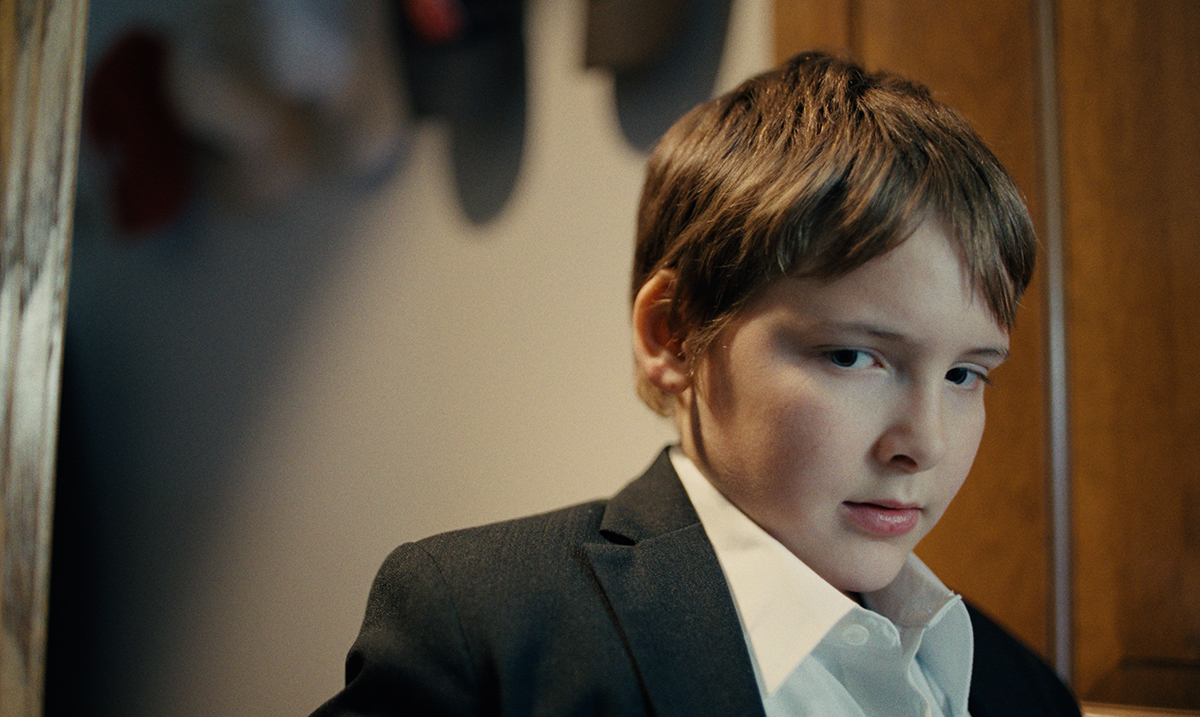
âOnly Onceâ is a short film by Hamza Kaye that uses symbolism and our expectations of how abuse plays out to frighten us. At only 8 minutes in length, it’s perhaps too short, yet still works well enough to impart its themes. Itâs the second indie film Iâve watched in the past month to deal with trauma and its aftermath. The first, âProjection,â used rage and darkness to exorcise its demons. âOnly Once,â by the end, becomes a literal title. Kayeâs film uses flashbacks and present-day scenes to paint a picture. And while the filmâs end is definitive, I found the shortâs beginning and middle sequences its most effective.
The filmâs set up is unnerving for reasons I initially couldnât explain but by the filmâs end became apparent. A young boy, Damien (Killian A. Robbins) sits playing with a Rubikâs Cube in the background while his mother (Megan Chamberlin) gets ready for a nice evening. The mother detachedly informs him company is coming over and heâs to ‘be on his best behavior.â I expected âOnly Onceâ to cut to the company coming over, but Kaye is smarter than that. The film instead cuts to the mother opening the door on another night to a tall man, clearly the âcompanyâ from the first scene who is now her partner and an intimate part of their home. I also found the following scene clever: mother, son, and her boyfriend, Russell (Jason Stoops) play a game of Jenga. And while Russell is the one to topple it, the point is well taken. Something is about to break.Â
‘Only Once’ Uses Symbolism Well
The best parts of âOnly Onceâ are its score by Robert Didier (also serving as the film’s editor, he adds a haunting, eerie quality throughout) and the way it draws on our expectations of how scenes will play out in real time. The post-Jenga scene is its strongest piece, where a game of Simon Says becomes nightmare fuel. The film is about abuse and power dynamics. As such, itâs no mistake that its abuser, Russell, towers over even the mother, not to mention the small boy. Itâs also no mistake when we learn what the motherâs command to behave from the filmâs opening really symbolized: her loneliness romantically â and need for companionship â leads to her son’s needs being trivialized. Did Damien tell her about the abuse he encountered? If so, did she believe him? These are the questions âOnly Onceâ asks â and abruptly answers â through its run-time and terse ending.Â
âOnly Onceâsâ strongest assets are its cinematography and its score â and its implications, which are scarier than anything it does show. Director of Photography Nicholas Merchant shoots the scenes well, especially the Jenga sequence. It centers on the experience of the young boy and the innocence being shattered in real time. Itâs also a credit to Stoops’ acting, where playing an abusive character was obviously difficult. He makes the events seem casual instead of overtly monstrous. I was here reminded of Joel Schumacherâs excellent â8 MM.” When Nic Cageâs protagonist unmasks a murderer, the man quips, tauntingly, âwhat did you expect? A monster?â These are the themes on display here. Evil is ordinary. And here, readily invited in.
Using our Expectations to Horrify Us
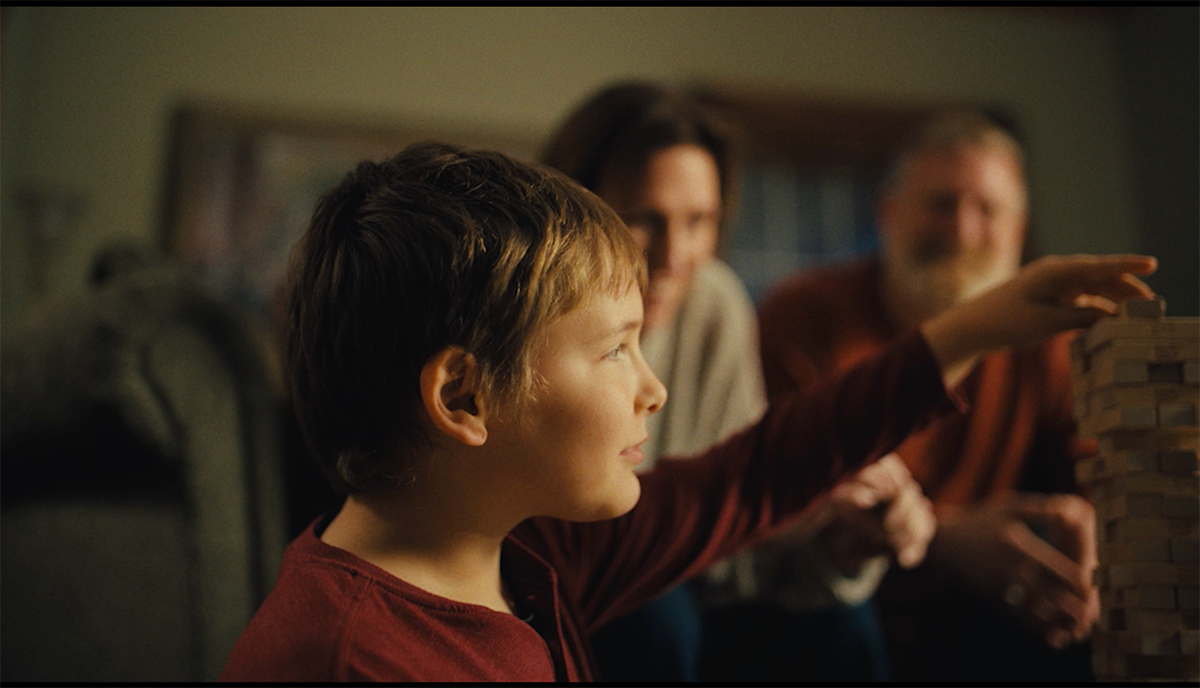
The acting from the cast is solid, with Kaye using playfulness to subvert our expectations. One scene between mom and Russell I expected to hint at the abuse that was to soon follow. However, their playfulness lulls us into a sense of safety and security the film quickly violates. This is juxtaposed with an adult Damien (Noah Runde), visiting an empty home and using sparse language to hint at how the trauma still affects him to this day. Itâs here, however, where I feel the film could have added some depth, as we donât really get to know Damien that well. “Only Once’s” use of the cold landscape of winter helps; however, a lack of catharsis for the main character might be disappointing to some. However, as shown in the aforementioned âProjection,â perhaps thatâs the takeaway: trauma is something that happens to you and can never be truly erased.
âOnly Onceâ is a good short. It has its criticisms. Itâs too short to bring us in fully and the filmâs literal title â and the scene in which this becomes apparent â might have been better implied rather than shown. Yet abuse has its power dynamics and that’s Kayeâs point: no one is stepping in to help Damien and he must help himself. Thatâs the true horror of the film and of abuse in general. The film’s climax is a form of hope, but not the hope I was wishing for. But “Only Once” doesn’t exist to give viewers what they wish would happen but to reflect reality. If anything, the short will hopefully spark conversation on the festival circuit in recognizing the signs of abuse and in believing victims. Kayeâs film is monstrous because we live in a world, sadly, where we donât.
“Only Once” is available to watch for free on YouTube.