





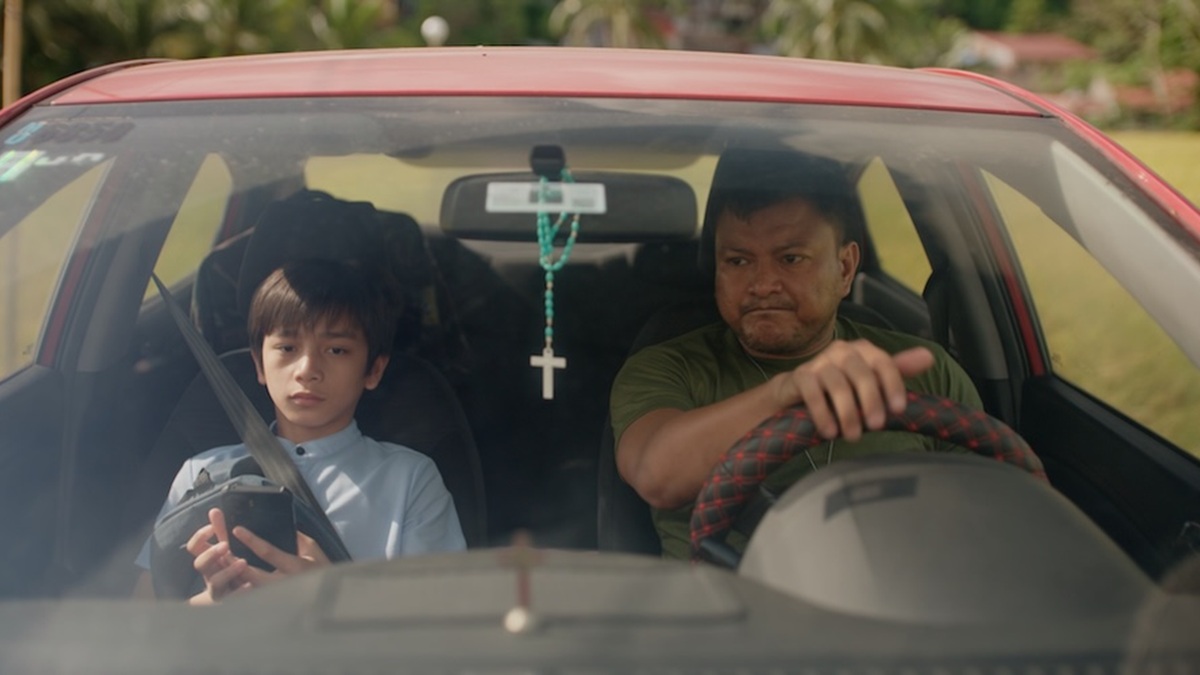
âNever let anyone intimidate you,â a father tells his young son near the beginning of JL Burgosâ “Ganggang.”
It would sound like decent parental advice had the man not just stepped out of their car, pulled a gun on a tricycle driver during a fit of road rage, then returned to the vehicle as though he had demonstrated an important lesson in manhood. The father is a military sergeant newly assigned to the province. His son Mel (Raine Dela Cruz), meanwhile, is about to enter a new elementary school where he will soon discover what intimidation actually looks like.
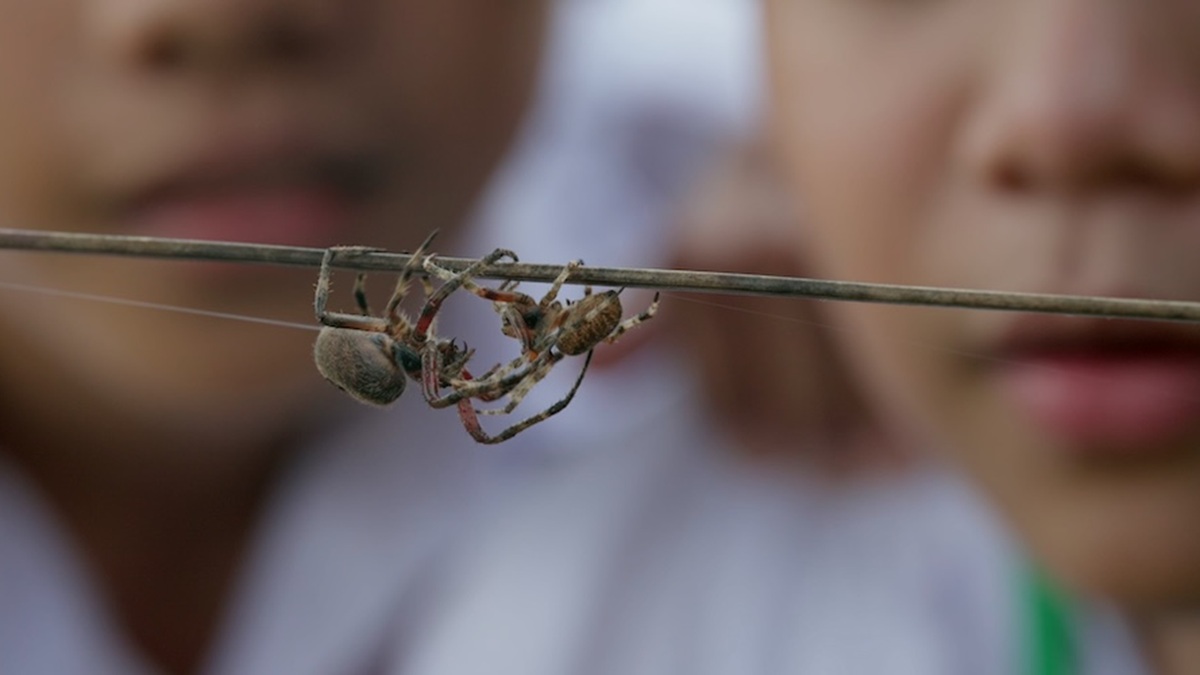
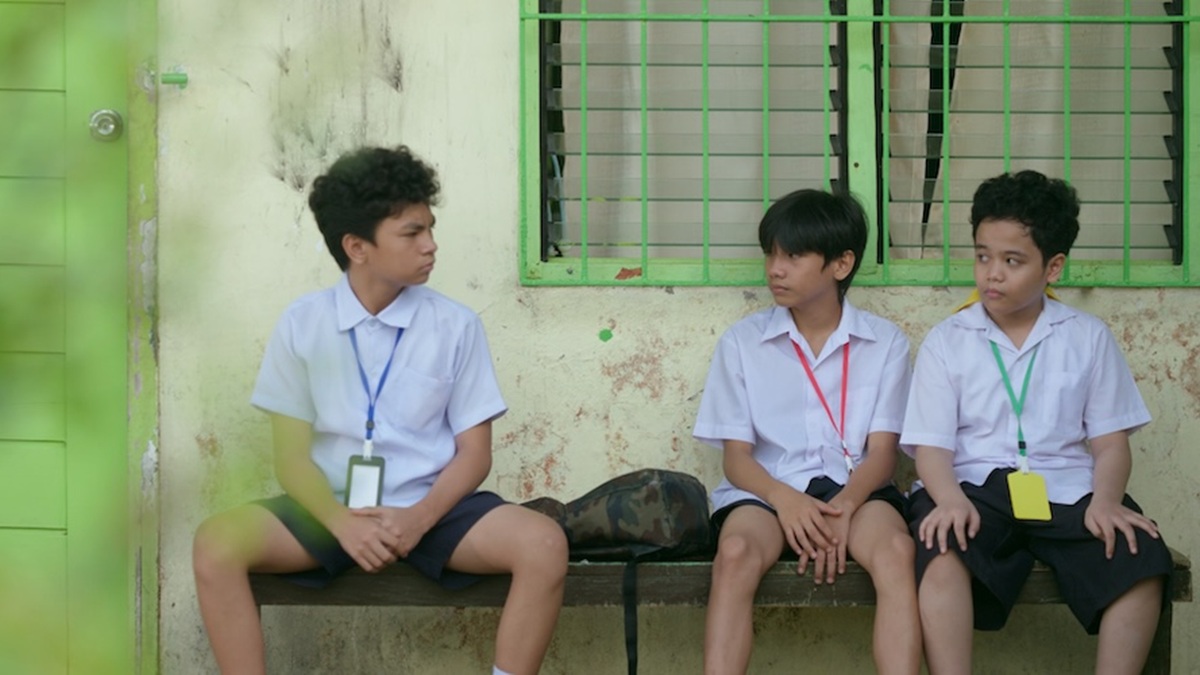
Burgos lays out the contradiction early. Mel befriends Ilay and Ten-ten (Kenneth âButchoyâ Vincent Mendoza and Don Rishmond Cerbito), two boys preoccupied with finding a ganggang, or fighting spider, strong enough to defeat the one owned by their classmate Anton. Anton (Prince España) is the school bully, but he also happens to be the son of the barangay captain. Even at their age, the children already know that status travels downward: some kids can push harder because of whose name follows theirs.
The spiders give Burgos a wonderfully simple metaphor without initially declaring themselves as one. The boys hunt for them, size them up, argue about which ones can fight, and turn their matches into miniature contests of dominance. The pastime has enough life of its own that the symbolism doesnât smother it. These are still kids getting dirty, wandering around, challenging one another, and obsessing over something adults might dismiss as trivial.
More Cinemalaya 2026: âOnly Known to Usâ, and the Things Love Asks Us to Keep
The Lessons Children Learn From Power
Meanwhile, another hierarchy is taking shape around them. Military checkpoints have appeared across the community, ostensibly to combat terrorist activity. Residents are questioned. People who challenge the authorities risk being branded as sympathizers. A teacher who openly objects to what is happening later turns up dead. Elsewhere, families wait for people who left for work and mysteriously never came home.
The boys donât have the political vocabulary to connect any of it. Burgos is better off when he leaves them that wayâthey notice adults talking, they overhear accusations they canât fully parse, and they know certain places are dangerous and certain people carry authority. However, their immediate concern remains standing up to Anton and beating his spider.
That distance between what the children see and what the audience can piece together gives “Ganggang” its most unsettling passages. The schoolyard bully and the adults outside it occupy very different worlds, yet both operate according to the same basic rule: those with enough authority quickly learn how far they can push everyone else. Antonâs father holds political office. Melâs father carries a gun and the backing of the state. Even while occupying the opposites of the pole, both their sons absorb these examples even when the adults would never describe themselves as teachers. The opening scene grows nastier in retrospect. âNever let anyone intimidate youâ sounds empowering until you realize the father has modeled its inverse: if you possess enough force, intimidation becomes yours to deploy.
The three young leads keep those ideas from immediately turning “Ganggang” into a classroom lecture. Their performances are rough around the edges, but I wouldnât trade that roughness for three impeccably trained child actors. Their line readings occasionally stumble; their timing isnât always polished. Yet they bicker, laugh, wander, and talk with the looseness of actual children. You rarely get the sense that theyâve been coached into adorable movie-kid behavior.
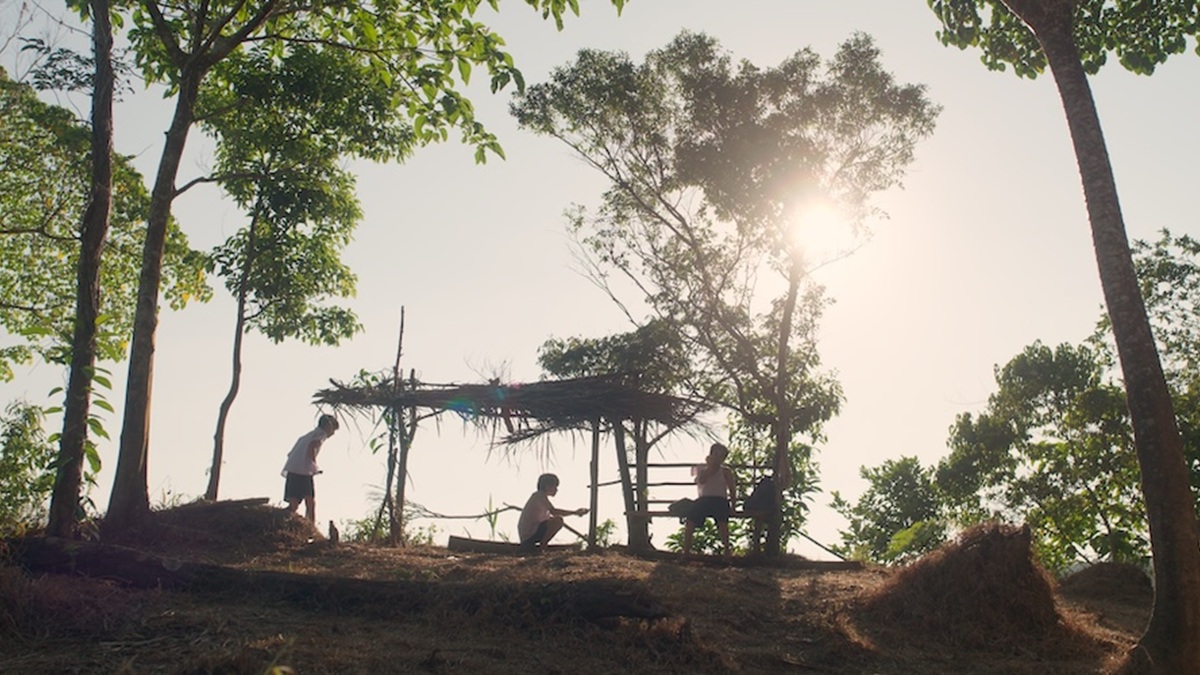
Their friendship also gives Burgos somewhere human to land whenever the politics threaten to dominate the frame. For much of “Ganggang,” spider hunting and the growing unease around the military proceed side by side. Eventually, the boysâ innocent search takes them somewhere childhood has no business going, and those two strands crash into each other with devastating force. Burgos earns much of that impact by letting us spend time with the boys before violence enters their lives directly.
The Documentary Keeps Breaking Through
Having said all that, “Ganggang” also has a problem thatâs difficult to separate from the passion behind it. Burgos is a documentarian whose work has long centered on human rights. His previous feature, “Alipato at Muog,” investigated the disappearance of his brother, activist Jonas Burgos, and anyone familiar with that film will immediately recognize the anger carried into “Ganggang.” This subject isnât academic for the filmmaker. His distrust of unchecked military authority is personal, and the movie never pretends otherwise.
Sometimes that conviction gives “Ganggang” urgency. At other points, however, the film plays like a documentary trapped inside a coming-of-age story.
The two modes donât always gel. Burgosâs fictional characters occasionally stop behaving like people moving through a complicated political reality and start serving fixed positions in an argument whose conclusion has already been reached. Viewers looking for a more ambivalent examination of the relationship between the military and rural communities wonât find much of one here. The abuses are overt, responsibility is clearly assigned, and Burgos keeps pressing the point until thereâs little room left for uncertainty.
Hereâs the thing, though: thereâs nothing inherently wrong with political cinema taking a side. Neutrality isnât automatically nuance, particularly when a filmmaker is depicting human-rights abuses. But narrative filmmaking still benefits from letting people, institutions, and contradictions develop beyond the argument they represent. Personal conviction supplies “Ganggang” with its anger; occasionally, that same conviction leaves the drama too eager to spell itself out.
The visual approach has a similar push and pull. Handheld passages lend portions of the film the immediacy you might expect from Burgosâs documentary background, while Mac Cosicoâs wider compositions and aerial photography pull us farther outside the boysâ experience. I can see the intention: one mode embeds us in the community while another surveys the larger environment surrounding it. Iâm less persuaded that the two always belong in the same visual register. The aerial shots in particular can remind us of a camera hovering above these lives just when the childrenâs restricted perspective is at its most compelling.
âGanggangâ Discards Nuance and Goes On the Nose
And by the time a series of scenes during and after the credits continues pressing the question of accountability, “Ganggang” has already made its case. The extra emphasis is understandable, but it also captures my main reservation with the film: Burgos sometimes keeps arguing after the drama has already persuaded us.
Even so, thereâs an emotional force here that survives the bluntness. The spider fights begin as a child-sized version of bullying: one creature overpowering another while everyone gathers around to watch. Gradually, Burgos expands that image into a world where the stakes are much higher but the instinct hasnât changed much. People with authority decide who deserves suspicion. Those without it learn when to speak, when to keep quiet, and how dangerous either choice can become.
And somewhere in the middle are three boys who only wanted to find a better spider. “Ganggang” hits hardest when Burgos trusts that tragedy to speak for itself.


“Ganggang” currently screens at the 22nd Cinemalaya Independent Film Festival. The festival runs from August 6 to 18, 2026. Follow us for more coverage.




