


“A Place of Absence” opens with a voice that feels both steady and wounded. A woman reflects on having lived in New York for twenty years, far from her family in Latin America, and on wanting her daughter (born in the United States) to understand the land and the people she comes from. The woman describes forests as vast networks of trees that survive through mutual support: when one tree is damaged, the whole ecosystem feels it. Disappearance, she suggests, works the same way. A loved one may vanish, but the void they leave ripples outward, altering the emotional climate of everyone left behind.
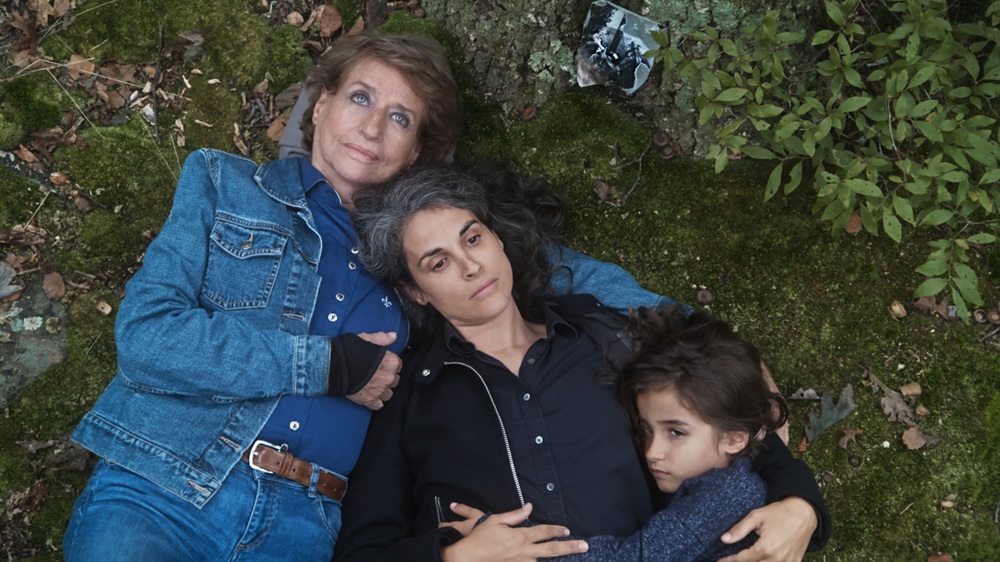
Only later do we learn the voice belongs to filmmaker Marialuisa Ernst herself, speaking to her young daughter about her Uncle Guillermo. Her earliest memory of him is simple and tender, “[it’s] making me fly like a bird.” Guillermo was her childhood hero, and his disappearance during Argentina’s military dictatorship—an era when the regime abducted dissenters and protesters by the thousands—became a defining silence in the family. The loss seeped into her mother’s life most of all, shaping the way the family handled and avoided grief, and how they sometimes folded it into daily routine.
Mothers on the Migrant Trail
It’s from this intergenerational ache that “A Place of Absence” makes its leap outward, connecting Ernst’s personal history with another landscape of disappearances unfolding across borders today.
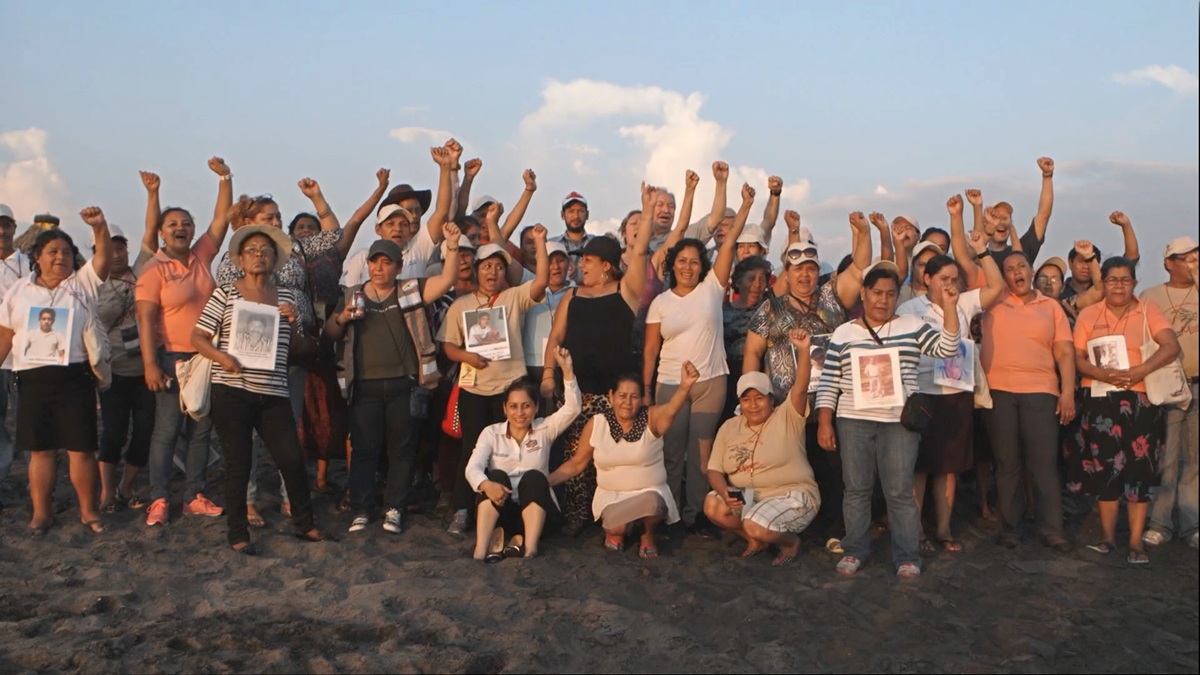
Ernst joins the Caravan of Mothers of Missing Migrants (Caravana de Madres de Migrantes Desaparecidos) as they journey through Mexico, searching for relatives who vanished while attempting to enter the United States. The women carry photographs like talismans—faces printed, laminated, held to their chests. These are not images meant for posters or newsreels; they are extensions of love, memory, and defiance.
Two stories anchor the film. Anita has been searching for her son for sixteen years. Leticia has spent fourteen looking for her daughter Merza. Their grief doesn’t announce itself loudly; it settles in their pauses, their careful words, the way they press fingertips to the plastic covering their children’s faces. When Merza is eventually located alive, the film doesn’t frame the scene as triumphant so much as profoundly human. Leticia tells her daughter to rest, postponing difficult conversations for a later time—an acknowledgment that trauma doesn’t resolve neatly just because the missing returns.
The Caravan visits brothels, shelters, and government offices. Officials speak in the polished monotone of bureaucracy, avoiding responsibility while insisting they “follow procedure.” At one site, authorities deny access to land believed to contain a mass grave. The refusal is calm, almost routine, which makes it even more chilling. The mothers remain planted in front of the building—quiet, resolute, and holding the faces of their loved ones toward a system that rarely looks back.
A Filmmaker Who Moves Between Worlds
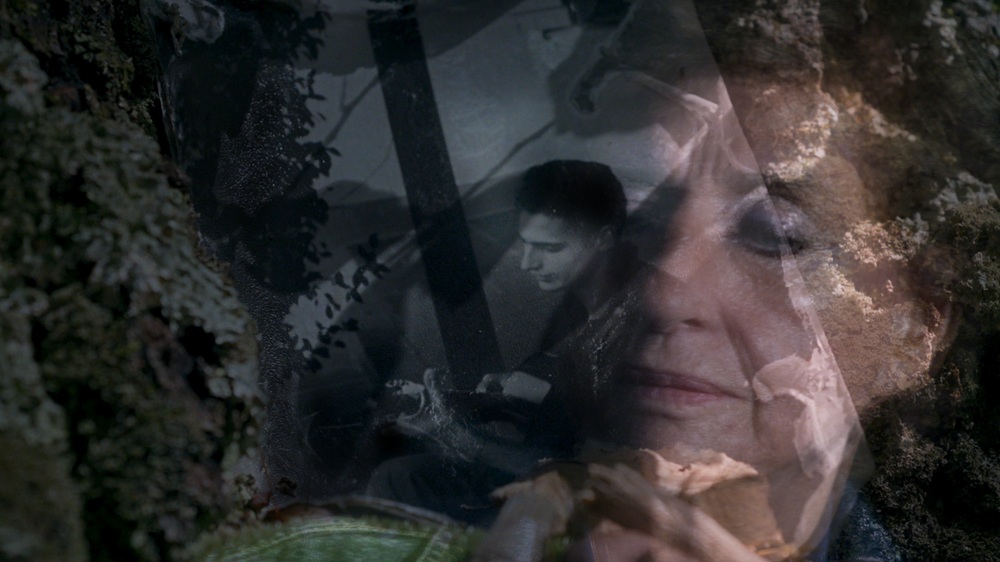
Ernst brings to the documentary a sensibility shaped by performance and installation art. Instead of relying on journalistic distance, she weaves the mothers’ stories with poetic visual language: animated portraits fluttering with leaves, photographs flickering like offerings in firelight, ritualistic interactions with earth and water. These aren’t embellishments; they are extensions of the emotional textures the women live with daily, articulating what straightforward testimony cannot.
Her conversations with her own mother punctuate the mothers’ search with unexpected intimacy. Her mother describes how, as a physician (she was in Bolivia, a country also beset by unrest, when the military abducted her brother Guillermo), she learned to set grief aside in order to survive the harshest years of the dictatorship. Ernst questions whether this coping mechanism is a shield or a wound—an ambivalence the film wisely never resolves.
What emerges is a portrait of a filmmaker moving between identities: Latin American and North American, immigrant and mother, someone shaped by political violence yet no longer rooted in a single nation. This in-between vantage point becomes the film’s emotional anchor, allowing it to resonate across borders without presuming universality.
Memory Carried Across Continents
Ernst’s personal history intertwines with the Caravan’s stories in ways that feel organically linked rather than forced. The disappearances of migrants today echo the disappearances of political dissidents decades earlier—not because the contexts are identical, but because the emotional aftermath operates with the same gravity. Families live in suspended time, mourning and hoping simultaneously, never given the clarity that death, in its terrible finality, at least offers.
The film reaches one of its most affecting passages when Guillermo’s remains are finally identified. Ernst’s mother touches what is left—bones arranged carefully by forensic teams, a scrap of cloth that survived with him—and the room seems to hold its breath. Later, during a quiet burial beneath a Ceibo tree, Guillermo’s songs about becoming a seed after death echo softly through the scene. The gesture feels private, almost sacred, yet the film lets us stand nearby, witnessing a small but meaningful reclamation of life stolen decades earlier.
‘A Place of Absence’: A Documentary That Travels Beyond Borders
What makes “A Place of Absence” work for me isn’t simply its exploration of grief, but its recognition of how disappearance transcends nationality. Families in Mexico, Argentina, Chile, all have their own vocabularies for this kind of loss; the emotional landscape is shared even if the histories differ.
Having written about disappearances in other contexts myself, I found Ernst’s approach unusually attuned to that global resonance. She understands that absence migrates—it crosses borders, reshapes families, and settles into new generations who inherit stories filled with gaps.
“A Place of Absence” is reflective, intimate, and grounded in a deep understanding of how grief moves through families and across continents. It’s a documentary that approaches its subject with care and clarity, building slowly to allow each story to settle before the next begins. By the time the Caravan reaches its final stops, the accumulated weight becomes almost palpable.
But Ernst’s touch remains careful, refusing to sensationalize trauma or flatten it into a single narrative. Instead, she listens. She waits. And in that attentive presence, the mothers’ voices become impossible to dismiss.

Marialuisa Ernst’s documentary film “A Place of Absence” will premiere as an Official Selection at this year’s DOC NYC, which runs from November 12 to November 30, 2025. Follow us for more coverage.

