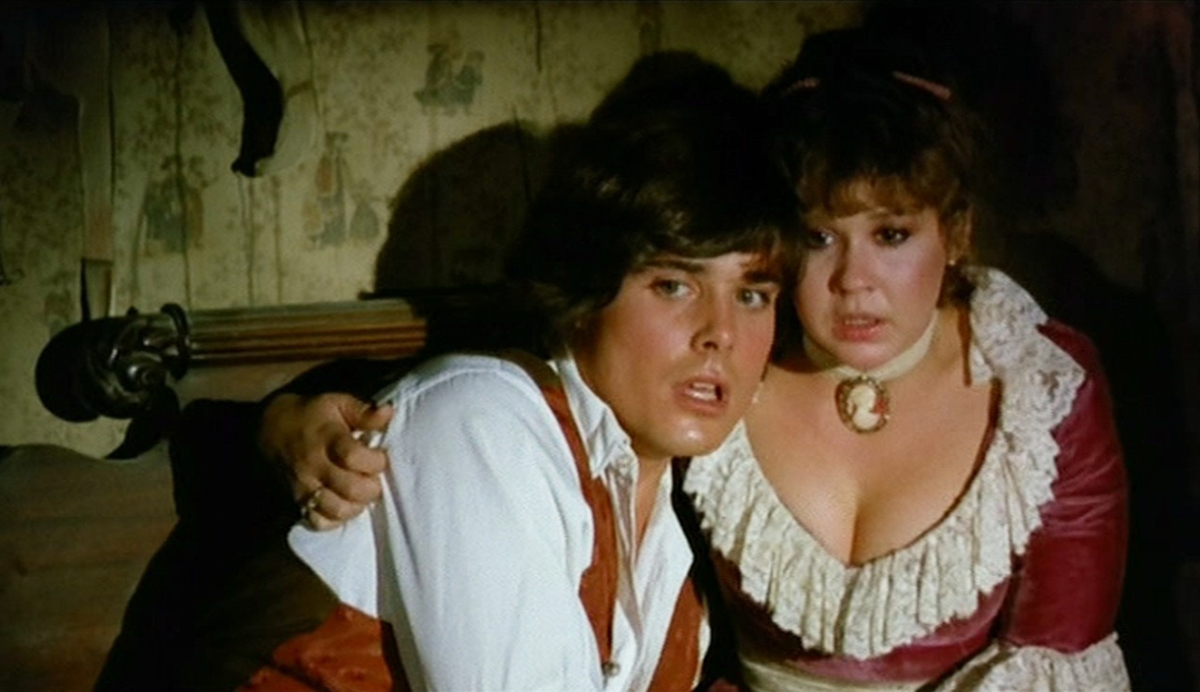
By 1981, we were well into the age of the slasher, building off classics like “Psycho” (1960) and “Halloween” (1978). “Hell Night,” directed by Tom DeSimone, was one of two VHS covers that scared the crap out of me as a kid. The other was “Friday the 13th Part IV;” and only after watching DeSimone’s film this Halloween did I realize the coincidence that they both shared actor Peter Barton. And coming off my review last year of “The Toolbox Murders” and this year of “Maniac Cop,” “Hell Night” is one of the better horror films from the decade, skirting the label ‘slasher’ and becoming just a good horror movie. It’s overlong at 1 hour and 41 minutes, but it’s forgivable. It ends well and features good characterization throughout—more than many slasher films earn the right to say.
There’s very little build up to a premise here. A Greek fraternity, headed by the obnoxious-yet-likable Peter (Kevin Brophy), lead four pledges to spend the night in the abandoned Garth mansion with a tragic lore surrounding it. The residence’s owner had 12 years ago killed his wife and children before taking his own life. The bit of family history Peter tells the pledges involve multiple deformed births, among them a mongoloid son (an archaic term for Down syndrome, god bless the ‘80s). It’s presupposed from the word go that this mansion might be haunted. To earn entrance into the fraternity and sororities they seek, the foursome must spend the night here—until 4 AM—and prove their worth.
Atmosphere and Setting Craft the Tone
What works about “Hell Night” is it has a story to tell and an atmosphere to create, and does both well. The plot is now banal: so many haunted house/mansion films exist as to create nauseam. But what the film does is let its characters into the mansion easily, and let them grow more desperate as the film continues. The foursome are all very likable. They include: the aforementioned Peter Barton, Vincent Van Patten, Suki Goodwin, and “The Exorcist’s” Linda Blair. All four are good and apt. We believe their relationships—even the thinly-painted ones—and care about them and want them to survive. The film also builds its atmosphere slowly. The first death doesn’t happen until well after the 30-minute mark, and this isn’t a slaughter-fest. At times it’s a slow-burn film that wants to build tension. And overall it works.
“Hell Night” had several instances where it could have veered into standard territory but finds ways to side-step them. For instance, Peter and one of his minions, Scott (Jimmy Sturtevant) sneak up to the mansion after hours to use pranks and scare-tactics to prey on the unsuspecting pledges. I could imagine a film today turning this into a whodunnit where Peter and Scott were the killers, or where some otherworldly threat takes over. Once it drops its premise, though, “Hell Night” plays it straight, which is a credit to its makers.
A Likable Cast Makes ‘Hell Night’ Work

What also works is the interplay between the actors, all whom are good here. Van Patten was probably the most cliche, doing his best Jeff Spicoli from “Fast Times,” but that film wouldn’t come out until a year later. He and his love interest, Denise (Goodwin) have believable and innocent banter. They both just basically want to have sex and party, and really, who can blame them? And I liked Barton and Blair here. Barton’s Jeff is a rich daddy’s boy and Blair’s Marti is shy and reserved. Yet the film makes us like them and defines them by their own making. They have quasi-intellectual talks (“what’s wrong with rich people?” and, “the capitalist keeps the poor person under his boot”) that seem far ahead of their time while still being sweet on each other. The film builds tension in their relationship, which was a nice touch for what must have been a throw-a-way slasher. Most largely, the audience cares if these four live or die, which adds to the tension throughout.
The horror of “Hell Night” is also fitting, and surprising for a decade littered with less developed slashers. The film’s threat(s) are real, not imagined, and I like the narrative innocence of these early slasher films. Where today you could imagine plot twists onto of plot twists—which would doubtless see the film crash into incredulity with “Scooby-doo”-type unmaskings—here “Hell Night” keeps it real-ish. The godforsaken remnants of the Garth family are the culprits here. And I liked the way the filmmakers structure the mansion itself into a nightmare of its own. It gave me “Lurking Fear” vibes from author H.P. Lovecraft, complete with its plot of mutant familial terrors. You could make a real argument that “Hell Night” is not even a slasher given its stellar atmosphere. It’s a better haunted mansion film than many of its ilk that littered the 2000s, and Cinematographer Mac Ahlberg and the production team knocked the eery setting out of the park here.
One of the Better Slashers

“Hell Night” is not without fault. It runs too long at 1 hour and 41 minutes, and its end is standard stuff involving jump scares and the “final girl” trope which would become industry standard. But its heart is in the right place. Its characters—from bro-type Peter to girl-next-door Blair—all make us like them, despite their cliché. And this is why the film works: its horror is sufficient, but not transcendent. But its set pieces are top-notch, its cinematography and score set the stage with careful, unhurried confidence, and it ends the way it should. By the time dawn nears, and that first patch of sun shows itself, you’re left with the impression of one hell of a night its victims lived through. It’s no wonder Blair’s frozen grip on those mansion gate bars all those years ago was so effective. And it’s nice that as a stronger entry into the slasher genre—devoid of sadism or grime—it’s a horror film I might have to enjoy again next year. And maybe even the year after that.