





(This is the third installment of my four-part series on this yearâs Cinemalaya full-length finalists. For the previous coverage, check out Part 1 and Part 2.)
This series began with films about memory and truth, how history devours those who stop resisting its pull. But Cinemalaya 2025 isnât just reckoning with collective amnesia; itâs also confronting the quieter wars fought within the self. If “Paglilitis” and “Raging” asked what justice looks like in a society built to deny it, then “Open Endings” and “Warla” turn inward, mapping the landscapes of love, identity, and belonging, where the battlefield is the body itself.
In the Philippines, queer cinema has long wrestled with the politics of visibility, but these two films ask a subtler question: after youâve been seen, what then? In “Open Endings,” queerness becomes a language of tendernessâmessy, circular, and lived-inâamong four women who canât quite untangle friendship from desire. Conversely, in “Warla,” it becomes an act of survival, where transwomen carve out spaces of family and safety in a world that grants them neither. Both films understand that love, in all its forms, is never just personal; itâs political.
Taken together, they sketch a portrait of what it means to exist at the margins yet insist on softness: one through the intimacy of chosen families, the other through the grit of chosen survival. Their worlds may look different, but the question that haunts them is the same: what does it take to live fully when acceptance itself feels like an act of rebellion?

âOpen Endingsâ: Love in All Its Complicated Versions
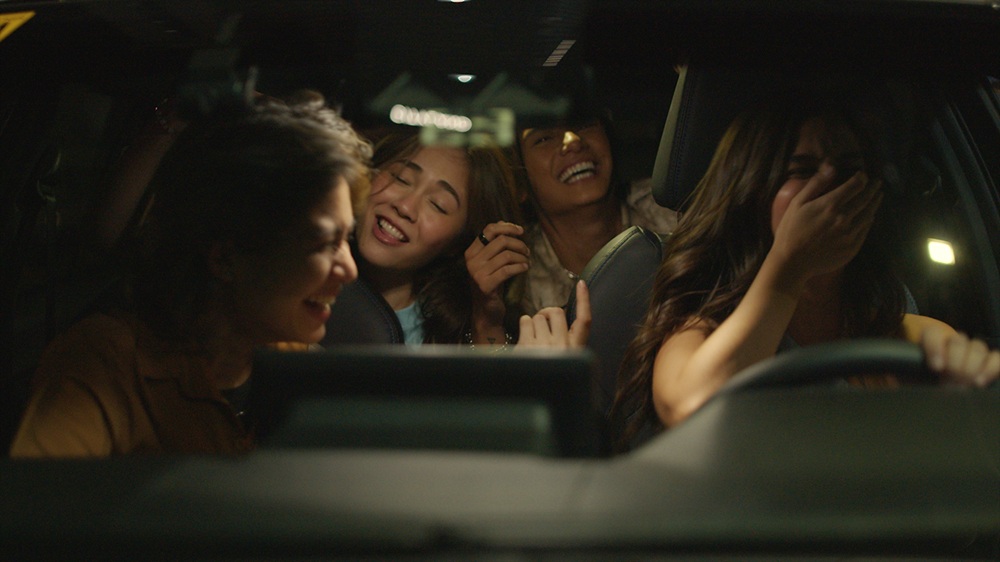
Some friendships are held together by the strangest glue. “Open Endings” begins with one of those introductions that could double as a warning label: Charlie (Janella Salvador) tells her new girlfriend, Rafa, that her closest circle consists entirely of her exes. Thereâs Hannah (Jasmine Curtis-Smith), Mihan (Leanne Mamonong), and Kit (Klea Pineda)âwomen whoâve each loved, hurt, and ghosted one another in different lifetimes.
Rafaâs startled, WTF reaction says what every viewer is thinking: this cannot possibly end well. And yet Nigel Santosâ film leans into that very impossibility, using it as proof that love, once it exists, never quite leaves the room. It just changes shape.
The film follows the four women through the rhythms of everyday intimacy and lets us feel the gravity that keeps them circling one another. There are no villains here, only the quietly selfish things people do when theyâre afraid of losing the few who truly know them. Santos, working from Keavy Eunice Vicenteâs screenplay, has an intuitive grasp of the tenderness that survives after desire burns out. Together, they stage their ensemble like a group thatâs long stopped trying to label what they are to each other. In doing so, the camera doesnât chase melodrama; it instead keys in on glances, gestures, the tiny recalibrations of closeness that happen when the past refuses to die down. The result feels less like a love story than a long exhale. For what itâs worth, “Open Endings” paints a portrait of people trying to grow up without letting go of who they were.
A Heartwarming Portrayal of Lived-In Queerness
Part of the filmâs appeal lies in how casual its queerness feels. Where many local romances still build tension around revelation or taboo, “Open Endings” begins after all that noise. These women are out, tired, and learning how to live. Their sexuality isnât a plot twist; itâs oxygen. Martika Ramirez Escobarâs cinematography washes their world in soft lighting to make the ordinary feel cinematic. Meanwhile, April Hernandezâs music fills in the silences the way good friends fill awkward pauses: with empathy, not explanation. Itâs a film that understands how queerness can be both mundane and miraculous at once.
Performance-wise, everyone shows up. Salvadorâs Charlie radiates the anxious charisma of someone whoâs used to fixing others to avoid fixing herself. Pinedaâs Kit hides longing beneath bravado, while Curtis-Smith gives Hannah a self-containment that makes her eventual unraveling hurt more. But itâs Mamonongâs Mihan who anchors the group, grounding their chaos with something almost maternalâa woman who fled love only to find herself orbiting back toward it. When she admits, on the night before Hannahâs wedding, that she never stopped loving her, it lands not as scandal but inevitability. These women have spent so long performing closure that the truth, when spoken, feels like a relief.
What Santos captures beautifully here is that strange, post-romantic intimacy that queer circles often share: how friendship becomes a second language after love, and how boundaries blur when everyone remembers too much. To this degree, “Open Endings” isnât afraid of mess. On the contrary, it allows its characters to be impulsive, selfish, even unlikeable, without punishing them for it. That refusal to moralize feels quietly revolutionary in itself. Thereâs a generosity in how the film observes their fumbling as if to say, âyou can make mistakes and still deserve softness.â
On Sincerity, and the Pitfalls of Too Much Introspection
That said, “Open Endings” does stumble in its rhythm. The film sometimes mistakes introspection for inertia; with the pacing sagging in the middle stretch, especially when conversations circle the same anxieties without deepening them. Santosâ empathy is clear, but the film could use more variation in tone to match its emotional maturity. For every scene that glows with authenticity, another feels stuck in repetition. Even so, itâs hard to stay frustrated when the film keeps offering small, piercing insights into how people love after heartbreak.
The closing moments bring everything full circle: the four women face each other, suspended between reconciliation and rupture. The screen cuts before any decision is made. Itâs frustrating, of course, but fitting. Life rarely ties itself up neatly, and love even less so. Santos seems to argue that some stories donât end; they just rest, waiting for the next version of you to pick them up again.
“Open Endings” may not be flawless, but its imperfections feel heartwarmingly human. Ultimately, itâs less about resolution than recognition. It understands that friendship can outlast romance, and that queer intimacy doesnât always end with closure; it lingers, shapeshifts, survives. These women arenât role models, but theyâre real, and their contradictions feel hard-won. If Santosâ film stumbles, it does so while trying to capture something true: that sometimes the only way to keep loving is to stop defining what love is.
Grade: B+

âWarlaâ: Survival, Sisterhood, and the Shadows That Follow
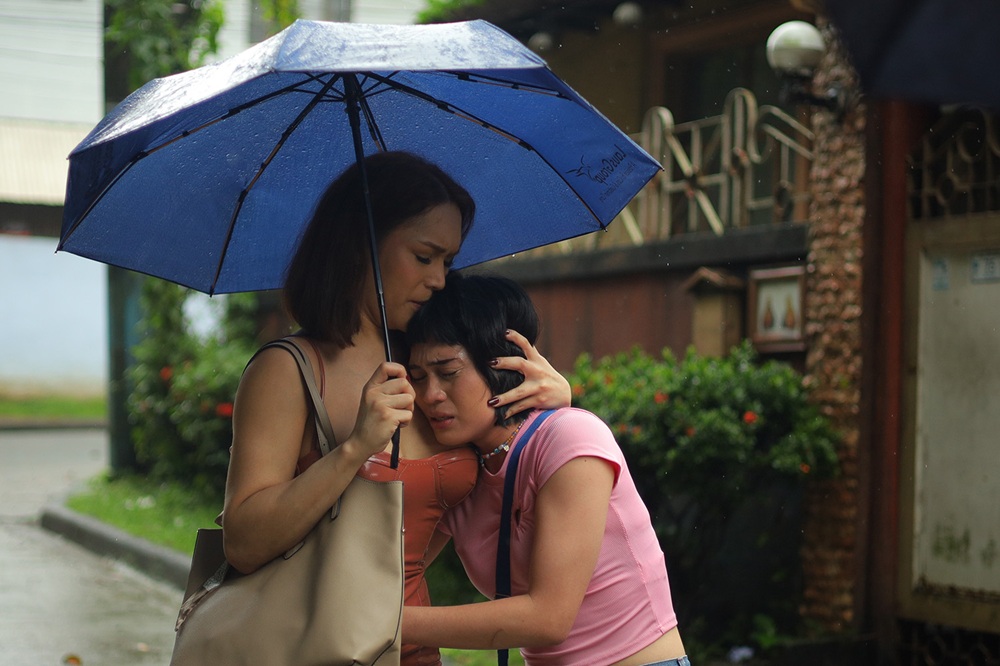
“Warla” opens not with a bang but with a body. A transwoman, beaten and bloodied, washes ashore as morning breaksâa stark image that announces exactly what kind of film this will be. From that moment, Kevin Alambraâs crime drama folds grief and rage into one volatile current. The dead woman is Lalie, and her âdaughters,â Kit-Kat (Lance Reblando) and Joice (Kaladkaren), watch from the shore, knowing that in their world, mourning has to share space with survival.
Kit-Katâs home life is hell: a father who sees her as a disgrace, a brother who mirrors that hate, and a mother (Dimples Romana, underused but poignant) who loves her quietly but never publicly. When Kit-Kat runs away, Joice takes her in, introducing her to a chosen family of transwomen who operate on the fringes. They call themselves sisters, though their bond is forged by desperation. Their hustle? A scam that lures foreign men with promises of romance, then stages their abductions for ransom money. The goal isnât greedâitâs transformation. As Joice puts it, theyâre âbuyingâ the chance to become fully themselves.
Itâs a setup teeming with potential: part social critique, part crime tragedy. Alambra and writer Arah Jell Badayos clearly want to explore how a system that denies dignity leaves the marginalized few moral options. And in some stretches, they succeed. The ensembleâparticularly Reblando and Serena Magiliw (as Barbie Ann)âplay their parts with grit and sorrow, refusing to let their characters slip into caricature. The multi-perspective storytelling (with subplots involving Luningningâs longing for affection and Barbie Annâs maternal guilt) gestures toward a broader portrait of trans life in the Philippines: fragmented, yearning, unprotected.
The Humanity Within the Hustle
Itâs easy to see what “Warla” is reaching for. The filmâs best scenes reveal glimmers of tenderness among the chaosâa sister teasing another about her makeup, a moment of quiet before a âjob,â a late-night confession of wanting to be loved, not just desired. These moments give texture to a community that cinema has often sidelined or sensationalized. When Joice divides her savings among the women, sacrificing her freedom so that they might have theirs, the film briefly achieves something raw and deeply humane.
And yet, the choice to frame this humanity through crime is where the film wobbles. Yes, “Warla” argues that these women are driven to theft and deception by a society thatâs left them no other path. But that explanation, while emotionally valid, risks reinforcing the very stereotypes the film tries to dismantle. The result is a movie that wants to empower its characters while still trapping them in the lens of victimhood and sin. For all its empathy, it canât quite escape the moral framing of a cautionary tale.
To Alambraâs credit, he doesnât flinch from the violence or the sorrow that comes with it. The cinematography has a murky, neon-lit beautyâhalf telenovela, half nocturnal fever dreamâthat mirrors the gangâs dual existence between visibility and erasure. The problem isnât the filmâs tone but its focus. Scenes of Lalieâs mentorship, or Kit-Katâs fractured home life, feel tacked on rather than interwoven, robbing the story of cumulative emotional power. For a film so concerned with identity, “Warla” often feels like itâs too unsure of its own.
Between Representation and Reinforcement
Itâs worth noting that “Warla” marks a milestone for representation: a Filipino feature led by trans actors, made with the guidance of STRAP (the Society of Trans Women of the Philippines). In that sense, its very existence matters. But representation isnât absolution, and the filmâs moral framing deserves scrutiny. Joiceâs climactic act of self-sacrificeâturning herself in to the policeâregisters less as empowerment than resignation. You can feel the filmmakers reaching for tragedy with meaning, but what lands instead is a familiar pattern: queer characters paying for their visibility with punishment.
Thereâs also the question of genre. “Warla” toys with the structure of a thriller but never builds the tension it promises. Instead, it drifts toward the social-drama mode familiar to many Cinemalaya entries, one that prefers message over momentum. You sense the sincerity behind every frame, but sincerity alone canât carry a film that loses its dramatic spine halfway through.
Still, even with its flaws, “Warla” is a worthy watch. Thereâs something undeniably affecting in watching these womenâcriminals, yes, but also caretakers, lovers, parents, and dreamersâgrapple with the question of what a better life might cost. Itâs not the definitive trans narrative Philippine cinema needs, but itâs a start, rough and uneven as it may be.
If “Open Endings” explores the quiet persistence of queer love, “Warla” confronts what happens when love, safety, and identity are constantly under siege. One is about staying; the other, about surviving. Both, more importantly, ask what it means to live fully in a world that refuses to make space for you.
Grade: C+
Watch out for the final installment of our Cinemalaya 2025 coverage.
âOpen Endingsâ and âWarlaâ will screen and compete at this year’s Cinemalaya Philippine Independent Film Festival, which runs from October 3 to 12, 2025. Follow us for continuing dispatches, reviews, capsules, and wrap-ups.




