Late-style filmmaking refers to the later-career work of an auteur that deviates from their previous style and aesthetic. The films that adopt this style have stripped-back elements and a deeper focus on themes of mortality, or a synthesized version of central ideas encapsulated through the directorâs oeuvre. Many describe it as a purified expression, a more elaborate work. Lately, we have seen a couple of directors who have started to adopt the late-style way of filmmaking: Wim Wenders with âPerfect Daysâ and Jim Jarmusch with âFather Mother Sister Brother.” But its purest form, although with its array of troubles, is the latest iteration, as seen in Claire Denisâ âThe Fenceâ (“Le Cri des gardes,” screening at the 2025 New York Film Festival in the Main Slate), where we see the French filmmaker take a different route in her storytelling.Â
Unlike her other works, Denisâ latest is more contained and controlled. It has a more limited form of expression. Adapted from Bernard-Marié Koltesâ play “Black Battles with Dogs,” âThe Fenceâ covers some of the same material as previous works like âWhite Materialâ and her debut âChocolat,” but with a reflective tone. Thereâs a divide between social classes, race relations, and differences in social viewpoints. This comes from her own personal experiences growing up under Franceâs colonialism in Senegal, something that affected her deeply and shaped her approach to filmmaking. She draws on her memories of colonial French West Africa. She turns Bernard-Marie Koltèsâ play into a deeply personal study of privilege, racism, and displacement. Its form of expression has a stage play look and framing, which drives Denis to explore uncharted waters.Â
‘The Fence’ Has Many Ups and Downs
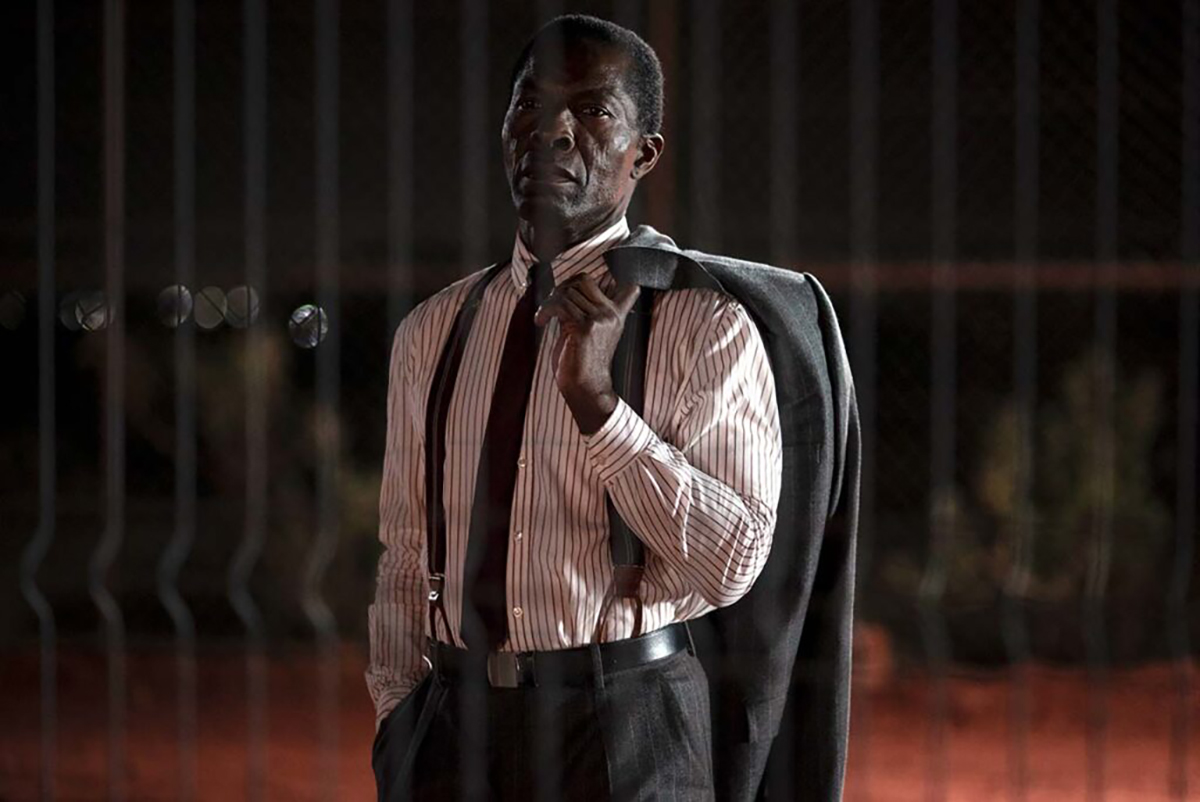
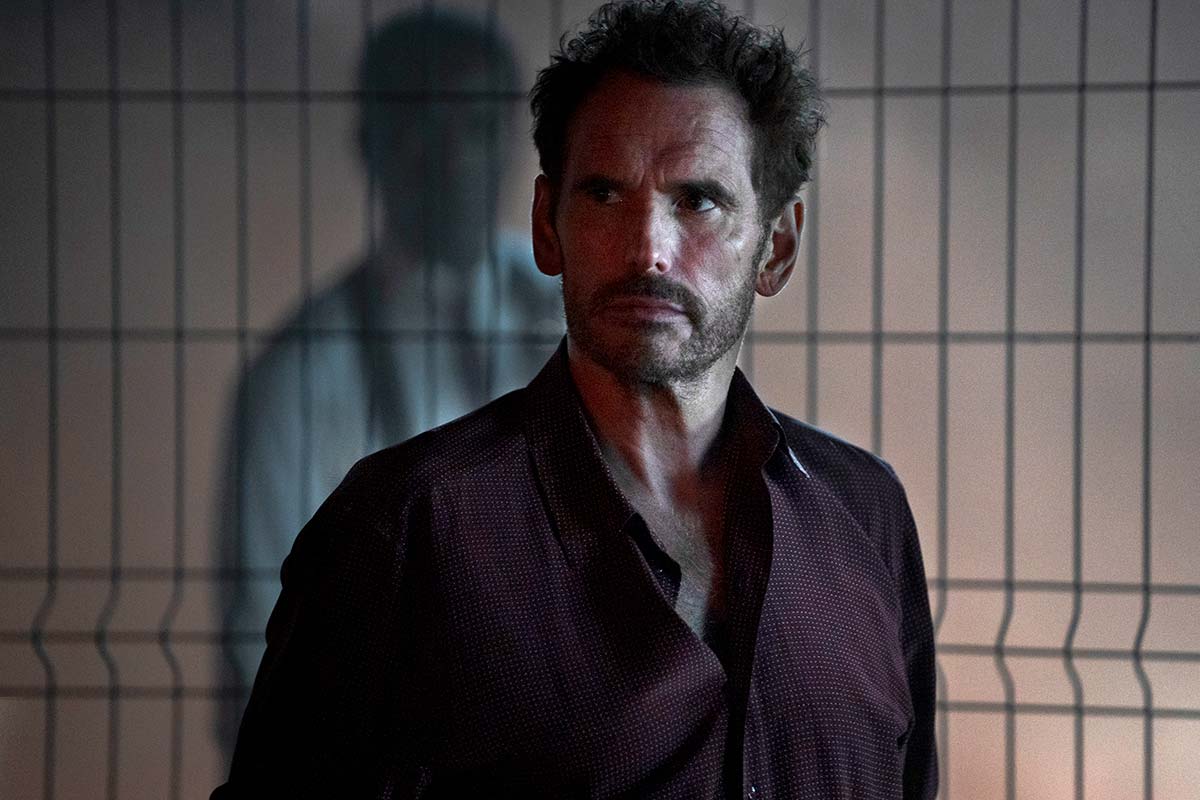
At a construction site in West Africa, Horn (Matt Dillon), an American construction site manager, awaits the Chinese takeover of his workplace. He is also expecting his recent young bride, Leone (Mia McKenna-Bruce, unfortunately poorly utilized), to join him in his compound. A long fence separates this housing to protect the workers. Upon arrival, a man, Alboury (Isaach de Bankolé, Denisâ long-time collaborator and muse), appears late at night on the other side of the guarded lodging. The man is asking for the body of his dead brother, who passed earlier in the day after an accident involving Hornâs right-hand man and site engineer Cal (Tom Blyth).Â
Horn wants to smooth everything out with Alboury, as his job means a lot to him and has granted him an elevated status in the company. However, things get tricky between three men. Performance-wise, âThe Fenceâ has its many ups and downs. While Bankolé is magnificent in his poised, controlled role, Dillon strains to find the right tone. He often overplays moments that Denis directs toward quiet tension. The supporting cast is also a divisive bunch. Blyth is given tons to chew off, including a great monologue in which his character expels a part of his truth. Meanwhile, McKenna-Bruce is there with nothing to do other than watch. Denis wastes Leoneâs role as intermediary between the two sides. Sheâs relegated to just reacting in the background.
Denis Explores the Root of Tragedy
Itâs admirable that a director of the caliber of Denis cast her, a very talented actress who rose to prominence after her excellent work in âHow to Have Sexâ two years ago. (To me, Denis remains one of the most essential French filmmakers of our time.) However, a part of me feels that the film would benefit from erasing her character, not because of the actress, but because of how her character is handled. She isnât needed for this storyâor at least in the fashion that Denis frames itâto proceed. It is rather sad to see her given a pennyâs worth of attention when she can effortlessly add tons of weight to a film. But the performances are one of the many aspects that fluctuate vastly in âThe Fence,” a rarity in a film from Denis.Â
As the tension escalates and frustration begins to take over them, Leone watches everything unfold. Denis explores the root of the tragedy, induced by racist mentalities and âentitlement,â with her usual observant eye. This time, it feels more straightforward and more blunt compared to her other films. The source material by Koltes has Denis opt for a more enclosed and stagey canvas than before. Previously, she explored the setting and the places affected by colonialism through striking, complex images that encapsulated the charactersâ struggles. (For example, Isabelle Huppert standing in the middle of the road as the wind blows her hair in âWhite Materialâ).Â
Broadening the Conversation
âThe Fenceâ does not have an image that sticks with you. What it lacks in visual presentation and impact, it makes up for in a strong use of silence. It fills the atmosphere with dread and fascinating discourse. The presence of a Tindersticks score is highly missed. In its place, we have the sounds of nature surrounding the room with the charactersâ exasperation. The feeling in the scenery becomes uncanny. It feels as though a malevolent force might soon retaliate against the oppressors. That indeed does not happen, and the sensation comes solely from the malaise of Calâs true intentions. It makes for fascinating and tense back-and-forths. Although there aren’t many surprises or a tonal shift in the backend of âThe Fence.”
The film operates as expected and without hesitation. But the minor details in each character do help broaden the conversation that the film is having. For example, at one point during the first few minutes of âThe Fence,” Cal sings a song from the band Midnight Oil called âBeds are Burning.” This song is about Indigenous land rights. The band calls for Australia to return the land to its Aboriginal owners. From this, you can pick apart Cal as a character, deeming him a man who knows no bounds and doesnât care about his actions. The song quickly became a factor in the context of the film. This is one of the few moments where Denisâ vision isnât so apparent and utilizes other sources other than the material by Koltes.Â
Revisiting Denis’ Origins
A significant part of âThe Fenceâ contains clear anecdotes that go back to Denisâ experience and research. They are pretty compelling, yet those expecting a more abstract approach might be vastly disappointed. I do appreciate that Denis is adopting the late style of filmmaking through a work that speaks to her personally. Yet, a chunk of it feels less than the sum of its very intriguing parts. Still, even within its restraint and unevenness, there is something quietly affecting about Denis revisiting her origins through this format and at this age.