





(This is a continuation of my ongoing series on this yearâs Cinemalaya full-length finalists. For Part 1, click here.)
If the first part of this series traced how history forgets, this second part looks at what happens when memory returnsâtoo late, too loud, too painful to bear. âPaglilitisâ and âRagingâ share the same center of gravity: the pursuit of justice by people who no longer believe in it. Yet they approach that wound from opposite directions. One insists on explaining everything, the other strips language down to the bone. Where one confuses catharsis for closure, the other understands that recovery is often quieter, lonelier, and far more uncertain than weâd like to admit.
To watch these two back-to-back is to see how tone can shape empathy. âPaglilitisâ builds its outrage around the noise, while âRagingâ finds its moral clarity in silence. Both films speak of survival in a world that rewards the loudest voices, but only one trusts stillness enough to let it say something. Between them lies the uneasy truth that justice isnât always loud, and healing rarely comes with applause.

âPaglilitisâ: #Justice, Trial by Timeline, and the Price of Speaking Up
Thereâs a version of âPaglilitisâ (lit. âA Trialâ) that couldâve been quietly devastating. In fact, the setup is ripe for it: Jonalyn (Rissey Reyes-Robinson, in what should be a breakout performance) accuses her bossâthe smug CEO of a milk companyâof sexual harassment, only to find the system, and the people around her, grinding her down.
Two years after her firing, Jonalyn is still in limbo, working remote gigs when her family fields calls from a celebrity lawyer (Eula Valdez) who sees the case less as advocacy than opportunity. When the accused dies even before a formal complaint is served, the public sympathy shifts overnight: the dead man forgiven, the woman condemned.
Cheska Marforiâs direction shows a filmmaker who understands trauma as a slow corrosion, not a spectacle. She allows long pauses, lets her lead sit in silence instead of screaming. In those early passages, âPaglilitisâ recalls the restraint of Belkıs Bayrakâs âGülizarâ: both films centering not on the assault itself but on what it takes to live after. Marfori is at her sharpest when she lets the camera linger on Jonalynâs detachmentâthe half-steps, the curt replies masking anger that canât find a safe outlet. Reyes-Robinson handles it beautifully; her performance suggests a person folding and unfolding within the same frame.
Processing Trauma in the Age of Social Media
If the film falters narratively, it finds sharper footing sociologically. Within this vein, what the film does capture incisively is the volatility of public empathy in the age of social media. âPaglilitisâ understands that justice today isnât argued in courtrooms aloneâitâs trial by timeline.
The film shows how a movement can rise and crumble with the same algorithmic precision, and how the collective rage that once rallied behind Jonalyn is just as easily weaponized against her. With one death, one headline, content creators spewing hot takes for engagements, the tide turns. Itâs a devastating portrait of how narratives are gamed, of how power recalibrates itself by appealing to âdecencyâ and âforgiveness,â while the survivorâs voice gets drowned out in the noise of performative empathy.
Thatâs the most chilling thing about âPaglilitisâ: not just that Jonalyn might lose her case, but that sheâs erased from her own story. In a culture where virality masquerades as validation, the film shows how something as harrowing as sexual assault becomes public property, a moral battleground for those who were never in the fight to begin with.
When a Well-Meaning Intent Ends Up too Televisual
But just when the film begins to find its rhythm, it loses nerve. Instead of committing to Jonalynâs inner world, Raymund Barcelonâs screenplay starts padding itself with clichés and dialogue that feel airlifted from primetime television. Then comes the endingâan abrupt cue to title cards summarizing statistics on workplace harassment. Itâs the kind of move that feels well-meaning but evasive, like a filmmaker flinching from her own story.
The pity is that the bones were good. Thereâs a powerful story here about a woman confronting a justice system (and a culture) that confuses exposure for closure. Marforiâs empathy for her protagonist is never in doubt, but the filmâs structure betrays her. By the time the closing facts appear, what could have been an indictment of institutional rot becomes a PSA about it. âPaglilitisâ wants to speak truth to power, but it ends up whispering statistics to the choir.
Grade: C-
âRagingâ: Silence, Survival, and the Storm Within
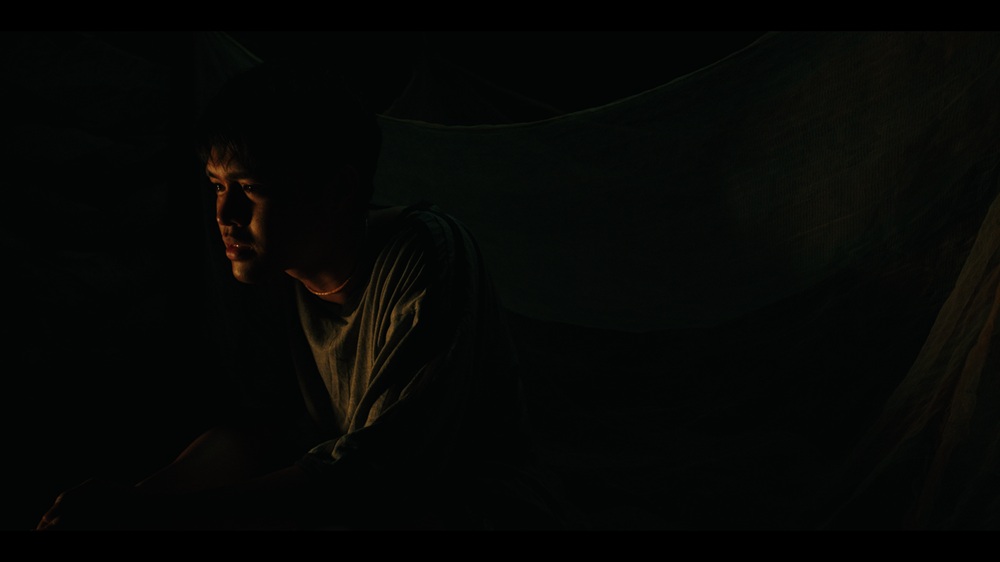
Ryan Machadoâs âRagingâ is everything âPaglilitisâ isnât: quietly assured, formally daring, and emotionally devastating without ever needing to shout. Set sometime in the late-1990s, the film follows Eli (Elijah Canlas), a withdrawn young man whose days blend together in the sound of his own voice played back on a Walkman. âItâs been 29 days,â he says in one of such recordings. âStill the same. Still heavy.â The phrase becomes a pulse, a small act of control against something that refuses to be named. Machado doesnât rush to explain it. He allows the unease to accumulate until the viewer begins to recognize that whatâs haunting Eli isnât a ghost story, but memory itself.
What the film gradually uncovers is a portrait of trauma that has nowhere to go. Machadoâs Romblon this time is a stark difference from his previous film âHuling Palabas.â In âRaging,â Romblon isnât a picture-postcard town but a living pressure cooker: mountains that hold secrets, rivers that cleanse yet never purify. When Eli reports seeing a plane crash in the distance, no one believes him. The mayor dismisses it, the townspeople laugh it off, and his only friend, Jopay, tries to protect him from the gossip that follows.
Itâs through these casual cruelties that the film reveals the deeper tragedyâthis isnât the first time Eliâs truth has been denied. The âcrashâ is a metaphor for something much closer: the night a friend betrayed him in the worst possible way. The communityâs disbelief is not new; it is cyclical, a form of silence disguised as civility.
On Depicting Quiet Rage
Machadoâs approach recalls Jeff Nicholsâ âTake Shelter,â where a manâs private anguish becomes a public spectacle of disbelief. Both films root their dread in realism, letting paranoia bleed into parable. But where Nichols builds storms on the horizon, Machado keeps his withinâthe downpour never comes from the sky, but from the soul.
In tone and pacing, âRagingâ also evokes RyÅ«suke Hamaguchiâs âEvil Does Not Exist,â in how it treats nature as a living reflection of human unrest. The rustling trees, the waterâs insistence, the hum of a storm waiting to breakâall mirror Eliâs slow and painful reckoning.
Canlas plays Eli with a quiet suffering that feels both internal and universal. His body language does the heavy liftingâthe hesitant steps, the clenched jaw, the compulsive bathing that borders on ritual. Each gesture suggests a man trying to wash off what canât be erased. Machado and cinematographer Theo Lozada refuse to frame him as a spectacle of pain. Instead, they keep a respectful distance, observing him in long, static shots that capture the isolation of trauma within a culture that has no language for it. The result is not detachment but intimacy, the kind that comes from truly being allowed to look and listen.
One of the Best Films of This Year’s Cinemalaya
Whatâs most affecting about âRagingâ is its refusal to dramatize violation. There are no flashbacks, no speeches, no attempts at forced catharsis. Machado instead builds meaning through rhythm and repetition: the sound of running water, the low hum of a tape being rewound, the persistent weight of routine. In his hands, recovery becomes an act of endurance. The rage the title promises is not fiery or theatricalâitâs slow, tidal, and deeply human. When Eli finally confronts his demons under the pounding rain, the scene plays less as vengeance and more as release. The violence feels incidental; what matters is the recognition of what has been lost.
The film closes with Eli bathing in the river as daylight breaks. For the first time, despite the strong current, the water feels still, the young manâs movements unhurried. The act is both cleansing and defiant: an ordinary gesture turned into a prayer. Itâs one of the most haunting endings in this yearâs lineup, a moment of grace earned not through spectacle but through stillness.
Where âPaglilitisâ mistook volume for urgency, âRagingâ finds eloquence in restraint. It trusts silence, trusting that pain does not need explaining for one to feel it. Machadoâs filmmaking underscores intuition and patience, with Lozadaâs camera exuding humidity and hush, and the sound design swelling and ebbing like conscience. Some viewers may find its pacing glacial, but those who surrender to it will discover something rare in local cinema: a story about male vulnerability told with empathy instead of pity. Itâs the quietest film of this yearâs Cinemalaya, and perhaps its loudest in impact.
Grade: B+
Watch out for the part 3 of our Cinemalaya 2025 coverage.
âPaglilitisâ and âRagingâ will screen and compete at this year’s Cinemalaya Philippine Independent Film Festival, which runs from October 3 to 12, 2025. Follow us for continuing dispatches, reviews, capsules, and wrap-ups.




