





Every Cinemalaya year seems to arrive with its own pulse, a mood that quietly defines the lineup. If last yearâs slate found solace in intimacy, 2025 feels haunted by inheritance. These are films obsessed with what we carry: grief, history, myth, and the responsibility of remembering when so much conspires to make us forget. Across the festival, ghosts linger not as apparitions but as arguments: between generations, between truths, between the living and the conveniently misremembered.
The first three titles in this yearâs batchââHabang Nilalamon ng Hydra ang Kasaysayan,â âCinemartyrs,â and âChild No. 82 (Son of Boy Kana)ââall turn the act of remembering into an act of defiance. They ask, in their own ways, âWhat does it mean to resist erasure? And how much of ourselves must we give up to keep the story straight?â
âAs the Hydra Devours Historyâ: Myths, Memory, and the Middle-Class Mirror
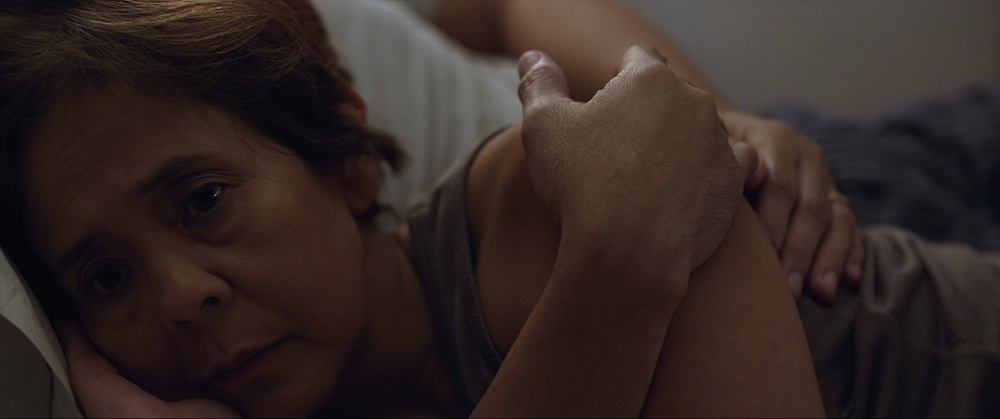
Dustin Celestinoâs âAs the Hydra Devours Historyâ (Tagalog: Habang Nilalamon ng Hydra ang Kasaysayan) opens not with subtlety but with a sting: a defeated presidential candidateâs team trying to compose a concession speech, one of them remarking that people keep voting the same devils back into power. Itâs a scene so nakedly drawn from the recent past, so much that the âThis is a work of fictionâ disclaimer almost plays as satire. From there, the film divides itself into eight chapters, each orbiting a different figure caught in the undertow of political loss.
We meet Kiko (Jojit Lorenzo), a strategist whose cynicism threatens to calcify into apathy; David (Zanjoe Marudo), a speechwriter whose faith in reason falters against the machinery of lies; Bea (Dolly de Leon), a history teacher tasked with teaching a past her nation refuses to remember; and Mela (Mylene Dizon), a lawyer forced to reconcile her familyâs complicity with her own ideals. Through them, Celestino sketches the emotional geography of disillusionment, the aftermath of losing not just an election but a worldview.
A Mythology-Inspired Mumblecore That Borders on Over-Exposition
The titleâs mythological backboneâSisyphus, Cassandra, Tantalus, the Hydraâis both inspired and limiting. It lends the film an almost tragic rhythm, mapping Greek torment onto Filipino despair, but it also tempts Celestino into over-exposition (Christopher Nolan, are you ready to top this next year?). At times, the metaphors come prefaced and footnoted in dialogue, as though the director fears his audience might miss the allegory. They wonât. If anything, the sharpness of âHydraâ lies not in its commentary but in its textures: the restless camera of Kara Moreno, the claustrophobic compositions, the way glasses of water and bowls of food become silent witnesses to conversations that feel both too intellectual and too intimate for comfort.
Among the ensemble, Dolly de Leon anchors the film with ferocious calm. Her Beaâa woman clinging to pedagogy as an act of resistanceâis the filmâs conscience, its reminder that forgetting is a privilege. When she speaks about the impossibility of teaching history in a nation seemingly allergic to it, the scene lands not as a monologue but as indictment. Itâs here that Celestino finds the emotional core he sometimes risks losing to polemic: the recognition that disinformation thrives not just on malice, but on fatigue.
Still, for all its didactic edges, âHydraâ feels necessary. For all its perceived preachiness, I still emerged convinced with the filmâs refusal to flatter its intended audienceâthe weary, well-meaning middle classâbut to confront their complicity head-on instead. Thereâs a certain bravery in that. Celestino knows his film may preach to the choir, but he also knows the choir needs a mirror. If hope is indeed, as the film argues, a choice made in darkness, then âHydraâ is both confession and call to armsâa reminder that remembering is itself an act of resistance.
Grade: B-

âCinemartyrsâ: Haunting History, Female Specters, and the Cinema as Afterlife
Set in 1998, Sari Dalenaâs âCinemartyrsâ begins like a ghost story disguised as a student thesis film. Shirin (Nour Hooshmand), a young filmmaker, wants to complete a documentary on the PhilippineâAmerican Warâcomplete with a chakra-believing Angel Aquino as the Virgin Mary and Lav Diaz as gun-toting Jesus Christ. Shirinâs project spirals into obsession when sheâs told to âgo southâ and capture the forgotten atrocities of Mindanao, so as to avoid making a documentary film thatâs âLuzon-centric.â What starts as an academic pursuit becomes something far stranger: a film haunted by the weight of the very history it tries to resurrect.
With âCinemartyrs,â Dalena blurs the line between recreation and possession. When Shirinâs crew begins restaging a massacre, the shoot itself becomes a séance: the sound crew picks up screams and human voices in the middle of the forest, the cast and crew convulse, and the ghosts of the slain take over their bodies as if to finish what history left unwitnessed. The result is a film that operates on several frequenciesâpart docufiction, part supernatural horror, part love letter to the ghosts of cinema itself.
Framing this chaos are archival voices of women directors like Carmen Concha, Susana de Guzman, and Consuelo Osorio, names largely lost to the mainstream histories of Philippine cinema. In invoking them, Dalena constructs a dialogue across generations, between the silenced and those still shouting into the void. To this effect, âCinemartyrsâ becomes not just an elegy for the massacred, but for the erased women who filmed in the margins, who fought for space in a medium eager to forget them.
An Ambitious Film Whose Reach Sometimes Exceeds Its Grasp
The film doesnât always hold its many layers together. Cedrick Juanâs âAmboyâ boyfriend character, for instance, feels underwritten, and the structural leapsâespecially between the Mindanao shoot and the final surreal coda in Luzonârisk alienating those who expect linear catharsis. Yet the filmâs imperfections are part of its power. Dalena doesnât want neat coherence; she wants rupture, echo, reincarnation. When Shirinâs body literally turns into a projector in the finale, itâs both weird and transcendent: cinema as childbirth, history as possession, light as testimony.
Technically, itâs immaculate: Neil Daza and Kiri Dalenaâs lensing drenches every frame in humid, handheld immediacy; Teresa Barrozoâs score hums like a buried scream; the sound design, alive with whispers and static, feels like memory clawing its way through celluloid. Beneath the madness, it feels to me that Dalena is making a radical argument: that the act of filmmaking, especially by women, especially about trauma, is an act of bravery.
If âHydraâ interrogates how we remember, then âCinemartyrsâ asks what remembering costs. And in the filmâs final shotâa beam of light erupting from a womanâs body, illuminating the wall like a screenâDalena finds the ultimate image of resurrection: the female filmmaker as conduit, the body as archive, the cinema as afterlife.
Grade: B
âChild No. 82 (Son of Boy Kana)â: Fathers, Fandom, and the Messy Inheritance of Idolatry
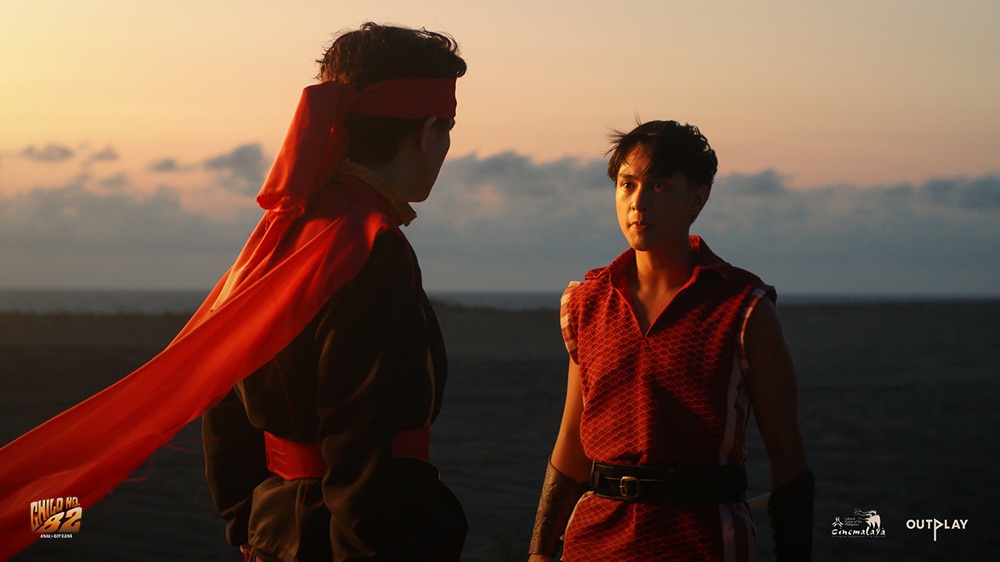
Tim Rone Villanuevaâs âChild No. 82 (Son of Boy Kana)â is the kind of debut that wears its heartâand its tonal chaosâon its sleeve. Itâs part melodrama, part social satire, and part love letter to the gaudy heroism of the olden days of Philippine cinema. Max (JM Ibarra), a chronically online teen who spends his days on âPocPocâ (likely the most accurate and hilarious fake app name in recent cinema), lip-syncs to lines from Boy Kanaâs movies as if invoking a deity. Boy Kana (Vhong Navarro)âan obvious amalgam of Fernando Poe Jr., Ramon Revilla Sr., and Joseph Estradaâis a legend whose shadow is as lurid as it is long.Â
However, for Max, whose mother Ali (Rochelle Pangilinan-Solinap) refuses to speak of the man, Boy Kana isnât just a missing father; heâs mythology. So when Boy Kanaâs death makes headlines, along with news that the superstar left nearly a hundred illegitimate children and an âofficialâ list of 81 acknowledged heirs, Max sets out to prove heâs number 82. The journey from Ilocos to Cavite becomes less about inheritance and more about belonging.
Villanueva frames this journey like a pilgrimage through the ruins of fandom, and here we see a lovable roughness to the film. We can sense a first-time filmmaker pushing against the limits of genre, sometimes awkwardly, sometimes brilliantly. The editing jitters, the pacing wobbles, but the heart is undeniable. Villanuevaâs eye for visual playâthe 8-bit graphics, the retro-fantaserye flourishes, the PocPoc montagesâevokes the old Mars Ravelo universe reimagined through Gen Z screens. Itâs camp that remembers where it came from.
Legacy, Lineage, and the Fan Fiction of Fatherhood
JM Ibarra carries the film with an earnestness that compensates for its tonal turbulence. In his debut feature role, Ibarra plays Max as fragile as he is foolhardyâan avatar of the Filipino son who mistakes virality for visibility. You sense an actor figuring himself out alongside his character. His chemistry with Pangilinan-Solinap gives the story its emotional ballast: she plays a mother whose restraint conceals deep hurt, grounding the spectacle in something tender and true.
And then thereâs Irma Adlawan, who steals the show as Mother Betty, the Cavite fan-club president whose devotion to Boy Kana borders on the religious. Adlawan plays her not as caricature but as cautionary tale: a woman consumed by parasocial fervor, emblematic of the fandom culture that treats celebrities as saviors and refuses to let go, even in death. Her scenes veer from hilarious to chilling, a microcosm of how obsession curdles into madness.
Yes, itâs messyâtonally and emotionally. The editing meanders, the writing leans on corny sentiment, and the earnestness is turned up to eleven. But thereâs something disarmingly pure about Villanuevaâs approach. He isnât mocking his characters; heâs trying to understand why they cling to myths that fail them. The result is a crowd-pleaser that might feel too box-office friendly for something like Cinemalaya.
Then again, its corniness is a kind of courage. In a festival season haunted by ghosts of history and ideology, âChild No. 82â is that rare debut that barrels forward with equal parts sincerity and chaos. And weâre all for it.
Grade: B-
Watch out for the part 2 of our Cinemalaya 2025 coverage.
âAs the Hydra Devours Historyâ, âCinemartyrsâ, âChild No. 82â will screen and compete at this year’s Cinemalaya Philippine Independent Film Festival, which runs from October 3 to 12, 2025. Follow us for continuing dispatches, reviews, capsules, and wrap-ups.




