






With the end of Rodrigo Duterteâs presidency and his attacks on democratic institutions like a free independent press, some Filipinos hoped for a new beginning. In contrast, others yearned for even more autocracy and a return to an era before the People Power Revolution and the restoration of democracy just a generation before. Ramona S. Diazâs latest documentary film, âAnd So It Begins,â now playing at this yearâs Sundance Film Festival, shines the spotlight on an initially unwilling presidential candidate whose deep love for country she likens to a motherâs love for her children.
The journey that follows, amid the smear campaigns and disinformation hurled her way by supporters of her political opponent, is a chronicling of a galvanizing fight for democracy in the Philippinesâ own age of âalternative factsâ.
As the filmmakerâs follow-up to her critically acclaimed 2020 documentary âA Thousand Cuts,â this film aims to shed light on the defenders of democracy in the age of post-truth Philippine media. And as more people become aware of the deepening threats to truth and democracy, âAnd So It Beginsâ becomes something more: a message of hope.
Contextualizing Philippine Politics, Featuring Marcos, Robredo, and Duterte
The film begins with a title card explaining the electoral process in the Philippines for the two highest positions. In the country, presidents and vice presidents are elected separately, with presidents being limited to one six-year term. In the national election of 2016, they were elected from opposing tickets; with Rodrigo Duterte sworn in as president, and Maria Leonor âLeniâ Robredo as vice president.Â
âAnd So It Beginsâ shows Robredo recounting that she wasnât politically active during her college years. That apolitical nature, however, changed with the assassination of Benigno âNinoyâ Aquino (a fierce critic of kleptocrat Ferdinand Marcos and whose death remains unsolved to this day).
Fast-forward to the 2016 election, and Robredo was in a tight race for vice president, this time against the late Marcosâ son, Ferdinand âBongbongâ Marcos, Jr. While Robredo won the race, the next several years saw Marcos Jr. appealing his case multiple times, citing election fraud and demanding a recount.
Also, as vice president, Robredo caught Duterteâs ire on the regular. It didnât help that Duterte (and, to a lesser degree, Marcos) boasted of a loyal base that found Robredoâs calm and amiable personality an easy target for verbal attacks.Â
At one point in the film, Robredo shares the challenge of working with an administration that not only tolerates but also promulgates sexism and misogyny, saying âit felt like undergoing fraternity hazing for five-and-a-half yearsâ. Duterte, for his part, doubles down. Dismissing Robredo as a âcolossal blunder,â the president says that âfor all of these years, she has done nothingâ; and that as a lawyer by profession, Robredo is ill-equipped to lead the country.
âYouâre better off choosing a dictator in the likes of Marcos.â
Two Women Fighting for Truth
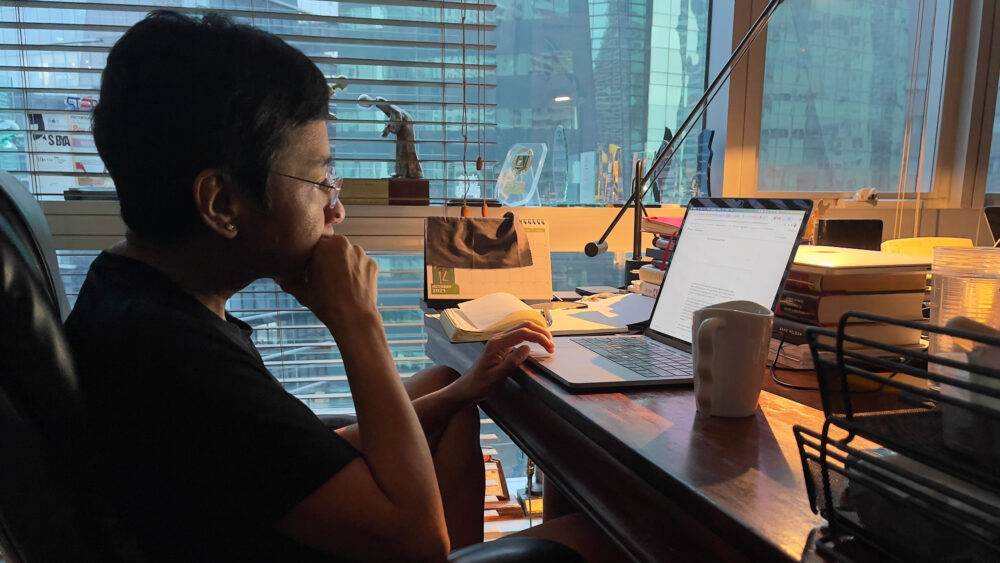
Diaz then revisits âA Thousand Cuts,â her documentary on Rappler founder and eventual Nobel Peace Prize recipient Maria Ressa, and integrates elements of that film here. âAnd So It Beginsâ suddenly becomes a two-pronged story about two strong-willed women sharing the same skies, fighting to uphold democracy amid a sea of vitriol and fake news.
With footage of unrest during the dictatorial regime of the older Marcos interspersed throughout the film, âAnd So It Beginsâ is a deep dive into the countryâs recent history. More importantly, Diaz shows how the digital ageâs role in spreading misinformation renders its citizens highly susceptible to repeating history all over again.
Despite the cautionary tale, Diaz emphasizes the grassroots campaign in support of Robredo. Known as the âKakampinkâ movement (a portmanteau of the Tagalog word âkakampiâ and âpinkâ, which translates to âAllies in Pinkâ), these movers exert a collective effort to fight Bongbong Marcosâ presidential run.Â
Hereâs why: More than the younger Marcosâ reticence to address his late fatherâs human rights record and the familyâs ill-gotten wealth, his campaign was essentially built on an extensive social media campaign that capitalized on spreading disinformation against Robredo. âLast Week Tonightâ even aired a segment centered on this particular election.
âAnd So It Beginsâ: A Stirring Companion Piece to âA Thousand Cutsâ
This is where âA Thousand Cutsâ ties to âAnd So It Beginsâ in a neat way: Ressa wants to advocate freedom of expression without compromising the truth. Robredo wants to spearhead change rooted, not in fear and blind loyalty, but in the search for what is right and true.
Diaz certainly wonât gain new Marcos and Duterte supporters anytime soon. Certainly not, when your past documentaries featured a critique on Duterteâs extrajudicial killings, and a reflective Imelda Marcos arguably believing her own lies.Â
In this critic’s opinion, âAnd So It Beginsâ is Diazâs most subjective work. There are no arguments for objectivity here, and surely there isnât when truth is on the line. As a documentary, even the more politically ambivalent audiences would find it problematic. But at face value as an artform, this is great storytelling.
A fitting companion piece to âA Thousand Cuts,â âAnd So It Beginsâ is an insightful film that documents hope and the fight for democracy in a country mired by misinformation. Yes, Robredo ended up losing the election to Marcos Jr., who currently serves as the countryâs president. But Diazâs choice on how to end the film sings a hopeful tune, one that hopes the youth would learn this timeâand for the better.





