





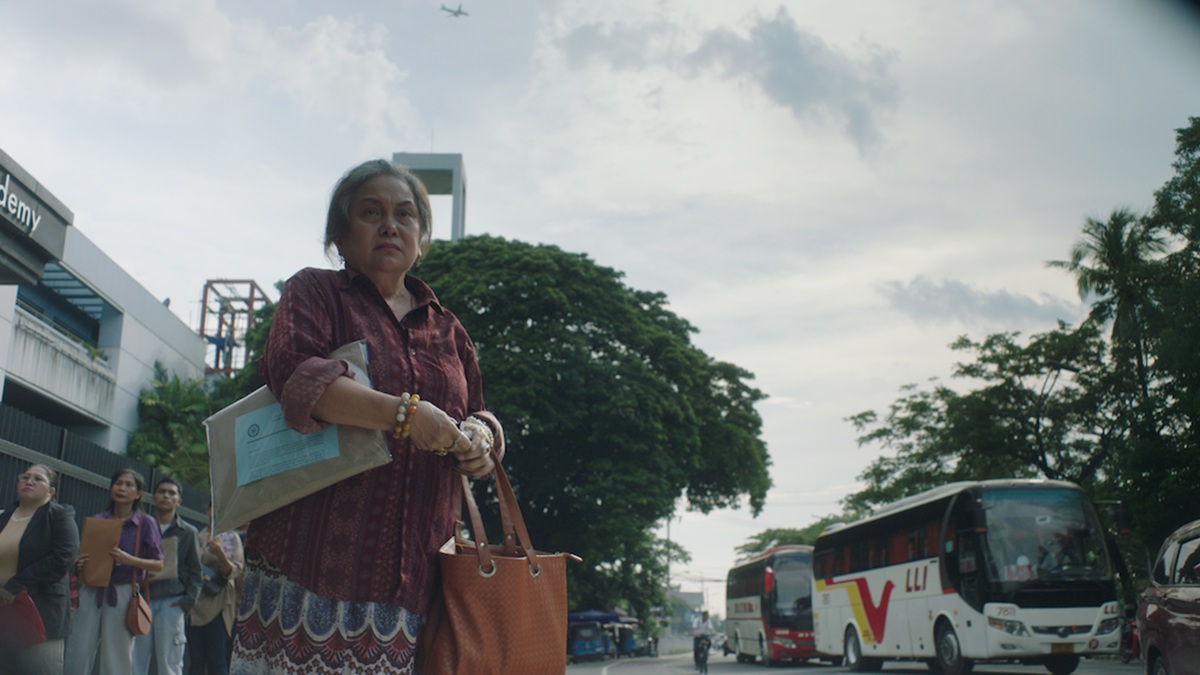
Virginia âBiringâ Divinagracia has already been told no several times, but she keeps dressing up and trying again.
At the beginning of Vahn Leinard Pascualâs “Status: Rejected,” the 69-year-old widow (Ruby Ruiz) rehearses another backstory for the people deciding whether she gets to enter the United States. This time, sheâs going on a religious pilgrimage. Apparently, an earlier application involved attending a Lady Gaga concert. The details change because the objective doesnât: Biring wants America badly enough to keep searching for the explanation that will finally make America want her back.
Another rejection sends her home to Anna (Alessandra de Rossi), the daughter with whom she shares a house but little intimacy. Anna keeps the household running while raising her own daughter, Sophia (Yani Villarosa), and Biringâs repeated applications have become another expense they can hardly justify. Somewhere across the Pacific is Biringâs son Clark, whose presence in America has assumed enormous importance in his motherâs imagination. Anna notices. She doesnât have to explicitly accuse Biring of favoring her brother for the resentment to register.
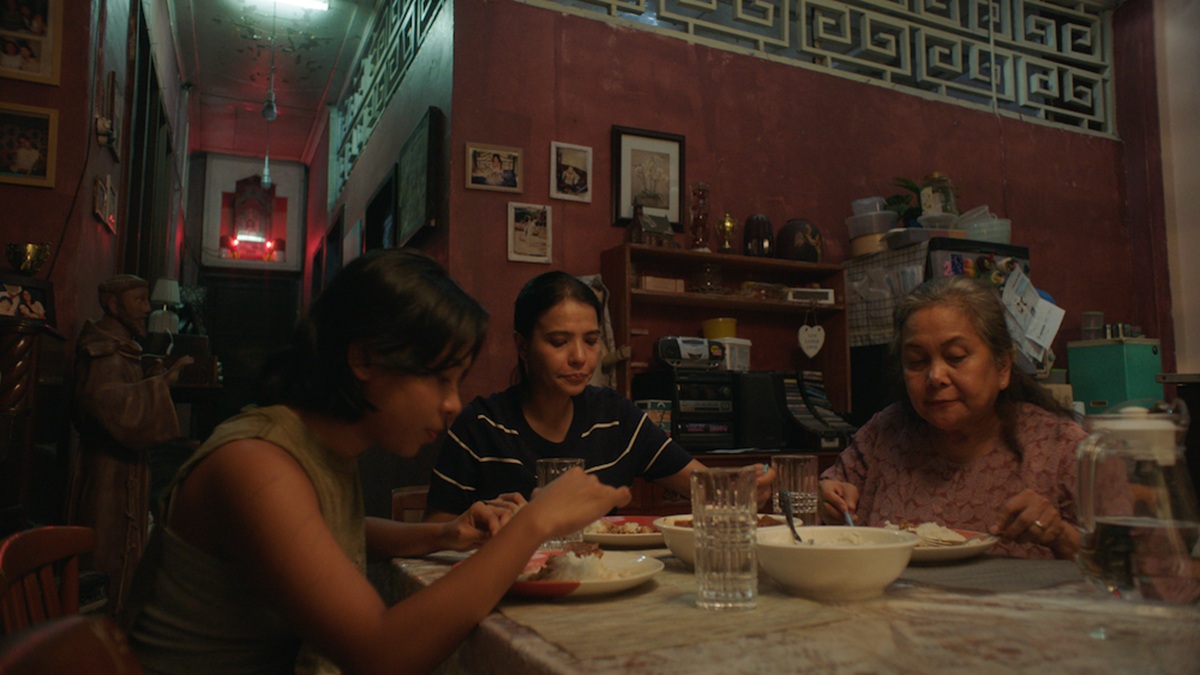
Pascual, working from a screenplay he co-wrote with Jaymar Castro and Ivan Villacorta Gentolizo, builds much of the movie from these domestic frictions rather than inflating every disagreement into melodrama. Mother and daughter know exactly how to wound each other because they also know how to avoid each other. Anger comes through clipped replies, meals eaten in silence, small requests treated like impositions, and the particular coldness of people who live under the same roof but have stopped asking what the other person needs.
Then Biringâs friend Tessie (Beverly Salviejo) introduces her to social media, and a man named Steve Johnson sends Biring a friend request.
We can see the red flags from orbit.
Biring canât.
The America Biring Has Been Waiting For
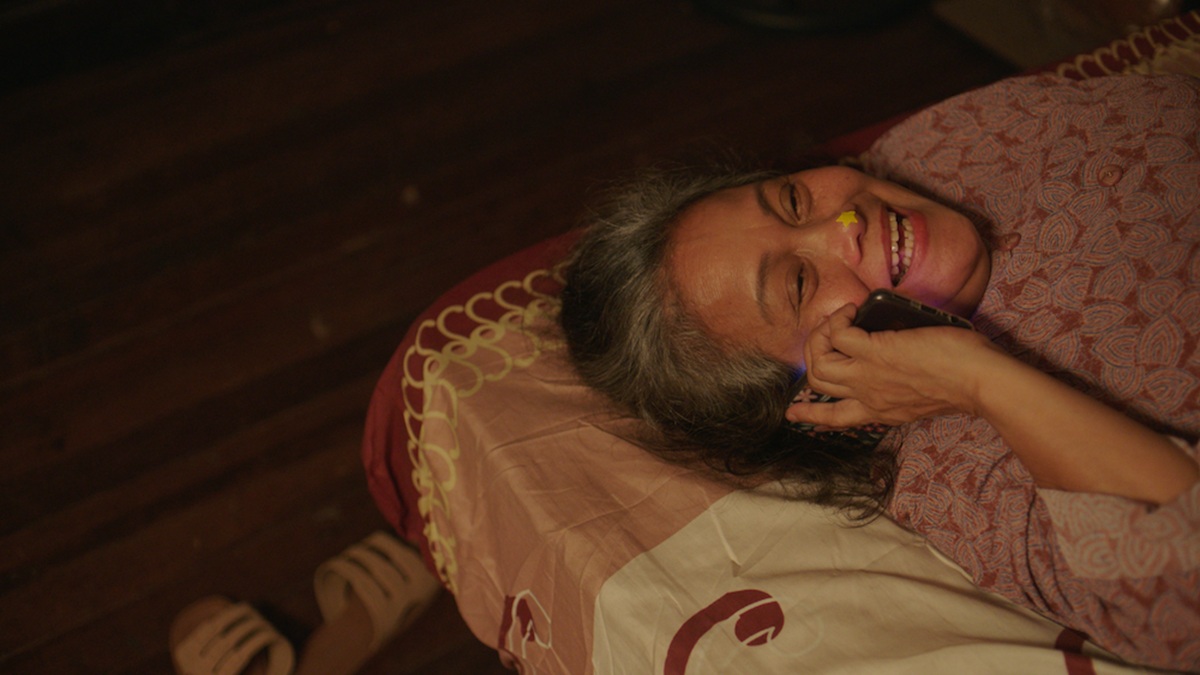
What makes her vulnerability convincing is that “Status: Rejected” doesnât reduce it to an elderly woman being bad with technology. Biring certainly needs help learning her way around social media, and Pascual gets some lovely comedy from watching her discover what online courtship now requires. Steve asks for a photo of her âtits,â and Biring, unfamiliar with the slang, sends him a picture of her teeth. Before long, sheâs learning how to take and send more suggestive photographs, discovering a form of flirtation that feels both embarrassing and thrillingly new.
The joke never becomes simply âold woman doesnât understand the internet.â Biring is having fun. Someone is paying attention to her, asking for pictures, flirting with her, and making her feel desirable at an age when that kind of attention may have seemed permanently behind her. More importantly, several things also make her almost perfectly positioned to believe him. Technology remains unfamiliar territory. Money is tight. Years of irritation have hollowed out much of her relationship with Anna, while her son lives an ocean away. Underneath all of those circumstances is a loneliness the movie rarely needs to name aloud.
Steve offers companionship, but he also arrives wrapped in something Biring has wanted for much longer: America.
For her generation, dreaming of the United States hardly requires explanation. Tessie remembers how, even when they were students, practically everyone around them wanted to go there. America represented escape, success, opportunity, and the possibility that life might finally open up somewhere else. Biring never seems to have stopped believing in that promise.
Her bedroom makes the fixation almost comic in its completeness. Posters and images of Hollywood, American men, and other pieces of US iconography crowd the walls. America isnât merely somewhere Biring wants to visit; she has decorated her private world around the possibility of eventually getting there.
Meanwhile, Anna is down the hall.
More Cinemalaya 2026: â2 Valid IDsâ Turns Bureaucracy Into a Punishment for Being Poor
On Filming [Emotional] Distance
That contrast is one of the filmâs sharper ideas. Biring spends enormous emotional energy trying to reach somewhere thousands of miles away while barely reaching the daughter and granddaughter living inside the same house.
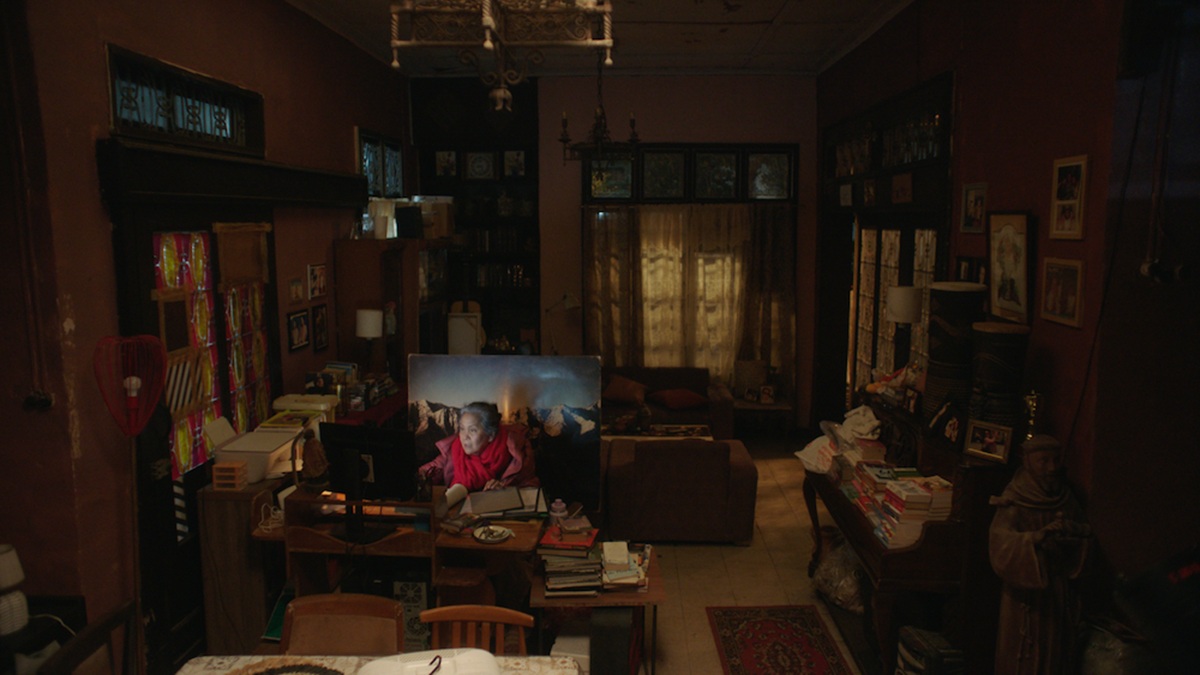
Marielle Hizonâs production design makes that home essential to the family dynamic. Itâs cluttered with boxes, thin curtains, furniture, narrow passages, and the accumulated belongings of people who have lived there too long without necessarily building intimacy. Pascual and cinematographer Martika Ramirez Escobar repeatedly use doors, stairs, bedrooms, and the dining table to show how physically close these women are while remaining emotionally compartmentalized.
Ruby Ruiz gives Vahn Leinard Pascualâs observant family drama a painfully human center, even when its destination becomes clear long before Biring sees it.
Ramirez Escobarâs photography was also what kept making me think of “Leonor Will Never Die,” which she directed and shot. Thereâs a similarly unvarnished familiarity in the way she photographs domestic space here. The house doesnât look arranged for our inspection; it looks occupied. Che Tagyamonâs editing helps considerably, too. A story built around repeated applications, online conversations, and family tension could easily drag, but “Status: Rejected” moves comfortably and leaves before its modest premise wears thin.
More Cinemalaya 2026: âThe Motheringâ Turns an Ancestral Home Into a Graveyard of Sins
Ruby Ruiz Makes the Obvious Hurt
My resistance to the movie comes from somewhere frustratingly close to a compliment: I believe Biring long before the story finds new ways to surprise me with her.
Predictability isnât simply knowing what happens next. Plenty of films tell us where theyâre going and become richer because of the inevitability. The difficulty here is that once Steve enters Biringâs life, most succeeding developments reinforce what we have already recognized about her. Loneliness leaves her hungry for attention. America remains a fixation. The internet is a world whose dangers she hasnât yet learned to recognize. Financial strain narrows her options, while the emotional vacancies inside her family leave room for an attentive stranger to enter.
The screenplay observes all of that with considerable compassion, though it doesnât always find enough new dramatic pressure inside those observations. We can see the trap forming almost as quickly as Biring walks toward it, and the route grows increasingly easy to anticipate.
Pascualâs direction is gentle enough with the characters that this rarely becomes irritating. If anything, the refusal to ridicule Biring is one of the movieâs better qualities. I just wish that same sensitivity had occasionally been paired with a less foreseeable turn: a complication that shifted our reading of what Biring wanted from Steve, or some development that changed the meaning of her journey rather than simply pushing her farther along a visible path.
Nonetheless, Ruby Ruiz keeps that straight road emotionally alive. She refuses to reduce Biring to either a foolish old woman or a saintly grandmother victimized by modern technology. Vanity, stubbornness, selfishness, romance, loneliness, and humor all coexist in Ruizâs performance without being ironed into an adorable-grandmother archetype. More importantly, she plays Biringâs desire seriously. An older woman wanting romance, sexual attention, and companionship isnât inherently treated as ridiculous. That comedy around sexting? It works, because Biring herself isnât the joke. Her unfamiliarity is funny; her desire isnât.
De Rossi provides the necessary counterweight. Anna has carried resentment long enough that it no longer needs theatrical outbursts. Her frustration has hardened into routine: she works, worries about money, raises her daughter, and watches her mother continue chasing an American future while the household immediately around them demands attention. Meanwhile, Clarkâs place within the family adds another sting. Biringâs fixation on joining him abroad inevitably leaves Anna feeling like the child who stayed has somehow become less visible than the one who left. The film wisely doesnât underline that jealousy. Years of it are already audible whenever Anna bristles at another application or another expense attached to her motherâs dream.
The Harder Journey Is Back Home
Where “Status: Rejected” finally earns more from me is that Pascual doesnât leave Biring exactly where the premise found her. Without getting into the last stretch, there is enough movement for rejection to acquire meanings beyond immigration paperwork. Her hunger for someplace else has consequences inside the home she already has, and eventually the film allows Biring to look inward rather than merely searching for another door to America. That shift gives the ending a welcome lightness without pretending years of damage have disappeared. Repair remains possible, not guaranteed.
The route may be obvious, but the people traveling it are never disposable pieces in a cautionary tale about internet scams. Pascual and his writers care more about what makes somebody vulnerable than about congratulating us for spotting the deception before she does. That generosity keeps the movie warmer and more humane than its familiar trajectory might suggest.
Biring wants to cross an ocean because sheâs convinced another life is waiting on the opposite shore. “Status: Rejected” is strongest when it quietly suggests that the more difficult journey may only be a few rooms away.

“Status: Rejected” currently screens at the 22nd Cinemalaya Independent Film Festival. The festival runs from August 6 to 18, 2026. Follow us for more coverage.




