





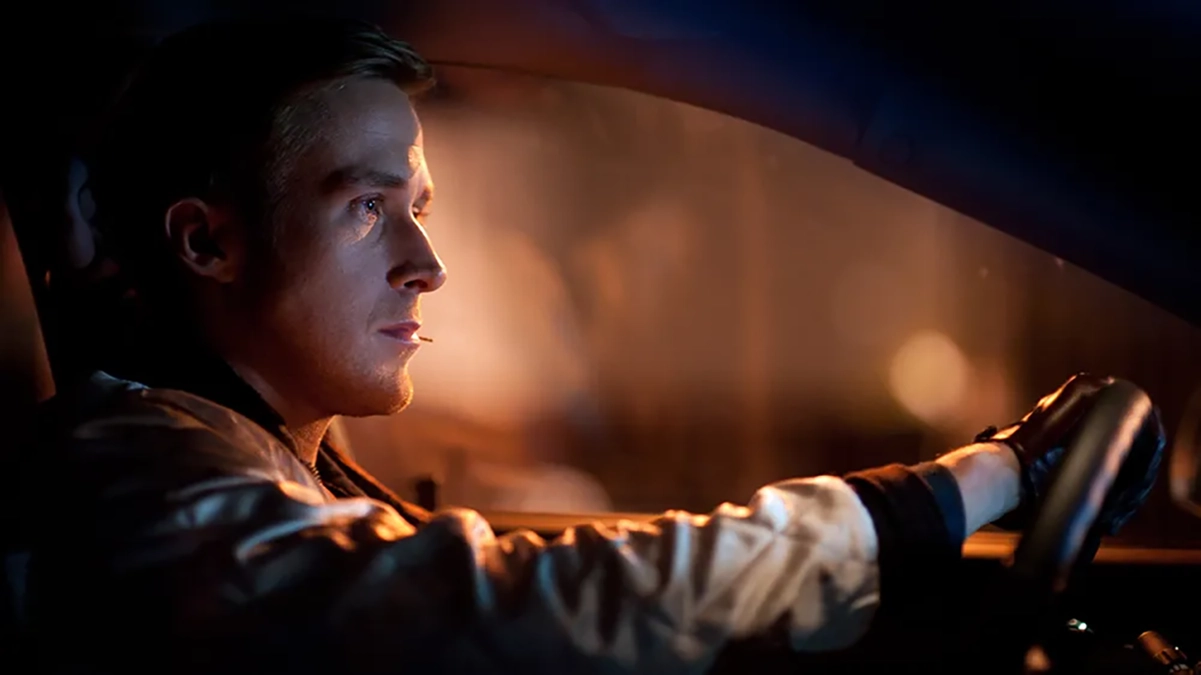
Given the utter brutality and lack of morals in Nicholas Winding Refnâs 2011 film âOnly God Forgives,â his 2011 film âDriveâ surprised me on first viewing. Watching it again last night, its themes stood out to meâespecially the varied themes of love, both romantic and plutonic, contained therein. Pulling from James Sallisâ novel, Winding Refn and Ryan Goslingâalong with supporting actors Carey Mulligan and Albert Brooksâpresent a layered look at fleeting bonds and tenuous relationships, all the more doleful due to the filmâs inevitable outcomes. Yet this is a movie about love amidst loss, and its scenes all say something about that central theme. Where âOnly God Forgivesâ was about violence and revenge, âDriveâ is about deeper material the film takes time to explore.Â
The filmâs themes are explored in many ways, but none so ardently than in its chief character, Driver (Ryan Gosling), and, in subtler ways, in the mobster Bernie (Albert Brooks). We know little about Driver at the filmâs onset. He works in a garage in Reseda Blvd., being exploited by Shannon (an excellent Brian Cranston) in between driving stunts for the movies and acting as a wheelman for criminal getaways. Yet a comment Bernie makes toward the filmâs beginningâas he explains to Irene (Carey Mulligan) that he underpays Driver, who never bats an eyeâstuck out to me. Why does Driver do this? Is it love for Shannon? Desperation? Iâd argue itâs neither. He likes the workâitâs honest and gives him purposeâand, like Bernie, Iâm guessing he likes having Shannon around. In many ways, Driver is like Bernie, but not as overt. His violence comes later, not initially.Â
Bright Spots Amidst Dolor
Itâs not hard to understand why Driver comes to love Irene. Sheâs a bright spot in his colorless life, spent between criminal activities and his solitary existence. Over the course of what seems like days, the twoâneighbors who only recently metâdevelop a bond. She likes him and he likes her. Both receive the other in gentle, cautious glances, amidst a world where a glass of water answers for socialization (itâs likely all she can afford as as single mom) and a secret spot at a river near LAâs tunnel system leads to a perfect day for all three of them. In Sallisâ novel, Driver had next to nothing, and the film stays true to that. He has a vintage watch (a prop model Patek Philippe, likely given to him by his father), but relies on Shannon to deliver cars to him for his jobs. He dresses in beaten up workshop-type henlies and a standard jean jacket. And he carries himself with that sense of lone detachment that is so common in his type of character. Irene makes him instantly smile.Â
When did Driver fall in love with Irene? Perhaps in the apartment complex in which they live, as they passed in silence so many times. Perhaps when he helped her with her broken-down car. The film never answers it definitively. When did Irene fall in love with Driver? Itâs up for debate, but Iâd argue itâs after the day at the riverâtheir stolen moment of peaceâand the way he made her son feel so safe and free. âThat was good,â she says. âHe had a really good time.â The clincher is Driverâs not acting; he had a good time too.Â
The most despairing nature of ‘Drive’ is the fleeting nature of the characters’ happiness
Like Driver, however, Bernie is an odd bag. We first meet him in a pizza shop as heâs meeting with Shannon, who is asking to borrow money. You get the impression this isnât a one-time thing. Bernie is in deep with the mafia. Itâs never said explicitly what his role is, but you get the impression he has connections that would frighten others. His partner, Nino (Ron Perlman) is your typical wiseguy. He flaunts his prowess and affiliations. Bernie keeps it all in. He’s keen to loan Shannon the money but wants to stonewall him first. Nino broke Shannonâs pelvis at an earlier date for overcharging him for services. Maybe Bernie wants to protect him. Itâs clear he loves him, considers him a friend, even if we can also tell he considers him foolish and naive.Â
Bonds that Could Have Been
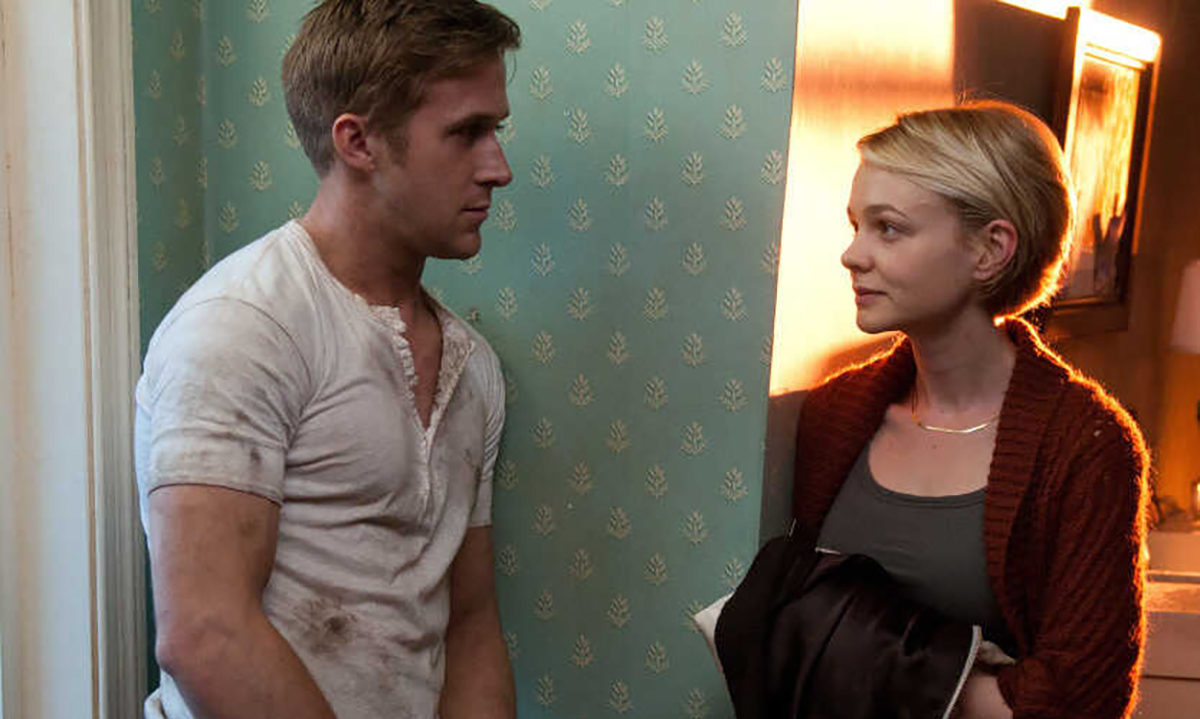
Yet the way Sallis and the filmâs screenwriter Hossein Amini structure âDriveâsâ narratives is akin to Greek tragedy. You have these charactersâDriver, Irene, Shannon, Bernieâand you just know theyâre going to collide in irreparable ways. In many ways, âDriveâsâ narrative mirrors another film starring Carey Mulligan, âPromising Young Woman,â by smacking its characters with an ending we should have seen coming, but didnât. Ireneâs husband (a good Oscar Issac) comes home from prison and longs to reconcile with his wife. A group of thugs try and extort him (after a beating), and Driver intervenes to try and helpâwhich of course ends up tragically. And as Driver attempts to put the pieces together and make the scene rightânamely giving Nino back an inordinate amount of cash that belongs to him, which was stolenâyou know by this point Winding Refn doesât have any happy endings in store for his cast.Â
The more despairing aspects of âDriveâ are its relationships that could have been and the fleeting nature of its charactersâ happiness. When does Driver lose Irene? Probably the minute he got involved with her husband, trying to save him due to his love for her. But it could have been later, in an elevator ride where he beats a hitman trying to kill them to death in front of her after their first kiss. The kiss was probably a kiss goodbye. Shortly thereafter Irene steps out of the elevator at the parking garage level. The doors close between themâliterally and figuratively.
Love ‘Almost’ Saves
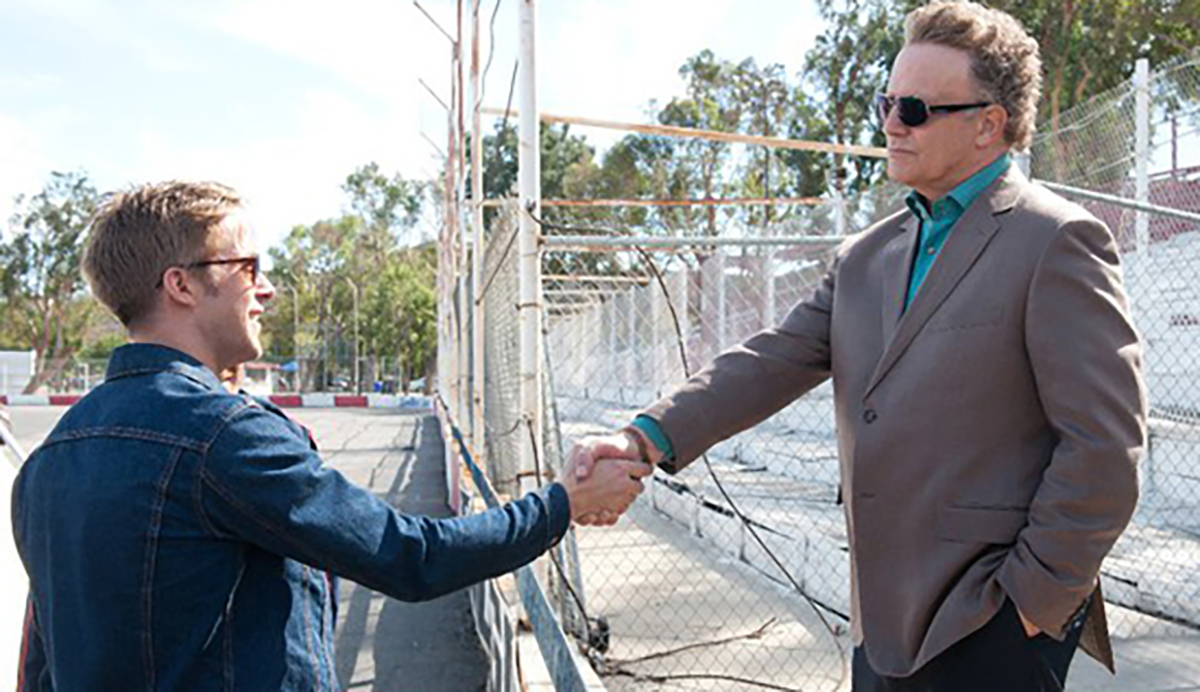
Bernieâs losses are just as sudden, even if they are at his own doing. When he realizes Nino is in over his headâand Bernieâs life is also in danger if he doesnât kill Driver and Shannonâhe sighs. He couldnât care less about Driver⦠but Shannon is a different story. He closes his eyes, almost imperceptibly, saying a silent goodbye before he accepts the reality. In the garage confronting Shannon later, as he remarks, âI was excited about this business,â we believe him. When he does kill Shannon, itâs quick. He slices his arm with a straight razor then grasps his arm saying, âshhh itâs over, itâs done, itâs okay.â Heâs trying to comfort the man he had no choice but to kill. Contrast this to the previous scene, where he viciously murders the thug Cook (James Biberi) in Ninoâs restaurant, another thought comes to mind. He butchered Cook out of angerânot at what heâs done (heâs incompetent)âbut that his actions have now led him to need to kill a friend.Â
It’s clear Winding Refn doesn’t have happy endings in store for his characters
âDriveâ is a violent movie and definitely earns its âRâ rating. However, for a movie focused on crime and loners who dare to invite make connection, it has more heart to it than it ought. I loved the film when I reviewed it in 2014 and find it still holds up today. Its characters are doomedâjust as recently explored in John Wickâbut they donât know it yet. It ends solemnly as it must, but along the way becomes a hard lesson in saying goodbye to things that werenât yours to begin with. Perhaps if its characters had made different life decisions this could have ended differently. But as it stands, itâs a lasting meditation on living dangerous paths, how love almost saves its characters, but whom ultimately fall victim to the beds they have made for themselves.Â




