





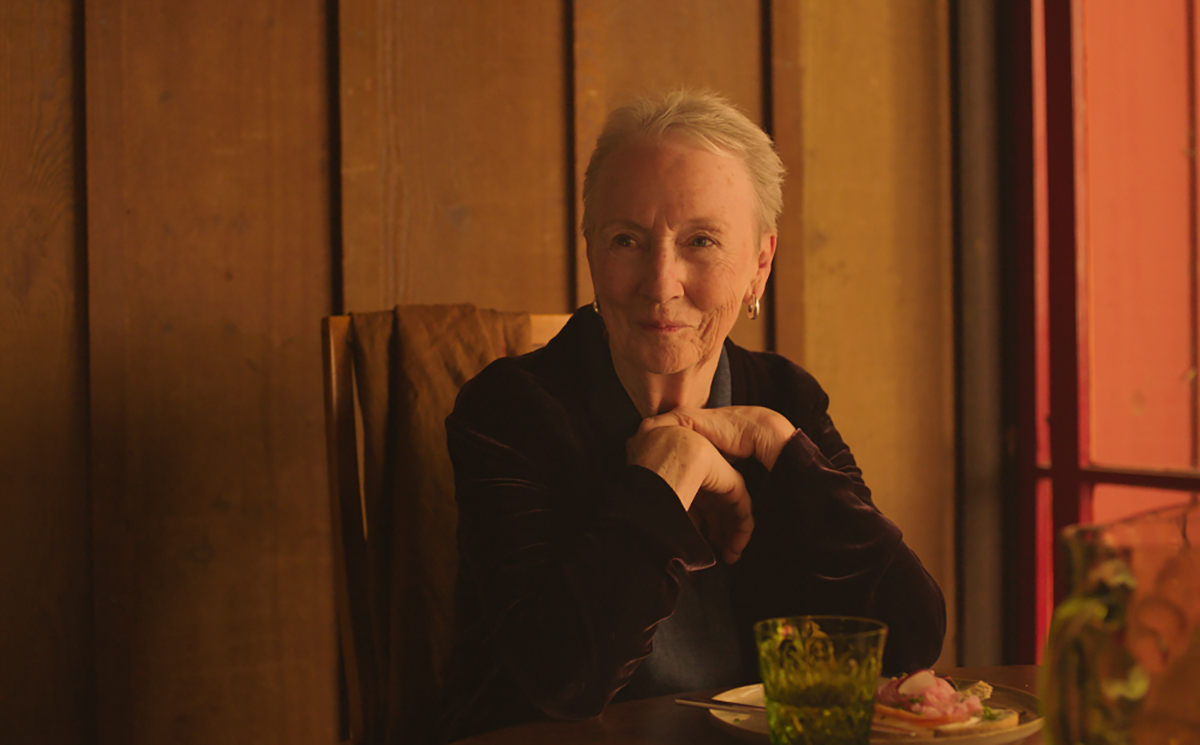
The toaster that pops in Ruth Goldmanâs (Kathleen Chalfant) immaculate kitchen early on in Sarah Friedlandâs âFamiliar Touchâ might as well be a gunshot, jolting this controlled, considerate movie off to the races. Amid the relative calm and soothing silence, Ruth meticulously garnishes two pieces of Instagrammable toast. But when she places another slice on a drying rack above her sink, âFamiliar Touchâ sounds an excruciating alarm that Ruthâs peaceful, carefully curated life is no longer tenable. Enlisting the game Chalfantâin a gusty, extraordinary star turnâFriedland (who also wrote the script) unveils a heartbreaking human drama thatâs both painfully intimate and agonizingly universal. At times, Friedlandâs storytelling ambition nibbles on more thematic weight than it can chew in a slender, 90-minute run time. But the central preoccupationsâthe pains and pleasures of memory, care-giving and receivingâresonate with an urgency thatâs uncommonly wrenching and unavoidably engaging.Â
At no point in the film does Ruthâor any characterâutter the word dementia, although the clues are initially delivered to the audience in graceful narrative and visual (the toast) cues. After the jarring siren of the toaster, the second disruptive noise is a doorbell. Enter Steve (H. Jon Benjamin), who unsuccessfully disguises his discomfort at this visit with cursory small talk (âIâm an architectâ) and casual, icebreaking jokes (âGod? No, Iâm more of a demi-godâ) redolent of a first date. Ruth canât remember his nameâit was on the tip of her tongue!âor any other personal details, but her conversational skills are crisp, her demeanor inviting. When Ruth places a firm hand on Steveâs knee, he clams up, pushing aside the âsignature sandwich,â suggesting they take a ride to a destination that Ruth insistsâin an amusing, almost juvenile protestâmust remain a surprise.Â
Friedland as an ‘Almost Documentarian’
Ruthâs joy at the getaway doesnât so much evaporate as devolve, and Friedland films Ruth at a side profile in the car, fixing on her face, then her hands, which she turns up to presumably invite Steve to hold hers. He resists and then her disappointment morphs to a knee-jerk acceptance when they pull up in front of Bella Vista nursing home. (The actual location is Villa Gardens, a continuing care retirement community in Pasadena, California.) Greeted there by Vanessa (Carolyn Michelle), Ruth is again rattled when Steve calls her mom. She canât have any kids, Ruth explains, itâs too much work! Steve, choked up but composed, tells her that itâs okay, heâs all grown up now. Itâs an arresting gut-punch, articulating the pain of when reality lands with a thump, forcing the mind and body to shake out any remaining magical thinking about best-case scenarios.Â
Through an unbending focus on these expressive faces, Friedland and her cinematographer Gabe Elder act almost as documentarians, conveying an individualâs grief in real-time. The steady framing lends âFamiliar Touchâ a voyeuristic quality, particularly during private moments at the nursing home. Looking outward, however, Friedland is on less stable footing. When Ruth overhears Dr. Brian (Andy McQueen)âto whom she had previously recited her special Borscht recipe, thus proving her mental mettleâtalking to Vanessa about his mom and grandma, he refers to the care complex as an unaffordable âgeriatric country club.â No further mention is made, and as far as we can see, thoughtful, independent Ruth doesnât try to grapple with that assertion. And so this hint towards socioeconomic imbalances and the related travails of full-time caregiversâhefty themes no doubtâfeels tacked on, almost intended for supplemental interview material or a directorâs statement.Â
About Evolving and ‘Growing Up’

Still, Friedlandâs light touch is a gift to these complex, fully-developed characters, who arenât merely participants reacting to Ruthâs struggles. Far more than a righteous polemic about a collectiveâs battle against illness, âFamiliar Touchâ is foremost about evolving, andâparaphrasing Steveâgrowing up. Despite an inevitable detour to pontificating, âFamiliar Touchâ mostly plays an even-hand, ultimately celebrating family support in all of its various, contentious forms, those sweet-and-salty relationships which nourish in health and especially in sickness. And no matter how bleak the outlook, itâs not a crime to have a little fun. Near the end, Friedland cuts from a scene in Ruthâs emptying houseâthe sink toast is now moldyâto a group birthday party at her new home, complete with balloons and cake. Itâs store bought, Ruth tells Steve, so she wonât eat it. No sense in spoiling her figure for some schmucks she hardly knows.Â
âFamiliar Touchâ opens in New York at Film Forum on June 20th, and will roll out to select theaters nationwide beginning on June 27th.Â




