





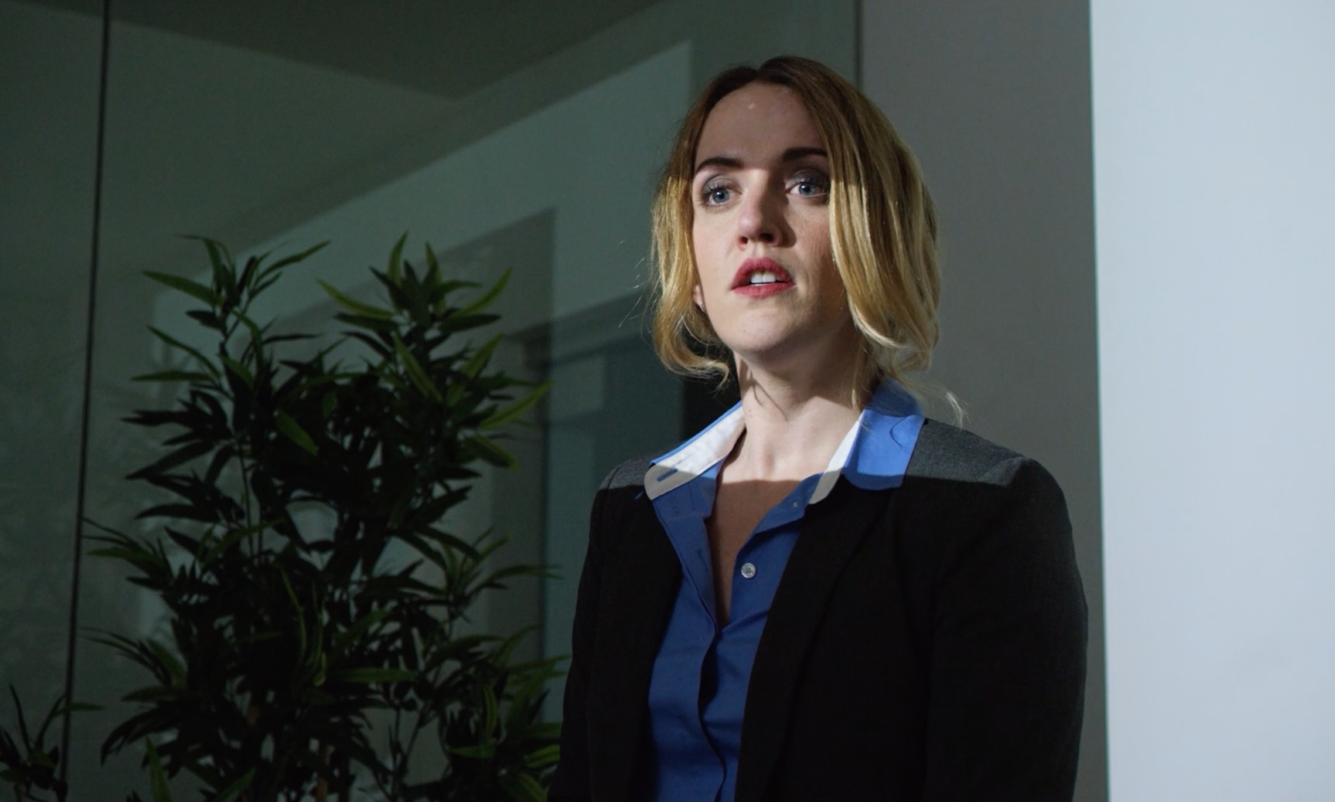
Edgar Allen Poe has been the focus of many a cinematographerâs lens, from films like âThe Ravenâ and âThe Pit and the Pendulum,â to 2014âs âStonehearst Asylum.â With a focus on the dark and the macabre, often including inward looks at his charactersâ psychology, itâs no surprise the horror master is revisited for fonts of inspiration. And while the inspiration is there, âHeartless,â the 2018 short written and directed by Kevin Sluder, lacks the story and production to make it a triumph. Itâs big on gore, which may please some, but its story is left somewhat cold. Underscored with a biting, metal soundtrack, the film undertakes a lofty challenge to paint its protagonist in a sympathetic light; but unfortunately the task is easier said than done.Â
Allen Poe aside, âHeartlessâ is clearly drawn as an homage to Marry Harronâs 2000 film âAmerican Psychoâ from its premise down to its execution. While that film, based off the controversial novel by Brett Easton Ellis was a parody of â80s yuppie greed and bloodlust, there was something that set its protagonist, Patrick Bateman, apart from the crowd. He was illusory, contemplative, über vicious and sardonic. His murders were undertaken with an air of satire while also commenting on his disturbed psychology. But underneath it all there was a detachment from his grisly deeds – along with an air of mystery – that made him easy to align with.Â
Itâs difficult to review âHeartlessâ without some context. In the the filmâs near-opening, after being insulted for doing a crummy job on a financial presentation, Shelby (Stacy Snyder) smashes a coffee cup into her colleagueâs face and slits her throat with the remains. The scene is strewn with blood and holds our gaze at her victimâs despair before cutting back to the present – an office where Shelby is giving a presentation to a trio of privileged Wall Street types. âShelbyâs been kind enough to step in for Clare,â begins one, talking not so much to Shelby but at her. âSo as soon as you get me a cup of coffee we can get started.âÂ
Sluder does well here, both in Shelbyâs reactions and the delivery from Michael Mercerâs polka dot tie and stripe shirt bespeckled Tripp Flynn. Misogyny runs deep through this crowd, and Snyder shows her characterâs irritation while attempting to laugh off the abuse with precision.Â

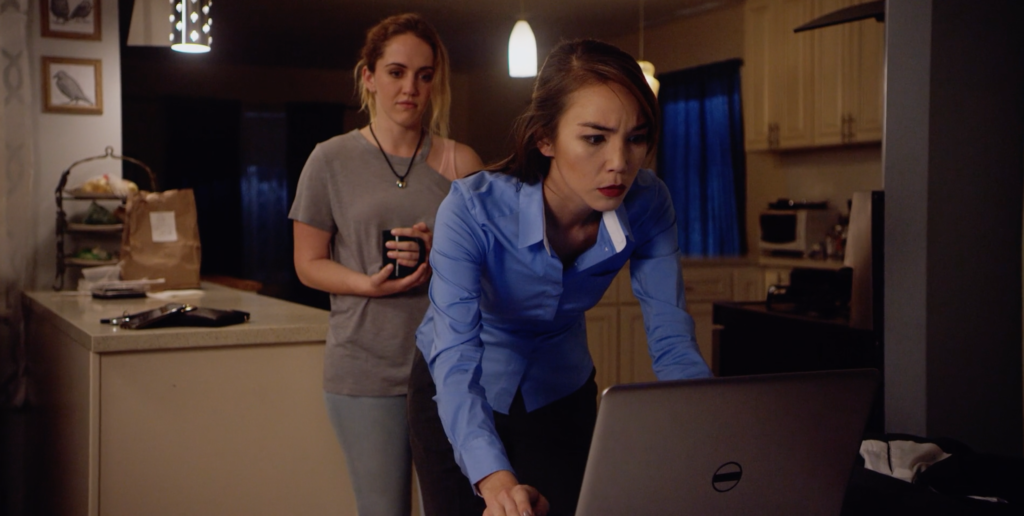
If Sluder had stopped here, focusing the camera on Shelbyâs discomfort in the wake of these men, along with flashbacks of her hidden deed, âHeartlessâ may have fared better than it ultimately lands. The trouble is, that while Snyder is a terrific actress, itâs hard to sympathize with her character; who, letâs face it, is basically a psychopathic murderer. We see little into her psychology to explain her actions other than her desire to fit in and be accepted. Her admonishment at the filmâs opening at Clareâs hands is hurtful and deep. Clare, played well by Joanna Sotomura, highlights Shelbyâs fears – sheâs little but an incompetent partner to be replaced. She lashes out in anger, seemingly.Â
However later additions, such as her basking in her deed while trying on a mask of insanity, blurs her character. Her subsequent actions in the boardroom seem misplaced. Asks one critic: âHow many times have we all wanted to throw a steaming pot of coffee in our jerky bossâs face, then disembowel him or her with a paring knifeâ¦?â But âHeartless,â billed as a re-telling of Poeâs classic âThe Tell-Tale Heart,â isnât scored with that workâs sense of fear and haunting guilt. Shelbyâs proud of her deed one minute, haunted by Clare the next, and the film has the misadjusted feeling of punching your boss in the face rather than the levels of psychological horror it intends.Â
The goreâs a problem. There may be something redeeming in a character bleeding profusely from a neck wound or her killer holding her beating heart in blood-covered hands, but I donât see it. Rather than capitalize on the graphic, âHeartlessâ misses an opportunity to shine more light on Shelbyâs motivation and psyche. The eeriest things happen in hidden corners of our damaged minds, and thereâs something infinitely more dangerous in a slow-building and tortured guilt than splitting someoneâs head with an axe. âHeartlessâ means to entertain, though, and you can understand Sluderâs intentions.Â
âHeartlessâ runs at just over twelve minutes, and herein lies the problem. Itâs either too short or too long, too horrific or not enough. The acting is for the most part excellent, the cinematography, costume design, and set pieces pleasing and effective. Itâs visual but not very deep. Its story presents a woman on the brink of insanity, yet her slip into this region of infinity is drawn with blood and guts rather than psychology or understanding.Â
– by Mark Ziobro


