Some movies become part of you before youâre old enough to understand everything theyâre carrying.
For me, one of those was James Bond. I still remember my dad introducing me to “Goldfinger,” and being transported watching Sean Connery deploy every little gadget on his Aston Martin DB5 before running off with Pussy Galore. I loved those movies long before I understood what âPussy Galoreâ even meant, much less had the vocabulary to reckon with all the misogyny, sexual politics, and general baggage that came with them. Getting older and becoming aware of those things hasnât made me stop loving Bond, nor has it erased the role those movies played in shaping my taste. You canât really choose the art that gets its hooks into you when youâre young, and you canât retroactively change what it meant to you once you understand the cultural baggage it carries.
So when the protagonist of Jane Schoenbrunâs “Teenage Sex and Death at Camp Miasma” invokes James Bond while trying to examine the problematic movies she grew up loving, I immediately knew what Schoenbrun was getting at.
Gillian Anderson is a Strong Casting Choice
Kris (Hannah Einbinder) is a young queer filmmaker coming off a Sundance breakthroughâan appropriately pretentious reimagining of “Psycho” from the perspective of the shower curtainâwhen sheâs hired to direct a new installment of “Camp Miasma,” a fictional, long-dormant â80s slasher franchise built around horny campers and an iconic masked killer named Little Death. Kris grew up obsessed with the movies, which were also part of her queer awakening, even as she now recognizes them as misogynistic, transphobic, and, in her own words, âtoo problematic to reboot.â
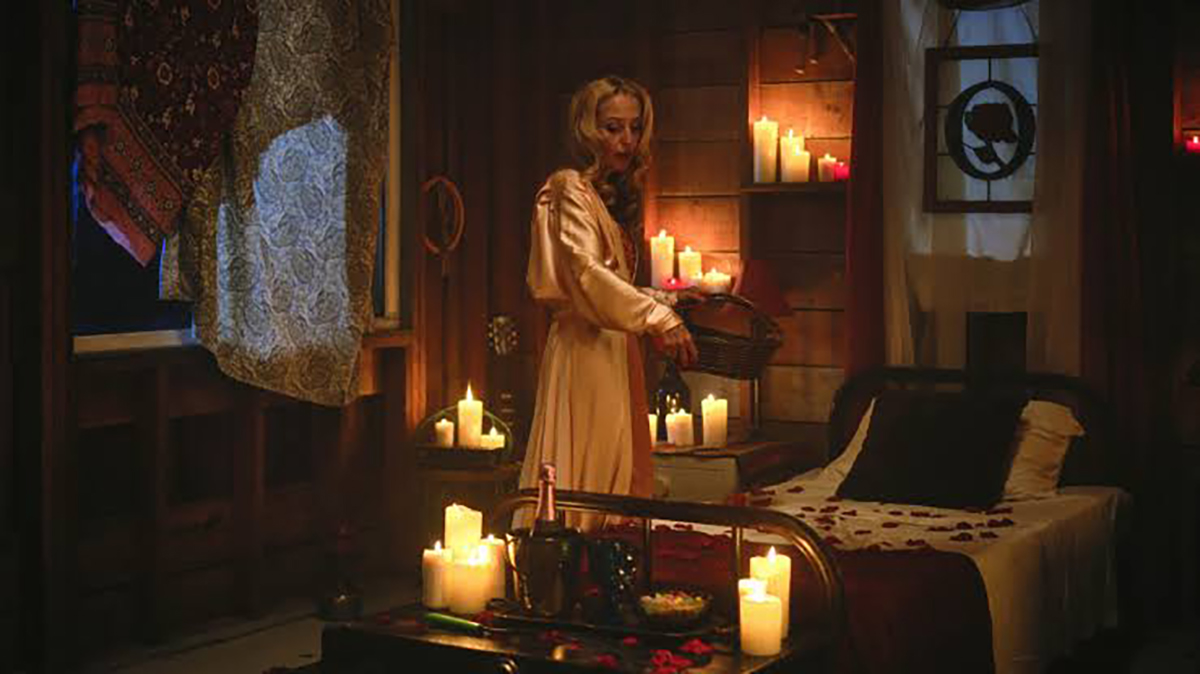
Looking for a way into the material, she becomes fixated on Billy Presley (Gillian Anderson), the final girl from the original film who walked away from the franchise decades ago. Kris tracks Billy down to the abandoned campground where the movie was shot, and the two women descend into an increasingly strange psychosexual relationship as the boundaries between “Camp Miasma” and reality begin to disappear.
Itâs immediately obvious that Kris is some kind of avatar for Schoenbrun. The very first time we see her, Einbinder appears onscreen alongside Jane Schoenbrunâs own directorial title card. Schoenbrun isnât exactly being subtle about it. Nor should they be.
Cerebral and Deep, Yet Warm

“Teenage Sex and Death at Camp Miasma” is like a piece of Halloween candy with a razor blade buried inside it: sweet, lush, horny, and almost obscenely inviting, but the deeper you bite, the more it cuts. Schoenbrun coats thorny ideas about art, desire, shame, and identity in enough sex, blood, movie stars, and Sour Patch Kids to give you a sugar rush.
Whatâs surprising is how light on its feet the movie remains while doing all of that. Schoenbrunâs previous films could be suffocating in their loneliness and melancholy; “Camp Miasma” is warmer, sweeter, and considerably more playful. Itâs still deeply cerebral and eventually cuts just as deep, but Schoenbrun seems newly interested in pleasureânot merely interrogating it, but allowing their characters to actually have some.
Kris could use it. Sheâs blocked in seemingly every direction. Creatively, she canât figure out how to make a âwokeâ “Camp Miasma” without alienating the people who actually like “Camp Miasma.” Socially, sheâs awkward and anxious. Romantically, she seems perpetually stranded as the third wheel in an unsatisfying poly relationship. Sexually, sheâs so terrified of embarrassment that gratification seems almost impossible. Theyâre different symptoms of the same problem: Kris has become extraordinarily good at intellectualizing her desires while building a prison that prevents her from actually pursuing them.
Capturing and Redefining the Essence of Slashers
Watching a wonderfully cheesy sex scene in the original “Camp Miasma,” she dutifully writes DESIRE in her notebook and underlines it.
Thatâs Kris. She canât simply want something. She has to identify DESIRE.
And yet Schoenbrun keeps revealing the teenage movie nerd underneath the Sundance wunderkind patina. Kris stops at a gas station, grabs fistfuls of candy, flips through a rack of shitty DVDs, and lights up when she discovers an old “Camp Miasma” sequel. For all her ability to dissect the franchiseâs politics and cultural legacy, her relationship with these movies precedes any of that analysis.
They got to her first.
Schoenbrun has a lot of fun inventing “Camp Miasma” as if it were a real slasher franchise, complete with vintage posters, merchandise, and increasingly ridiculous sequels. Itâs basically their own “Friday the 13th:” a grubby piece of genre filmmaking that somehow became immortal, eventually sending Little Death on the inevitable trips to Manhattan and outer space. There are traces of “Sleepaway Camp” in its summer-camp setting and tortured gender politics, and something of the queer reclamation that eventually happened around “A Nightmare on Elm Street 2,” but mostly the joke is how instantly recognizable the entire life cycle feels.
The Movies that Made Us
Yesterdayâs disposable junk has become todayâs sacred intellectual property, and thereâs an acid-tinged Hollywood satire in the decision to hand this supposedly embarrassing relic to an acclaimed young queer filmmaker and ask her to make it respectable. Kris already knows whatâs wrong with “Camp Miasma.” The complication is that knowing doesnât make her love it any less.
Which brings her to Billy.
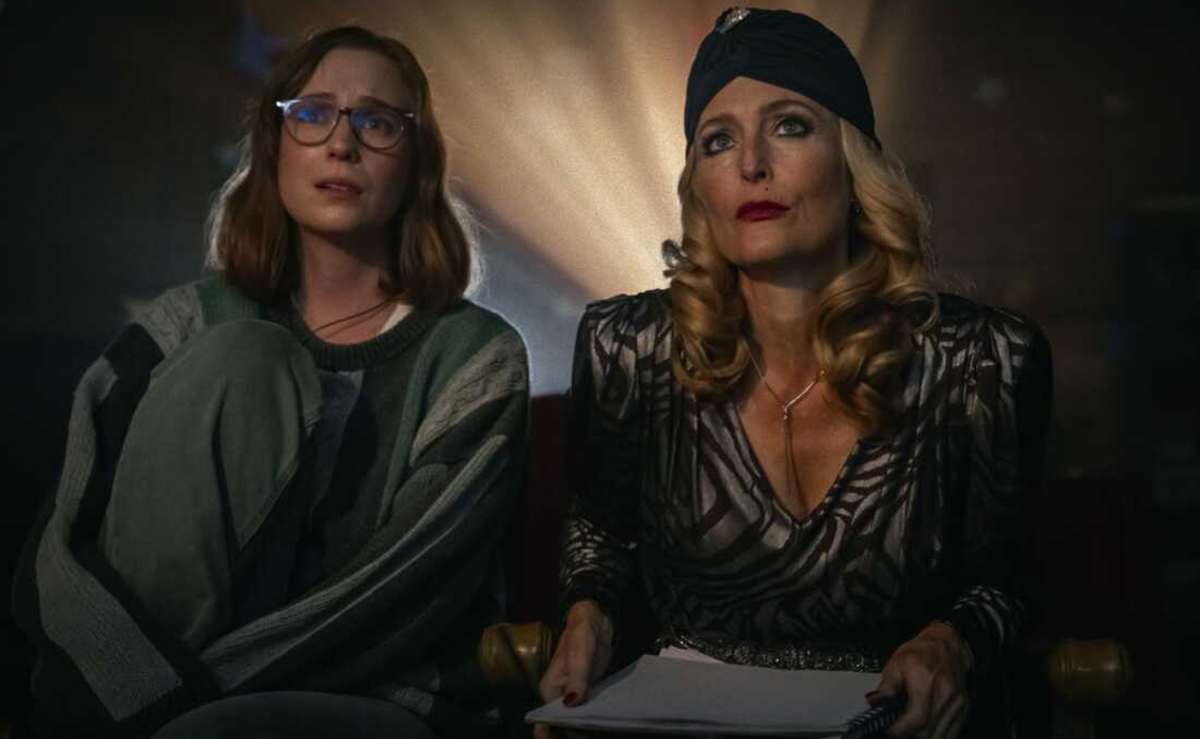
Thereâs more than a little Norma Desmond in Billy Presley, along with the legacy-sequel echoes of Jamie Lee Curtis returning to “Halloween”âcomparisons the movie itself is happy to invoke. Casting Gillian Anderson is particularly inspired because Schoenbrun gets to borrow decades of genre iconography without having to explain any of it. Anderson is both a tremendous actor and a genuine genre icon, and the movie lets her be funny, imperious, theatrical, incredibly sexy, and just threatening enough that youâre never entirely sure whether Kris should be listening to her.
Einbinder is Good Throughout
Opposite her, Einbinder gives a terrific first major film performance. Her comic instincts are obviously useful for Krisâs nervous, hyperverbal awkwardness, but sheâs just as good at suggesting the panic underneath itâthe sense that Kris is constantly monitoring herself from somewhere outside her own body. Both actors are playing women who have turned themselves into performances. Kris performs the socially conscious Serious Filmmaker; Billy performs the mysterious former scream queen. The longer they spend together, the harder it becomes for either performance to hold.
And somewhere along the way, this acid Hollywood satire starts morphing into a dreamlike stoner romantic comedy between the two of them.
Thatâs one of the great pleasures of “Camp Miasma.” It isnât particularly interested in being scary in the way “I Saw the TV Glow” was, but itâs not exactly a spoof either. Itâs a chamber piece between two women that somehow feels epic, oscillating between industry satire, erotic two-hander, ghost story, slasher movie, and romantic fantasy without ever feeling like Schoenbrun has lost the steering wheel.
And itâs horny. Extremely, wonderfully horny.
Sex and Character Development

More importantly, the horniness actually matters. Itâs been a while since Iâve seen a movie with sex scenes this artfully executed that are also this dramatically consequential. Schoenbrun doesnât use sex as decoration, provocation, or proof that weâre watching an âadultâ movie. The sex is where Krisâs character develops.
She begins the movie sitting at a safe remove from desire, watching it on a screen and taking notes. With Billy, desire becomes something she has to participate in. Schoenbrun understands something a lot of contemporary American movies seem weirdly frightened of: a sex scene can reveal character through bodies rather than dialogue. Who looks, who performs, who relinquishes control, who allows themselves to be seenâall of it matters. Kris spends so much of the movie trying to control the frame, both as a director and as a person. Sex is where she discovers what happens when she gives some of that control up.
Billyâs answer to all Krisâs theorizing about what made “Camp Miasma” work is considerably simpler: âflesh and fluids.â
DESIRE.
Flesh and fluids.
Kris wants to put a name to the sensation. Billy wants her to experience it.
Is Trash Nourishment?
That distinction starts bleeding into everything. Kris lives off candy and movie snacks. She and Billy bond over fried chicken and dipping sauce. Sour Patch Kids practically become erotic objects. Food, movies, sex, and violence occupy the same sensual plane: sugary, greasy, artificial, excessive, potentially bad for you, and delicious anyway.
Maybe the trash is the nourishment.
It helps that “Camp Miasma” is gorgeous. For all the movieâs joking about the distinction between high art and trash, Schoenbrun has made an extraordinarily beautiful piece of filmmaking out of the cheapest, tackiest materials imaginable. At times it looks like Wes Anderson had a lifetime subscription to Fangoria: oversaturated skies, matte-painted backgrounds, candy-colored gore, artificial moonlight, bodies and blood rendered with almost obscene lushness. Schoenbrun isnât trying to perfectly reproduce what an old slasher actually looked like so much as what one feels like in your memory after decades of VHS tapes, late-night television, and accumulated nostalgia.
Schoenbrun Commits to Her Premise
Their needle drops work the same way. One of the movieâs standout sequences pairs a “Camp Miasma” massacre with Counting Crows, an inspired collision of melancholy pop and geysers of blood that manages to be hilarious, beautiful, and genuinely stirring at the same time. The joke isnât that the music is too sincere for the violence. Schoenbrun commits completely to both.
Thatâs the tonal trick they pull off throughout the movie. “Camp Miasma” can be sincere and ridiculous, erotic and grotesque, intellectually dense and tremendously silly without treating any one mode as a corrective to another. Its tone is elastic without ever becoming messy. Schoenbrun can find genuine eroticism in dipping sauce and beauty in a slasher massacre because they never seem embarrassed by any of it.
Gradually, neither is Kris.
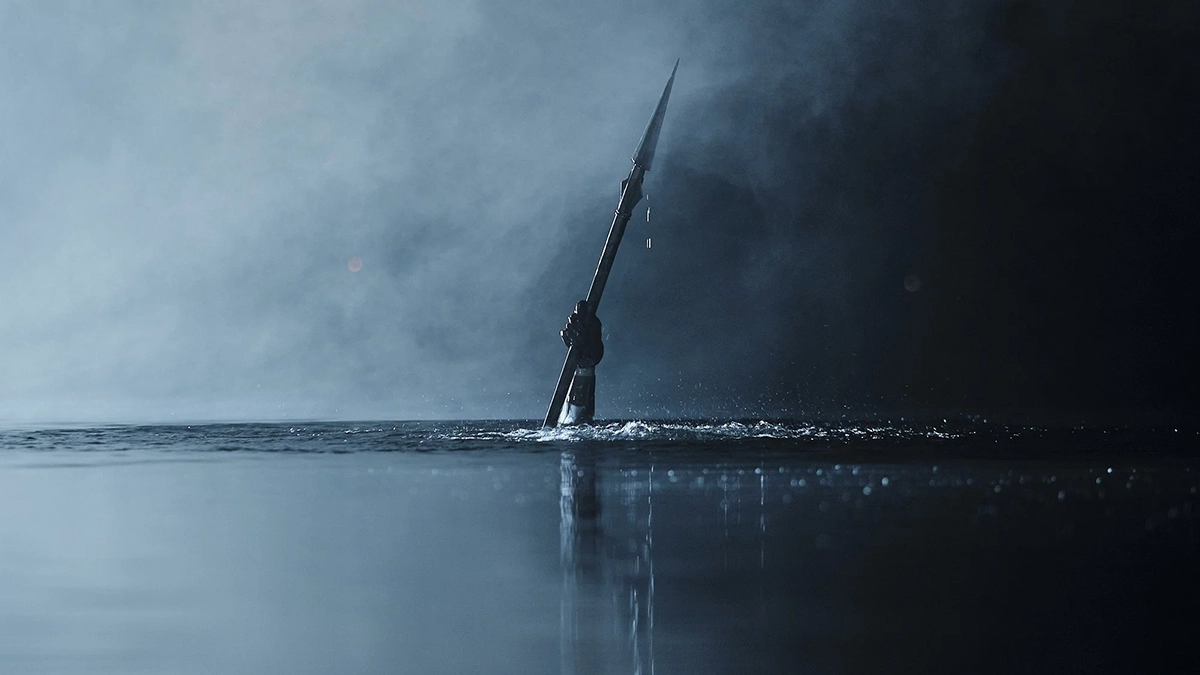
The distinction between Camp Tivoli and “Camp Miasma” starts disappearing. VHS textures, matte paintings, and contemporary digital effects bleed together until asking whatâs ârealâ becomes almost beside the point. Little Death supposedly waits at the bottom of the campgroundâs lake, inside a bizarre video store Billy describes as âwhere the movies come from.â
Schoenbrun Gives Her Protagonist Authorship

That image feels like the culmination of an obsession running through Schoenbrunâs entire filmography. Like “Videodrome,” their movies treat media as something that doesnât stay safely on the other side of the screen. It gets inside you, changes your desires, and eventually starts erasing the boundary between the person watching and the thing being watched.
Across Schoenbrunâs three narrative features, their protagonists have moved progressively closer to that boundary:
Viewer. Fan. Director.
“Weâre All Going to the Worldâs Fair” follows someone participating in an online horror phenomenon she canât fully understand. “I Saw the TV Glow” is about fandom so consuming that the television show on the other side of the screen may contain a truer version of the self. “Camp Miasma” gives its protagonist something neither of those characters possessed: authorship.
And that makes all the difference.
Playing in the Sandbox of Our Youth
Kris isnât horrified when she finally finds herself inside the movie that has consumed so much of her life. She takes control of it. Suddenly “Camp Miasma” becomes a wonderfully adolescent form of wish fulfillment: she gets to spend time with the movie star she grew up crushing on, reshape the franchise around her own desires, and even unleash Little Death on the people making her miserable. What initially looks like another Schoenbrun story about disappearing into an obsession becomes a fantasy about claiming ownership of it.
The joke folds back in on itself. Kris gets to reshape the formative slasher of her youth while Schoenbrun is doing the same thing through Kris.
Thereâs no shortage of filmmakers who get to play in the sandbox of whatever nerdy obsession they had growing up. Contemporary Hollywood is practically built around it. What separates Schoenbrun is that they arenât simply reproducing those obsessions or catering to an audience waiting to recognize the references. They metabolize them into something unmistakably their own. “Friday the 13th,” “Videodrome,” and the rest of the slasher canon are raw materials rather than the destination.
Eventually the Fluids Win
Thereâs still an amusing contradiction in making such an academic movie about the limitations of intellectualizing pleasure. At times, Schoenbrun can seem almost as incapable as Kris of simply letting the âflesh and fluidsâ rip. But “Camp Miasma” isnât primarily interested in taking horror apart to show us how clever it is. Itâs interested in whether weâve spent so long explaining the ride that weâve forgotten how it feels to be on it.
And eventually, the flesh and fluids win.
That may be the most exciting thing about “Camp Miasma.” After “Weâre All Going to the Worldâs Fair” and “I Saw the TV Glow,” Schoenbrun has made another film about the media that gets inside us and helps shape who we become, but this time theyâve approached that obsession with more pleasure, more confidence, and more freedom.
Three films would ordinarily feel too early to start making grand pronouncements about a filmmaker, but Schoenbrun has already developed such a specific cinematic language that Iâm willing to make one anyway: theyâre one of the best filmmakers currently working, and certainly one of the most vital.
An Essential Filmmaker
Whatâs exciting is that the specificity of their work has never made it feel limited or closed off. Schoenbrun is a trans filmmaker making intensely personal, expressive art about identity, desire, fandom, and the strange ways media embeds itself inside us, but the films donât require you to share their exact experience in order to recognize yourself in them. Theyâre specific enough to feel lived-in and expansive enough to travel.
Thatâs what separates Schoenbrun from so many filmmakers who get handed the keys to the sandbox of whatever they obsessed over as kids. “Teenage Sex and Death at Camp Miasma” isnât interested in proving how much Schoenbrun knows about slashers or flattering an audience for recognizing the references. The genre history gets absorbed, distorted, eroticized, joked about, and finally turned into something unmistakably theirs.
The result is sweet, horny, funny, strange, emotionally sharp, and completely singular.
At this point, Jane Schoenbrun doesnât just feel like an exciting filmmaker to watch.
They feel essential.