






Andrew Niccol knows how to write dystopian films. And direct them. In his first, âGATTACA,â he examined the human spirit amidst a time where perfect humans were grown in a lab and âdegene-eratesââlesser humansâwere the product of natural birth. âThe Truman Showâ was sci-fi, the story of a man whose life was televised, primarily unbeknownst to him. And âLord of Warâ might as well be dystopian, despite its reality. Niccol has always operated in the world of currency. In âGATTACAâ that currency was genes and in âLord of Warâ that currency was bullets. And in 2011âs âIn Time,â that currency is just that. Time.Â
In this latter, humans inhabit a world where they age naturally until 25, and then physical aging stops. Theyâre given from that point one year to live, measured on their forearm by a counting clock. Itâs not hard to see where this will go. The poorer locales live day-to-day, bartering for minutes, hours, days. The richer cities bask in near immortality. During the filmâs penultimate scene, fugitive Will Salas (Justin Timberlake) robs a vault and steals 1 million hours. Thereâs more than enough to go aroundâthe rich just donât want to share it.Â
Time is Currency
âIn Timeâ is the film where Niccol gets the most brazen. Heâs flirted with justice before, but here weaponizes it. In âLord of Warâ Nic Cage lectures an Interpol agent (Ethan Hawke) on the systemâalbeit corruptâand why heâll be released despite massive illegal arms trades. Yet in âGATTACA,â he’s more subtle. Jude Lawâs character is a wheelchair-bound member of the elite whose genes predict heâll live forever. Yet his partnering with, again, Ethan Hawke as a member of the underclass is Niccolâs most romantic: âI got the better end of the deal. I only gave you my body; you gave me your dream.âÂ
âIn Timeâ takes that idea and runs with it. Time here is clearly money. And Niccol, Timberlake, and, later, Amanda Seyfried as the daughter of a super-rich power broker (Vincent Kartheiser), show the juxtaposition between the wealthyâwho never have to worry about deathâto the poor, who wake up each morning with a day or less on the clock. This is all visually shown: green, digital letters count down with SFX more believable than the filmâs time period would have allowed. We see people dieâtheir arm counts down to seconds. Yet in the film’s near opening, a man from a rich district with 110 years on his arm (Matt Bomer) gives Salas the secret to the formula: âfor the few to be immortal, many must die.â Niccolâs script is a savage takedown of capitalism. âWall Streetâ took its full run-time to say what Niccol does in seconds.Â
A Takedown of Weaponized Capitalism
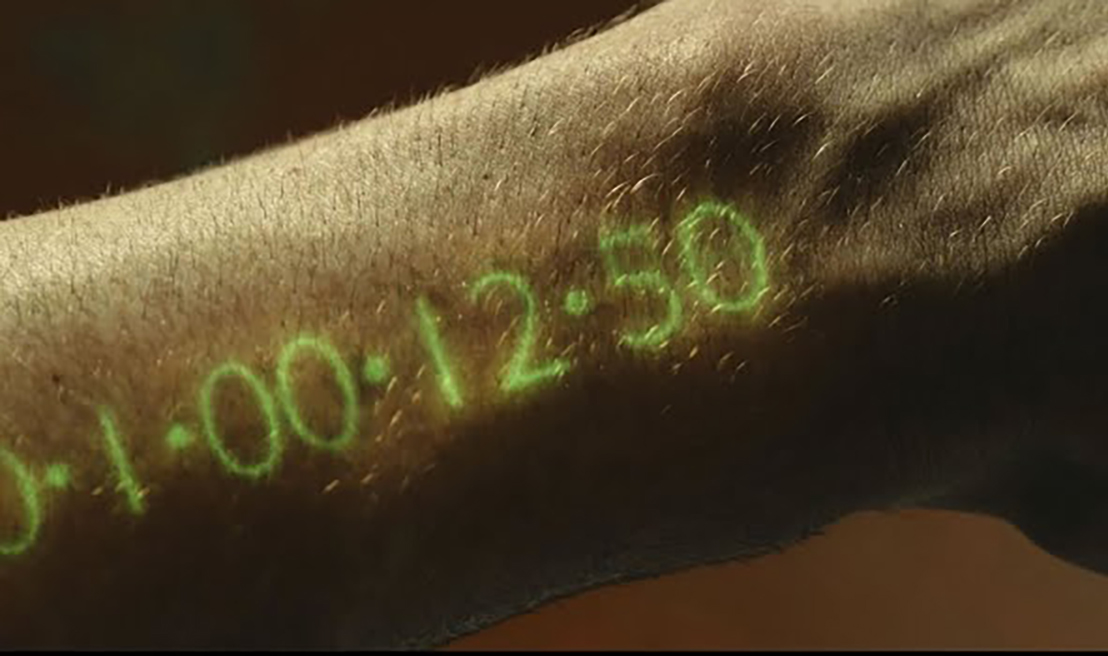
Thatâs not to say âIn Timeâ is perfect. Its opening is strong, showing Willâs allegiance with his mother (a good Olivia Wilde) and his best friend (Johnny Galecki). The filmâs premise takes some getting used to. No one in this film looks old. They all talk of âhow many years past 25â they are. Some are three (like Will) and some are 85 (like Kartheiserâs Phillipe). But everyone looks the same. Niccol commits to this idea which leads, eventually, to a clever joke where Philippe must explain to Will which of the three beautiful women in his palatial home are his mother, wife, and daughter.Â
The vehicle that Niccol uses to start his thrillerâBomerâs âHamiltonâ throwing around his time in a bar, buying drinks for everyone and later telling Salas he wants to dieâis an interesting angle. Heâs 105 (25+80 I suppose) and is sick of existing and not living. And despite him giving Will the secret to time (read: capitalism), itâs the first time in a movie Iâve seen a privileged character suggest that given enough time, even theyâll tire of the charade. Of course not all of them, as legions of rich folk gladly bet 100 years a hand at casinos while the poor trade minutes for scraps. Here Seyfriedâs Sylvia Weiss is possibly the only member of the elite to question if never taking a chance just to live forever is really living. The script is smart and takes appropriate stabs at the upper class without ever becoming tiresome.Â
Overlong, but Lots to Chew On

Yet sometimes âIn Timeâ wanders into familiar stuff, especially with a timekeeper, (âIn Timeâsâ police) who tracks Will for âstealingâ the time from Hamilton, even though Hamilton gave it to him. The timekeeper, Leon, played by Cillian Murphy, is semi-wasted here. Heâs integral, just like Hawkeâs Interpol agent from âLord of War.â Yet when he realizes things are awryâand should, rightly, changeâheâs so concerned with âthe lawâ that his character loses something. The filmâs closing scenes prove this: Leon basically lets Will know he sees the inequity, doesnât care because he gets his end, yet espouses to care about the law as if itâs separate from the system heâs protecting. Still, Murphy gives it his all, and a scene with Philippe and he toward the filmâs middle (âitâs a scandal what they pay our timekeepers, reallyâ) adds an indictment to how society abuses police officers to the mix.Â
âIn Timeâ is an insightful film and gives us lots to chew on. However, its detriment is its run-time of 1 hour and 49 minutes, whichâespecially towards the endâcould have used a trim and some gumption when it starts meandering. Additionally, a few chase sequences try a little too hard to be âMinority Reportâ or the like when the filmâs stiller moments are its best. Will starts off trying to avenge his mother and all the poor in the districts and ends up falling in love with Sylvia by the end, whom he initially kidnaps. Itâs not that itâs handled poorly or isn’t believable. Itâs just obvious that Niccol wanted to make a sci-fi blockbuster (the filmâs budget was $40 million), where a little restraint might have gone a long way.Â
Learning Not to Waste Time
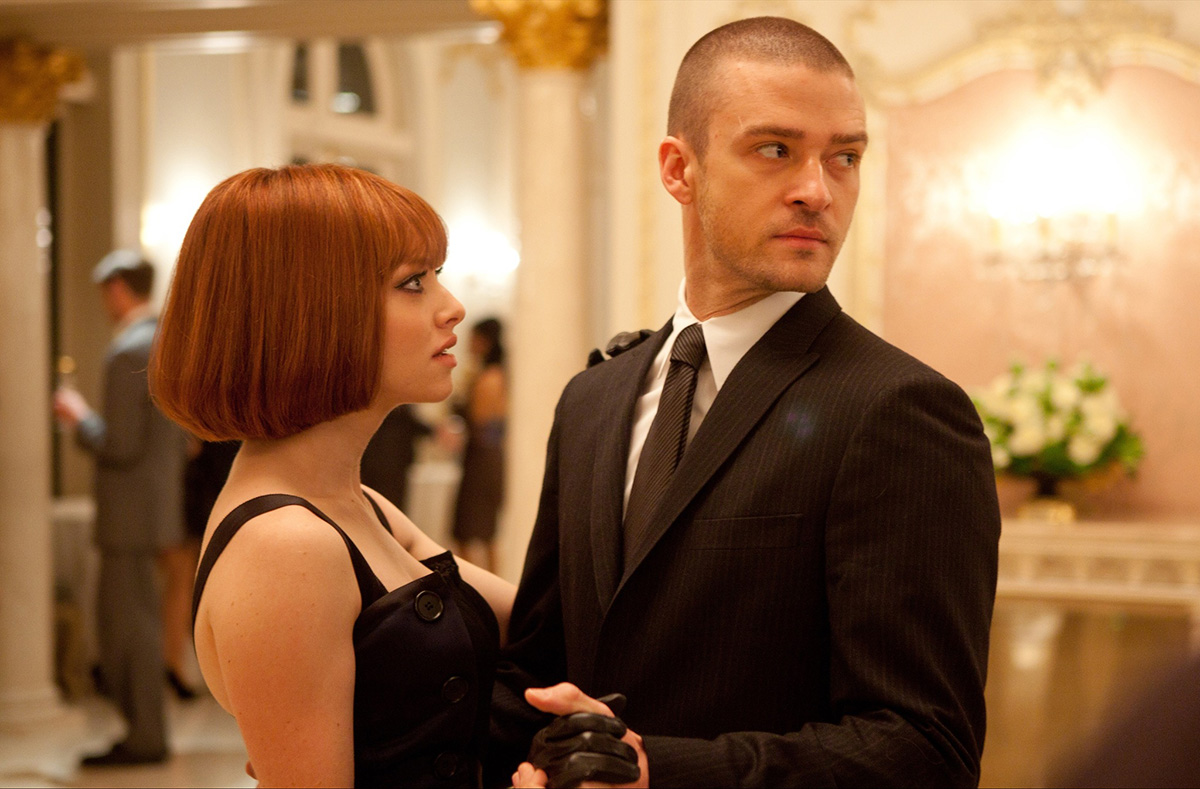
But âIn Timeâ is good. Timberlake is extremely likable, providing an everyman who seems desperate for the filmâs run, despite the actorâs good looks and sex appeal. Seyfried is a good compatriot, although painted a bit thin. The cinematography by Roger Deakins is slick and futuristic, but never gets lost so much in the future we forget the filmâs commentary. The film ends a little too conveniently, but itâs a small demerit. Along the way, Niccol, Timberlake, and company show us what time means, how we waste it, and how more isnât always an indicator of better. And under it all, itâs the cleanest, sharpest criticism of power, wealth, and greed Iâve seen on film in some time. Not bad for a sci-fi actioner released 15 years ago.Â


