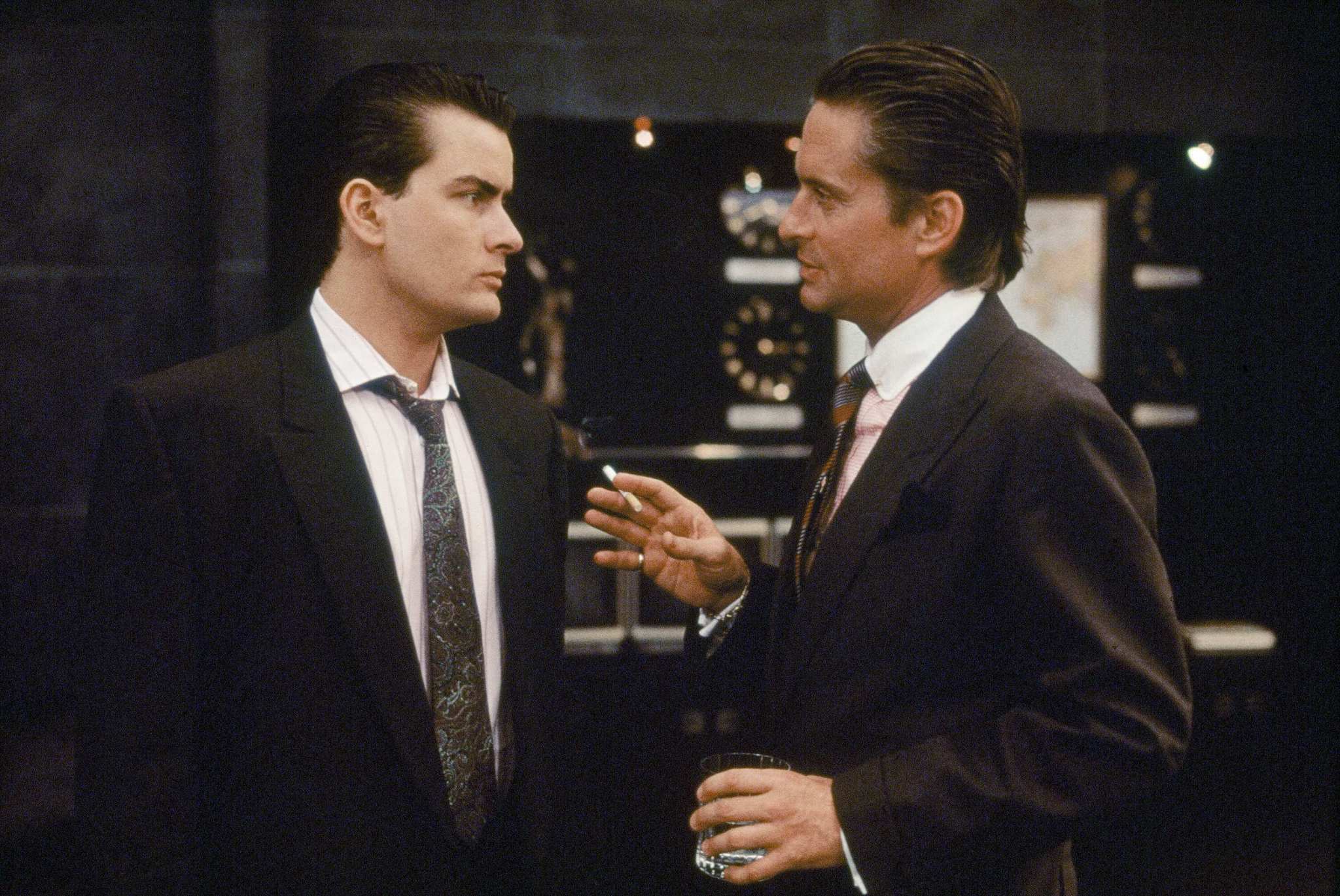
âWall Street,â released in 1987, is a wide reaching picture. Itâs about â80s Wall Street, itâs about the ins and outs of being a successful stockbroker, itâs about greed. Its themes run deep, its acting is excellent, and its direction without error. The film takes place in New York Cityâin so many ways the financial and cultural capitol of Americaâand incorporates all the excitement and fervor of living the good life, no matter how high the cost. The film is directed by Oliver Stone; his attention to detail and storytelling, as well as perfectionism behind the camera, make for a stellar film that still remains as serious a cautionary tale in 2017 as it did 30 years ago.
The plot of âWall Streetâ follows Bud Fox (Charlie Sheen), a young stockbroker impatient to make the big bucks. We see others in his firm such as Marvin (John C. McGinley), whoâs comfortable where he is at and a pragmatist. Heâd rather go to the Knickâsâ game with his friend and enjoy life rather than quest after landing the billionaire clients Fox dreams of. We also see another employee, Dan (Franklin Cover), who cautions Fox to get out of this racket while he still can. âI came in one day, I sat downâ¦and look at me now,â he exclaims.
These two represent comfortability to Fox; but, to him, they live in a different world. Fox wants it all. He spends his nights in a dingy Manhattan apartment, his days grinding it out, but never failing to make his daily call to Gordon Gekko (Michael Douglas), a billion-dollar player. It isnât long before Fox warms his way into Gekkoâs good graces, leading him down a path to riches that may not be as straight and narrow as he hoped.
Where âWall Streetâ excels is its storytelling and character development, its acting and script displayed with near perfection. Fox is shown to us as ambitious but yet cautious, Gekko powerful and ruthless. Gekko scoffs at the notion of hard work or luck. Heâs into inside information, only bets on âsure things,â and wants Bud to help him get it. Fox make some early protestations, throwing around phrases like âthatâs inside informationâ or âI could lose my license,â before ultimately giving in. The scene that shows this is a piece of great filmmaking, with thunder clapping outside, the lights dimming until all we see is Gekkoâs face glowing in the darkness. If “Wall Streetâ is a morality tale, then Gordon Gekko is undoubtedly the devil.

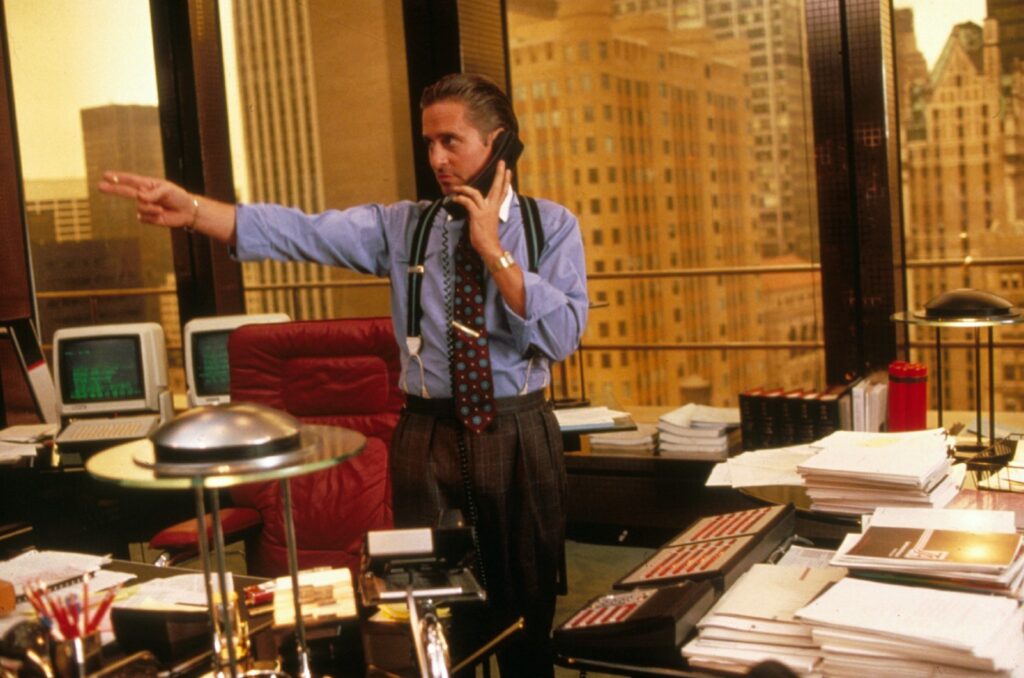
Foxâs descent is all the more believable as heâs flushed against other characters such as a hardworking lawyer friend (James Spader), and his blue collar father Carl, played expertly by Sheenâs real life father Martin Sheen. The scenes between the two are well done and believable; we not only believe that these two are father and son during this film, but believe, acutely, that their conflict in values will come into play in greater ways as the film progresses. âStop going for the easy buck and start producing something with your life,â his father cautions. âCreate, instead of living off the buying and selling of others.â
What works about âWall Streetâ is these characters are all likable, from Fox to Carl, to Gekko and Darien (Daryl Hannah), a well-to-do interior decorator that becomes a love interest for Bud. Every actor in the film owns their performance, none so astute as Douglas, who won an Oscar for âBest Acting in a Lead Roleâ for his portrayal of Gekko here. A large part of the credit for this belongs to Oliver Stone (who co-wrote the script with Stanley Weiser), who pushed his actors to the max. Douglas, who was more known at the time for being a television actor and producer, balks in behind the scenes documentaries at the length of some of the monologues, and remarks how Stone âpushed himâ to be a better actor. His performance during the film’s keystone “greed is good” scene was so believable, in fact, that Charlie Sheen states âeven I was buying it.â
The power of this scene of course works off of others just as powerful, such as heart-to-hearts Bud has with his father early on, and an explosive scene between the two in an elevator that is more than just a father/son fightâ itâs the on-screen explosion of their entire value systems.
âWall Streetâ is a stellar picture. With wide-sweeping morality, tight scriptwriting and acting, and a focused lens, the movie is both an anthem against greed and unrestrained capitalism, and a powerful family drama wrapped up in a classic rise and fall tale. A film that holds up over the ages, amidst copy cats (âBoiler Roomâ) and a sequel (âWall Street: Money Never Sleepsâ) that fail to capture the magic of the original. If you havenât seen this film, do yourself a favor and watch this powerful masterpiece.