


“We wait and see,” says spy, Günther in between cigarette smoke. “What have we seen?” A telephoned voice replies. “Enough to keep waiting.”
Dialogue like this makes “A Most Wanted Man,” directed by Anton Corbjin, an intriguing spy thriller, all the more interesting because the film would become Philip Seymour Hoffman’s swan song. The film chronicles, among other things, a Chechen Muslim who illegally immigrates into Hamburg, Germany, and a web of intelligence-seeking opportunity that springs up in his wake. Trailers would have you believe this man is the focal point of a story that unfolds in a near Bond-esque fashion. This man is a focal point; but however in a gradual, deliberate, and slow-paced way Corbjin’s films are known for.
One of the most unique selling points of this film lies in the acting and intrigue it brings to the table. Hoffman plays Günther Bachmann, a seemingly demoted spy who hangs his hat in Hamburg, but is not the least bit the worse for it. With a German accent, and slow, purposeful speech, Bachman plays more like an end to himself than a man filled with emotion. Hoffman manages to breathe life into Günther, giving him a depressive, secretive enigma, and then spends the rest of the movie trying to let him exist despite it.
Bachmann’s personality and drive are shown in his interactions with others in this film, from the Chechen Muslim Issa Karpov (Grigoriy Dobrygin), to a Unites States operative (Robin Wright) and a young lawyer (Rachael McAdams in a splendid performance). Dialogue in “A Most Wanted Man” is delivered in a dry, subtextual way that grants the film a unique feel. Watching it, you can tell that effort that has gone into everything here, from the script penned by Andrew Bovell and Stephen Cornwell (based off of the novel “A Most Wanted Man” by John le Carré), all the way to its soundtrack. This film feels like a novel, and has the excellent production value to bring it to life.
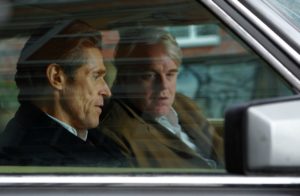 Part of the charm here is there’s very little moralizing, and the fact that its protagonists act out of habit, rather than desire. There is the occasional idea of ‘making the world a better place,’ but as Günther barters with Robin Wright and later with several heads of intelligence agencies, you get the idea that mistrust lines both sides. The story flows quite smoothly, and its actually interesting to see the web of contacts, snares, and gadgets that Günther has at his disposal for such as small spy outfit. In my favorite line from the film, Günther gives a mark a pen to take into a meeting. “It’s just an ordinary pen,” he says. “Looks like a pen, writes like a pen, and listens like a pen.” The man receiving this information is a banker named Brue, played wonderfully by Willem Dafoe following up a nice performance in the recent “Out of the Furnace” from 2013.
As with another of Corbjin’s films, “The American” some might find the utterly slow pace of “A Most Wanted Man” too daunting, but those who slip into its sluggish progression will find a picture worth watching. Cinematically, the film is striking, taking place between shadowed nightclubs in Hambugh to the city’s grey, doleful streets during the day. The camera sloshes a pallor of humdrum and espionage over the entire city; there’s never a moment here where you wonder what kind of film you’re watching. Additionally, the supporting acting is quite good. McAdams throws you for a bit, as she disappears into her character of Annabel Richter, and Dobrygin, who I’ve not heard of before, brings the right elements to the lost immigrant Issa Karpov. Hoffman, as much of the cast, are reserved and poised for most of its 122-minute run-time. Its brief flash of emotion erupts at the film’s suspenseful climax, but will not even be hinted at here.
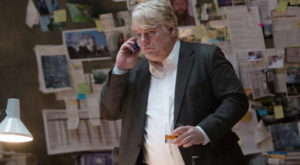 “A Most Wanted Man” is an effective spy thriller all the way. Fans of le Carré’s work, such as his other spy tale “Tinker Tailor Soldier Spy” will not be disappointed, as well as fans of Corbjin’s purposeful character development, solid story, and slow progression. While it may irritate some impatient viewers, it’s a movie worth taking in. Hoffman has some scenes in this year’s “The Hunger Games: Mockingjay – Part 1,” but, truthfully, this was the film for him to go out on, if indeed he must. It’s hard to imagine another filling Günther’s shoes. The film, and his character have a noble quality well begotten to the talent that went into making them.
– by Mark Ziobro

