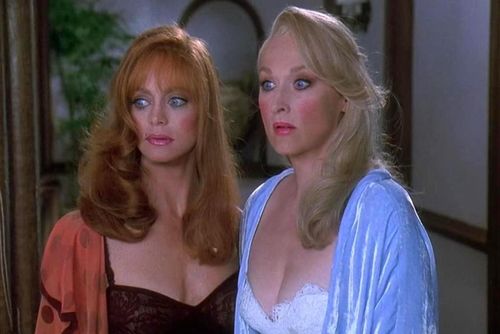
“Death Becomes Her,” the 1992 Robert Zemeckis fantasy/comedy, is at once about vanity and about stagnation. And it’s also just a goofy time at the movies (or your couch, since this is doubtless where you’ll find it, reading this review in 2014). While light and a bit droll, the acting is top notch, featuring laughable yet perfect performances from its leads, and offers humor in the right places. It’s a predominantly female character-driven movie, with Bruce Willis sandwiched in-between Goldie Hawn and Meryl Streep, and features a lot of talk of the undead and the occult, especially towards its end. Whatever observations the film has, however, are better off taken lightly; this is a movie to have fun with, and is best enjoyed at the not-so-serious level.
A plot description here isn’t necessary or even possible. Willis plays Ernest, a once-successful surgeon who degenerates into an alcoholic who loses his license and can only find work making corpses look presentable for funerals. The irony is that Ernest is dead already. He’s long ago given up on any dream of his, or any identity apart from his wife, Madeline, played with vigor by Academy Award Winner Meryl Streep. His wife has a long-standing feud with an ex-friend, Helen (Hawn), from whom she long ago stole Ernest from. Both women, horrified at the prospect of old age, become lured into a bizarre woman’s practice, where, for varying degrees of financial sacrifice, they can achieve eternal youth. Of course amidst this, Helen wishes revenge on Madeline and launches a plot to get Ernest back and kill her. And all the while, Ernest goes about his dismal funeral business, clueless to the whole thing until an obvious climax toward the film’s end.
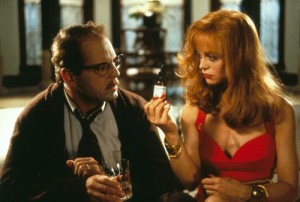
While this description makes the film sound rote, it actually offers up entertainment and laughs. My first impression while watching this film is how good an actor Willis is when he wants to be. There are no John McClane heroics here (in fact he’s more or less a coward), but no dramatic turns a la “The Sixth Sense” either. Ernest is a loser for a majority of the film, and it’s questionable whether he ever sheds this image, even at the film’s end. Willis disappears into the unsung character, smacking more of his indie attempts such as “Breakfast of Champions” than Hollywood leading man. This is a compliment; with the limited involvement of Ernest’s character, he could have easily fallen apart in the hands of a weaker actor. Willis makes us remember him.
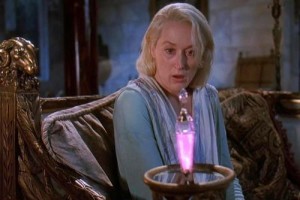
Both Hawn and Streep are thoroughly entertaining as feuding ex-friends intent on killing each other, even if this is amidst a film laden with several plot issues. Streep brings a detached, vain presence to Madeline that is nearly perfect, somehow managing to pull back just when her character borders on truly despicable. Hawn is less likable, but no less devoted to her character. And their vicious quest for perfection, and the depressing effect it has on them both are shown off in the film’s bizarre yet captivating cinematography. From slumped characters shot through mirrors, to images of bizarre bloodletting to lose weight glimpsed through a half-closed door, “Death Becomes Her” hints at the painful and problematic avenues people often take in the quest for perfection. This is of course reinforced through Lisle Von Rhuman (Isabella Rossellini), a quasi-occultist woman who sells an eternal youth potion from behind guarded castle. A litany of gory, over-the-top special effects also come into play; but the proceedings take place in the confines of satire here. Fractured wrists, broken necks, and gunshot wounds crash into characters that don’t take them seriously. “Death” feels in parts as though it could have been directed by Tim Burton, and not Zemeckis, the man who brought us three “Back to the Future” movies.
 “Death Becomes Her” has some criticisms in its chaotic plot and confusing, clambering ending, and in its’ decision to give Ernest’s character little more than a passing glance. However, the film is funny, especially when its’ two anti-heroes engage in hand to hand (or shovel to shovel, shotgun to stomach, etc.) combat, funnier still when both realize neither can die. And a scene that portrays a visit to the hospital after Madeline suffers a disastrous fall down the stairs is the funniest in the movie. The film’s special effects, acting, and ambiance somehow sets the viewer apart from the proceedings, getting them to laugh instead of cringe. There are some take-a-ways about vanity and perfection here, but overall “Death” is just a quirky film that’s fun to watch, even if it’s not overly memorable.
– by Mark Ziobro