Movies with dancing as their main plot mechanism have lined the decades since the 80s in unwavering numbers. The recently released “Step Up Revolution” pitted a group of exhibition dancers against a greedy developer, and reintroduced the ‘dancing as protest’ genre – not that it had really gone anywhere. “Dirty Dancing” (1987), was one of the first, and paved the way for more recent movies like “Save the Last Dance” (2001) and “Dirty Dancing: Havana Nights” (2004) – a supposed sequel to the Swayze/Grey classic.
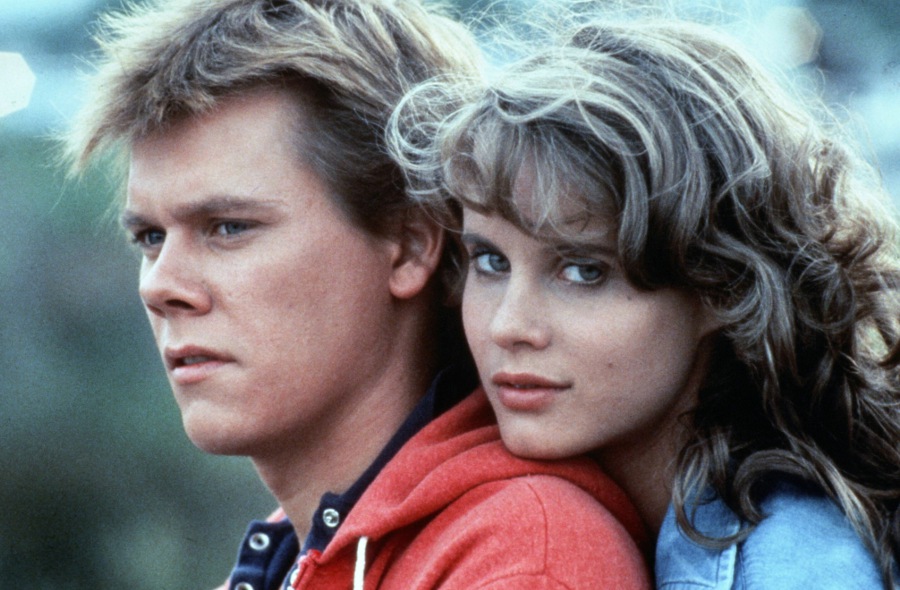
However, genre movies always have a genesis. Before these films saw their way into a production studio, “Footloose,” released in 1984, hit theatres with its unique premise, iconic scenes, and ’80s-rich soundtrack. Starring Kevin Bacon, “Footloose” is the story of a street-wise kid named Ren McCormick from Chicago (Bacon), who finds himself in a small Midwestern town where dancing is outlawed following the accidental deaths of several teenagers after a night of drinking and partying.
Leading the charge against dancing, and immorality of any kind, is Reverend Moore (John Lithgow, “3rd Rock From the Sun”), whose own son was one of the one’s killed in the tragic accident years ago. His daughter, Ariel (Lori Singer, “Law & Order: Special Vicims Unit”) takes a liking to Ren, but is closely guarded by her father and her rough-and-tumble boyfriend Chuck.
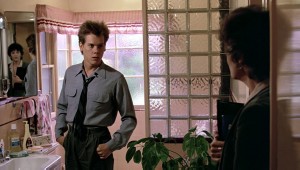
It isn’t long before Ren starts having trouble fitting in. He gets on Chuck’s bad side when Ariel begins to spend more and more time with him, he’s cut from the gymnastic team when word spreads that he is “trouble,” and he’s left with really only one new friend, Woody (John Laughlin), who seems to understand him. And it isn’t long before real trouble starts – Ren decides to host a senior dance – but first he must ask the Town Council to repeal its years-long ban on dancing.
“Footloose” is, at the heart, an 80s movie through-and-through. Tight jeans (on both men and women), wild hairdos and vintage cars line its presentation. However, this is never more recognized than in its soundtrack. Artists like Kenny Loggins, Quiet Riot, Foreigner, and John Mellencamp line the soundtrack, bringing about a nostalgia for this bygone era when watching this movie in 2012. One iconic scene, involving a tractor race between Ren and Chuck, is made all the more dramatic with Bonnie Tyler’s “Holding Out For A Hero” playing in the background. Much of the movie is like this. As hard as it is to imagine British comedies such as “Monty Python” and “Lock Stock and Two Smoking Barrels” to remain humorous if stripped of British slang and recast with American actors, it’s equally as improbable “Footloose” would hold up with a soundtrack from any other time. Like the 80s itself, the movie had a brief window in which to exist and have the impact it did. As a testament to this, witness that even the “Footloose” 2011 remake features Loggins’ “Footloose” and a remake of Tyler’s “Holding Out For A Hero.” The decade can only be imitated, not recreated no matter how hard filmmakers may try.
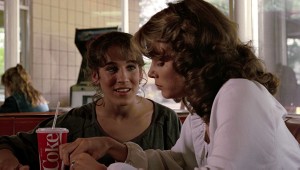 However, certain parts of “Footloose” suffer from an over-understanding of this fact. One scene involving Bacon dancing gratuitously by himself smacks of a would-be musical video, and really serves as nothing more than to show off his moves, tight jeans, and devil-may-care hairdo.
Likewise, other parts seem over-the-top in their moralizing. While it may be believable that Ren is let go from the gymnastic team because he rubs the Reverend the wrong way, it is far less credible that his efforts to have a senior dance, even in this backwards town, would be met with such disdain. His mother is let go from her job because of it, and a group of bible thumpers even throw a brick through his family’s window with the words “Burn in Hell” scrawled on it.
The movie also tries too hard to make a villain out of Lithgow’s character, when he may have been better suited fighting the closed-minded nature of the town rather than abetting it. While some other town’s folk damn any kind of literature or thought that goes against the bible, Rev. Moore seems to understand that banning these types of thought is not the answer. His condemnation of dancing comes from his guilt of his son’s death – however, the movie takes entirely too long to resolve this fact, though it’s really no surprise when the Reverend comes around, albeit in the 11th hour.
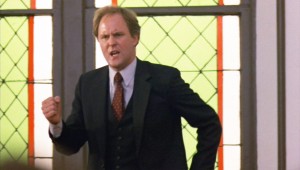 It’s interesting, as a parallel, that the Reverend, stalwart in his feelings against dancing, still seems tobe able to see where his closed-minded preaching can lead those who are more inclined to follow. When he realizes he’s wrong, he’s the first to admit it – a long cry from modern movies that often lack this insight and progression. It’s a difference that makes his character more believable, honest, and human than I’ve seen elsewhere, and part of the reason that we care to stick around to the end.
Additionally, other characters in the movie, such as Ren and Ariel, seem to understand this. Though they don’t agree with him, the movie becomes less like a kids vs. adults free-for-all but rather a joint effort to understand the other. “Footloose,” apart from the music, and apart from the romance, is about a family, and a town, healing from personal tragedy. The town of Bomont, like Rev. Moore, must let go of the senselessness of his son’s death and move on toward a new way of life.
At the end of the day, “Footloose” is not a perfect movie. It’s got its share of clichés, made all the more tiresome by 30+ years of attempts to duplicate them. It’s a hyper reality. But it has heart. The plot is engaging and the characters are relatable. In a modern time concerned with poverty, unemployment and uncertainty, it’s nice to think back on a era of good music, and an era less concerned with material possessions and technology (they still had tape decks, come on now), and with kids, and adults, who seemed to have a better grip on what’s important. Not to say it would solve all the world’s problems – but I can’t help but think the world would be the better for it if more movies depicted unrestrained joy – even if alongside cheesy music and wild wardrobes – as their defining characteristic.
– by Mark Ziobro