


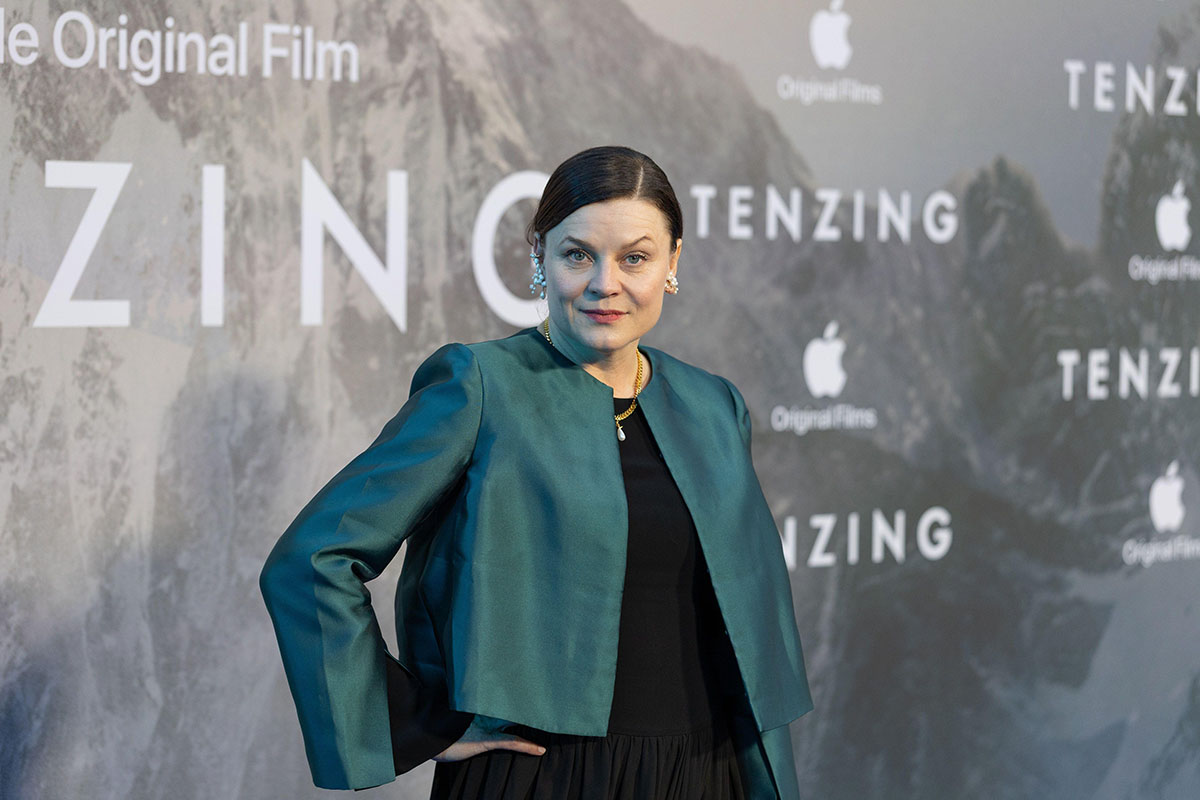
I was in elementary school when the 1996 Mount Everest disaster happened. It was May 11, my parents’ wedding anniversary, and I remember following the news about what happened on the mountain over the next several weeks. Even then, I had a fascination with Everest. I loved geography and looking at almanacs and world maps growing up, and there was always something about the world’s highest mountain that captured my imagination.
So naturally, Jennifer Peedom’s “Tenzing” was a film I was particularly interested in seeing. Set against the historic 1953 ascent of Mount Everest, the film tells the story of Tenzing Norgay (Genden Phuntsok), the Himalayan mountaineer who, alongside New Zealander Edmund Hillary (Tom Hiddleston), became the first to reach its summit. Also starring Willem Dafoe, Caitríona Balfe, and Thinley Lhamo, the film explores Tenzing’s struggle for recognition within a British-led expedition, his relationship with his family, and his spiritual connection to the mountain. For Tenzing, Everest isn’t simply another peak to conquer. It’s Chomolungma, the sacred mother goddess.
When I had the opportunity to speak with Rebekka Karijord, the composer behind the film’s beautiful score, I was particularly excited. And as a frustrated musician myself, I couldn’t resist picking her brain about her creative process. One of the things I asked her was how she approached scoring a film about climbing Everest. We tend to associate reaching a summit with enormous, triumphant orchestral music, but “Tenzing” is also a deeply personal and spiritual story. Rebekka told me that, for her, the musical character of the film was the mountain itself. That made perfect sense to me, especially when you consider that the soundtrack opens with a track titled “Chomolungma,” the Tibetan name for Everest.
We also talked about her collaborations with Nepalese musicians, the importance of knowing when not to use music, and one of my favorite moments in the film: when Tenzing and Edmund finally reach the summit, there’s a brief silence before the score returns with “Top of the World,” my favorite track on the soundtrack. I was curious how she and Peedom arrived at that decision, and her answer gave me an even greater appreciation for the scene.
And because I had a little time left, I also asked her about her personal taste in music. Turns out, she’s quite the eclectic listener. Needless to say, my Spotify playlist has expanded considerably since our conversation.
This interview has been edited for brevity and clarity.
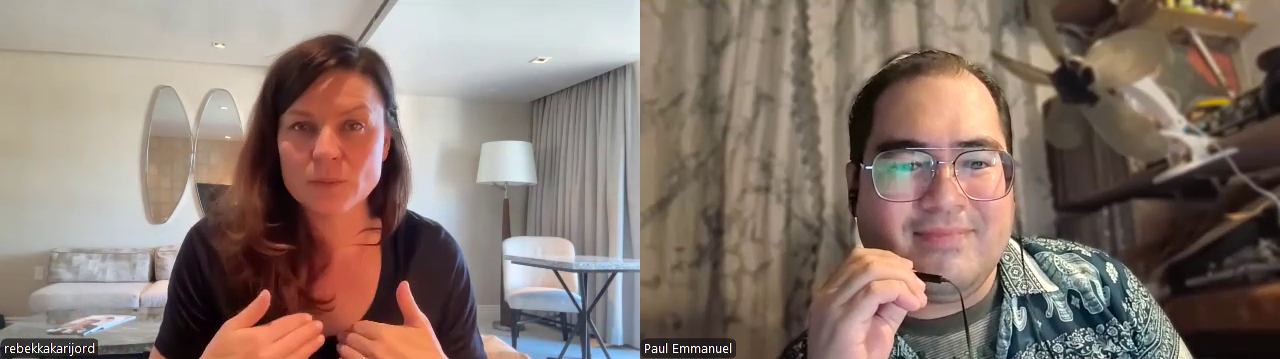
Paul Emmanuel Enicola for The Movie Buff: Hi, Rebekka. It’s so lovely to meet you.
Rebekka Karijord: Hi, nice to meet you. Where are you? Are you in the US?
I’m actually here in the Philippines at the moment.
RK: Okay, nice. Nice to meet you all the way from the Philippines.
I’ve been looking forward to talking with you about the music. Congratulations on your work.
RK: Thank you so much.
When we think of films about climbing Everest, we tend to imagine these enormous and triumphant scores. But “Tenzing,” for me, is also a very personal and spiritual story. When you first approached the music, was there anything you knew that you wanted to explore?
RK: Yes. I usually think of my film scores as like a character, almost. When I get a script, I’m thinking, “Who am I?” And not me, Rebekka, but who is the music in this story? If I can distill it to a sentence, what is it?
And when I got this amazing script, I was just crying, and I felt the musical character is the mountain. Because if we nail that beauty and that wild wilderness and create this character of that, we will understand why they are so drawn to her, and we will understand Tenzing’s whole arc of trauma and how that transforms into this longing, you know?
So I started investigating very soon: How does she sound, Chomolungma, this goddess of Everest? Through collecting sounds from set, through starting to work with Nepali singers — that was my main first approach.
Speaking of the Nepalese singers, you worked with some remarkable musicians on this score, including Ani Choying Drolma, Manose Singh. You even incorporated Thinley Lhamo’s voice. Was there a moment during those collaborations when the music took you somewhere you hadn’t originally imagined?
RK: Oh, yes. It was very enriching and learnful and humbling, and it was yet again another proof for me that the highest art form is collaborative quite often, and leaving your ego aside and creating this trustful space for people to enter. And Jennifer Peedom, the director, has done that with all of us in our crafts. She’s left a lot of trust, and that is contagious. It creates trust in the whole project.
With the music, I felt really early on that I need collaborators in Nepal. I’m from northern Norway. I understand mountains, and I understand grief and longing. But I’m not from there, and I need someone that I can work with, and not as an exotic texture or something I paste on top of my orchestral big score, you know? It has to be a deep meeting. So with Thinley, we started right away when I got signed on. She ran in between takes to a little cabin, and I started recording her. And then we continued recording the whole post-production.
Ani Choying Drolma came on later. She was on my playlist of artists that I’ve loved for years, and she heard about the film. We got in touch, and she said, “I want to sing on this.” So I sent her five cues. They were ready from my side, but then I said, “Do exactly what you hear.” And that was quite scary because I don’t know what’s going to come back.
Then back came these incredible chants, and I was FaceTiming Jen Peedom, saying, “Are you hearing this?!” [laughs] Just so enriching. And it gave a musical blessing to the film, and it gave something I could never have done on my own, honestly.
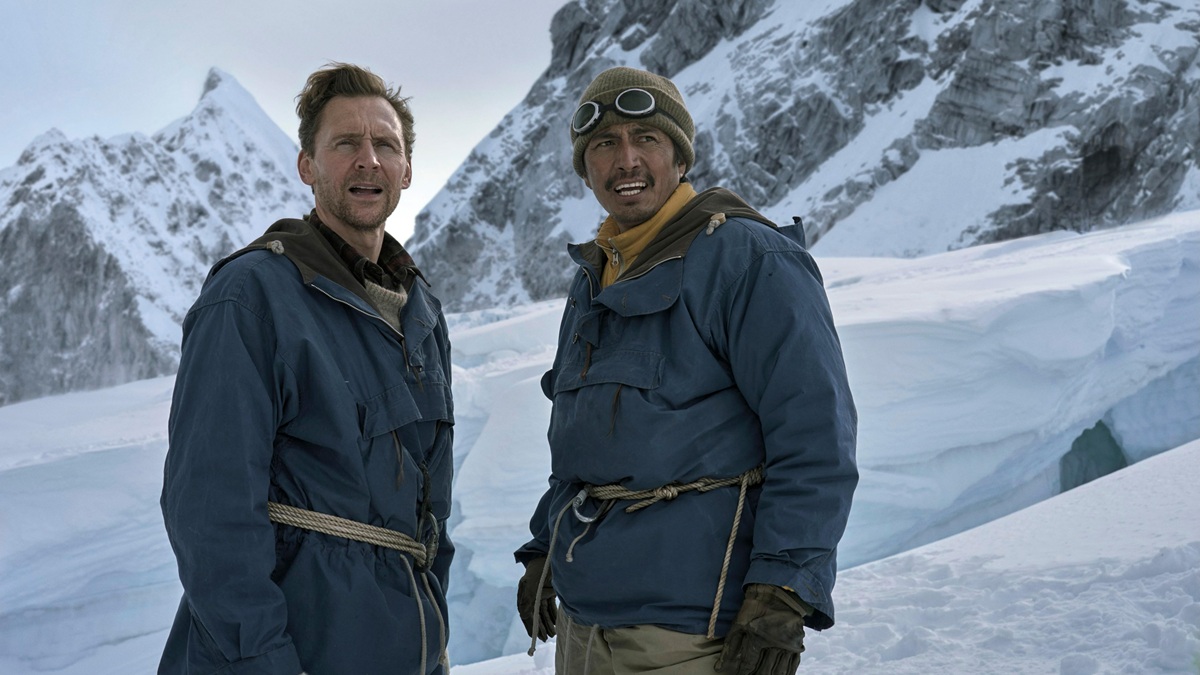
You mentioned your collaboration with Jennifer Peedom. One of my favorite scenes in the film is when Tenzing and Edmund finally reach the summit. There’s this brief silence before the music returns and “Top of the World” plays. It’s my favorite track of the score.
RK: Oh, thank you.
I’m curious how much of that direction came from your collaboration with Jen. For a composer working with such a huge musical canvas, how do you decide together when to pull back and let a moment speak for itself?
RK: Yeah, that’s a lot, but it often happens in sound mix, I think. So I think it’s important that you have a big palette. Maybe you have more material than you need in a cue.
But I think that moment was always silent. I think we understood already in the spotting session that, no, this needs to be just breath and footsteps and awe, you know? And there are a lot of moments in the film where I sat in the mix and I was like, “Why do we need music here? Let’s pull back.” I do that quite a lot, actually, because I feel like the acting is saying it, the amazing cinematography is telling it. Why do we need to put music on top of it?
And for me, that is a lot about penetrating the material emotionally and not being pasted on the outside, creating a distance to it, which music can do if you’re not careful, because it’s such an emotionally powerful tool.
You also composed the music for “Songs of Earth,” which has a very intimate relationship with nature. Was there anything from that experience that you brought into this film, or did this film require you to rethink how you translate the landscape into music?
RK: It was definitely a lot of knowledge from that process that I could use in this. And actually, that film was kind of an indirect reason why I got this job, because they went location scouting with the tracks from “Songs of Earth.” So they were in Nepal with those tracks. And it’s such a beautiful process, taking field recordings and translating them into orchestral sounds and instruments. So that was definitely a deep musical, scientific work that started then, and that I took with me and got to really explore more with “Tenzing” on a bigger scale.
I would like to talk to you for a little bit longer, but let me just ask this. When you’re not composing for films, what kind of music do you find yourself listening to these days?
RK: I listen to NTS a lot, which is like an online radio station curated by musicians, and I have some favorite hosts. And they kind of put together their own radio programs, and I discover all kinds of music there. I listen to everything from Aldous Harding to Caroline Shaw to PJ Harvey to weird drone music and Kali Malone, and older music, Hildegard von Bingen and Gregorian chants.
I have a very eclectic music taste. Anything with a lot of feeling in it. I love contemporary classical music, and ambient music. But it has to have energy, and ambient music with…yeah, that’s about it. [laughs]
Some of the things you mentioned, I’ll give them a listen later on. Again, thank you so much, Rebekka. Congratulations on the film, and I’m looking forward to the next things that you do.
RK: Thank you so much for your time, Paul.
You can preview the “Tenzing” soundtrack below.
More Interviews: Mae Cruz-Alviar, Dingdong Dantes, Marian Rivera • Olivia Wilde • Devonté Hynes

