


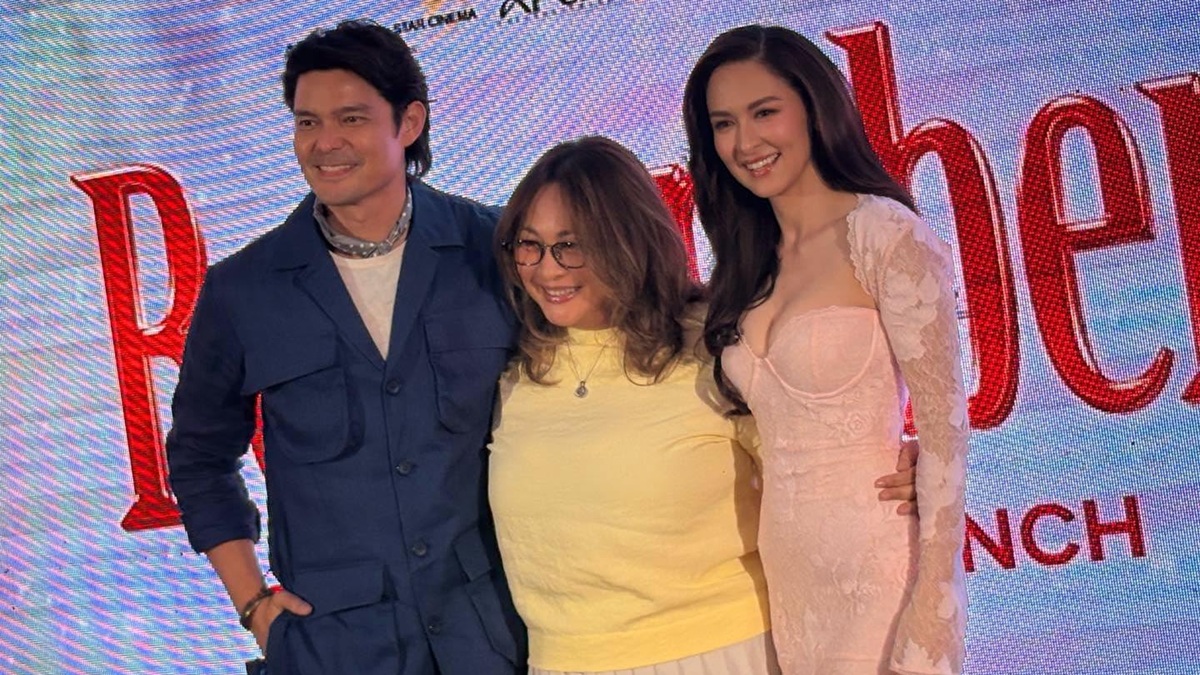
One of the challenges director Mae Cruz-Alviar encountered while filming “Remember” was reminding her two leads that they weren’t supposed to be getting along. Dingdong Dantes and Marian Rivera, who have been married in real life for over a decade, would sometimes be caught hugging and being affectionate with each other before filming a scene. “Cut it out, cut it out!” Cruz-Alviar would jokingly remind them in Tagalog. After all, the two were playing a couple whose marriage had already fallen apart. Being sweet to each other wasn’t exactly going to help.
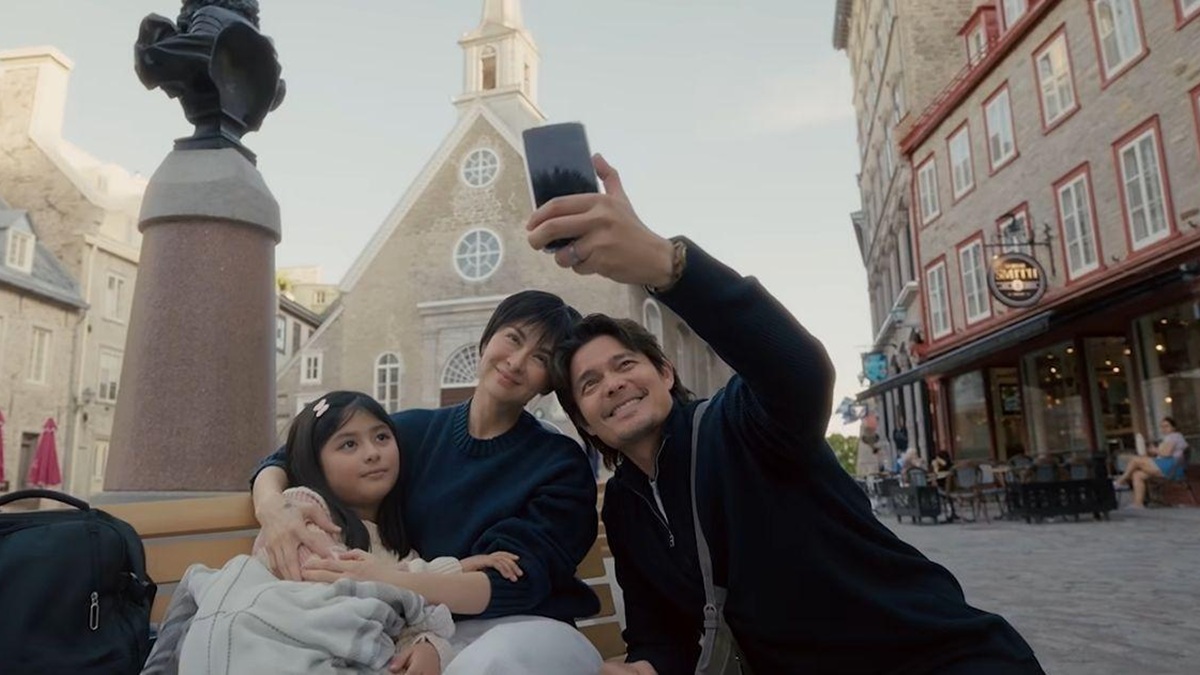
It’s an amusing anecdote from our recent virtual conversation, but it also says something about the peculiar challenge of making “Remember,” which reunites the three following the massive success of “Rewind.” Here, Dantes and Rivera play Joseph and Ria, estranged parents who must pretend that their marriage is still intact for the sake of their daughter, whose memories are gradually slipping away. For two actors whose familiarity with each other has long been part of their onscreen appeal, playing a couple who can barely stand each other required a different approach. Their real-life relationship could be an advantage, but it also meant having to work against their natural instincts.
‘Remember’: The Trio’s Reunion After ‘Rewind’
When I spoke with Cruz-Alviar, Dantes, and Rivera during a virtual press junket, we discussed what drew them back together for another family-oriented drama and how their previous collaboration helped prepare them for the emotional demands of this one. Dantes and Rivera talked about the trust and familiarity that allowed them to navigate their characters’ fractured relationship, while Cruz-Alviar explained how she monitored the emotional progression of their performances, sometimes revisiting scenes long after filming them. For her, getting a scene right wasn’t necessarily about how many tears the actors could produce. Sometimes, what she needed was simply in their eyes.
I was also curious about how “Remember” approaches memory through its visual language, particularly given how much of the story depends on a child’s experience of remembering and forgetting. Cruz-Alviar discussed the deliberate use of camera placement, lighting, lenses, and visual effects to distinguish different kinds of memories. It was one of the more interesting parts of our exchange, offering a glimpse of the filmmaking decisions behind a story that could easily be discussed in purely emotional terms.
“Remember” opens in Philippine cinemas on November 11, before getting a US and Canada release on November 13.
This interview has been edited for brevity and clarity.
Paul Emmanuel Enicola for The Movie Buff: What made this particular story worth telling after the success of “Rewind?”
Mae Cruz-Alviar: Well, of course, when I’m working with Dong and Yan, I always want a story that’s family-oriented, something wholesome, and something that talks about faith and love for one’s family. They represent those things. They’re like a model family, model parents, and I think they’re perfect for the roles. So that’s the story I wanted to tell through this film. [to Marian and Dingdong] Perhaps you can share how we came to tell this particular story.
Dingdong Dantes: For us, it’s definitely a story worth telling because of the impact it had on us personally. We were deeply moved when we first read the story, especially when we began to understand Direk’s vision for the film. We connected with it on so many levels. And we really hope that the feelings we experienced when we first discussed the story and internalized our characters are the same feelings audiences will experience when they watch the film. That’s why we felt it was important for us to tell this story.
Marian Rivera: It’s important for us to make projects that have an impact on the people watching them. Because even through a film like this, we have the opportunity to give people hope. We know that everyone is going through something in their lives, and those challenges can be difficult. But if we can make a film that gives people hope and encouragement as they face their own struggles, why wouldn’t we, right? I think that’s also one of the roles we should have in life: to give hope to others.
Dingdong and Marian, having a long-lasting marriage in real life, the dynamic of your characters in the film is, to say the least, complicated. What can you share about your process in portraying a fractured marriage?
DD: Well, first of all, we really needed to understand our characters because their situation is very different from what happens in our own lives. Once you understand the characters, then as actors, you can find a way to portray them.
Was it difficult? In a way, yes. It really was difficult to do.
MCA: I know them, and they’re professionals. They understand what’s required by the story and their characters, and they did their homework. So when they step onto the set, they don’t arrive as Marian and Dingdong. They arrive as Ria and Joseph. By the time they get to the set, they’ve already read the script and understood their characters. Because they’re dedicated actors, they know what they need to do and what’s required of them.
But of course, it’s funny because before a scene, you’ll see them hugging each other and being sweet. And I’ll tell them, “Hey, you can’t do that later, okay? You should be apart from each other!” And they’ll say, “Oh, yeah, yeah. Just for now, just for now!” [laughs]
MR: And another thing, I think it’s also a huge factor that Direk is there because she’s the one who reminds us where the emotions are coming from and what’s supposed to happen in the scene. She really makes sure we’re all on the same page. For example, when the two of us are being affectionate, she’ll remind us, “Save that for later. You’re supposed to be having a fight in this scene, so you two need to get yourselves ready!” [laughs] So we have those reminders.
Nevertheless, we also do our part by studying our characters before we get onto the set, so that performing those scenes becomes easier for us.
Direk Mae, how do you know when to heighten the emotion in a scene and when to pull back?
MCA: When I study the script or the story, I’ve already plotted out which parts will require more from the actors. But then, while you’re actually filming a scene, you can also feel it. You can sense when something isn’t quite there yet, when you need more from them. Even if they’re already crying, it’s not about the tears. It’s in the eyes. It’s in the delivery.
So I’ve already mapped these things out. I’ve studied the script, and I know which moments require the emotions to really come from deep within, when the crying needs to come from the gut. But there are also moments when I only need to see the emotion in their eyes, or when I just need a little more from them. And it’s really a process of reviewing and studying the material again and again.
Even after we’ve finished filming certain scenes, I keep reviewing what the actors have given me. What did they bring to that particular scene? It’s like charting everything every day, every single day: It doesn’t stop after the first reading or the second reading of the script. It’s something you have to do daily.
That’s why, when we were in Quebec, even if I wanted to cook and go sightseeing during our breaks, I couldn’t. I had to keep remembering how they delivered their performances in certain scenes. Because, in a way, you’re like a compass. You have to keep checking where everything is emotionally. You might realize, “Wait, I need to push this scene a little further because of what they gave me in that earlier scene.” Or perhaps, “I need to tone things down here.”
That’s really how it works. It’s a constant process of studying the material and trusting your gut.
Were there moments when your familiarity with each other helped, or perhaps complicated, a scene?
DD: Oh, yes. A lot. Especially during the more heated scenes. Because we know each other so well, there’s more room for us to comfort one another, to support each other, and to provide whatever the other person needs in that moment. For example, whether it’s something physical or something as gentle as holding hands or giving each other a hug, we already understand each other’s needs.
MR: I think it’s the same for me as it is for Dong. It’s a mixture of both. It’s easy and difficult at the same time. And it’s easy because we know each other so well. But it’s difficult because, in this film, we’re confronting each other. We’re fighting, and we’re expressing so many emotions that don’t really happen between us in real life. So that’s the biggest challenge.
That’s why we talk to each other about what we’re going to do in a particular scene and what emotions we need to bring into it. We help each other, even when we’re filming scenes in which our characters are angry at one another. We’re still working together and helping each other figure out how to make those scenes better.
How did you approach representing memory and forgetting through the film’s visual language?
MCA: That was something I really had to think about. How exactly do you show the act of remembering?
In fact, we even had a term that we used while filming. We’d say, “Oh, we’re shooting memories now. We have to shoot the memories.” It’s about how we stage and compose those scenes.
For instance, we have the actors facing the camera because we’re showing things from the child’s point of view. And I also used different lenses for different kinds of memories. There are memories that come back following the amnesia, and then there are what we call pure memories, which are the happy memories. So we were very conscious of our choices when it came to lenses, lighting, and visual effects because we needed to distinguish between those different memories. And that was very important.
That’s also why, even when we’re filming an actual scene, we have to shoot it from the child’s point of view. Because those memories are going to be important, and they’re going to play a role in the story from the beginning all the way to the end of the film. So it’s important that we highlight them. We can’t simply shoot a scene and then cut to another one. We have to film those memory shots separately because I really wanted to emphasize that we’re seeing these moments from the child’s perspective.
And these are the memories that she carries with her into the final part of the film.
I’d like to talk to you for a bit longer, but that’s a good way to end our chat. Once again, thank you, Direk Mae, Marian, and Dingdong. I can’t wait for the public to watch this film. Congratulations again.
MCA: Thank you!
DD: Salamat po. Thank you very much!
More Interviews: Olivia Wilde • Devonté Hynes • Carl Joseph Papa

