

Padraic McKinley’s “The Weight” is a rugged post-Western yarn that never shies away from grit and grime, while also refusing to douse the faintly optimistic glow which glimmers behind its primal ferocity. McKinley’s film is a bruising drama, hauntingly told, with stirring performances submitted by a terrific ensemble cast. It also, seemingly authentically, showcases a post-depression-era Pacific Northwest milieu (set in 1933). Also worth noting is that there hasn’t really been a surplus of similar films released thus far in 2026, so this one proves a welcome cinemagoing detour.
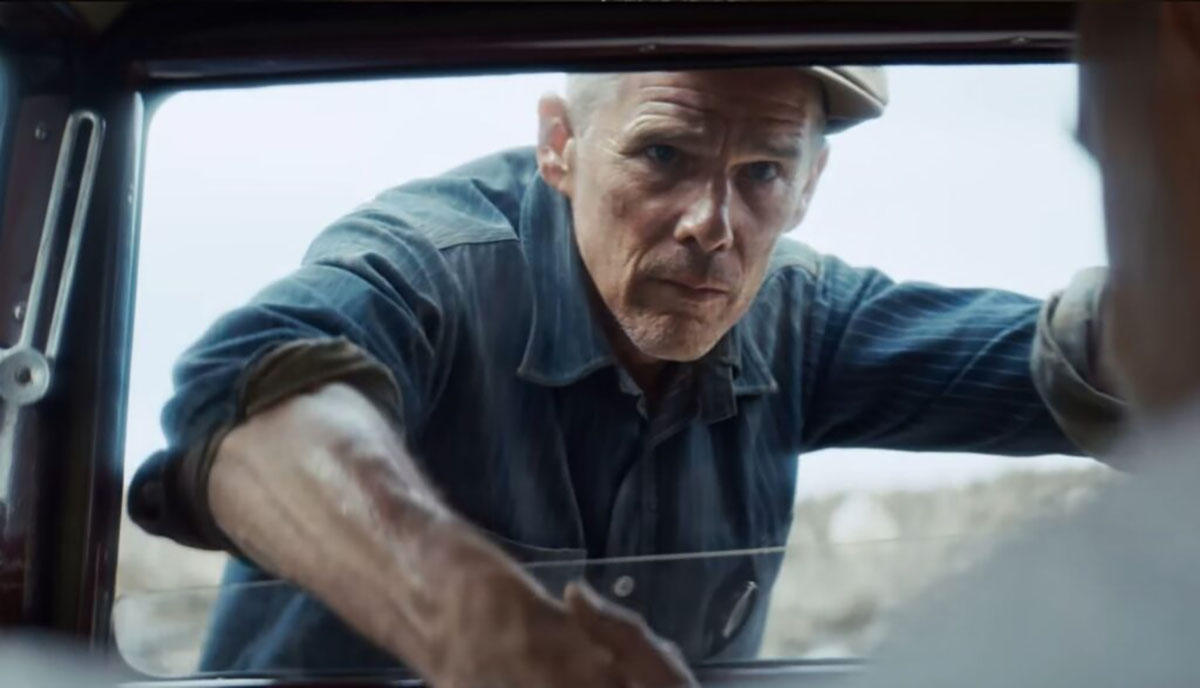
Here, Ethan Hawke plays an aggrieved father Samuel Murphy, banished to a penal camp after he is cornered in an alleyway and pinned for a crime. He swiftly demonstrates physical and mental strength from the get-go and rallies the troops to conquer an inconceivably difficult task in quick time (express removal of a hulking boulder), piquing the interest of Russell Crowe’s J.J. Clancy. It’s here that he is offered a proposition, in a somewhat similar fashion to John Hillcoat’s “The Proposition,” though that film is a lot more nihilistic in tone. He is to hand-select three other men for a quest involving government gold. They are then to transport a heavy load of the commodity across rugged terrain and several fatigue-driven days to unlock freedom for themselves (and for Murphy, the chance to reunite with his daughter).
Ethan Hawke’s Ever-Increasing Versatility
Of course, complications arise, tensions flare up, and fists are thrown and oftentimes connect, etc. There are warring personalities within the posse and murky motivations to be sure. In one of the most nerve-racking scenes in the flick, Hawke has to traverse a decrepit bridge while catching slabs of gold casually lobbed at him. As a viewer, you’ll find yourself swaying along with the embattled Murphy as the flimsy walkway threatens to collapse. For a film that contains so many flashes of brutality, “The Weight” also—somewhat refreshingly and unapologetically—makes no secret of the fact that its ending is upbeat given all that’s come before it.
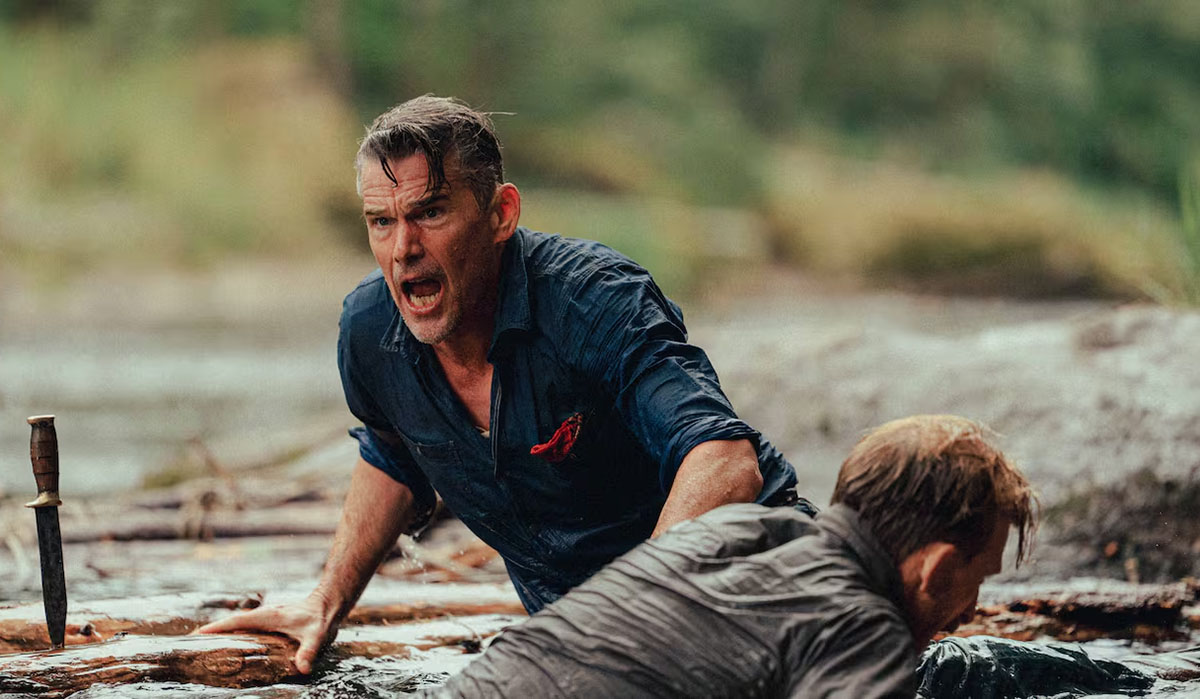
Gravelly voices and ominous admonishments run rampant as this ragtag bunch of men battle river crossings, rogue gunmen, and other assorted dangers en route to emancipation. In fact, one instance recalls the bit in Christopher Nolan’s “Insomnia” when Al Pacino’s detective falls into the watery Alaskan depths while pursuing a suspect, only to be temporarily imprisoned by the overhead clash of shifting logs on the chilly surface. Ethan Hawke’s ever-increasing versatility is on full display here once again, and it’s a testament to his malleable prowess as a performer as to why he keeps being tasked with such a diverse array of characters to inhabit.
Russell Crowe and Austin Amelio Add Depth
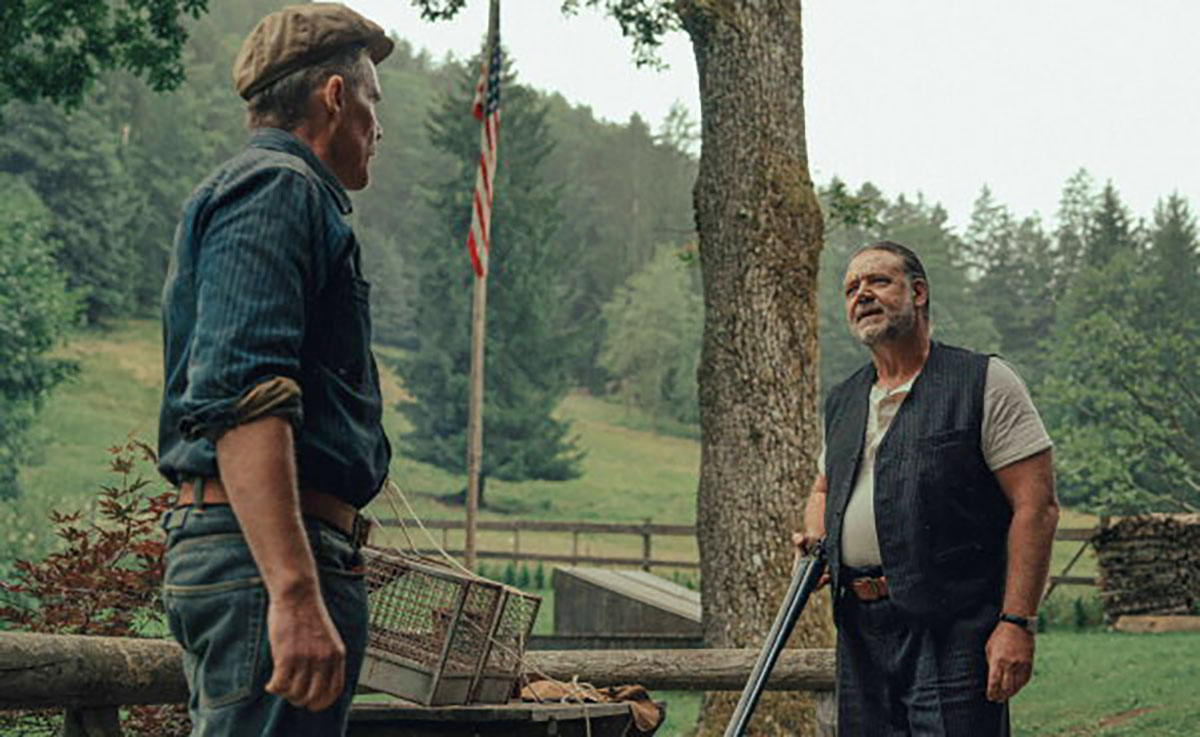
Ably assisted by Russell Crowe (classically powerhouse) as the seemingly empathetic but potentially devious Warden Clancy and a gallery of stalwart character actors (Austin Amelio, Sam Hazeldine, etc), “The Weight” is a runaway train of a flick manned by considerable, diverse talent. It’s a remarkable directorial debut, and a real feat given how successful the finished product is. Not since “Slow West” (starring Ben Mendelsohn and Michael Fassbender) has a historical drama by a debutante director proven so flashily assured. There are also echoes of Justin Kurzel in the film’s spare, unflinching style.
Above all else, “The Weight” is a consummate adventure film, and its entertainment value is high while ensuring its characters have clear motivations and arcs that transcend mere serviceability. The effects of avarice on the bullish mindsets of those in pursuit of wealth—intermingled with rousing adventure sequences—should spur comparisons to John Huston’s masterpiece, “The Treasure of Sierra Madre,” which is essential viewing, of course. While “The Weight” may fail to reach those especially lofty heights, it remains one of the most compelling dramas of the year and contains heady doses of thematic depth. It’s rough and tumble, but lugs plenty of emotional, erm, weight, along with it. This is especially true as the treacherous journey barrels toward a conclusion that features a car veering off into the wilderness and a bevy of hardened chaps returning to camp against all odds, their resolve somehow still intact.
A Thoroughly-Absorbing Watch
Amelio is good as the irascible and attitudinally dubious Rankin, and Avi Nash as the well-meaning Singh is also outstanding. Likewise, in what is a very male-dominated movie, Julia Jones as Anna, a daring runaway that joins the group and proves as skillful as any of them impresses in a pivotal part, especially when her and Murphy appear to take somewhat of a shine to each other. George Burgess also makes a literal impact as a brutish heavy. The final confrontation is tense without ever going over the top as Murphy gains the upper hand. And the conclusion as a whole—as mentioned earlier—goes for uplift via familial reunion, and it has the effect of adding a lightening brushstroke across the entire film, which is an unremittingly rugged experience, generally speaking.
“The Weight” ultimately examines the lengths some go to achieve material prosperity and how monetary power stacks up compared to ambition brought on by paternal responsibility. These are two very different, albeit similarly aggressive motivators. The action-rife quest is backdropped by the verdant wilds of the Bavarian Forest (adroitly used to double as Oregon) with Italian cinematographer Matteo Cocco clearly a dab hand at his craft. A thoroughly absorbing watch, it’ll be interesting to see what its clearly capable director looks to produce next given this provocative and pulsating opening gambit.