



The Philippines has become so used to absence that we sometimes forget how strange our family arrangements can look from the outside. Someone is almost always abroad. An aunt in Hong Kong, a cousin in Dubai, a mother in London, a father in Saudi, or a neighbor’s daughter in Japan. They are not gone in the way people used to be gone. They remain present through calls, remittances, boxes, photos, short visits, little jokes in the family group chat. Still, they are not there when the child gets sick, when the house grows quiet, when someone graduates, when someone dies, when ordinary dinner-table irritations harden into years of not knowing one another.
We have learned to give this absence a system. There are remittance centers for it, airport rituals for it, balikbayan boxes for it, government forms for it, and family myths for it. We know how to send money, chocolates, canned goods, perfume, toys, branded shirts, and small apologies wrapped in plastic. What cannot be packed or wired home, however, is more difficult to name. Time does not travel well, and neither does tenderness. It can try, of course. It can move through a frozen video call or a voice message recorded before or after a shift, but there is always something missing in transit.
‘Midnight Girls’ and the OFW Film Tradition
This is why Filipino cinema keeps returning to the overseas worker. Not because the subject has run out of meanings, but because the wound keeps finding new surfaces. And with her latest film “Midnight Girls,” Irene Emma Villamor enters that tradition with unusual clarity.
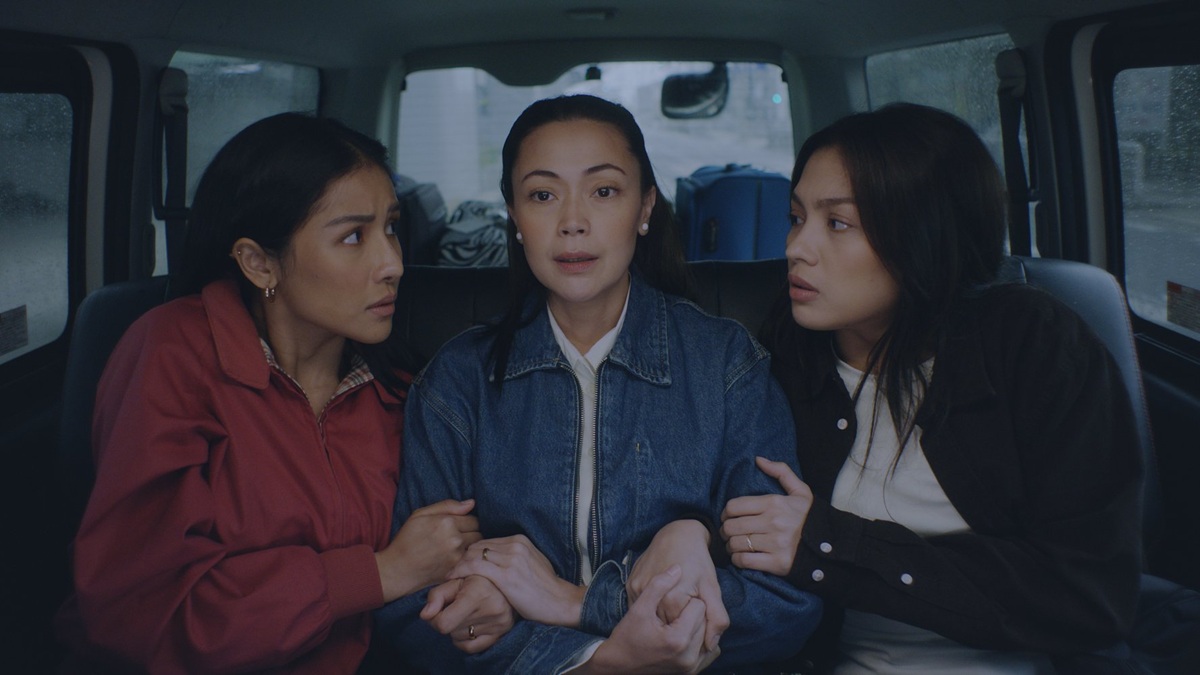
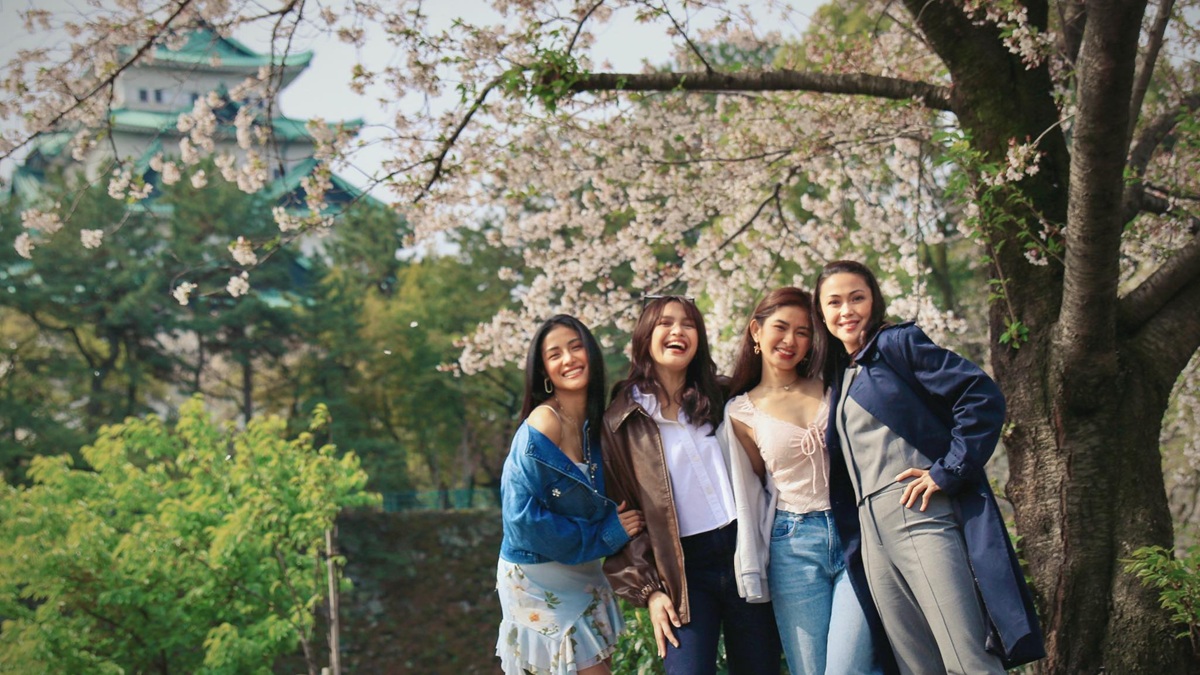
Set in Nagoya, Japan, the film follows four Filipina entertainers whose lives are bound by work, secrecy, friendship, longing, and the old Filipino bargain of leaving home so that home can survive. Vicky, Saki, Wanna, and Paris could have easily been reduced to types. Instead, Villamor and co-writer Rod Marmol do something kinder and more useful: They give each woman a life that feels as if it began before the movie and will continue after it, which is a small thing to say and a hard thing to pull off.
The result is one of the strongest Filipino films of the year so far. It is also one of the more persuasive recent additions to the OFW cinema canon because it does not treat sacrifice as a clean virtue. It shows the strain behind the word. Sacrifice here is not an idea printed on a tribute poster or a speech about modern heroes. It has a body. It smiles when tired, flirts when lonely, lies to a boyfriend, and mothers through a phone. Here, it performs womanhood in a room where desire is part of the job, even when the self underneath is breaking in another direction.
A Different Kind of AAPI Story
There is a reason “Midnight Girls” feels like a fitting film to write about during AAPI Heritage Month, even if it is not an Asian American story in the familiar sense. The month is often framed around visibility, contribution, and belonging, especially within the United States. Those conversations remain necessary, but they can also settle too comfortably into one migration story: a family arrives, suffers, endures, assimilates or resists assimilation, and eventually claims space.
Filipino migration often follows a rougher emotional logic. Many do not leave to reinvent themselves. They leave because survival has already narrowed the options at home. The fantasy of arrival gives way to tuition fees, medicine, debt, rent, visas, agency payments, and the kind of love that has to become practical before it can become tender.
“Midnight Girls” complicates the easy language of Asian visibility because its women are visible and invisible at the same time. They are Filipinas in Japan, working inside another Asian economy, near enough to seem culturally proximate yet still marked by language, class, gender, and labor. They are seen by customers, by employers, by each other, by the people back home who need the money. But the full reality of what they do and what it costs them remains partly hidden. Sometimes deliberately. Sometimes because no one really wants to know.
Villamor’s Japan is not a travelogue. Nagoya glows, yes, and Pao Orendain’s images know how to catch that nighttime sheen without making it feel like a tourist brochure. The film looks better than the duo’s recent collaboration in “The Loved One,” though the comparison is a little unfair since Japan gives any cinematographer a head start. Still, the better visual instinct here is not prettiness. The film works best when the city feels like a workplace: clubs, rooms, streets after hours, apartments where the women return to themselves after selling a version of themselves to others.
Related AAPI Feature: City as Wound: Lino Brocka’s ‘Manila in the Claws of Light’ and the Politics of Memory
What Gets Spent Before the Money Is Sent
The word “entertainer” carries a particular charge in Filipino life. It can attract pity, gossip, judgment, fantasy, and the old respectability panic that tends to follow women whose work involves being looked at. “Midnight Girls” knows the charge of that word without letting it take over the film. Its women are not presented as fallen, and just as importantly, they are not embalmed as saints. They drink, want, lie, desire, resent, forgive, and make choices that are not always wise. The film’s compassion comes from allowing them to be human without first asking the viewer’s permission.
The nightclub setting could have invited the usual easy moral framing. Fortunately, Villamor avoids that trap. She neither glamorizes the work nor reduces it to degradation. What she understands is that dignity does not disappear because a job makes other people uncomfortable. The labor may be intimate, gendered, exhausting, and compromised, but it is still labor. It keeps families alive. It keeps debts moving. And it keeps children enrolled, medicine bought, houses repaired, parents fed. If some people would rather not imagine the conditions that make those remittances possible, the shame belongs elsewhere.
What “Midnight Girls” adds to the OFW film tradition is its attention to the body as the place where sacrifice is processed. These women do not simply work abroad and send money home. They convert themselves into livelihood. Their charm becomes useful. Their beauty becomes useful. And their patience becomes useful. Their ability to laugh at the right moment, dress the right way, hold back anger, tolerate loneliness, and hide the worst parts of the night becomes part of what they send back.
The body becomes the remittance.
There is something brutal in that, but the film does not overstate it. Much of its force comes from watching these women carry their own contradictions. They can be tired and funny in the same scene. They can resent the people they love, then protect them anyway. And they can know the cost of their work and still take pride in surviving it. Villamor is good at letting those feelings sit beside one another without forcing them into one tidy moral conclusion.

The Many Shapes of Distance Through the Eyes of Four Women
Vicky, played by Jodi Sta. Maria, carries the film’s most recognizable OFW wound. She is a mother whose son (Zaijian Jaranilla) has grown up away from her, and the hurt between them has become too old to be solved by explanation. She left to provide. He grew up with the benefits of that provision, but also with the pain of her absence. The money arrived. The mother, however, did not.
No one is entirely wrong in that conflict, which is why it hurts. Vicky is not wrong to feel wounded by her son’s resentment. Her son is not wrong to feel abandoned. The cruelty lies in the arrangement itself, in the way a country can make love dependent on distance and then expect the family to absorb the damage privately.
The shadow of “Anak” inevitably falls across this material. In Rory B. Quintos’ film, Vilma Santos’ Josie returns from Hong Kong to discover that the years she spent earning for her family have also estranged her from them. “Midnight Girls” does not repeat that story, but Vicky belongs to the same emotional bloodline. Both films understand that provision can become a poor substitute for presence, even when provision is the only form love is allowed to take.
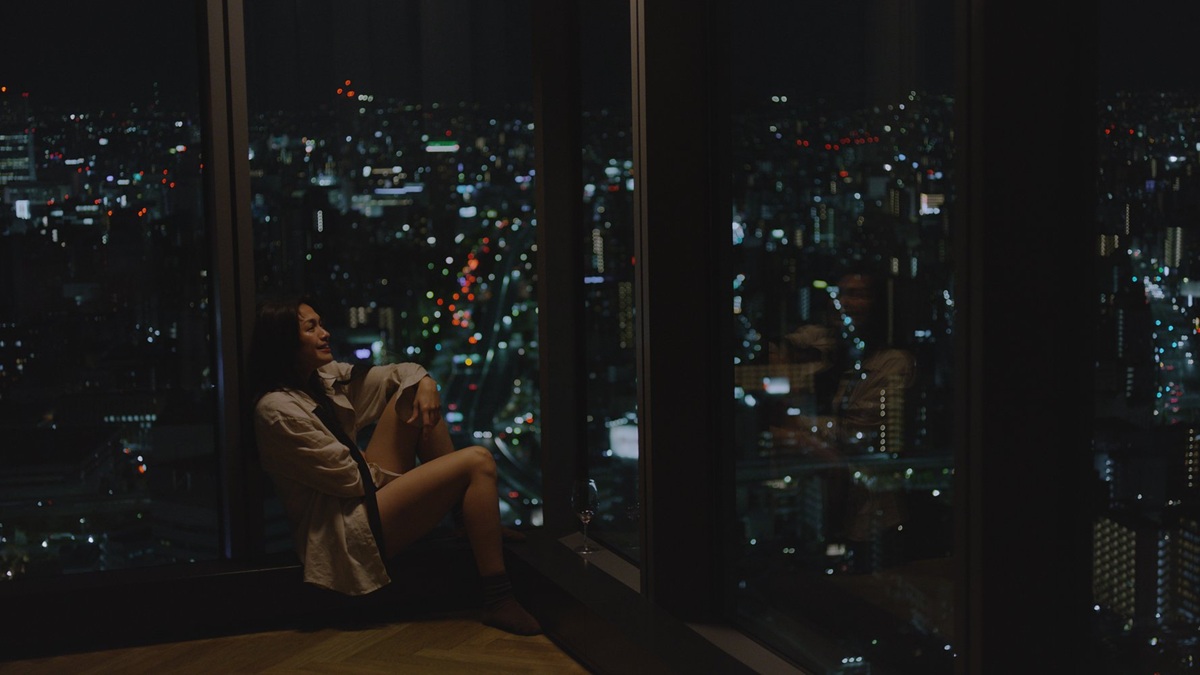
Saki’s (Jane Oineza) arc is more delicate. Without reducing it to a label, her story involves a private struggle with gender and the body, made more painful by the kind of work she does. The job seems to require a heightened performance of femininity: beauty, softness, charm, availability. Saki’s inner life is moving elsewhere. The tension gives her scenes a quiet ache because the performance is not only professional. It cuts into the self.
This is where “Midnight Girls” becomes more complicated than a general drama about women abroad. It sees how migration already splits a person into versions: the worker abroad, the provider on the phone, the tired body after the shift, the image of success the family back home firmly believes. Saki lives that split more violently. The body is not only exhausted. It is disputed territory.
Wanna’s (Loisa Andalio) story begins in secrecy and moves toward exposure. She hides a relationship with a boy from her province, and when he follows her to Japan and discovers what her work actually is, romance turns into judgment. The conflict is familiar, almost melodramatic in shape, but it touches something true. Her fear is not only that she lied. Her fear is that the truth will make her unlovable.
That kind of shame is rarely private in Filipino life. It spreads outward. It becomes a question of family, upbringing, reputation, what people might say, what work is supposed to mean, what a woman is allowed to do before affection starts sounding conditional. Wanna’s conflict works because it knows how quickly love can become surveillance once respectability enters the room.
Finally, Paris (Sanya Lopez) carries the film’s romantic longing. Her feelings for a Japanese man could have been treated as simple fantasy, but Villamor gives the longing enough context to make it understandable. Loneliness abroad can make attention feel enormous. When so much of your life is organized around service, performance, and the needs of people elsewhere, being seen as someone more than useful can feel like rescue. Whether it truly is rescue is another matter, and the film is wise enough to leave some of that exposed.
The Family They Build After Midnight
The friendship among the four women gives “Midnight Girls” its warmth, though calling it warmth may make it sound softer than it is. Their sisterhood is not decorative. It is practical, sometimes messy, and occasionally bruising. They fight, sulk, tease, forgive, withhold, and return to one another because there are things only another woman in the same situation can understand.
This is not the cheerful barkada version of migrant life. It is a substitute family built under pressure. The people they love most are too far away, too dependent, too young, too oblivious, or too wounded to fully understand what the work demands. So the women become witnesses for one another. They recognize the fake cheerful voice used in calls home because they have used it themselves. They know when a joke is covering panic. And they know how quickly a night can turn, how badly one comment can land, how much dignity must be protected in rooms where it is constantly being tested.
The film’s conflicts among the four are sometimes predictable, but the relationships still feel lived-in because the performances keep finding the little dents in the writing. Their closeness does not erase resentment. Their loyalty does not prevent hurt. That is probably why the friendship works. It is not imagined as pure comfort. It is another form of labor, freely given but not always easy.
The OFW Film as National Memory
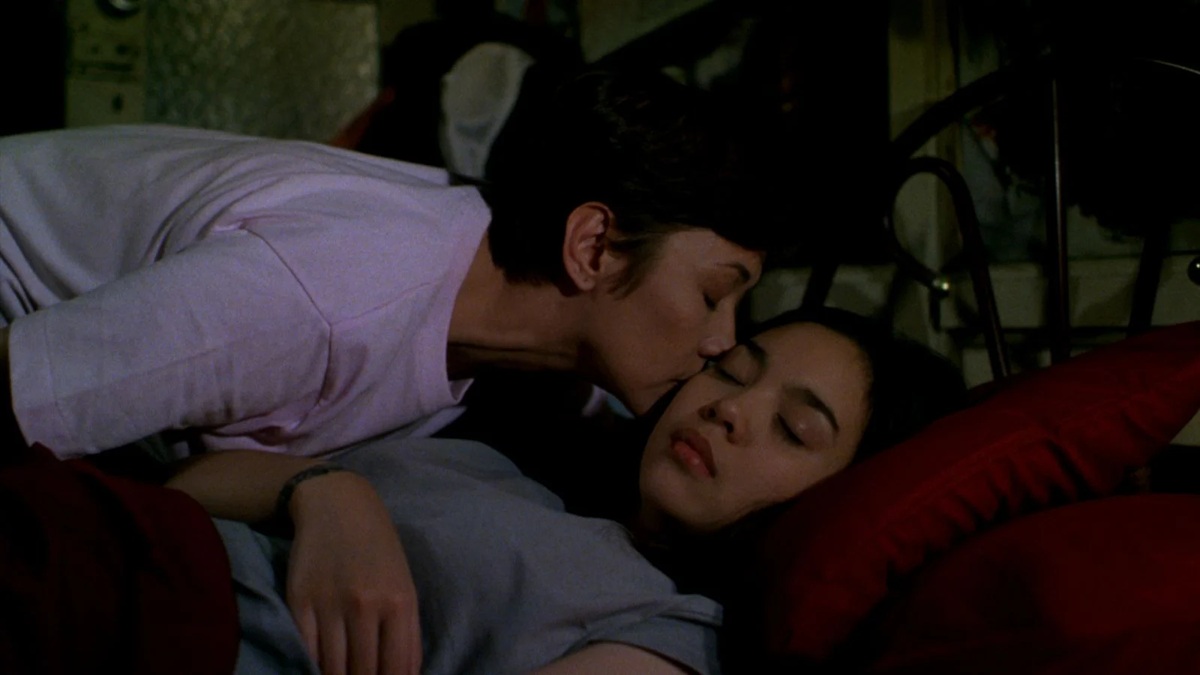
Seen this way, “Midnight Girls” does not stand alone. It joins a long line of Philippine films that have tried to understand what overseas work does to the Filipino family, the Filipino body, and the Filipino idea of home.
“The Flor Contemplacion Story” turned the OFW into a figure of national grief and political accusation. “Milan” and “Dubai” filtered migration through romance, ambition, and the seductive danger of elsewhere. “Caregiver” followed a professional woman forced to rebuild herself through work that rearranged her sense of dignity. “Transit” looked at Filipino migrant life in Israel through legal precarity and the fear that ordinary family life could be undone by policy. “Sunday Beauty Queen” found pageantry, exhaustion, and brief self-invention among Filipina domestic workers in Hong Kong. “Hello, Love, Goodbye” brought the OFW dilemma to contemporary pop romance, where love competes with the arithmetic of survival. And “Bagahe” made return home feel less like release than another form of interrogation.
The countries change, but the wound keeps traveling. Hong Kong, Singapore, Italy, Dubai, London, Israel, Japan. The map expands, and with it the meaning of Filipino identity. We are a people whose national story has become inseparable from departure. The Filipino abroad becomes worker, provider, lover, parent, suspect, performer, stranger, and sometimes myth. Cinema keeps returning to this figure because the country keeps producing her.
What “Midnight Girls” contributes to that lineage is its insistence on the gendered and embodied cost of survival. It does not only ask what the Filipino sends home. It asks what gets spent before the money is sent.
When the Film Lets Real Women Speak
One of Villamor’s strongest choices is the insertion of real-life interviews with women who have worked in Japan. In another film, these moments might have felt like a heavy underline. Here, they give the drama a second weight. The fiction pauses, and the viewer is reminded that Vicky, Saki, Wanna, and Paris are not simply dramatic inventions arranged for catharsis. They are built from lives that existed before the film and will continue after it.
Those interviews also keep the movie honest. They stop the story from becoming too smooth. Once real women begin speaking, the film can no longer be received as just a set of well-played arcs. It becomes part testimony, part tribute, part argument. The characters may be fictional, but the compromises are not.
There is also something moving about the way those interviews sit against the more polished scenes. They do not break the film so much as roughen it, which it needs. For a story about women whose lives are often softened, judged, or misunderstood by people at a distance, the directness of real testimony carries its own authority. No dramatic device can quite replace the face of someone who has lived close to the subject.
When the Mess Gets Too Neatly Solved
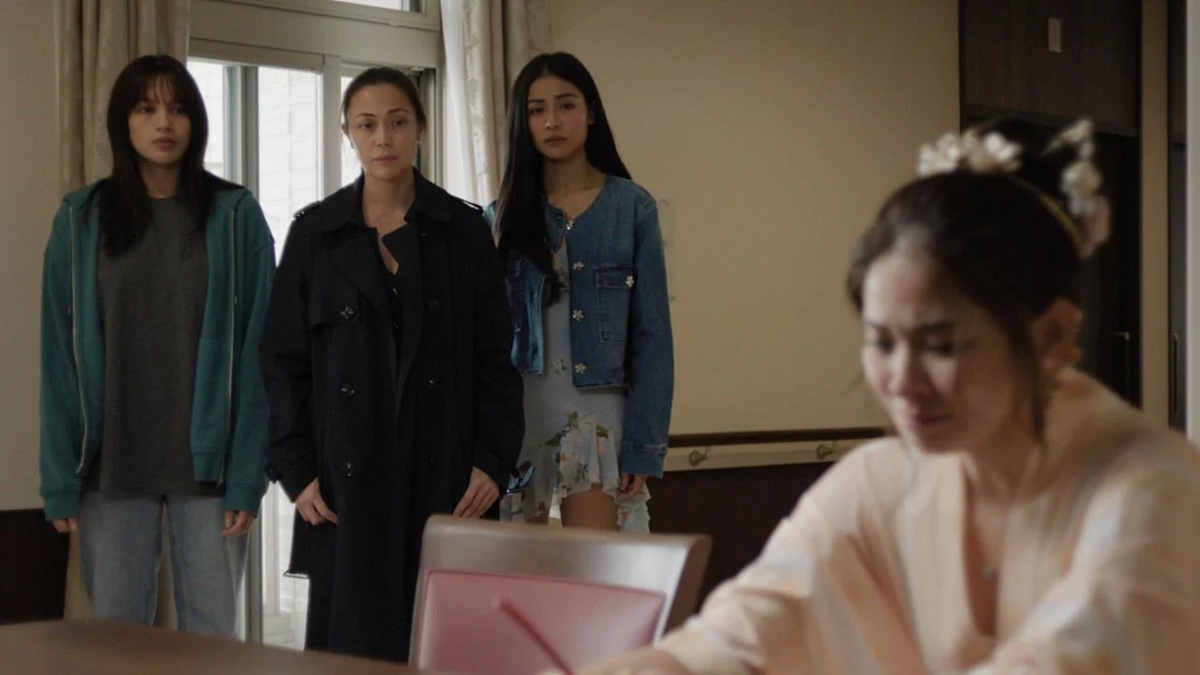
For all its strengths, “Midnight Girls” is not beyond criticism. Its weakest instinct is its need to tidy. The confrontations, the falling-outs, the emotional build-ups, the eventual reconciliations all move toward resolutions that can feel a little too expected. The film is so good at recognizing the disorder of migrant life that it is mildly disappointing when some of that disorder gets arranged into familiar dramatic closure.
The issue is not that the film wants healing—Filipino melodrama has earned that impulse many times. The problem is that a few of the reconciliations arrive with more neatness than the characters themselves seem to call for. These women have been written with enough texture to suggest wounds that do not settle easily, and the film’s final stretch sometimes behaves as if tenderness can fix what distance, shame, labor, and years of compromise have already complicated.
Len Calvo’s score presents a similar tension. I have long admired Calvo’s music, and there are passages here that sound lovely on their own. The score moves through city-pop touches, Filipino-flavored chord progressions, and occasional turns toward a more minimal, Hisaishi-like delicacy. At the same time, it can feel busy, even overpowering. The music sometimes pushes emotion that the actors and screenplay have already made plain. It is not unpleasant to hear, but there are moments when it seems not to trust the performances enough.
These flaws do not undo the film. They simply point toward the reason its best scenes work. “Midnight Girls” is strongest when it lets the women breathe without arranging their pain too carefully. It is strongest when it allows a silence, a glance, or a tired joke to do what a swelling cue or a polished reconciliation cannot.
Villamor’s Year Featuring Absences Taking Different Shapes
Coming after “The Loved One,” “Midnight Girls” confirms an impressive 2026 run for Irene Emma Villamor. The two films are different in subject, but they share an interest in people carrying absence into ordinary spaces. The Loved One turns emotional absence into heartbreak. “Midnight Girls” turns physical absence into labor. Both films are drawn to people who keep functioning while something inside them has already been altered.
Villamor’s sensitivity here is not loud. She is not reinventing OFW cinema, and the film is not free of familiar turns. But she understands behavior. She understands how pain can hide inside routine, how a person can make a joke because crying would be too inconvenient, how love can become obligation without ceasing to be love. In “Midnight Girls,” that understanding gives the film a steady emotional pulse even when the plotting grows predictable.
The danger in writing about OFWs is that the language can become noble too quickly. “Modern heroes” is not an empty phrase, but it is an incomplete one. Heroism can honor sacrifice, but it can also spare us from looking too closely at why sacrifice has become so necessary. It praises the worker while leaving the system intact. It turns pain into mythology, and mythology is much easier to admire than labor.
“Midnight Girls” does not solve that problem. I mean, no film can. What it does, however, is return specificity to a story that the country has sometimes learned to summarize too efficiently. It gives the audiences women who are tired, funny, vain, frightened, desirous, ashamed, angry, generous, and still trying. It gives us workers who are not only symbols of resilience but people with bodies that ache, hearts that want, and lives that cannot be reduced to the money they send home.
The Woman Behind the Remittance
In the end, diaspora is not only about geography. It is about transformation. The Filipino who leaves becomes useful in another country and gradually harder to know at home. She becomes a voice on the phone, a sender of money, a rumor, a savior, a source of resentment, proof that the family is surviving and evidence of what survival has taken.
That is the pain “Midnight Girls” understands at its best. It looks past the neon, past the easy pity, past the safe distance from which we prefer to admire sacrifice. In turn, it asks what gets spent before the remittance arrives. It asks what happens to the woman whose body, charm, time, and silence have all been converted into care for people elsewhere.
The tragedy is not simply that people leave. It is that leaving asks them to become useful in ways that may make them less known to the people they love. “Midnight Girls” sees the woman behind the remittance, and then it asks what, exactly, the country has asked her to give.

