


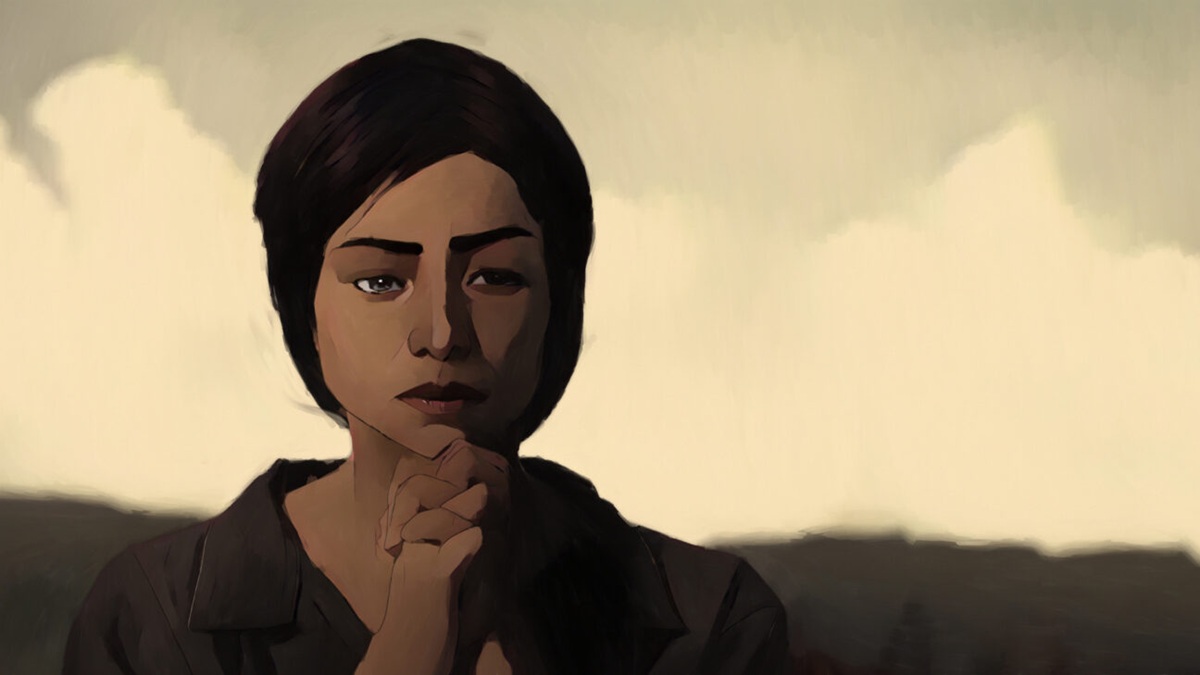
When the Maguindanao massacre happened in 2009, I remember making a conscious effort not to watch any footage from it. This was not moral courage on my part—I think it may have been the opposite. I knew the images existed, and I knew that some of them, or at least things claiming to be them, had begun making their way through the usual back channels of pirated VCDs and DVDs, passed around with the same ugly curiosity that turns human suffering into contraband spectacle. I wanted no part of it.
The news reports alone were already too much, because the bare facts had the force of a nightmare. A convoy stopped on its way to file a certificate of candidacy, dozens murdered, journalists among the dead, bodies found in a mass grave. At the time, the Philippines was already being spoken of as one of the most dangerous countries in the world for journalists, second in dread only to places that were actual war zones. Then Maguindanao happened, and whatever illusions remained about civility, democracy, and the limits of political violence were dragged into the open.
Drawing Around an Absence
Carl Joseph Papa’s “58th” returns to that horror with an unblinking gaze, but it is not merely a film about atrocity. That would be too easy, and maybe too crude. The film is about what happens after atrocity, when the cameras leave, the court records harden, public outrage gets metabolized into trivia, and a country as amnesiac as ours allows tormentors to reenter polite society wearing a fresh shirt and a practiced smile. It is a film about the cruelty of official incompleteness.
The title refers to Reynaldo “Bebot” Momay, the photojournalist whose body was never recovered after the massacre. Fifty-seven bodies were found. Momay, though widely understood by his family and fellow victims’ kin as among those killed, remains a wound in the record. His daughter Reynafe “Nenen” Momay Castillo has spent years fighting not only for justice, but for recognition. In “58th,” recognition isn’t an abstract legal matter. It’s the thing that separates presence from erasure: a death certificate, a name counted properly, a family being told, finally, that the grief they have carried is real.
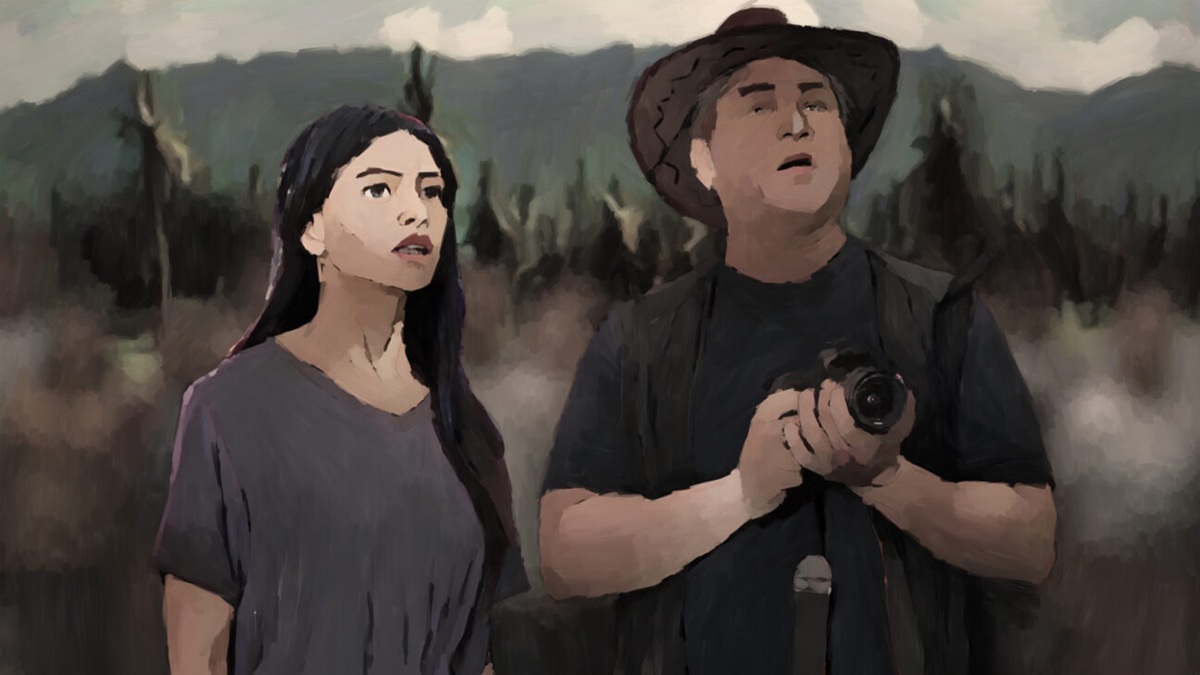
Papa builds the film around Nenen (Glaiza de Castro), whose conversations with a filmmaker figure, played by Mikoy Morales, frame much of the story. The device is simple: a Zoom interview that invites the kind of digital confessional that became ordinary in the last few years. In another film, it might have felt too tidy or too self-aware, but here it gives the story a necessary point of entry. The filmmaker is not a hero, a detective, or a crusader. He’s a listener, and more precisely, an outsider trying to understand what it means to be entrusted with someone else’s pain.
That question hangs over “58th,” sometimes productively, sometimes uneasily. Papa has made animation his home turf. In “Iti Mapukpukaw” (The Missing), rotoscope animation became a way of externalizing private trauma, memory, and self-repair. The unreality of the image made emotional sense because the film was moving through the fractured interior life of a man whose wounds had not yet found language. In “58th,” the terrain is more dangerous because this isn’t only about memory. It’s also about legal evidence, eyewitness accounts, public record, mass murder, and the grief of living people.
The Ethics of Rendering Someone’s Grief in Animation
I admit I remain a little conflicted about animation as a tool for reenacting real-life atrocity. To be clear, however, that hesitation isn’t a dismissal of Papa’s method. If anything, “58th” works because Papa’s hand has become steadier, his eye more disciplined, and his control of rhythm less beholden to novelty. The rotoscope sequences rarely feel out of place, and they almost never feel inappropriate. He’s not using animation to make the massacre palatable. He is using it to reconstruct what cannot be filmed anymore: Nenen’s memories, Bebot’s presence, and the emotional geography of a family trying to locate a man whom history has left suspended.
Still, the question sits there whether one wants it there or not. When a film softens the literal image through animation, does it protect the viewer, protect the subject, sharpen the memory, or make the horror easier to consume? I had a similar reservation with “Alipato at Muog,” a live-action documentary that turned to animation for portions involving testimony and recollection. In both cases, the choice makes practical sense. It can guard dignity, fill gaps, and avoid the cheapness of reenactment. But it can also create distance, and with a story as painful as this, distance is never neutral.
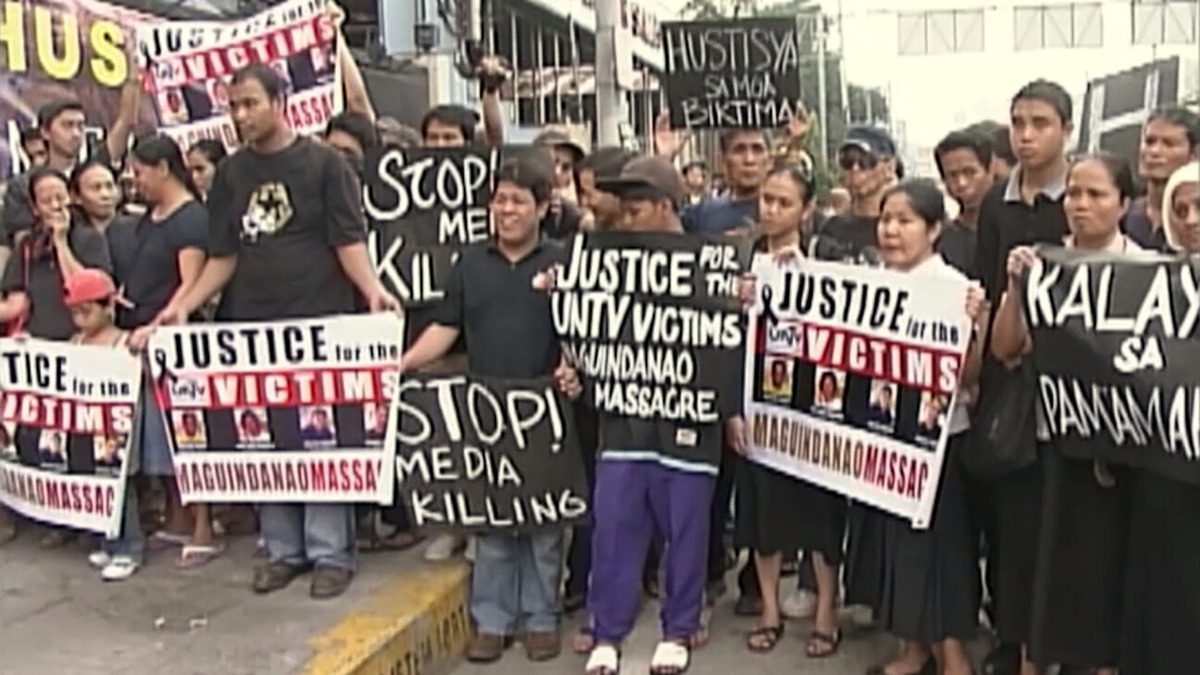
Papa seems aware of that risk, which may explain why “58th” does not hide entirely behind animation. It includes actual footage from the aftermath: the exhumation, the recovery, the funeral homes where decomposing bodies wait to be identified by families already trapped inside the worst hours of their lives. These moments are brutal not because the film sensationalizes them, but because it refuses to launder reality into tasteful suggestion. Papa does not show everything—thank God for that. But he shows enough to remind us that the horror was not symbolic. It happened to bodies, in daylight, in a country that knew how to move on before it learned how to grieve properly.

Where Record Meets Recollection
This interplay between animation and archive gives “58th” its prickly force. The archival footage returns us to history as it was captured: degraded video, harsh textures, the visual grammar of television news and field reporting. The animation, meanwhile, enters Nenen’s account and tries to rebuild the emotional truth around the facts. The two modes do not always sit comfortably beside each other, though comfort may be the wrong thing to ask from a film like this. The unease is part of the point. We are watching cinema attempt to hold what institutions failed to hold.
Papa is also smart enough to understand that Bebot cannot exist in the film only as a missing body. That would reduce him to the fact of his disappearance. Through Nenen’s recollections and Ricky Davao’s brief but deeply felt presence, Bebot becomes a father, a working journalist, a man with humor and warmth and ordinary habits. Davao, in what has become his final film role, does not need much screen time to leave a mark. He moves through the film like a memory the family refuses to let history misplace.
The casting is one of Papa’s underrated gifts. I wrote about this before in relation to “Iti Mapukpukaw,” where Carlo Aquino managed to suggest entire rooms of feeling with his eyes alone. Papa seems drawn to actors whose faces can survive translation into animation, which is harder than it sounds. Rotoscope can flatten a bad performance or overdecorate a good one. In “58th,” Glaiza de Castro gives Papa something durable to work with, a performance that carries grief, fear, exhaustion, disbelief, and, at times, the tremor of someone trying to stay coherent while memory keeps opening trapdoors beneath her.
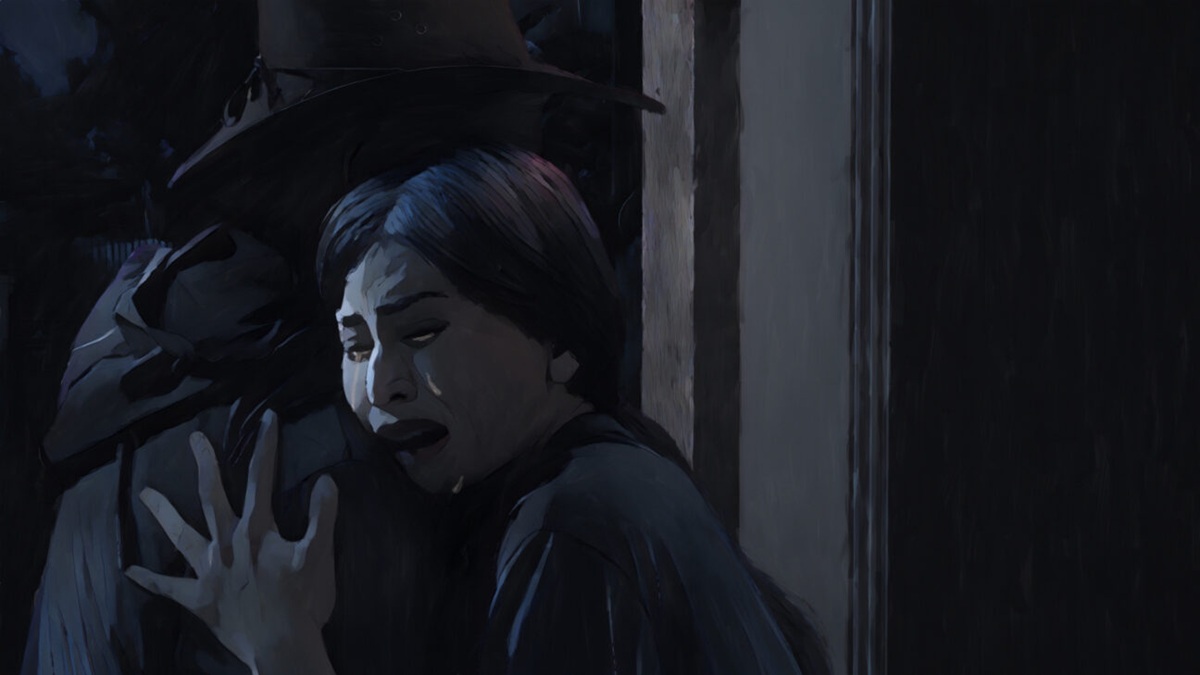
De Castro has always had expressive eyes, but Papa uses that quality with unusual precision here. Even filtered through animation, her stare retains the heaviness of lived pain. There are scenes where the film moves close to psychological horror, not in a genre sense, but in the way grief turns perception unstable. Nenen is not merely recounting the past; she is being pulled back into it, and De Castro lets us feel the exhaustion of someone who has told the story before and knows she will have to keep telling it, because the alternative is disappearance.
The Violence After the Violence
That, more than the massacre itself, is the film’s devastating argument. The killing did not end on November 23, 2009. It continued in paperwork, in delays, in missing remains, and in the bureaucratic language that can deny a family the most basic acknowledgment. “58th” understands that violence is not only the gunshot or the grave. It is also the blank space where a name should be.
That said, there are moments when Papa’s approach strains under the size of the material. A few passages lean hard into atmosphere and emotional emphasis, when the facts and testimony are already almost unbearable. The score by Arvy Dimaculangan, effective in many stretches, occasionally presses on feelings the film has already earned. The Zoom framing device, while useful, can also make the film’s outsider position a little too explicit. We understand why Papa needs an anchor, but we do not always need the anchor pointed out to us.
These are not fatal flaws, however. They are pressure marks from a filmmaker trying to do several difficult things at once: honor a family’s grief, document a national crime, dramatize memory, resist erasure, and make an animated documentary that does not feel like a formal exercise. If the film sometimes reaches too visibly for emotional shape, it may be because the story itself resists shape. How does one give form to an absence? How does one make a missing body felt without turning that absence into a metaphor so elegant it becomes indecent?
The answer, for Papa, is persistence. He keeps returning to Bebot, to Nenen, and to the gap between what the family knows and what the record has yet to fully recognize. By the end, “58th” becomes less a retelling of the Maguindanao massacre than a challenge to the country’s preferred mode of survival: forgetting just enough to function, forgiving just enough to avoid accountability, and shrugging just enough to let old monsters return as public servants, commentators, allies, or respectable men.
A Country That Learned to Look Away
That makes the film feel painfully current. Philippine journalism today is not only threatened by bullets, though that threat has never disappeared. It is also besieged by disinformation, social media algorithms, paid narratives, influencers cosplaying as truth-tellers, and content creators who have learned that outrage, distortion, and soft propaganda can be monetized more easily than reporting. In that climate, a film about murdered journalists cannot belong only to the past. It arrives as a warning from the recent dead.
There has been a visible strain in contemporary Philippine cinema lately, a set of films taking on the burden of national memory with varying degrees of anger, sorrow, and craft: “Lost Sabungeros,” “Alipato at Muog,” “Bloom Where You Are Planted,” among others. These films do not merely entertain, though some of them do that too. They ask audiences to look at the machinery around them. They ask what we have allowed, what we have excused, what we have renamed for convenience.
“58th” belongs to that company, and it may be one of the more assured examples because Papa does not treat political urgency as a substitute for filmmaking. He knows the image still matters. So does rhythm, performance, and the moral weight of choosing where to place the camera, even when the camera has been replaced by animation.
‘58th’: A Call to Action Against Forgetting
Through it all, I do wonder if Papa is nearing some kind of shift. He has done remarkable things with animation, from “Manang Biring” to “Iti Mapukpukaw” to the short “The Next 24 Hours.” It has become the language most associated with him, and fairly so. But “58th” also suggests a filmmaker pushing against the borders of that language. Its strongest passages often come from the tension between animated reconstruction and raw record, between performance and documentation, between what can be drawn and what must be shown as it was. Whether that leads him further into hybrid forms or eventually into live action, I hope he keeps testing himself. His curiosity has become one of the more exciting things in Philippine cinema as of late.
For now, “58th” stands as his most politically urgent film and perhaps his most difficult to process. It is not an easy watch, nor should it be. It asks us to sit with a family’s grief and a country’s shame, and it asks us to consider how easily a person can be erased when the systems built to record the truth fail or refuse to do so. More importantly, it also asks us to remember that justice is not complete just because some names have been read in court, some sentences have been handed down, and some anniversaries have been marked by speeches.
There is a moment in the film when Bebot’s absence stops feeling like absence and begins to feel like accusation. That is where “58th” finds its force. It does not let the missing remain missing. Instead, it says his name. It counts him. And it insists that a life is not made less real because a body was never found.
In a country so skilled at moving on from the very things that should have changed it, that insistence matters. More than that, it hurts.

Carl Joseph Papa’s “58th” premiered on January 31, 2026 at the International Film Festival Rotterdam. The film will screen at the Annecy International Animation Film Festival this June 2026. Follow us for more coverage.

