



Modern horror remakes are inevitable. Hollywood turns to the past to recycle familiar properties in hopes of audience recognition and financial returns. The great majority of these remakes are rehashes of the originals, with higher production costs and a crisp, modern look. They contain so few changes of the ideas, scenes, and concepts that make you question their existence. In the 2000s, studios set out to produce remakes of the horror titans of the ’70s and ’80s, such as “Texas Chainsaw Massacre,” “Nightmare on Elm Street,” and “Friday the 13th,” amongst others. They did so with “the chance” of reinvigorating new life to these projects, now twenty or thirty years off their original release. Audiences who didn’t have the chance to see them in their heyday could experience something similar. But not quite.
The focus was always on leveraging the property with nostalgia to ensure financial safety. That means that creative risks are minimized and stylistic individuality is flattened. The raw, unsettling edge that defined them is gone. It showcases a conceptualization that misunderstands the respective project’s ideas and adds more gore and violence. From projects with meat and brains to just having the former without earning it. However, there is always a chance that a modern horror remake validates its existence and adds to the conversation the original had. For example, Luca Guadagnino’s “Suspiria” (one of my favorite films of all time), Leigh Whannell’s “The Invisible Man”, and Arkasha Stevenson’s “The First Omen.” Another film we can add to that list is Daniel Goldhaber’s smart and crafty reinterpretation of the cult mondo-horror film “Faces of Death”.
Creative Risks are Minimized in Most Modern Horror Remakes
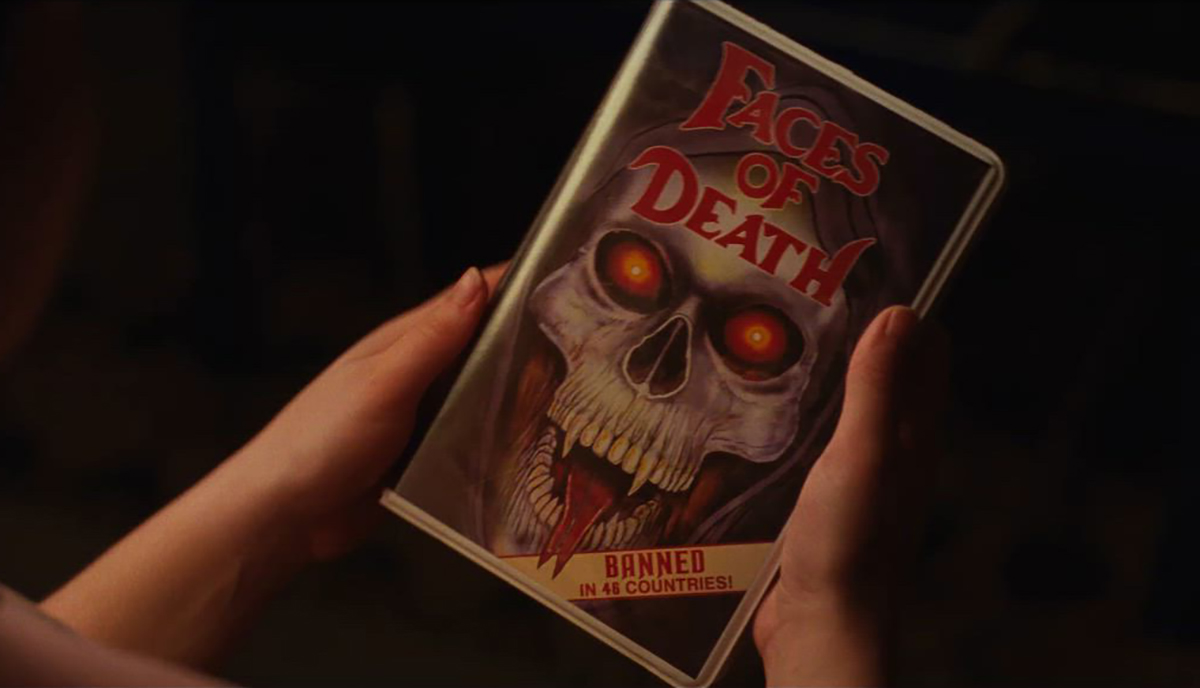
In 1978, a film titled “Faces of Death” was released and caused a stir. Although critics back in the day panned the picture, it was a Box Office success and immediately garnered a cult following. The reason why “Faces of Death” made a lot of money is because of morbid curiosity. The “documentary” centers around a pathologist named Francis B. Gröss (Michael Carr), who presents us with footage of gruesome, bloody ways of dying. Gröss tells the viewer that what lies between life and death is fascinating. This is revealed by a recurring dream that he can’t shake. This is why he has spent nearly all of his life researching the act of dying.
There is footage of a man being killed by an alligator, from an electric chair, the firing squad, and many others, meant to shock the audience. What made “Faces of Death” infamous was that people believed all of the murders appearing in the film were real. It caused uproar worldwide with bans in around forty-eight countries. Some portions of the film included pre-existing videos of real deaths. But a great part of it was faked in a studio. The public interest in “Faces of Death” is similar to that of “Cannibal Holocaust.” In that 1980 exploitation picture, an anthropologist and a rescue team head to the Amazon rainforest to locate a filmmaking crew that has gone missing while filming a documentary on the local cannibal tribes inhabiting the land.
A Smart Reinvention of a Cult Mondo Horror Film
The promotion revolved around the doubt on whether it was a “snuff” film or real. It led to both intrigue and dismissal. As you may expect, the happenings in “Cannibal Holocaust” aren’t real, just made to look real enough to cause disbelief. The cast and crew didn’t weren’t available for interviews, press, or any other appearance. It led folks to believe that those appearing on-screen had actually died during filming. Director Ruggero Deodato went to court over the film’s realism. He faced murder charges until he made the cast appear in court to save his case. “Faces of Death” didn’t go to those extremes, but made a lasting impact for many years.
Daniel Goldhaber doesn’t go the documentary or exploitation film route to “remake” the 1978 film. Instead, he makes a narrative that alludes to the original while commenting on the content people consume today. The 2026 rendition follows Margot (Barbie Ferreira), who works at the Kino offices, monitoring the content uploaded to the platform. She reviews what gets up, taken down, censored, or flagged. Her job is a hard one to endure, as Margot sits all day reviewing short videos, most of which are stirring. And all of that you saw can’t leave the office doors; the baggage is left at clock out. But her past perturbs her. An incident that caused her sister’s death left her scarred for life due to dumb decisions while recreating trends for engagement on social media.
Certain videos during her paid doom-scrolling trigger that tragic memory. Since the incident was recorded and uploaded to the platform, millions of people saw it and laughed at her endless, nightmarish pain. That’s why she distanced herself from the world. Her goal at Kino is to keep the platform safe from content that might induce others to make dumb decisions just like her. During one of her shifts, Margot comes across an odd video. A man is decapitated in a makeshift guillotine operated by mannequins. At first, she believes it is fake, so he allows it to be published. However, when a second comes around, another man is being executed via electric chair, she begins to get worried that the incidents in these videos are real.
Goldhaber Brings New Life to Previously Uncovered Material
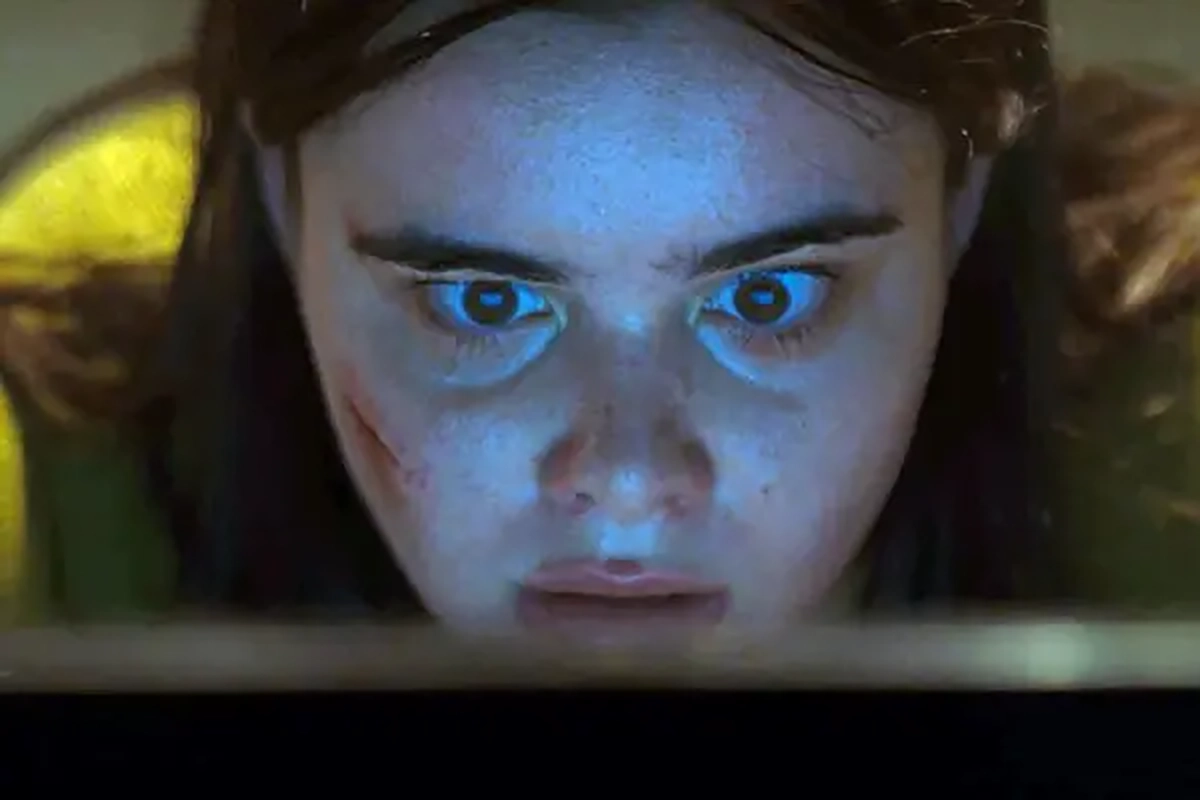
Margot asks her manager (Jermaine Fowler) for help, but he says to leave it up and “give the people what they want.” Yet Margot’s gut tells her to seek more answers. Through a Reddit thread about real vs. fake snuff films, she investigates these videos to see their true nature. What she uncovers is a killer, Arthur Spevak (Dacre Montgomery), on the loose, who is using the film “Faces of Death” as inspiration for his murders. Daniel Goldhaber intelligently plays with the original material to make way for his version of “Faces of Death.” We get subtext to scenes that previously had none or were intended to shock the audience. Each kill and murder adds to the film’s weight, each an extension of its themes rather than a provocation.
Goldhaber elaborates on censorship, desensitization, the obsession with technology, and the content we consume daily. It forces the audience to confront their “passive” consumption of disturbing imagery. In doing so, the film blurs the line between observer and participant, suggesting that indifference is a form of complicity. Of course, “Faces of Death” exaggerates and occasionally satirizes the constant consumption of short-form media through biting quips and blood kills. But its main point remains elaborate and fully-fledged. In some ways, it reminds me of David Cronenberg’s “Videodrome.” In the film, Cronenberg posits that media creates a reality more potent than physical reality, and how violent and sexual content becomes “the norm” — leading to a higher demand for more media of that kind and tenure.
Like the Canadian filmmaker, Goldhaber focuses on the psychological effects of prolonged exposure to violent content, using discomfort as interrogation. He wants us to question our own relationship with the images and videos we consume. Where Goldhaber falters is in the ending. I felt he rushed the climax to a more precise point, which led to a weaker conclusion ending with a quick joke that isn’t quite funny. However, its message and impact are not ruined by this hasty decision. “Faces of Death” is a great example of how to “remake” a horror film without relying on recreating or a copy-and-paste mechanism. A new life is given not only to the original picture but also to its notions. At a time when many horror remakes are made and mostly fail to sell their existence, Daniel Goldhaber manages to do so unexpectedly with a cult film.


