



There’s something faintly absurd about how “Mother Mary” begins, or at least how it settles into itself. A global pop icon, mid-crisis, shows up unannounced at the estate of a fashion designer she hasn’t spoken to in years and says, almost sheepishly: I need a dress.
It sounds like the setup to a joke. It almost plays like one, too, in those first few minutes when the film hasn’t quite revealed how seriously it takes itself. But David Lowery doesn’t rush past that absurdity. He lets it simmer. Before long, the request stops feeling trivial and starts to feel desperate. A dress becomes something else. A second skin. A confession. Or a metaphor for possession. Maybe even a way out.
She Just Wants a New Dress (and Maybe Everything Attached to It)
That slow shift is where I found myself leaning in.
The broad strokes are simple enough. Mother Mary (Anne Hathaway), a pop superstar whose fame has tipped into something close to religious devotion, suffers a breakdown backstage in the middle of a concert tour. The film provides clues early on to a previous event surrounding the singer, and the next thing we see is her making a detour to the remote home of Sam Anselm (Michaela Coel), the designer who helped build her image and whom she abandoned at the height of her success. The break wasn’t just professional. The way they talk to each other makes that clear: there’s history here that hasn’t been named outright but hangs over everything.
What follows is less a reconciliation than a standoff. Sam agrees to make the dress, but only on her terms. That means forcing Mother Mary to confront what she left behind. Their conversations don’t move in straight lines. They circle, double back, press on wounds, then pretend they didn’t. It’s tense in a quiet way. You feel it in the pauses, in the way neither of them seems willing to give the other the satisfaction of clarity.
A Slow Burn of Two People and One Unfinished Conversation
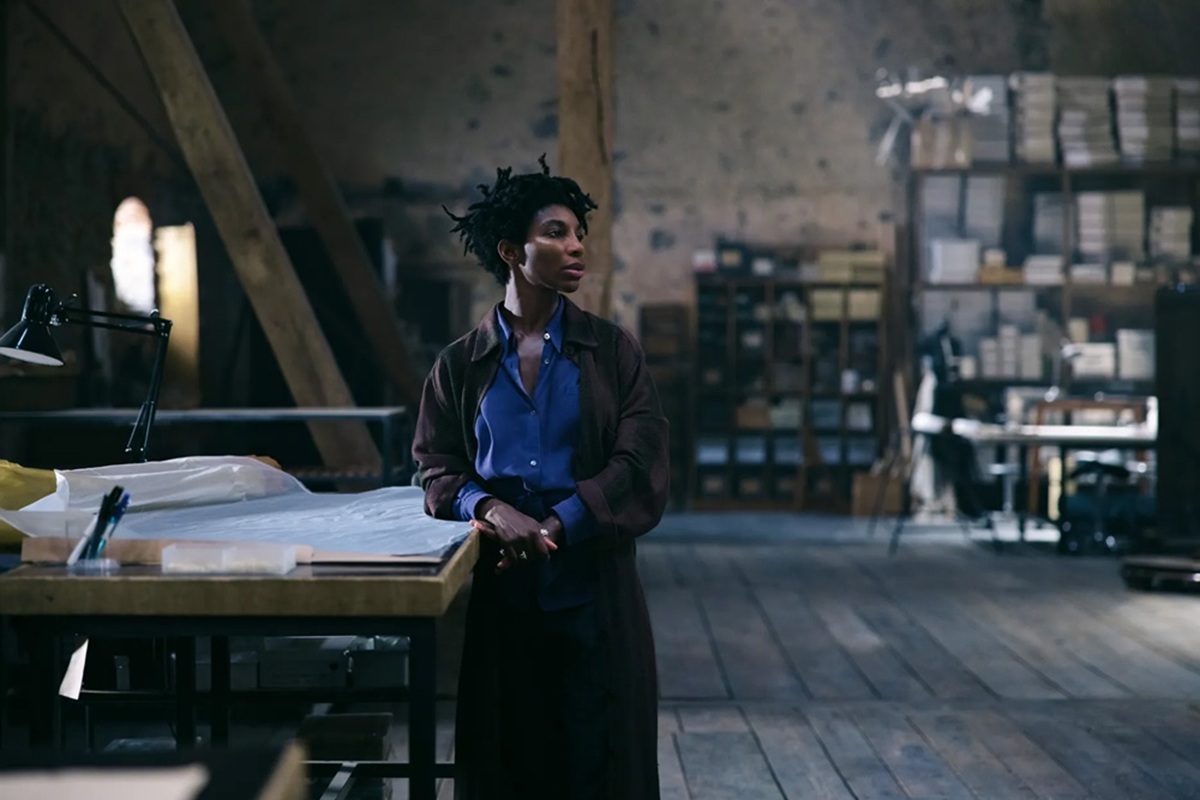
Those scenes, set mostly inside Sam’s cavernous, drafty workspace, are the film at its most compelling. Strip away the metaphors, or at least hold them at a distance, and what you have are two people trying to figure out where the work ends and they begin. Sam talks about design as if she’s shaping something internal, something fragile. Mother Mary talks about her songs the same way. They’re not just collaborators who fell out. They’re artists who once made something together and then lost whatever it was that made that possible.
You can feel how much that loss has settled into Sam. Coel plays her with an icy resolve that maintains control, or at least the facade of one. There’s anger there, yes, but also something quieter, almost mournful. She isn’t just dealing with a difficult client returning for a favor. She’s dealing with someone who took a piece of her and walked away with it. The film doesn’t spell that out, but it doesn’t need to. Coel lets it sit in the way she looks at Hathaway, in the way she holds back.
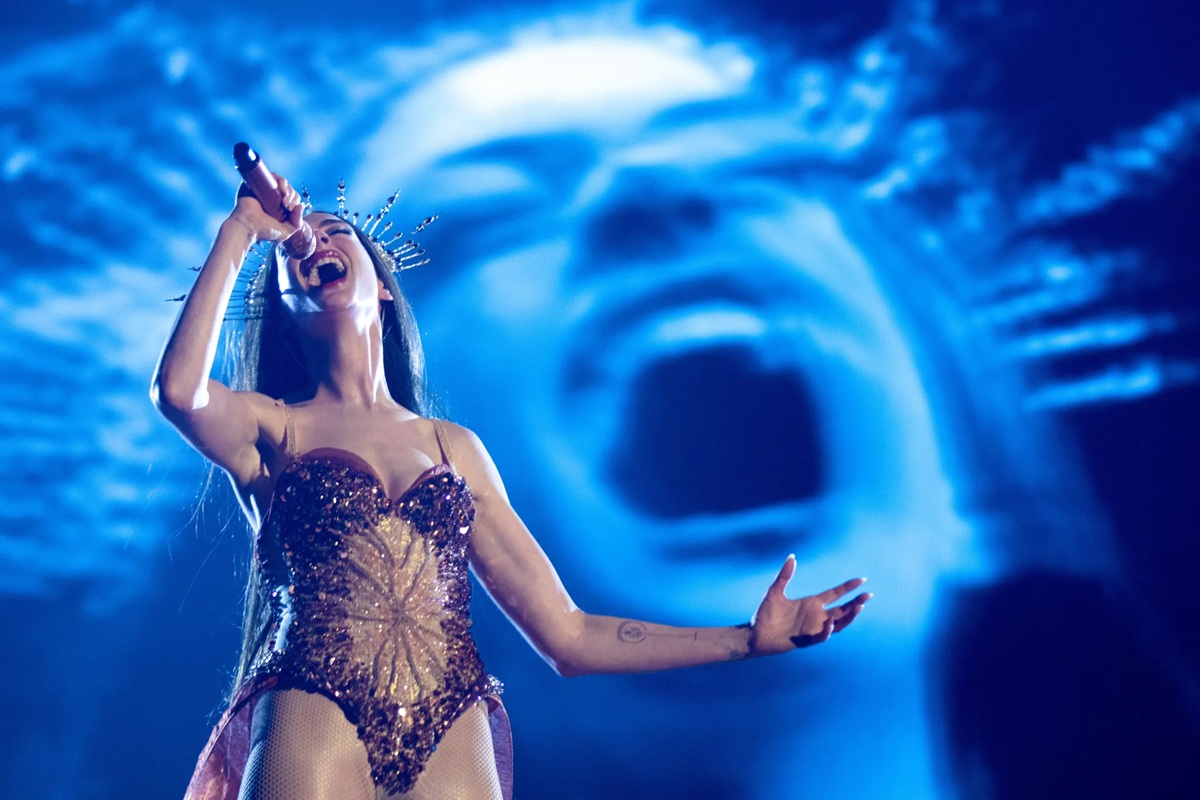
Hathaway, for her part, goes big. Sometimes it works. Sometimes you can see the effort. There are moments where her delivery leans into a kind of breathy intensity that feels a little studied, as if she’s trying to signal how much is going on underneath. Then she pivots into something physical, most memorably in an Adjani-coded sequence where she runs through her choreography without music, and suddenly it clicks. The performance stops feeling like interpretation and starts feeling like release. It’s messy, a little unhinged, and far more convincing than the quieter, more mannered beats.
Somewhere Between Control and Collapse
The dynamic between them carries the film for a long stretch. It’s not about who’s right or wrong. It’s about who gets to define what they were to each other, and whether that definition still holds. There’s a push and pull there that feels alive. At times even a little playful, in a cruel way.
It also helps to have a frame of reference for what Lowery seems to be circling here. At a certain point, the film started to feel like it was pulling from two very different places: the tightly wound creator–muse dynamic of “Phantom Thread” and the self-destructive unraveling of performance we’ve seen in “Black Swan.” Not in a derivative way, but in how it understands the act of creation as something intimate and, at times, punishing. One builds through control, the other through collapse. “Mother Mary” tries to hold both impulses at once.
You see it in how Sam approaches design as something almost surgical, precise, exacting, while Mother Mary throws herself into performance like it might tear something open. The film keeps toggling between those two modes. Discipline versus surrender. Craft versus obsession. It doesn’t always reconcile them, but that tension gives the film a shape.
When It Starts to Drift
Then the film begins to open up, and not always to its benefit.
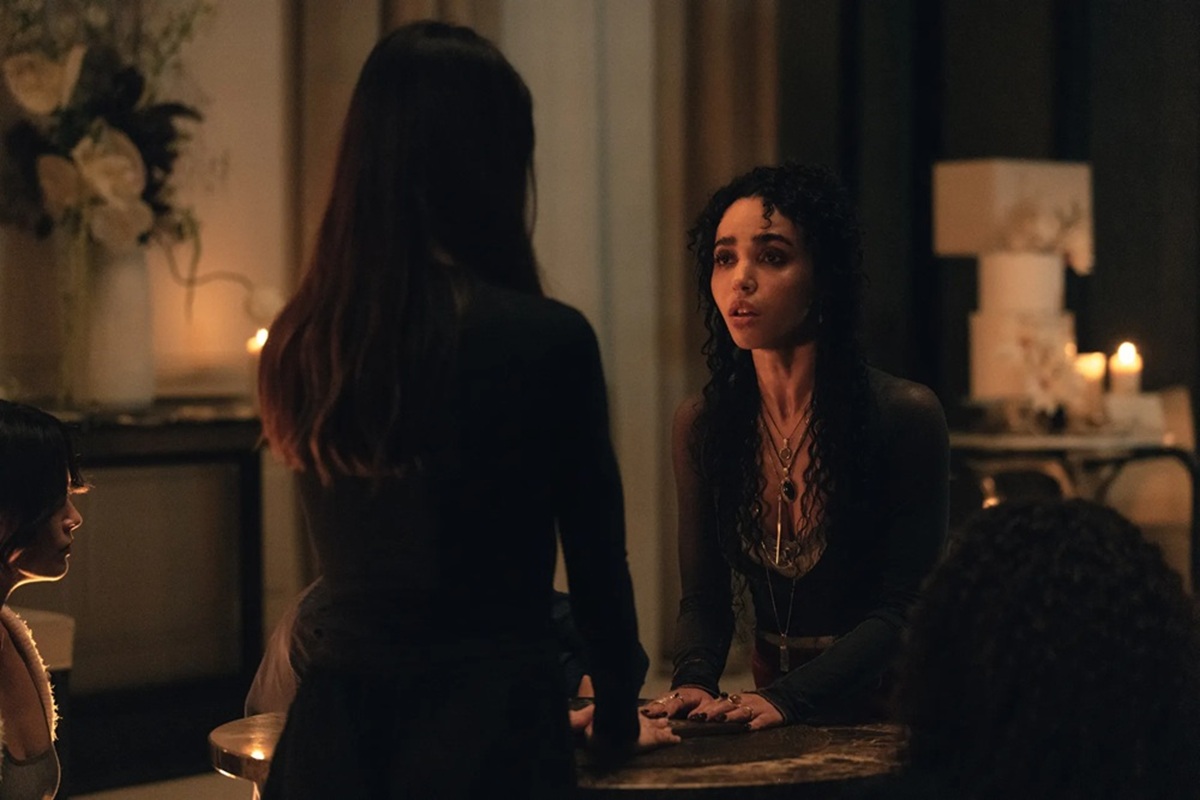
Midway, Lowery introduces a supernatural thread. Following a séance (FKA twigs shines in a small but critical role), we are introduced to an entity: a shared vision of a red dress by both Mother Mary and Sam that moves on its own, appears unbidden, and threatens to consume. It’s an image that sticks. It’s also one the film keeps returning to, layering meaning onto it until it starts to strain. Is it a manifestation of their bond? A shared guilt? A creative force they didn’t fully understand when they first tapped into it? The film gestures in all those directions without settling on any one of them.
Frankly, I don’t mind such active avoidance. There’s something to be said for letting an image do the work, for not pinning it down too quickly. But as the film moves toward its final stretch—séances, self-inflicted wounds, the sense that something has to be forced out before either of them can move forward—it starts to feel like the film is chasing a feeling it hasn’t quite earned. The metaphors pile up. The conversations get heavier. The intimacy that made the earlier scenes so gripping begins to slip.
It’s a strange kind of exhaustion. And while it isn’t one of boredom, it nonetheless feels more like the film is asking you to keep up even as it becomes less certain of where it’s going.
Part of that comes from how tightly wound the two characters remain. Neither really lets their guard down, not in a way that feels fully lived-in. You can read that as intentional. They’re performers, used to controlling how much of themselves they reveal. But it also means that by the time the film reaches for something like catharsis, it lands a little short. You understand what it’s reaching for. You just don’t quite feel it.
Back to the Dress
Still, I kept coming back to that central idea: the dress.
For Sam, it’s creation. Not in the abstract sense, but something closer to identity. When Mother Mary left her, it wasn’t just a professional setback. It felt like the thing she had built, this shared language between designer and performer, was taken from her. Making a dress isn’t just about fabric or silhouette. It’s about shaping how someone exists in the world.
For Mother Mary, the stakes aren’t that different. Her songs, her image, the way she presents herself on stage, they all feel like extensions of something internal, something she doesn’t seem to have a firm grip on anymore. When she asks for a dress that “feels like me,” it lands less like a request and more like a question she doesn’t know how to answer.
That overlap is where the film feels most alive. The idea that both of them lost something when they lost each other. That the bond between creator and muse, if that’s even the right way to frame it, doesn’t dissolve cleanly. It persists. It mutates. And it finds ways to come back.
‘Mother Mary’, and Pop as Religion
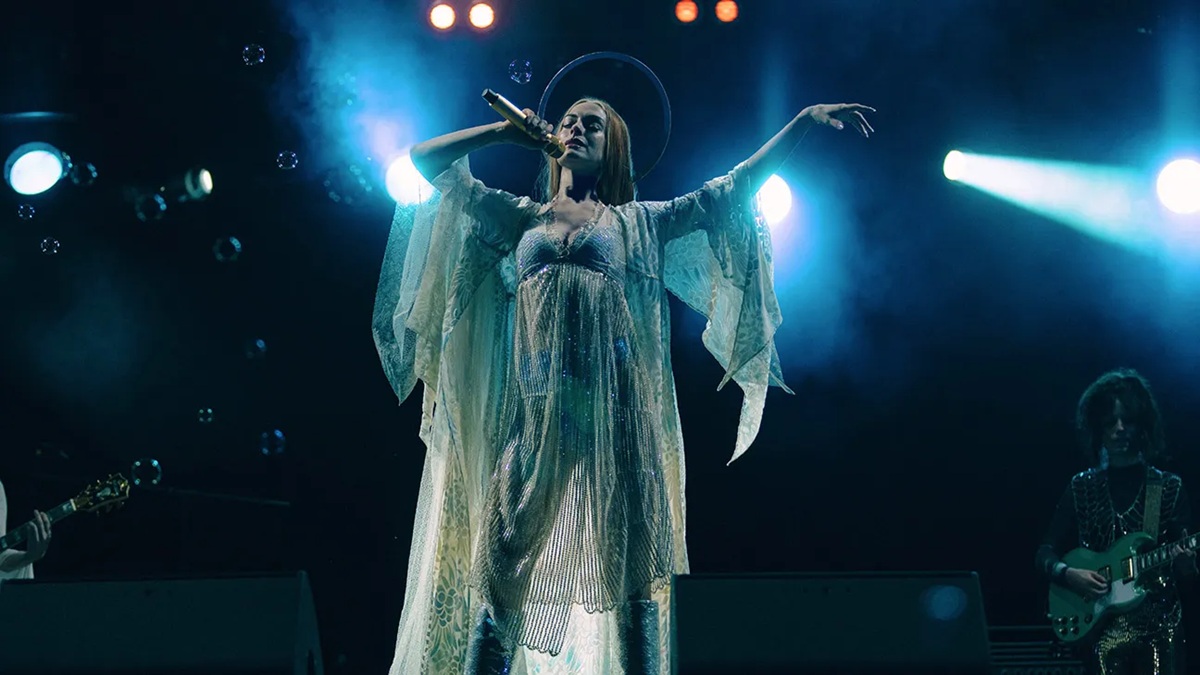
Lowery dresses all of this in a kind of gothic pop sensibility. The concert sequences, shot with a slick, almost overwhelming scale, nod to the spectacle of modern pop stardom, from the “Reputation” and “Renaissance” world tours to Lady Gaga in Copacabana.
Here, however, that spectacle is cranked up to eleven, to one that turns performers into something close to deities. The halo imagery, the name “Mother Mary,” the way fans are framed resembling an overzealous congregation—the symbolism isn’t subtle, but it doesn’t need to be. The film isn’t interested in subtlety there; instead, it’s interested in how easily admiration turns into worship.
Daniel Hart’s score leans into that atmosphere, giving the film a steady undercurrent that holds even when the narrative starts to drift. The songs themselves, handled by Jack Antonoff, Charli XCX, and FKA twigs, are more hit-and-miss. Some land, while others feel like they were designed to sound like hits without ever quite becoming them. There’s a sense of something polished but not entirely personal, which might be the point, though it doesn’t make them any more memorable.
Visually, the film is hard to fault. Andrew Droz Palermo and Rina Yang give it a texture that shifts depending on where you are, controlled and almost sterile in the early scenes, then gradually more fluid, more unstable. The barn where most of the film unfolds becomes its own version of stage, a place where past and present blur together.
But for all the visual ambition, I kept thinking about how much stronger the film felt when it held back. When it trusted the two actors in a room, working through something messy and unresolved. There’s a stretch in the middle where it feels like that might be enough. Where the film doesn’t need the added weight of ghosts and rituals to get where it’s going.
It doesn’t stay there.
Caught Somewhere in Between
That push and pull, between restraint and excess, intimacy and abstraction, is what ultimately defines “Mother Mary” for me. I admired it more than I fully connected with it. There are moments that pack an emotional punch. A look. A line. That silent dance, bodies hitting the floor without the cushion of music. But there are also stretches where it feels like the film is circling its own ideas, unsure of how to land them.
By the end, when that final image of the dress arrives, elegant, striking, unmistakably Sam’s, you get the sense that something has shifted, even if the film hasn’t quite articulated how. Maybe that’s enough. Maybe it isn’t. As for me, I walked out somewhere in between.

David Lowery’s “Mother Mary” is scheduled to be released in the United States by A24 on April 17, 2026, before expanding nationwide on April 24. Follow us for more coverage.


1 Comment
interesting… this made me excited to see this…