


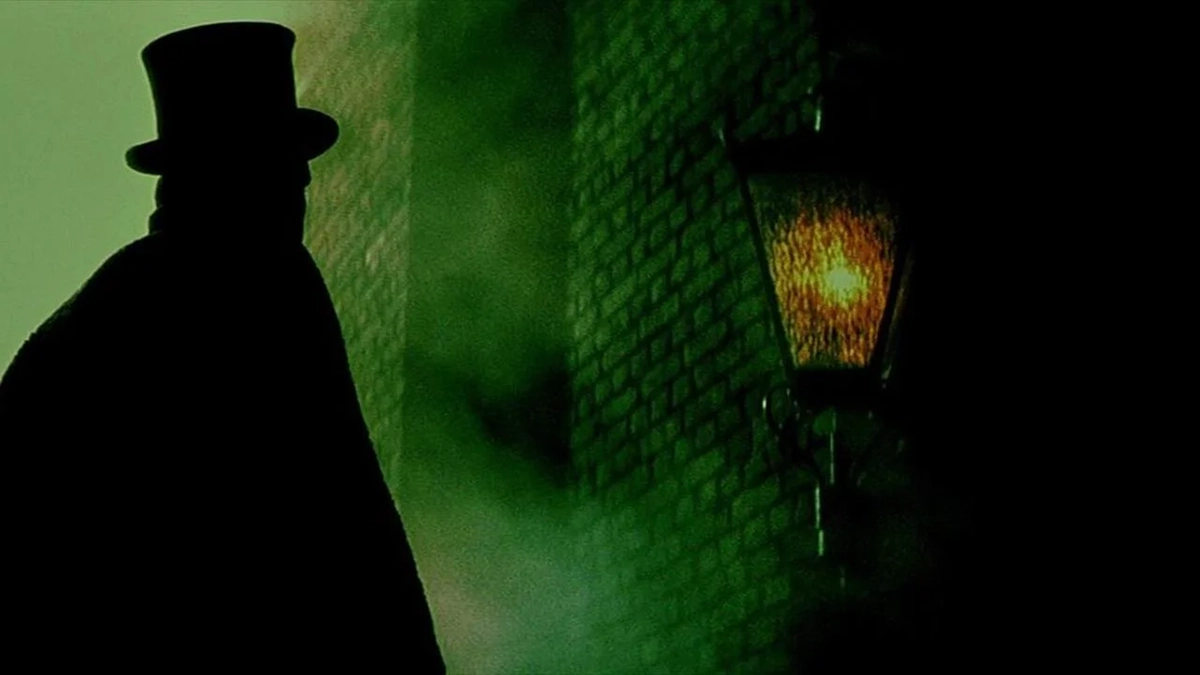
Given the notoriety and graphic nature of the crimes of Jack the Ripper, “From Hell’s” brilliant achievement is to give it an almost pedestrian thesis. Directed by the Hughes Brothers—and starting Johnny Depp—the film has that late ‘90s feel to it, though it was actually from 2001, along with “The Ninth Gate” vibes and “Hannibal” themes mixed in. The film is actually an interpretation, I feel, by the Hughes Brothers and a trio of writers as to who or what Jack the Ripper actually was. And while history points in a different direction, its ultimate reveal makes sense—or at least to the cynical side of me.
“From Hell” is a period piece, taking place in London in 1888, the same time the Ripper murders occurred. In fact, the victims are mostly all the same: Mary Ann Nichols, Annie Chapman, Elizabeth Stride, Catherine Eddowes, and Mary Jane Kelly—all murdered by not the first, but the hitherto most notorious serial killer. And the film’s treatment is serious, yet with some distance from the material. This was 2001—only three years before “Saw”—yet torture porn was not yet on the menu. There’s some graphic-ness toward the film’s end (slaughter is the word concerning Ripper’s last victim), yet cinematographer Peter Deming (“The Menu” and “Mulholland Drive”) holds smartly back. He keeps the enigma on the crime scenes and the palpable fear that ran through London’s White Chapel district rather than on blood and guts.
A Film Ahead of its Time
Playing inspector Inspector Frederick Abberline, Depp is in good form here. He’s deferential and kind and a force against the misogyny and downward glances at London’s prostitutes (here called “unfortunates”). There’s clear “Les Miserables” vibes in the way they are treated, to the point where a well-meaning officer—discussing the murder of the first—comments how he loses no sleep over a dead ‘bang-tail’ if it were not for the way in which she was done. Oddly, the tabloids never mention Jack the Ripper by name in this movie. But ripper he is. He slices first the victim’s throat and then removes organs—including private organs—in a reckless display of controlled abandon. Most of the police—including the higher ups—are quick to move on. But Abberline persists. He understands the killer’s motives. He’s also a hopeless opium addict, seeing visions of the deaths during drug trips. But his intelligence is above all those around him, as is his empathy.
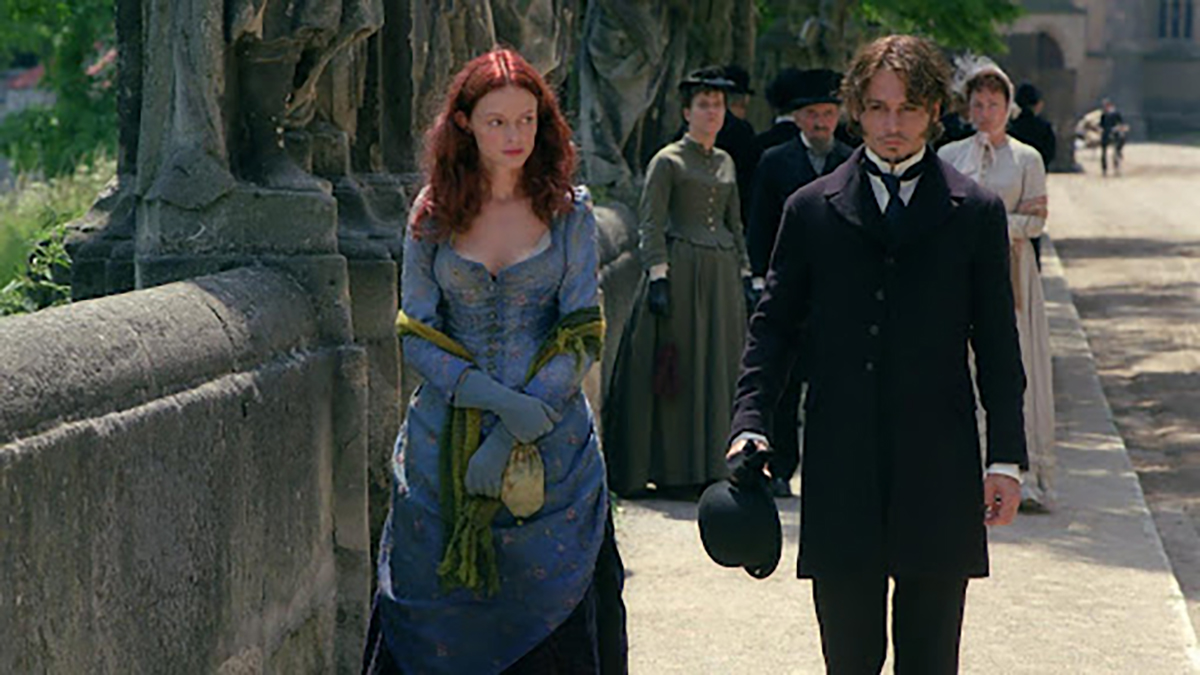
For 2001, I was interested in the way “From Hell” paints the lives of the prostitutes of White Chapel as not one-sided, desperate cases, but empathetic, struggling street hustlers. Mary Kelley, the film’s “final girl” and heroine, is played with the usual spunk and charm by Heather Graham, so popular during this time period. She also develops a love interest with Abberline, underlined with the notion that such a thing is improbable. One scene as the two negotiate their feelings was stronger than I’d seen in films of the time, and Depp—still two years away from “Pirates of the Caribbean”—plays an endearing everyman. He has no notes of the method performances that lined “Edward Scissorhands” or “Fear and Loathing in Las Vegas.” He’s likable and makes earnest commentary on the sad and dismissive London society.
Depp is Good; as is the Supporting Cast
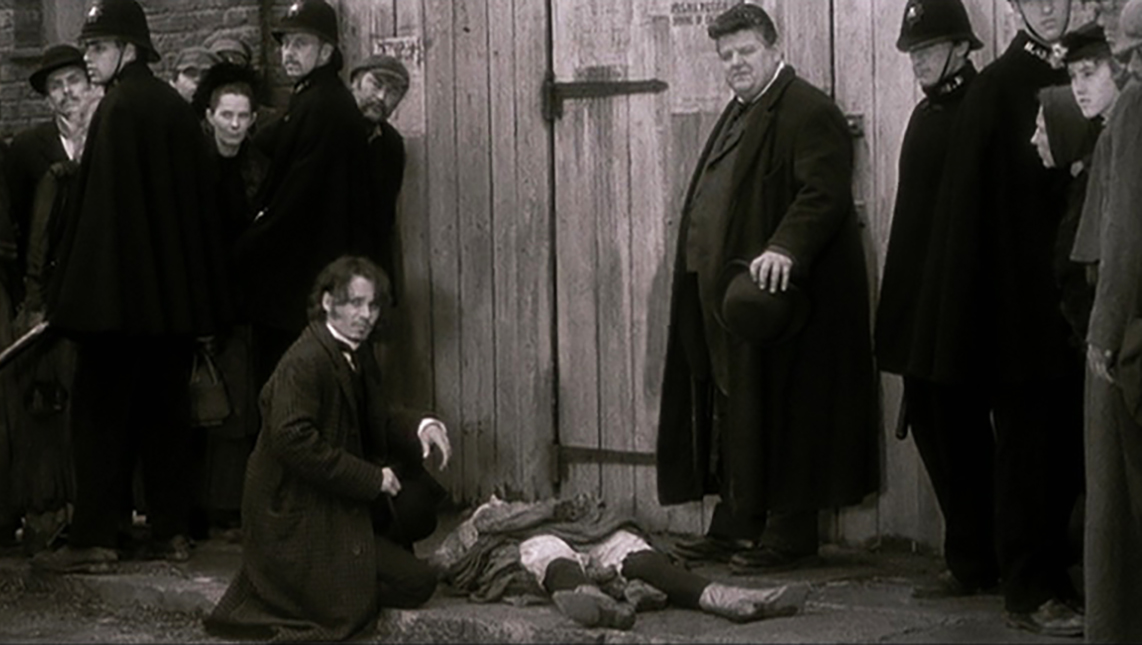
The ancillary actors are all decent, and my favorites here were Ian Holm—playing Sir William Gull—a confidant to the Queen who hides more than he shows. The ‘whores’ in the film—the Ripper’s victims—are played by Katrin Cartlidge, Susan Lynch, Lesley Sharp, Annabelle Apsion, and Heather Graham—with an actress, Estelle Skornik, thrown in for what I feel is a red herring. They are all apt and make us believe they are a) in this profession together and b) fear for their lives on a daily basis. They’re threatened by pimps and customers in equal measure. Additionally, a sympathetic Sergeant (played affably by Robbie Coltrane), adds some nice scenes throughout.
Adding to this, the film uses its $35M budget well, not on deaths and gore but on the recreation of 1888 London. Smartly, it’s not totally rendered; we see dark corners of the White Chapel district at night, the inside of royal palaces, and street corners and taverns where the film’s victims staged their business. Deming’s camera is not a lingering one as a rule, but it can when it needs to, mostly during intimidation and threats towards the film’s “unfortunates.” Despite it all, “From Hell” is making wide-sweeping takedowns of misogyny and classism throughout. I especially liked Depp’s cold stares when a fellow officer dresses down one of the women in front of him. The film is subtle, but yet unmistakable. This, on top of the fear, murder, and intimidation the women feel felt like it’s own kind of small victory.
Guessing at The Ripper’s Identity
In fairness, “From Hell” isn’t perfect, and it’s closing act is too much secret society, rituals, and showing instead of telling. One scene towards the end with Ian Holm (spoiling nothing here) was unnecessary, though it does parallel what has happened to one of the victims’s friends early in the film, which, inadvertently, also makes an indictment of mental health treatment to sufferers from this time period. But despite it all, I liked the plot—and conclusion—“From Hell” offers. We like to think Jack the Ripper was a deranged sociopathy… and maybe he was. But maybe the reason writers Alan Moore, Eddie Campbell, and Terry Hayes come up with is more in line with the truth. If you haven’t seen the film, I won’t spoil it here. But I’m just cynical enough to elevate the film—despite its somber and depressing closing shots—due to the astuteness it offers. All-in-all a good film and one to whet the appetite this “Halfway to Halloween.”


3 Comments
This and Sleepy Hollow make for a spooky double feature. Also just realising between those two, Sweeney Todd, the first Nightmare of Elm Street, Dark Shadows, Depp had a rather brief run as a scream king.
I agree. I loved him back then before he went full Jack Sparrow. He was also great in The Astronaut’s Wife and the Ninth Gate.
Growing up I was a big Depp fangirl (my email address is the biggest giveaway probably), watched almost everything he was in. He can be OTT but given a good director who can rein him in especially, he shines. His most recent performance I loved was in Minamata (2020). Very subtle, no melodrama. Sadly the movie itself was overshadowed by his real-life courtroom drama at the time. Will check out those two movies u mentioned.