


There are few things that pull me in faster than films that engage, head-on, with culture, history, and the ways those in power have tried to rewrite both. As someone who finds Indigenous narratives not just urgent but necessary, I must say Josephine Stewart-Te Whiu’s debut feature “We Were Dangerous” piqued my interest early. Set in 1950s Aotearoa, it’s a fictional story, yes; but it’s one stitched together from the real bruises of colonialism, gendered control, and cultural erasure.
Stewart-Te Whiu directs from a script by Maddie Dai, whose sharp, often subversive voice is evident throughout. Together, they attempt to pull from the past not just a record of violence, but the texture of youthful rebellion. The result is occasionally uneven, tonally jarring in parts, but never less than absorbing. At times, it feels like “The Virgin Suicides” meets “The Shawshank Redemption”—a dreamlike portrait of confinement and girlhood, framed by an aching desire for escape.
A New Zealand Reformatory, and Three Girls Poised for Trouble
“We Were Dangerous” opens with a voiceover that might have come straight from the mouth of a colonial bureaucrat, sanitized, maternalistic, and resolutely pro-Empire. The narrator, the Matron (Rima Te Wiata), delivers lines about salvation through Christ and proper English grooming with an almost serene authority, as though colonization were the best thing to ever happen to the Māori. It isn’t exactly satire, though it exudes an acute awareness of its own absurdity.
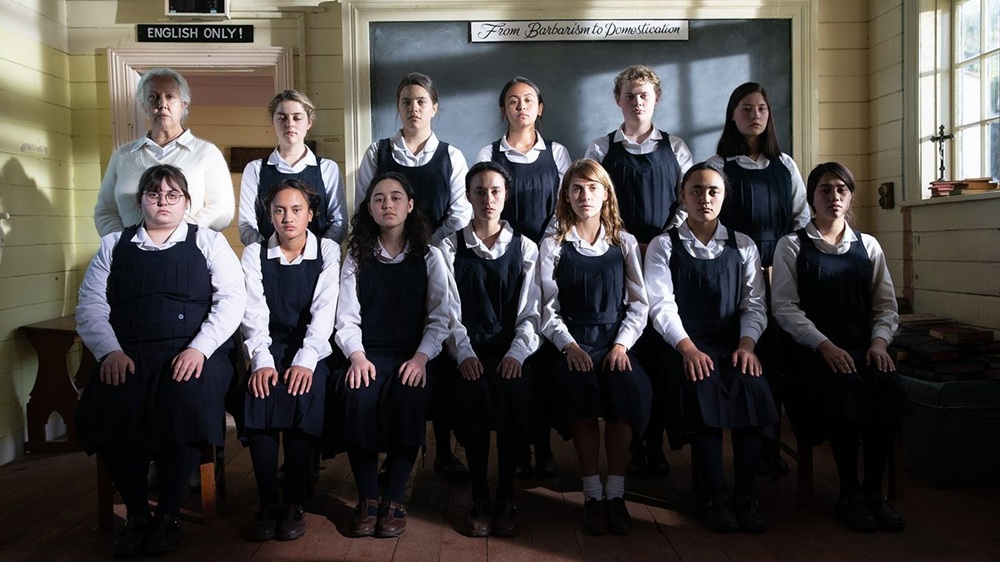
Just a couple of minutes in, we see the school she runs, the Te Motu School for Incorrigible and Delinquent Girls, introduced like a reeducation camp dressed up in lace curtains and prayer beads. Its mission: Christianize, civilize, assimilate. And if those words don’t send a chill down your spine, perhaps the Matron’s suggestion that these girls are to be “reprogrammed” will.
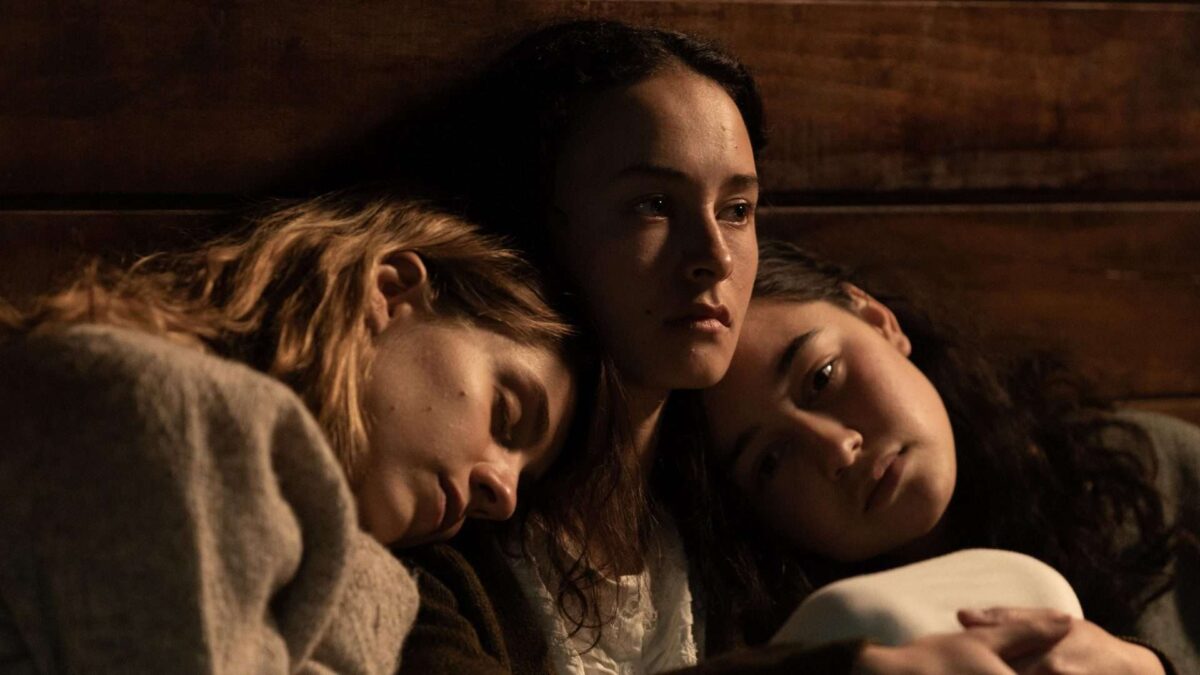
We quickly meet Nellie (Erana James), Daisy (Manaia Hall), and later on Lou (Nathalie Morris), all branded as delinquent, with their records—criminal damage, lying to police, “immorality”—seemingly valid justifications for their stint at the school. In reality, however, the three are simply young women with ideas and feelings too unruly for 1954 New Zealand. More importantly, the film quickly scrubs those labels in favor of showing us who they are together: a cobbled-together sisterhood. Nellie is the de facto ringleader; Lou, the romantic; Daisy, the uncertain newcomer whose Indigenous identity brings with it another layer of social erasure.
Rebellion, Friendship, and a Film That Fights for Both
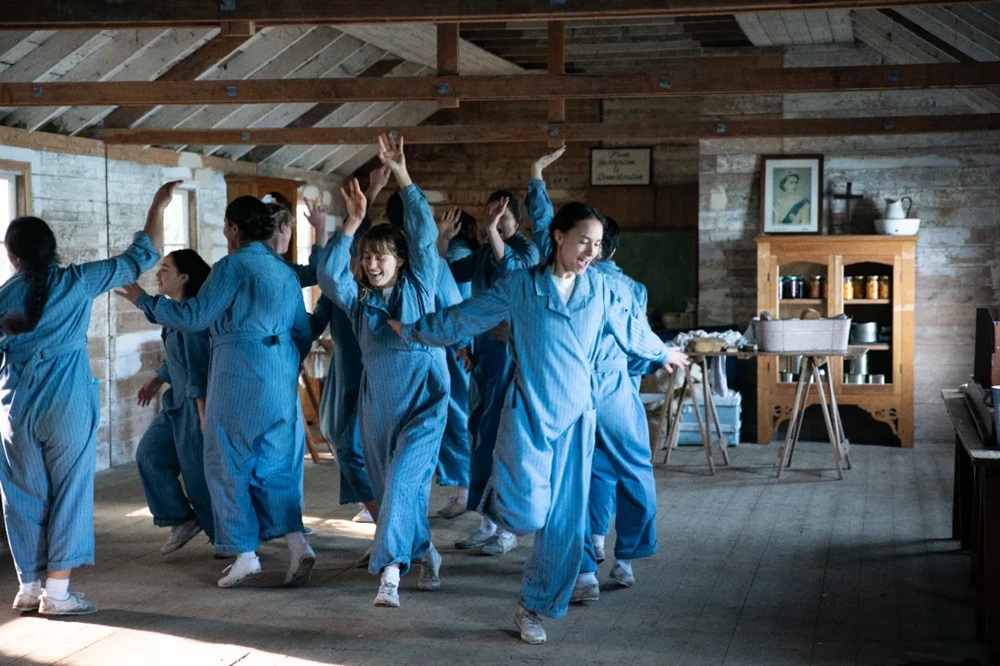
After an escape attempt, the entire school gets shipped to an isolated island once used for housing people with leprosy. In what is easily one of the film’s most galling moments, a government official quips that if the island could isolate lepers, it should be more than enough for teenage girls in heat. It’s one of those lines that sticks—not just for its grotesque dismissal, but for what it reveals about how adolescent rebellion, especially from young women, is treated: as something trivial, laughable, even contagious.
The island becomes the crucible for these girls, where survival, identity, and friendship are all up for negotiation. Nellie is brash and self-assured, Daisy more tentative and tender, and Lou enters the picture as a kind of wild card—sexually charged, emotionally raw. The chemistry between the three never feels forced; if anything, it’s the most believable element of the film. In their scenes together, Dai’s script hits its stride. The girls tease, clash, protect, and betray with the fluidity of real teenage relationships. Their solidarity feels hard-earned and necessary, a small act of rebellion in itself.
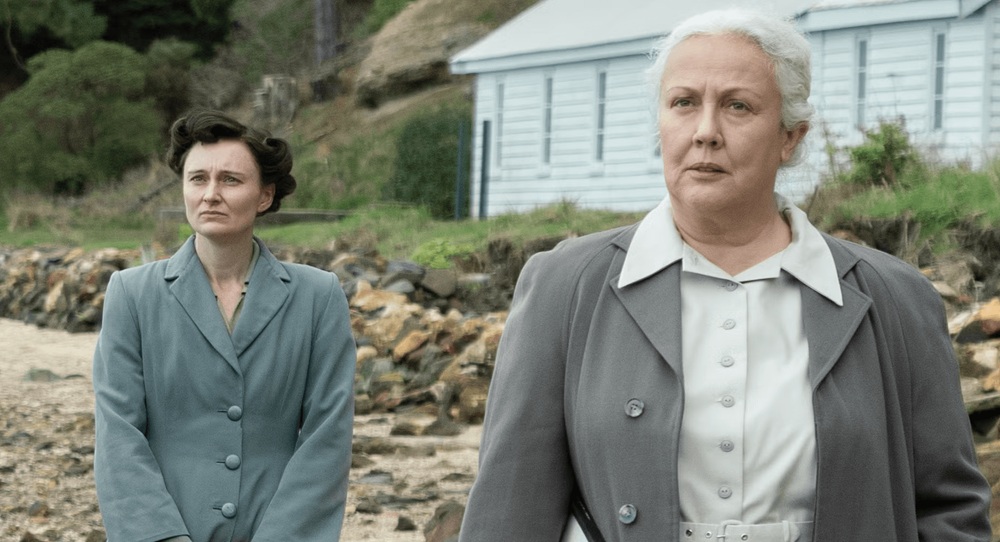
In the film’s focus on the young women’s connection, Stewart-Te Whiu juxtaposes it with the institution’s rules and its enforcers holding them in check, most notably the inscrutable Matron whose own history suggests she was once one of them. Though she’s never cruel, she’s complicit in the cruelty of the place.
Related Interview: Screenwriter Maddie Dai on Creating Her Powerful Coming-of-Age Film ‘We Were Dangerous’
Sharp Voices, Strong Faces, and a Keen Eye for Irony
To Dai’s credit, the screenplay does not pander. These girls are messy, and their traumas aren’t cleanly resolved. The specter of institutional control over young women’s bodies looms large, from religious indoctrination to the threat of literal sterilization. And yet the film does not collapse under the weight of its themes. Dai threads moments of levity and wit throughout, showing a real affection for these girls as characters, not just symbols.
Erana James, already a seasoned presence on screen, is compelling as Nellie, all swagger and suppressed vulnerability. Nathalie Morris brings volatility to Lou, but never lets her tip into caricature. And Manaia Hall is a revelation as Daisy, whose softness hides a quiet, deliberate strength. Rima Te Wiata, as the Matron, resists the urge to go full villain. Instead, she plays her like someone who sincerely believes she is saving these girls from themselves, which is perhaps more terrifying.
Visually, Maria Ines Manchego‘s cinematography walks a careful line between nostalgia and critique. The film is gorgeous to look at, often evoking vintage photography. Colors are soft but deliberate; compositions feel just rigid enough to mirror the social confines these girls are struggling against. That visual irony—beautiful frames of institutional cruelty—is part of what gives the film its charge.
As for the title “We Were Dangerous,” I kept turning it over in my head. Is it a lament? A badge of honor? A warning? It could mean the girls were perceived as threats needing containment, or that there was once a time when being a free-thinking young woman was, inherently, dangerous. Ultimately, the ambiguity feels right. The film doesn’t hand you a thesis; it leaves you to sit with the discomfort.
When Satire Gives Way to Sincerity
And yet, for all its strengths, “We Were Dangerous” never fully figures out its tone. Stewart-Te Whiu’s direction is confident, occasionally to a fault. The film’s look is carefully manicured: static frames, muted color grading, and symmetrical compositions that recall the works of Sofia Coppola or even early Peter Weir. But where those films leaned into their surreal menace, “We Were Dangerous” plays it straight. The result is aesthetically composed but emotionally inconsistent.
Case in point: The opening scenes promise a dark comedy—something acidic, mischievous. There’s a satirical edge that hints at broader sociopolitical critique. But as the film progresses, it veers into much heavier territory: psychological abuse, cultural annihilation, medical violence. The shift isn’t subtle, and for viewers who walked in expecting something lighter, it might feel like a bait-and-switch. I wouldn’t call this a flaw exactly, but it does make for a lopsided experience. The third act, especially, plays like a different film entirely, one that’s more interested in melodrama than satire.
That visual irony—beautiful frames of institutional cruelty—is part of what gives the film its charge.
Also, in certain parts of the film I couldn’t help but think that there was enough room to go deeper. The framework is solid, the characters rich, and the historical context brimming with implications. But the script occasionally opts for shorthand when it might have pushed further. The stakes, particularly the political ones, get flattened by the focus on the interpersonal. Which, to be clear, isn’t a bad choice—just a narrower one than the premise might have allowed.
‘We Were Dangerous’: A Debut That Bruises, Persists, and Promises More
There’s something commendable in what “We Were Dangerous” reaches for, even if not everything lands. It’s a coming-of-age story that doesn’t simplify rebellion or trauma, and it treats its girls—and women—as more than lessons waiting to be learned. Still, even with its uneven structure and tonal shifts, I found myself pulled along. Maybe it’s the performances, maybe it’s the visual language, or maybe it’s just that rare sensation of watching a film trying to grapple with something bigger than itself.
Whatever the case, Stewart-Te Whiu’s debut shows she’s a filmmaker with something to say. It announces a voice worth listening to: one with guts, curiosity, and the beginnings of a signature. And if the film doesn’t fully realize the mix of resolve that ‘Shawshank’ exemplifies and the melancholy ‘Virgin Suicides’ exudes, it still comes surprisingly close. And that’s more than enough to make it linger.

Josephine Stewart-Te Whiu’s “We Were Dangerous” had its world premiere at South by Southwest on 8 March 2024. The film is available digitally on PVOD and TVOD across Canada on Rogers, Xfinity, Apple, and Amazon. Follow us for more coverage.

