


“Milk,” Rice, and the Blood” is an experimental indie Hindi film written and directed by Saurabh Doke. It’s a revenge tale, a social critique, and a crime story all in one. It tell its tale in a sporadic, jumpy time sequence. It’s not totally backwards like “Irréversible” or “Memento,” but is its own thing. It’s the story of a young man, Pradip (Swapnil Badnale) who arrives in a nameless city and is kidnapped, tortured, and (possibly) killed by ruthless elements. He has committed no crime but his existence. He’s from a Dalit family, and a quick online search shows the casteism and prejudice these people face in India. As Doke compiles his story—alongside by a number of competent actors—he carries us along with it. Its strength is that it pulls you in. Its detriment is its almost-total reliance on knowledge of Dalit prejudice to understand fully the arena in which you’ve stepped.
There are several themes going on at once in Doke’s film. Obviously there’s crime and drama, as well as prejudice and the danger minorities face in forbidden places. However, I feel “Milk, Rice, and the Blood” is commenting on the differences between the city and the village, of the suburban vs. the rural. From one’s time with this film, you can feel a reverence and cleanliness towards farm-life (where Pradip comes from ) versus the greed and duplicity of the city. Pradip moves in with a roommate, Ashish (Ashish Bisht), who is initially kind to him. However, jealousy will form (how dare Pradip be too nice to Ashish’s girl at the office where they work). And it’s very clear certain city elements are looking for—if not creating—reasons to treat Pradip differently.
Of Casteism and Unbelonging
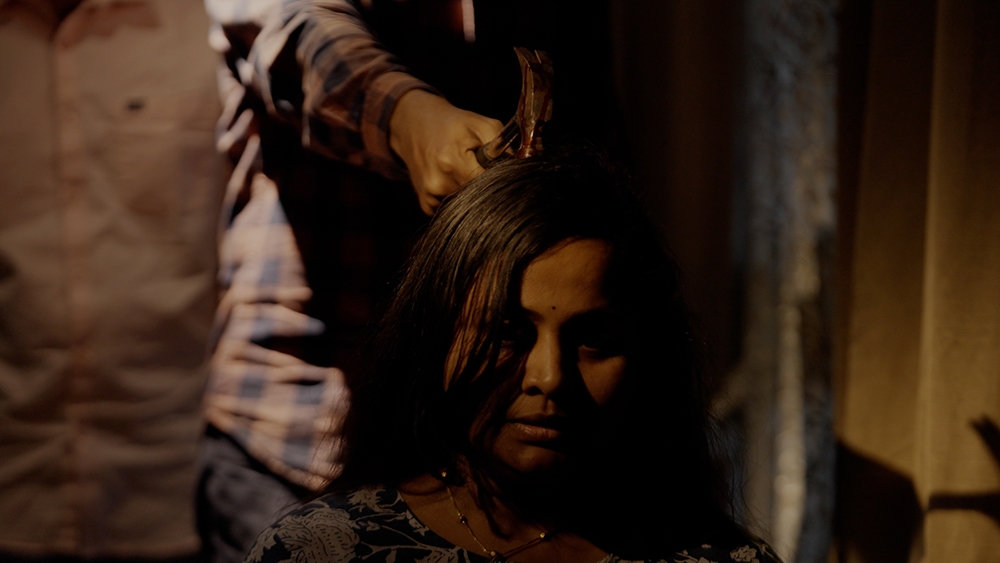
What makes “Milk, Rice, and the Blood” difficult to watch at times are its out of order flashback sequences and its violence, both remarkable for a $4,000 budget. Both Pradip and some local hoodlums are subjected to torture throughout Doke’s film. Here the picture does well at capturing a sense of horror and foreboding. We’re not talking anything overly excessive like “Saw” here. However, Doke and Cinematographers Yash Chouhan and Sairaj Patil do a great job instilling a sense of desperation. The film’s opening sequence is sudden and brutal, and brings you into the picture with a sense of immediacy. Yet sequences of Pradip’s prolonged torture by two goons brings a sense of sadness and pause. I had to look away at one point… not because the effects were too much, but because of the casual sadism with which it was carried out. All the while, person after person comments how Pradip “is used to this,” a sort of head-shrug rationality for why people of his caste are little more than an afterthought.
The film’s out of order sequences follow two arcs. One is of Pradip, with flashbacks showing him renting the room with Ashish. The other is with his brother, Siddharth (Doke) looking for signs of his whereabouts. I won’t spoil any of the film’s chronology, because chaos and the unknown are what draw you into Doke’s film. The dialogue is in Hindi (with English subtitles), yet is quite easy to follow along. The difficult part is for those not from India, who may be unaware of the caste system and what’s happening on-screen. Why does the landlord insist Ashish should have “found a roommate with a better background” when Pradip appears like them in every way? Why does Pradip’s desire to bring fresh farm food to the city in lieu of the adulterated, overpriced fare Vikram (Aditya) peddles cause anger? And why does he get accused of abuse simply for having the effrontery to try and help a woman up who’s fallen and fainted? Doke doesn’t answer these questions, but English speakers can look toward the ways our society treat minorities for some understanding.
An Artistic Film with Things to Say
The acting is good here, with Badnale and Doke standouts for obvious reasons. As Pradip, Badnale is sufficient. He comes off as a fish out of water and a caring person who encounters disrespect throughout. Pradip carries himself with a sort of aloofness that lets us know he’s naive to the prejudice he receives. He can’t understand why people would treat him differently, nor why they would rather pay for the shoddy goods Vikram sells in place of fresh farm food. Ashish understands—somewhat—and I liked Bisht in the role of Ashish. He doesn’t have an issue with Pradip at first, until others change his mind with lies that poison his view. Aditya does well as the criminal Vikram, as does Sandesh Mantri, one of Vikram’s goons. Pradit’s landlord (Ashwannikumar Jadhav) and his wife (Dhanashree Jamkar) give realistic turns effecting a casual bigotry you can feel. And the city itself (filming takes place in Pune, Maharashtra, India), though never named, feels like its own type of villain.
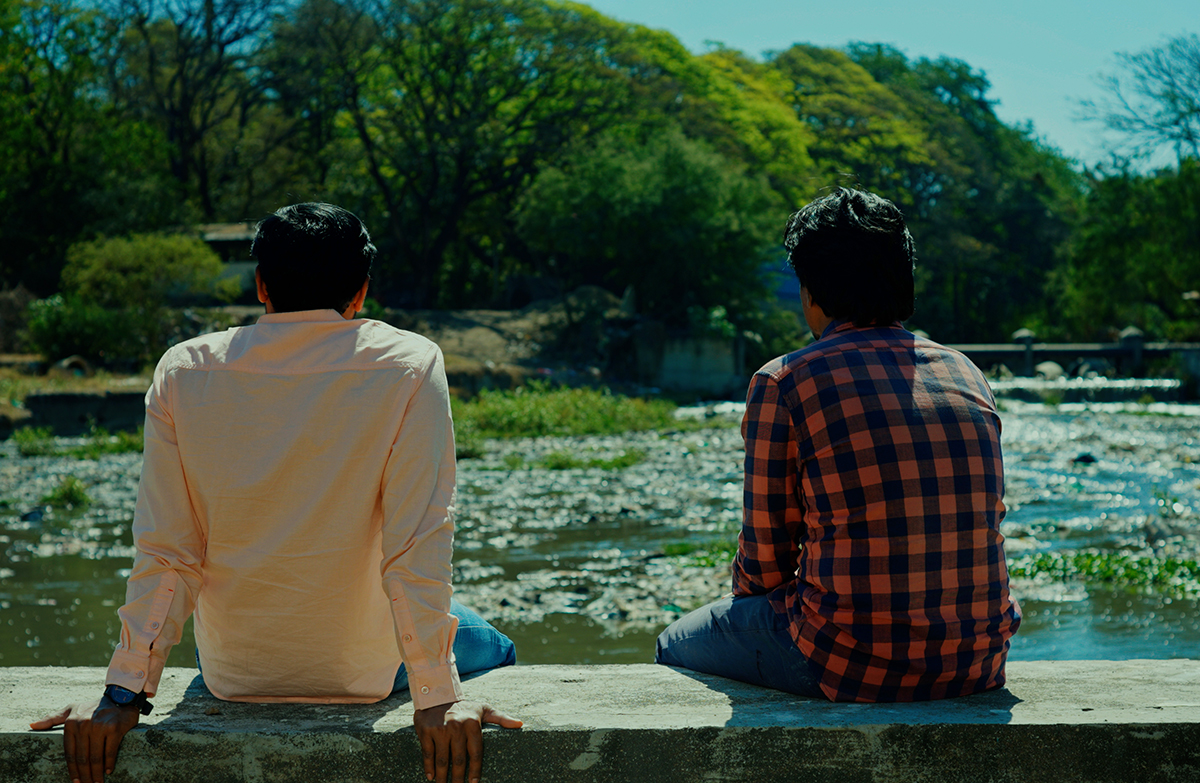
However, of all the players, I enjoyed Saurabh Doke in his vengeful role the most. He’s not on screen for that long, but he really nails the role. His quest to find the truth carries the film along, as do solemn scenes with he and Pradip by a peaceful river in simpler times. Yet his final scene with Jadhav was the film’s best, as he asks not for recompense but demands respect. And while the scene carries a lot of creative license, it’s effective and vindicating. I’d like to see him in more like this—a Liam Neeson-type who rights wrongs—maybe in a more thrilling film (like “Taken”) or a darker one (like “Old Boy”). Yet the point here is not to enjoy Siddharth’s revenge, but to question its need. Under this lens the whole thing become sad. Why couldn’t the city just accept Pradip as he was?
A Good First Film
All-in-all, “Milk, Rice, and the Blood” is a capable indie. For the small budget, its out-of-order flashback sequences are better than you’d expect, and its violence is at times hard to watch… though it’s professional and contained. Doke is commenting on casteism and violence here, but also crime versus honesty and decency versus indecency. This seems to be Doke’s first feature film, and I’d like to see more from him. And while those familiar with India’s caste system and Dalit oppression will understand this film most, it has something most audiences can relate to and entertains you along the way.

“Milk, Rice, and the Blood” is available to rent or buy on Amazon Prime.

